Category Archives: Creativity

Facebook Permanently Deleted My Account: A Summary of My Ordeal With the Tech Giant

As most people are aware, Facebook, that social media behemoth that controls half of the world’s population’s lives, doesn’t have customer support. Their principle is that anything can and will be done by artificial “intelligence”, and that you do not need to interact with a human in order to have the answers to your technology questions. Meta, the parent company of Facebook, Instagram, Threads, and other smaller social media ventures, has several online pages where they expect their customer to self-guide through links that will help them figure out how to solve every technology problem they might be facing with their accounts. I recently was victim of this lack of customer service when my accounts were hacked and as a result, Facebook permanently deleted almost two decades of memories, writings, pictures, and real life connections I have nurtured with people from around the world. Here’s a summary of the story and where I am today in this journey of losing my primary social media account.

I am a GenXer. Born at the very end of the 1970s, raised in the 1980s, and becoming a young adult in the 1990s. This is important because I am from the first generation that witnessed massive technological changes in our lives. I grew up without a telephone at home (I grew up in rural Puerto Rico. There was exactly one phone in my neighborhood, and about three houses with any form of cable TV.) But when I was in high school at a public boarding school in the west of the Island, I got a message at the school asking me to call the number of my parents’ brand new telephone at home. Later, on my second year in college, I got a Nokia, prepaid cellphone that I had to carry in my backpack because it was big and bulky. Of course, this cellphone was the companion to the pager I had already acquired, which we all called “beepers” in our native Spanglish. I point this out because I am from the generation that every survey confirms, it Facebook’s primary user. That is absolutely true.

The first time I heard about Facebook was while in Seminary. Since I attended Seminary outside of Boston, not far from Harvard, Facebook was a novelty we were all familiar with. I attended Seminary exactly at the same time as Mark Zuckerberg was attending Harvard and developing his innovative software. When the platform was first introduced to students outside of Harvard, I used my .edu Seminary email address to open my personal account. As most people from my generation, Facebook became the preferred social media platform to connect with friends, colleagues, and people I started to meet in other countries as I started to travel more often for both pleasure and work. Like most GenXers, Facebook became my way to interact with the world.
As the company continued to change and implementing rules and guidance for users, I tried to keep up, even if I didn’t agree with every single new rule. However, I never had any troubles until their infamous rules regarding names. I do not use my legal name for various reasons. The primary reason being that I was tired of hearing English-speakers butcher my name and not understanding that mine is not a “name” and “middle” name, but rather a composed name, and that I have two, not one, last names. I also started publishing under the name you all know me by now, styled as J. Manny Santiago (the “J” being a nod to my legal name, which was also the name of my maternal grandfather, whose memory I cannot honor as his last name is always stripped by the USAmerican naming customs.) I had to produce several pieces of proof stating that in fact, my name is J. Manny Santiago, even though my birth certificate, my passport, and my driver’s license do not have that name. More recently, I used a common Spanish word that has no derogatory connotation at all in Puerto Rican Spanish, but that I recently learned is used in Mexican Spanish as a derogatory term in some contexts. I was put in “Facebook jail” for using this word in a publication. I challenged the decision, based on the huge diversity that exists within Spanish dialects, and explained why the word had no negative meaning in my dialect, only to be told by Facebook’s AI systems that the software will not change their decision. And with that, I was given more time in Facebook jail. (By the way, other dialects of Spanish use words that are completely and utterly crass and vulgar in Puerto Rican Spanish, but apparently, Facebook has no problem with that.) Until this November, that was the most trouble I had gotten into with this social media tool. However, things changed in unexpected ways.

In early November, I temporarily deactivated my Facebook account. I do this regularly to disconnect a bit from the day-to-day of social media. But I am a regular Facebook user and always come back after some weeks. However, this year that did not happen.

On Thanksgiving Day, I am getting ready to welcome our dinner guests when I receive an email from Facebook that says “Welcome back!” I clicked on it and read that my account had been reactivated and Facebook was just welcoming me back. Of course, this concerned me but I didn’t have the time to get too much into it. Still, I took a little peek and opened the email. When I clicked on the link, Facebook started giving me a message that my account had been permanently disabled. This was odd, of course, but I was certain I could find the solution in the morning.

Lo and behold… the next day, when I went back to the email and the link, my account was still permanently deactivated. I tried everything I could. I searched for answers on Facebook, but since I could not access my account, there wasn’t anything I could do. Meta has a form you can use to submit any requests to reconsider their decision. However — and this is both cruel and a clear failure on Meta’s side — you must be logged into Facebook in order to submit that form. Of course, with no customer support system, it is likely that hundreds of thousands of accounts are being disabled unilaterally by Facebook with no recourse for their consumers.

I kept trying different ways to access my account. On one occasion, I was able to login into Meta and there was my profile picture from Facebook, and a message saying that my Facebook account had been permanently deactivated because an account I did not recognize and which did not follow Meta’s community guidelines was tied to my Instagram account. This at least cleared up what had happened. I looked for that account on Instagram and could not find it. My Instagram account didn’t have any linked accounts either. I assume the hacker account was either quick in disappear after the hacking, or Facebook was lying. Either way, at least I had a little bit of information on what happened to my account. Interestingly, even though it was my Instagram account the one compromised first, this one did not get deactivated.

As I kept trying to find answers and help, I came across information about supposed email accounts you can send information to. I emailed all of these accounts at Meta/Facebook at no avail. Those emails are not functioning emails. I had taken screenshots of the messages from Meta/Facebook, and wrote a short, one page letter explaining what happened.

On Tuesday after Thanksgiving, as I am checking my bank account, I noticed two charges for $250 each from… Facebook! How can this be if Facebook disabled my account? Obviously, the hacker used my stored cards to make purchases or to pay for something. This was another level of hacking I had not experienced before. Facebook is making me pay for the hacking I was a victim of.

Of course, I immediately called my bank and was able to report the fraudulent charges. My back was very helpful in reimbursing me the money and filing fraud reports on both charges. They also worked with Facebook and I was able to receive the reimbursement from them. However, the matter of my account was still pending. Now, the hacking had expanded to fraudulent bank charges and I still had not way of contacting Facebook directly to figure this out.

That was, until I ran into a YouTube video from a business woman in Florida who had a very similar experience. She explained what happened to her, and how her business page was also affected as Facebook requires that you use your personal account to create business accounts. In summary, this woman was able to make a different account — she could not use her previous email or an IP address associated with her personal email, as Meta bans anything that has to do with your old account from ever having access to Facebook again — and was able to reach out through Facebook help page. She also shared how she found out that Facebook has two special help sections, where you can actually connect with individuals, if you are a business or a government agency. Bingo! That was my possible saving grace!

A while ago I created a secondary Facebook account with my state agency’s generic email and my work phone number. Although it’s under my name, it’s actually a generic “personal” account that me and my staff can use in order to administer the agency’s page in case I took a break from Facebook as I usually did. I used this secondary account to login into my agency’s page and through there, I was able to finally reach Facebook help desk. A little bit of sun was already showing! I sent a note with all the print outs of the information I had gathered: the screenshots of the messages I received, the message about an account linked to my Instagram, and evidence of the fraudulent charges. I was cautiously optimistic about a possible resolution. But I also wasn’t holding on my breath because you cannot really trust a business that doesn’t have any type of general customer support.

A few days after I submitted my request, I did receive a note from a person from Facebook. It was a personalized note, acknowledging receipt of my note and the situation. I was excited, but still a bit doubtful that Facebook would do anything. I explained that the email I had used to submit the request was a generic email and that I might not have access if I were to move from my current position. I have tried to be as polite and as patient as possible. Since then, we have communicated a few times, sometimes because they need some information from me, or more recently, to let me know that the process to reinstate a disabled account can take some time.

It’s been over a month now, and things have not moved. Although I have been communicating with the Facebook staff, I have very little hope that my account would be reinstated. This whole process has been stressful, because, as I mentioned, I relied on Facebook to connect with many personal and professional connections from throughout the world. For instance, due to communication restrictions, it is almost impossible for me to connect with my contacts in Cuba outside of Facebook. Their emails are ever changing, and there is no direct phone calls I can make, nor do most of my contacts had any phones to call them to. The same for other connections on countries with limited phone or internet services. I do hope that a “miracle” happens and I get my account back. So far, nothing has happened and I doubt something will happen in the next few months. Perhaps I will get back to Facebook at some point in the far future, when I am able to set up a new account. For the time being, I am just waiting for the staff person I had been in touch with to give me any updates before I lose access to the secondary account.

1 Comment

Filed under Creativity, Facebook, Hacking, Meta

What Is Time? Or What Is Latino Time, Anyway?

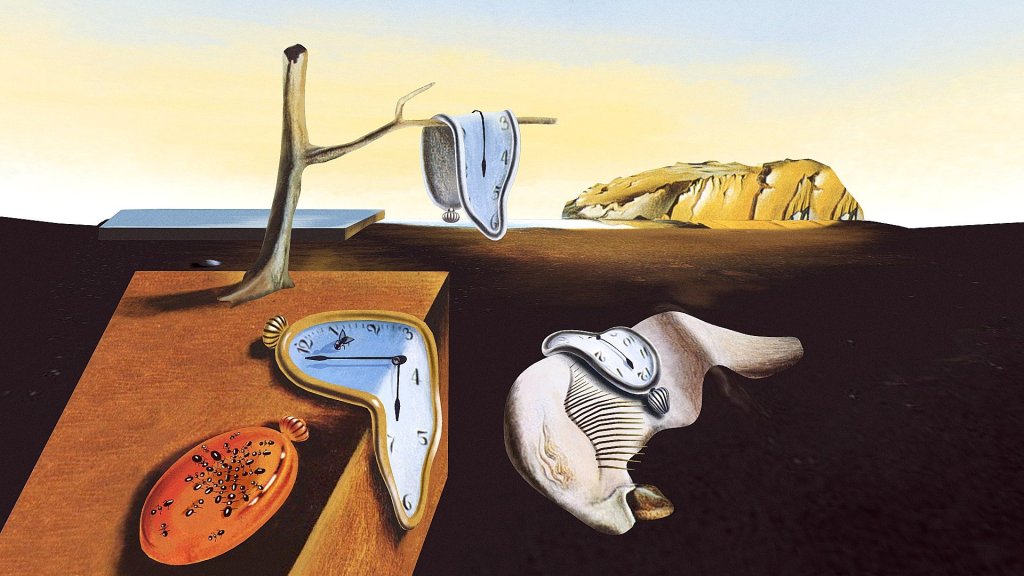
One of the places I love to visit when I go to Yucatán is the Grand Museum of Maya Culture. Each time I visit, I learn something new or pay closer attention to something I missed the last time I visited. A few weeks ago, when I visited, I paid closer attention to a note about the concept of time in the Maya culture. It explained that the Mayas understand time as cyclical. This is one of the reasons why spheres were used to mark time – the Mayan Calendar. A linear time makes no sense in the Maya culture. The future is behind us, the present is unknown, and the past is right before us. The future is behind us because we do not know how that time will be used and what it will bring. The present is unknown because it is happening as we live, and therefore, we cannot actually see it until it is in front of us. The past is clearly in front of us because we remember.

Each culture has a concept of time that works for them. Everyone knows the USAmerican adage: “time is money!” The whole USAmerican culture is fixated on this cultural reality. Although I have not studied the origins of this, I assume it comes from the Protestant work ethic. According to some early Protestant theologians – specifically, Calvinists – labor is not only honorable, but it also shows whether you have been chosen by God. People in Calvinist societies wanted to show everyone that they had been chosen, and thus, they worked hard to demonstrate that they had been chosen.

Sociologist Max Weber was the person who defined this concept. In his work, Weber argued that this approach influenced the way in which the earlier Anglo settlers of what became the USA were able to succeed. Since then, this approach has permeated USAmerican society. “Time is money” is just a different way of saying that you must not “waste” time; you must use every minute of your life on a task that is productive. Time is seen as something linear, and you complete one task after the other in a linear way, in order to be as productive as possible. You can control time, and it is a limited resource that should not be wasted. I just learned that this perspective is called “monochronic.”

According to the definition I found, “In monochronic societies, people take time seriously, adhere to a fixed schedule, and value the sequential completion of tasks.”[1] This perspective flourished during the Industrial Revolution, as it made sense for this period of history when the main goal was to produce as much as possible.

On the other hand, there are polychronic societies. In these societies “people perceive time as more fluid, where multitasking and interruptions are normal. Time aligns more with the sun, the moon, and Mother Nature than it does with the hands of a clock.”[2]

In Latin America, our societies tend to be polychronic. This, of course, is a generalization. The Protestant work ethic and the USAmerican obsession with making money have definitely influenced most Latin American societies. Nevertheless, our cultures tend to be more polychronic, understanding time in more flexible ways than European and most North American cultures (with the notable exception of México.)

When I first moved to the mainland USA, the understanding of time was one of the greatest cultural shocks. I couldn’t quite comprehend what I understood to be an obsession with timeliness, cutoff times, hard deadlines, etc. I would be flabbergasted at how little quality time people spent in each other’s company. To this date, I still cannot comprehend how many of my USAmerican friends can be exactly on time for something. I do have a theory that they probably just arrive super early and park nearby until the clock marks two minutes before the scheduled time, and then they just walk up to your door. I don’t know! I haven’t cracked the code yet…

As I spend more time in the USA – I have officially lived longer in the USA than in my own country – I have adapted to some cultural and professional norms, mores, and customs. I understand that certain people need me to show up right on time, or sometimes even a few minutes earlier. I try as hard as I can to comply with the expectations. However, culturally, I am definitely wired to see time as a flexible reality.

In my own culture, when it comes to spending time with others, it is not about “being on time” but about the quality of time you spend with someone. Since time is flexible, it is expected that you prioritize companionship more than setting up specific times to start and end. There is a running joke that Latino folk – and in my case, Puerto Rican folk – spend pretty much the same amount of time saying goodbye as the time they spent visiting with you. Of course, this is a bit of an exaggeration, but it is quite close to reality.

Since time is flexible, it also means that you can work on many different tasks at once; or have timelines that look nothing like the linear timelines that are common in corporate settings. A Latin person will most likely go back and forth between projects and within stages of that project. There is no need to follow a specific timeline because it is not necessary. You will have the product finished when it is finished, and it will be a quality product because you gave it the attention that it needed regardless of whether it was “on time” or not. This causes much frustration among multicultural groups! It is especially hard when those groups are made up of people who have adapted to the USAmerican understanding of “time is money” but come from polychronic backgrounds. In these instances, the majority USAmerican coworkers use the example of the people who follow their understanding of time to dismiss the very real different understanding of time of the others in the group.

It turns out that social scientists and researchers in the field of business have already studied these interactions. I read an article online[3] that describes project management from these different perspectives and how multicultural workgroups can manage to be successful.

I will not go into the details of that paper. However, I would like to present some of my own perspectives and understanding of how to approach this reality of differences in understanding time.

First, I think it is important to recognize that “different” does not mean “better” or “bad.” It just means… DIFFERENT! Different societies and cultures have different ways to approach time. We must understand that our own understanding of the world around us is shaped by our histories, social locations, personal experiences, and myriad other things. It is wrong to expect others to behave like me, even in professional settings. It is also wrong to assume that everyone must conform to my understanding of the world. Accept and embrace differences.

Second, it is always best to foster a culture of communication and trust in the workplace – or any other place! This will help communicate effectively when these differences show up. It also helps with setting communal expectations that are born of the collective ideas and different approaches brought in by the members of the group. When there is trust and communication, people will feel empowered to share their own understanding of time, and a good project leader will help negotiate a workflow that makes sense for the group. This brings me to the next point.

Flexibility is key. What works today might not work tomorrow. Once a workflow has been established for a project, it cannot be assumed that the next project will follow the same timeline or workflow. Good project leaders will need to go back to the drawing board and go over the whole process of listening, learning, negotiating, and adapting a new workflow that works for that group and that project in particular.

These strategies can also work in personal relationships. I understand my friends’ perspectives on time, and I honor them the best I can. They also understand my own understanding of time, and you will never see one of my USAmerican friends showing up at my house for a party at the exact time I invited them! This sounds silly, but it’s true! In my Latinoness, I think I will have everything ready by the exact time I invited my guests, but there’s always something that makes it not possible to be right on time. Thankfully, my friends understand this, and they know they should show up at least ten minutes past the time I asked them. They also know that I value their company more than I value ending a party “on time” – whatever that means in this context – so they are never rushed to leave my home at a particular time.  

To finish this article, I want to leave you with a smile on your face. A few years ago, FLAMA, a Latino YouTube channel, posted a really great video titled “Perception of Time – Latino Field Studies.” Please watch it, for a laugh… and to understand better what I have just written about!


[1] https://www.spanish.academy/blog/polychronic-culture-in-latin-america-thoughts-and-facts-on-time/

[2] https://www.spanish.academy/blog/polychronic-culture-in-latin-america-thoughts-and-facts-on-time/

[3] Duranti, G. & Di Prata, O. (2009). Everything is about time: does it have the same meaning all over the world? Paper presented at PMI® Global Congress 2009—EMEA, Amsterdam, North Holland, The Netherlands. Newtown Square, PA: Project Management Institute. https://www.pmi.org/learning/library/everything-time-monochronism-polychronism-orientation-6902

Leave a comment

Filed under Creativity, Culture, ethnicity, Heritage, Hispanics, Hispanos, Identidad, Identity, Latino, Leadership, Sociology, Time

Seven Words of Christmas

Word ArtThe news have reported that the current White House administration instructed the Centers for Disease Control (CDC) from using seven words on their budget documents. With seven days left for Christmas, I decided to take the time to write a piece each day highlighting one of the seven words.

In the Christian tradition there is the sharing of the Seven Words. These are phrases that Jesus shared while being crucified. Many Christian churches share and preach on these Seven Words during their Good Friday liturgies. The Seven Words are the climax of what Christian theology calls “the story of salvation.” The last words that Jesus shares are: “it is finished” (John 19.30) and “into your hands I commend my spirit” (Luke 23.46.) After these words, Jesus expires.

According to the timeline of events, after Jesus expires on the cross he is placed into the tomb and on the third day he is resurrected. This is the hope of the Christian person: no matter how difficult the journey is, no matter how painful the culmination of life is, there is always the hope of resurrection. This is the message of Holy Week.

Why am I writing about Holy Week on the season of Advent leading into Christmas? Because the Seven Banned Words of the CDC are a mirror of those other Seven Words of Holy Week.

The current federal administration has been crucifying the remnants of the facsimile of democracy that the United States had. With each carefully orchestrated move, the current administration tries to diminish the people’s confidence and trust on institutions serve the country. They are intentional in the use of words to describe the institutions that keep some resemblance of democracy. The administration’s furious attack on the free press, their obsession with political rallies a year after elections, their systemic appointment of people completely unprepared and unqualified to lead the agencies they are appointed to oversee, their deliberate construction of lies disguised as truth, the unashamed use of FOX News as state propaganda television, and a myriad other big and small actions that undermine democratic processes are just the tip of the iceberg. The United States democracy is being crucified.

Diversity

Fetus

Transgender

Vulnerable

Entitlement

Science-based

Evidence-based

These words represent all that society stands for when they are on their way to progress. French philosopher and founder of Sociology, Auguste Comte, wrote about the stages of human progress. In Comte’s theory, societies move towards progress. There are three stages of society: theological, metaphysical, and positivist. A theological society looks at an unknown occurrence and places all responsibility on unseen beings that control our destinies. Any possibility of progress is thwarted by the society’s fear of angering their mythological beings. A metaphysical society is in the middle stage. Societies in this stage begin to understand that there are certain things that have an explanation. The understanding of actions and their consequences are part and parcel of this society’s natural development. Neither one of these two types of societies is inherently corrupt or ignorant. You cannot know what you do not know. However, these are not ideal societies. The ideal society is one in which members are exposed to a systemic way of understanding truth. To this Comte called a “positivist society.”

Although Auguste Comte’s positivist approach to explaining society is not ideal, it does have merit, especially taking into consideration the banning of words in certain official documents by the current administration. A positivist society understands that humanity is on a journey forward. This journey cannot be contained, no matter how much the powers that be may try to stop it. Resurrection is the conclusion to the crucifixion. Progress is the conclusion to temporary repression.

Democracies are vulnerable entities. They can suffer from the ego of leaders who place power over service. Interestingly, Christmas is the time of vulnerability. In the Christian tradition, Christmas commemorates the birth of a vulnerable child, from a vulnerable family, who was threatened, even as a fetus, with destruction by its enemies – political, economic, societal, cultural, and religious, among others. Christianity proclaims that this child that was born transcended what humanity understood at that moment about the relationship between humanity and its divine sovereign. Some theologians propose that this transcending experience of God made Sophia, the common image of God as Wisdom, take the form of Christ in the person of Jesus, thus making God a transgender reality showing humanity how close the Divinity is to all of humanity. The diversity of opinions that ages of science-based social studies and evidence-based conclusions have shown us, is evidence that societies do tend to move forward towards progress and positivism. It is our responsibility, our duty, and even out entitlement as engaged members of a functional society, to be in solidarity with the vulnerable democracy that we are so desperately trying to save. Resurrection is the conclusion of crucifixion, even during the time of Advent and Christmas.

Leave a comment

Filed under Academy, Creativity, Culture, discrimination, Human Rights, Identity, LGBTQ, Philosophy, Queer, resistance, Sociology, Theology, trans, transgender, United States, USA

The Academy and Creativity

It took me a very long time, but I finally recently got admitted to a doctoral program. I am currently completing a Doctor of Education (Ed.D.) degree in educational leadership through an innovative distance learning program on a respected university. Contrary to what many people believe, online degrees are not less rigorous or less demanding than traditional programs. Certainly, there are several “diploma mills” out there – and both the FBI and the Department of Justice have taken matters into their hands.

Since way before I entered a doctoral program, I was excited with the possibility of becoming part of the academic elite. I do not mean this in a derogatory way. Far from it! I have admired academics and researchers my whole life. I looked up to them. I followed some of them and their works. I wanted to be part of this group that gives so much to

"This doesn't leave much room for creativity."

“This doesn’t leave much room for creativity.”

society. Thus, when I was admitted to the doctoral program, I was elated. I was finally entering a world in which I could be creative, original, and novel… My interaction with other students would allow me to discover new things and to expand my understanding of the world. Having mentors and teachers with vast experience in the field would mean that I would have the opportunity to ask questions, to get answers, to get recommendations on where to find answers, to get encouragement on topics to research and so much more.

What I can say, however, is that it’s been both encouraging and frustrating (but I guess that this is exactly how life in general goes!)

I am not saying that I am not happy with the program and the mentors. Nothing farther from the truth! I have enjoyed every part of the program. My mentors are amazingly great scholars and they have shown tremendous respect for their respective fields of study, for the training of the students, and for the institution they represent. I must also confess that I am in absolute awe with one particular mentor. Throughout my life, I have had my fair share of great teachers, and this particular mentor has quickly become one of them.

My frustration, however, is not with the institution, with the program, or with the field of study. My frustration is with the academic system that, in order to standardize the production of knowledge, has, at the same time, curtailed creativity on the part of the scholars.

I am not suggesting that we ought to get rid of rules altogether, or that we should never follow certain standards. However, I have noticed how the rules and regulations are so ridiculously complicated and detailed that they do not allow for the expressing of individuality on the part of the scholar who is writing.

I became aware of this through my doctoral studies. Throughout my academic life I have used different styles manuals (mostly the University of Chicago manual, but also MLA Formatting and Style Guide and the APA Style Publication Manual.) Since one of my graduate degrees is in theology, even more creativity was allowed. This doesn’t mean that theological research is less rigorous. It means that, because of the nature of the field, creativity is welcomed and celebrated. Moreover, some flexibility was always allowed so as to present works that spoke to who we are as individuals in relation to the work we are doing.

Now, however, as I move to a more standardized form of scholarly writing, I find myself baffled at the many regulations that come with it.

Two spaces after a final period? Why the heck?! Do the people who put together these manuals are over 100 years old and still using typewriters?

A whole, almost blank page *just* for my name and institution? Apparently they don’t care about wasting money or resources when printing!

Having to repeat the title on EVERY. SINGLE. PAGE? Why??? Just… WHY???

OK, I get the numbering pages (always have done that.) And I also get having a standard way of quoting, citing, and writing the references. But, honestly, there are other rules that make no sense… and that, for people who enjoy writing and reading like me, make it difficult to be creative with the way in which we present our work.

Now I understand why most scholars dress the same, talk the same, have the same mannerisms, and pretty much look all the same: they have been following standardized ways of scholarly work for decades! To me, that is sad.

To be honest, I will definitely follow every single one of the ridiculous rules and regulations the program asks me to follow. After all, I *do* want to succeed in this program and part of the way of doing this is by conforming to the system that has allowed you to pursue research and scholarly work. But I also make myself a promise: never, ever, ever, EVER, to curtail the writing creativity – within reason – of my future students and mentorees.


[RANT OVER. LOL]

Leave a comment

Filed under Academy, Creativity, School, Studies, Uncategorized