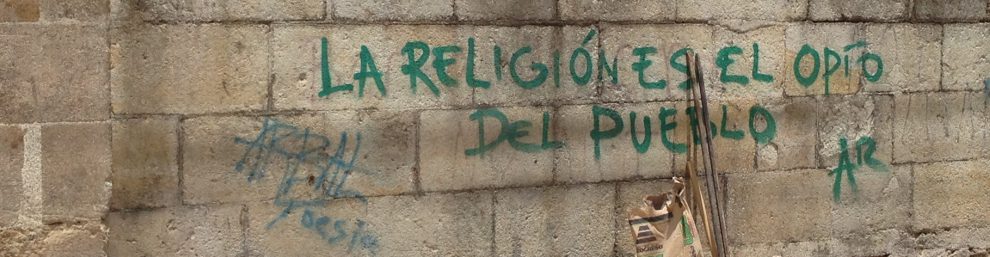
Hispanic Heritage Month starts tomorrow, September 15th through October 15th. It was set during this
time as many Latin American countries celebrate their independence sometime during that period. (But not ALL countries do, and my own country, although part of Latin America, it’s still a US colony, so no independence yet for us.) Here are a few notes for those of you who want to observe this celebration in your agencies, groups, churches, clubs, etc.:

– The name of the heritage month is “Hispanic” Heritage Month. We didn’t select it, it does not represent the entirety of the communities, and not all Latinos are Hispanic, etc. …. BUT… it’s the name of the month as it was instituted by the USA federal government. Don’t come up with other names that do not represent the history of our struggle and the history of how this heritage month came to be. That doesn’t stop all of us from advocating for a change. Using the official name as it is right now just helps maintain a connection with our past as we move forward. The most important thing you can do is to add descriptions of the communities you want to celebrate. For instance: “This Hispanic Heritage Month, our agency wants to highlight the contributions of Indigenous and Black people of Latin America by offering x, y, z.” Hopefully, one day — and as a result of our collective advocacy — this will be “Latin America Heritage Month.”
– Although all Mexicans are Latinos/as/xs not all Latinos/as/xs are Mexican. This is the most visible ethnic Latin group in our region, but we can say something similar, with other communities, in other locations. Please know that our community is diverse. When you organize your agency’s HHM celebration around one cultural tradition only, you are telling me two things. First, you don’t care about me as a Latino with roots in a different culture than the one you’re highlighting. Second, you don’t know much about our communities or your own communities, where people might come from any of the many Latin American countries.
– Please, make your celebrations as broad and inclusive as possible! Not all Latin people speak Spanish. Some Latin folk speak English as their primary language. French, Creole, Portuguese, and hundreds of indigenous languages are also Latin American languages and cultures. Keep that in mind, especially when trying to highlight the communities in your area. Don’t patronize us by haphazardly translating things into Spanish with Google translate. Also, be carful with asking a heritage speaker to do the translation! Spanish alone has so many dialects, and many heritage speakers learned from their parents who might not have had the opportunities to have formal education, and thus, do not know the intricacies and nuance of the different dialects. Usually, they have very regional dialects which might hinder clear communication with people from outside their regions. Moreover, heritage speakers — who must be celebrated for their work to preserve the language — are most familiar with spoken Spanish, and not with written Spanish. Celebrate diversity in speech and dialects, but also recognize that there is a standard version of one of our languages — Spanish — that is understood across dialects. Only professional translators who have spent their professional lives doing this will produce good content that is understood across cultures. I also know of a at least another Latin American language, Mayan, that also has many dialects, some of them not even mutually intelligible. So, only translate things when it makes sense for those things to be translated.
– Our music is as diverse as we are. Salsa, tango, merengue, cumbia, bachata, reggaeton, rock en español, plena, and myriad others. Don’t rely only on one type of musical style. HOWEVER, keep in mind that some genres of music — reggaeton which is one my favorite styles, so don’t take this as a negative comment on the genre, and Spanish trap, for instance — contain words or phrases that might be extremely offensive or very vulgar in some dialects. Please vet your music selection with people who speak the dialect of the musician. This way, you will have music that is inviting, instead of having music that might be liked by some people while being offensive to other audiences. Don’t play the music of the popular artist just because they just modeled for Vanity Fair (ha! Some of you will get the reference… and also, I love BB’s social commentary and some of his music, so don’t come for me. I am just using some general examples.) Every time I hear reggaeton music with vulgarity in its lyrics playing at supposedly “family friendly” event sponsored by an organization, I know the people there do not know my dialect and the cultural nuance of the use of curse words and vulgarity across different Latin American cultures. Again, vet your music selection with the people who speak the dialect of the singer.
– Look for as much representation of Latin American cuisine as possible! Generally speaking, south of the middle of Central America, no Latino cuisine uses hot spicy chiles! Perhaps your Argentinian best friend loves hot spicy food, or your Cuban spouse does; but that doesn’t mean Argentinian or Cuban cuisines are spicy hot cuisines. The staples of our cuisines vary also. Of course you are very familiar with the Mexican tortilla. But, did you know the Central American tortillas are thicker and don’t compare with the Mexican ones? Did you know that plantains are the staples of Spanish and Black Caribbean cuisine and that we never, ever use tortillas in our dishes? Did you know that in most South American countries bread is king? Also, find local Latin American restaurants of ALL types of cuisines, not just one. Around the area where I live in Pierce County and south King County in the state of Washington, for instance, there are Peruvian, Puerto Rican, Salvadoran, Argentinian, Colombian, Guatemalan, and Honduran restaurants. Order from them!

– Latinoness does not equal immigration. Do not center your events only on immigration issues! Sure,
that is the biggest reality of our community. But Puerto Ricans are Latino/a/x and we — on paper — do not face this challenge. Cubans and Venezuelans also do not face these challenges in the same way. Tejanos, Californios, Nuevo Mejicanos… and many other groups of Latin folk from the lands stolen from México are as Latino/a/x as we are and they do not face immigration challenges. Expand the issues you work on and you highlight in your celebrations. We have other challenges as well, such as lack of access to well paid jobs, racial and ethnic discrimination, anti-Blackness, lack of access to stable housing, etc. Additionally, we are not our challenges! We have contributed tremendously to USAmerican culture from the very beginning. Celebrate ALL of our contributions also, and don’t see us merely as recipients of your charity.
– Latinidad is not race. Mestizaje is not the only expression of Latinidad. Indigenous peoples are still here and thriving throughout Latin America and many of them here in the USA in spite of the many ways we have tried to erase them and their cultures. Black Latinos/as/xs exist… and they come from every single country in our beloved continent. Highlight their influence, their contributions, their resiliency and their Latinidad! Asian Latinos/as/xs also exist! Their contributions to our histories, cuisine, cultures, music, etc., is undeniable. Plus, Asian-Latino cuisine is the best. Ask any Peruvian! Don’t hide this rich history! Latin folk of Arab and North African heritage also exist! And when it comes to religion, at least two Latin American countries are almost majority Evangelical/Protestant: Guatemala and Puerto Rico. Don’t assume we are all familiar with Roman Catholic traditions and rituals. Almost half of Latin folk in the USA are Protestants or Evangelicals, and there are many, MANY Latin folk of other religious traditions: Jews, Hindus, Buddhists, Muslims, Spiritists, Santeros, Vodoo practitioners, atheists, agnostics, and everything you can think of.
– This note is for my Latino/a/x siblings: pay attention and be in solidarity! Who is not being represented and who is being left out? Are you an advocate for ALL of our cultures and traditions? Are you calling folk in to reflect on how they have centered only your or my culture and not the cultures of the other Latin folk who live in our communities? Speak up and advocate for each other as you also celebrate your own individual cultural heritage. It’s all about celebrating our diversity, not helping the people and institutions with power blend us into one thing. Make ’em learn about us! Don’t conform to their expectations!
– When in doubt: ASK!!!! Ask your colleagues what would be meaningful for them. If they are all from one single heritage, honor that and also, seek out others in your community from other cultural backgrounds so you can be more inclusive. We LOVE sharing our traditions, our stories, our cultures, our foods, our memories of back home, our histories, etc. Invite us to be partners in the celebration, and don’t do something for us, do it WITH us.
Have a wonderful celebration of Hispanic Heritage Month and remember we are still here after October 15th!
 SocioTheology
You must be logged in to post a comment.