I continue my journey of sharing with you all during this Hispanic Heritage Month a little bit about each Latin American country I have visited. Today, I want to invite you to come to my own home-country: Puerto Rico!
I was hoping to publish this yesterday, September 23rd, but unfortunately, as the saying goes: life happened. September 23rd is significant for many Puerto Ricans because it is the anniversary of the Lares Revolt, or as we know it, El Grito de Lares. You can read more about this event through the link embedded in the prior sentence, but here’s a short explanation.
In 1868, a group of people from Puerto Rico and Cuba were ready to raise in armed revolution against the Spanish Empire. There were coordinated efforts to overthrow the Spaniard government in both colonies, at around the same time. Unfortunately, the Spaniard government heard about the plans and things had to change. In Puerto Rico, the revolutionaries decided to go ahead with the revolt ahead of the original planned date. On September 23rd, a group from Lares, a town in the mountains of the Island, marched from the hacienda of Manuel Rojas and his family to the center of town. They proclaimed the Republic of Puerto Rico from the balcony of the Roman Catholic Church in the main plaza, and installed a temporary government. As they moved through the mountains to take on other towns and cities, the rebellion was squashed by the armed Spaniard forces, bringing to an end the dreams of a free country. Just a few years later, in 1898, when the Island was just admitted to the Kingdom of Spain as an official province, with representation in the Spanish Courts (Congress), the United States invaded and made Puerto Rico, first, a military colony, and later, an unincorporated territory. Or, in simple English: Puerto Rico is a colony of the United States.
Of course, I have my own opinions about the political realities of the Island. However, this post is about our culture, our island, and the wonderful places you can explore when you visit. If you want my opinions on the political realities, you can find some here on this blog or just by reading some of my posts elsewhere such as my social media channels.
With all that out of the way, here is my beautiful Puerto Rico! Almost everyone who visits the Island stays only in San Juan, the capital city. Although the city has some beautiful, important, and historical places to visit, staying only there is a huge mistake travelers make. It is especially sad when travelers only stay in the Condado area, where most hotels and tourist traps are. If you only visit Condado and Old San Juan, you might as well just stay in Miami Beach, Cancún or any of the other clones of soulless blocks of concrete make for USAmericans’ entertainment. If you want to keep reading, you will know where to experience the real Puerto Rico.
I was born in the municipality of Lares, as a matter of fact. And so was famous singer-songwriter José Feliciano of “Feliz Navidad” fame. But that’s as much as we share with each other. However, the town of Lares itself is worth visiting. Not only because it’ll give you a clear idea of how is life in the mountains, but also because of the wonderful things you can find here. Right next to the plaza there is a famous ice-cream shop where you can have some of the most famous Puerto Rican delicacies in ice-cream form. Arroz con gandules (rice with pigeon peas), coquito (a coconut based drink), rum, garlic, salted codfish, and a bunch of other familiar and unfamiliar flavors are just some of the ice-creams you can try at Heladería Lares. On the way to the town of San Sebastián from Lares, you can also see the beautiful flora of the Island, and even dip into one of the many great waterfalls on the side of the road.
I personally do not enjoy much of the eastern part of the Island. However, there is plenty to visit there. El Yunque is a rainforest that our Taíno ancestors venerated as it is the place where Yucahú, the Supreme Being, resides. El Yunque is also the natural barrier the Island has to stop the constant hurricanes that every year threaten the country. The islands of Vieques and Culebra can also be reached from the eastern side of the country. Although I am not of a beach person, I have enjoyed visiting both islands for different reasons. If the beach is your thing, Playa Flamingos in Culebra has constantly being rated as one of the top beaches in the world. A short small plane ride will take you from the mainland to either one of the Islands, as the ferries that carry passengers and cars are often out of service.
On the mainland, the town of Loíza can show you our deep connection with Mother Africa. Loíza is a town full of culture, rhythm, music, dancing, and delicious foods from our African ancestors. It is quite common to see tambores (drums) being brought out of any house, and immediately a party will start. Everyone will gather around the drums and listen carefully as they communicate with the Orishas who accompanied our ancestors from Mother Africa to the Caribbean. Bomba and plena, two of our African-inspired dances can be experienced here more often than in other parts of the Island. The area of Piñones, just west of Loíza, is a couple of miles of coastline covered with kiosks and food trucks where you can try all sorts of delicious small bites from our culinary traditions.
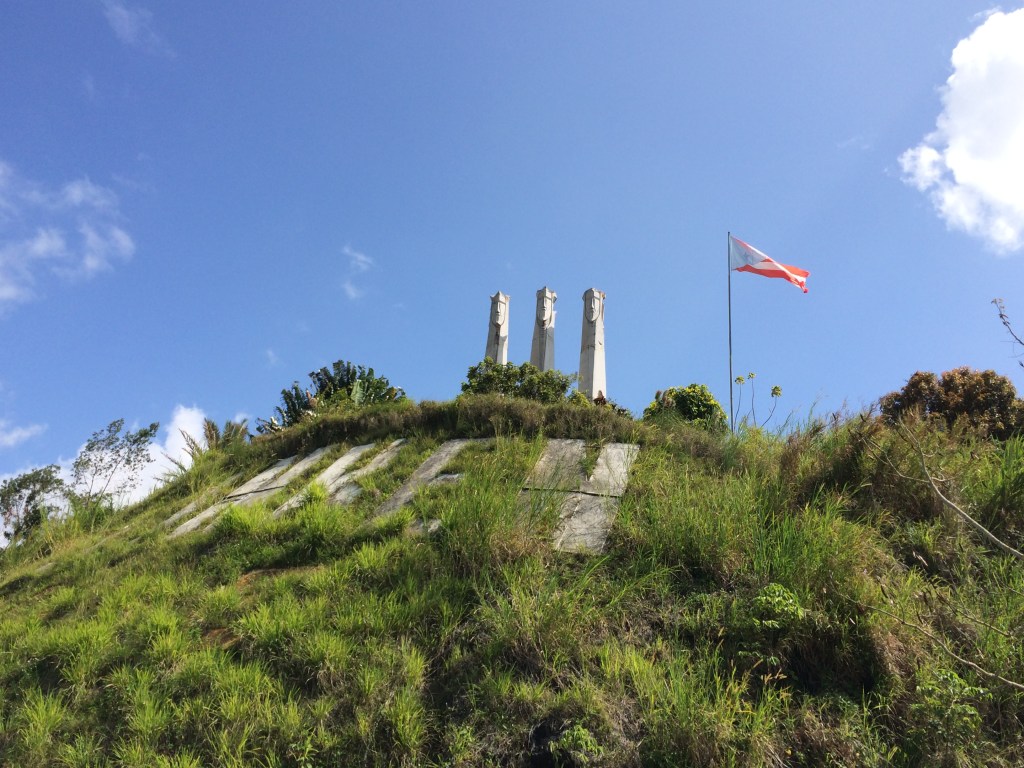
On the way south through the town of Cayey, you can find what some have called the “Pork Highway.” This stretch of mountain roads is filled with roasted pork eateries. The Puerto Rican diet is based mostly on pork, and roasted pork — lechón asado — is king here. At the bottom of the road, you can find The Hill of the Three Kings, a monumental sculpture to the Wise Men — or Three Kings — from the Christian tradition, who are said to have visited the infant Jesus at his home to bring presents of gold, myrrh, and incense. Christmas is long in Puerto Rico, starting with the USAmerican holiday of Thanksgiving (the fourth Thursday of November) and running through eight days after the Feast of Epiphany on January 6th. The celebration of the Three Kings — Reyes Magos — is the biggest Christmas party in the Island. A visit during this time of the year is highly encouraged.
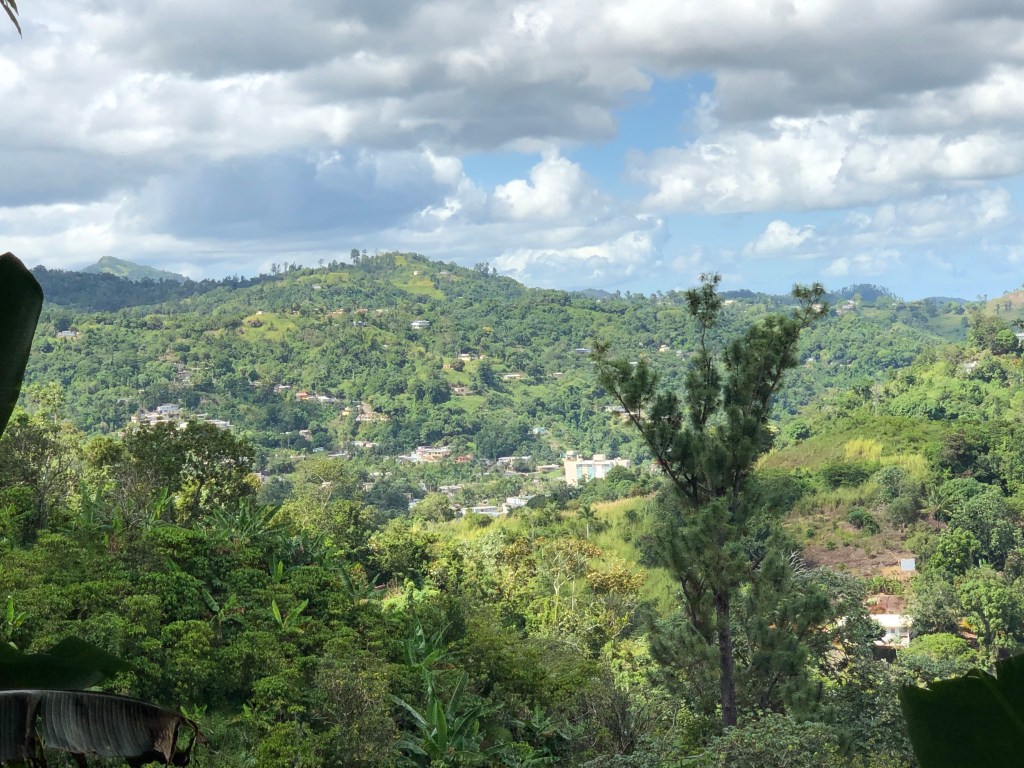
I was born and raised in the mountains, so this areas is very close to my heart. I already mentioned Lares, but there are so many other wonderful places to visit around the central mountains range. My hometown of Adjuntas has much to offer. Visitors can see the wonderful work of community initiatives such as Casa Pueblo, a world leader in advancing solar power for underserved communities. The organization also has other initiatives as a coffee farm, organic coffee production, a butterfly farm, and El Bosque del Pueblo, a forest that was reclaimed from the nation’s government and private hands who wanted to mine precious minerals at the expense of the rivers and creeks that run through the area. Moreover, my hometown has lakes, creeks, and rivers you can explore, and the second highest peak in the mountains, Cerro Guilarte, where you can spend a day of hiking. The municipal government also hosts a weekly folk art market at the main plaza (full disclosure, my sister is a town councilmember), and you can find the best bakery goods at a bakery on one side of the plaza while the best pizza in town on the other side. OK, I know I have spent a lot of time here, but I know and love my town, so I had to give it a bit more shout outs!
There are other wonderful places to visit throughout the mountains. Aibonito has the Festival of Flowers. For those who are religious, Maricao has a shrine to the Virgin Mary that is very well known. Las Marías hosts the annual Festival of the Sweet Orange. Jayuya has the highest point in the mountain range, Cerro Punta, the Museum of the Cemí showing indigenous artifacts, and you can hike down to a river with a pretty well preserved collection of indigenous petroglyphs carved into a big boulder known as Piedra Escrita (Written Boulder.)

In the south, the city of Ponce offers from much to visitors. The area of Serrallés Castle has the aforementioned “castle” — in reality, a huge mansion for the Serrallés family, who were early rum producers –, a Japanese Garden, and the Cruceta del Vigía, a lookout where you can catch a pretty impressive sight of the whole area all the way to some of the islands off the southern coast. The main plaza is also worth visiting. You can shop around the downtown area for folk art as well as for guayaberas, our traditional male shirts. The historic Fire Station is a jewel in the middle of the city. The Roman Catholic Cathedral of Our Lady of Guadalupe displays an ancient icon of this advocation of the Virgin Mary that comes from the town of Guadalupe in Murcia, Spain, from which the Mexican advocation takes its name and likeness. (Yes, the Virgin of Guadalupe comes from Spain. The story of the Mexican apparition is much later, and the advocation comes because the bishop who heard San Juan Diego first, saw in the image a Virgin that reminded him of his hometown.) The Museum of Art of Ponce is another jewel in the south, with the largest collection of art in all of the Caribbean. Still in the southern part, you can visit the beaches in Guánica, while also walking along the boardwalk right on the bay where the USA soldiers invaded the island. In Lajas you can visit, stay, and certainly eat, at La Parguera, a great beach neighborhood with a long history of fishing and community development. It is here also where you can witness the wonders of nature in their bioluminescent waters. If you are lucky enough to be there in a new moon night, you can take a boat to the area where these microorganisms make the dark waters look bright blue with their light.
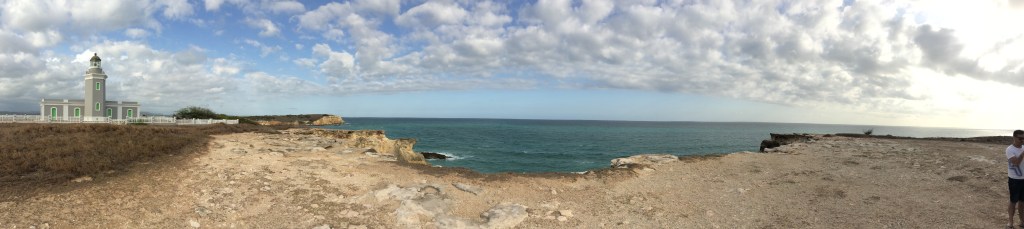
The western part has the town of San Germán, which is deemed the “Mother of Towns”, as it was from here that most of the south, central, and western towns and cities were established. There you can also walk through ancient stone roads, and look at colonial architecture still used today. The Porta Coeli, an important museum of religious art, is located here, as well as the oldest private, religious university in the Island, the Inter American University, which is affiliated with the Presbyterian Church, USA. Cabo Rojo is another beach town. As I said, I am not big on beaches, but Cabo Rojo has the only beach I actually like: Playa Sucia or La Playuela. To get there, you will drive through the salinas, a natural pool of salt water where salt is harvested, and which sometimes looks pink because of the microorganisms that overgrow here during certain times of the year. The cliffs by the old lighthouse are worth visiting, but with plenty of caution as many people have dater nature here, which is never a good idea. Mayagüez is the largest town in the western part. I had the chance to live here while in boarding school in high school, and college. The second largest campus of the University of Puerto Rico is here. The center of the town offers lost of entertainments yearlong, but Christmas is probably the best time of the year to visit Mayagüez. There are always parties on the main plaza, and lots of bars and restaurants offering live music — usually with local artists who might be students at the local UPR campus –, theater productions you can catch at the majestic Yagüez Theater. Rincón, a beach town next to Mayagüez, attracts amateur and professional surfers from throughout the world. The town just recently remodeled the park around the lighthouse, and you can come here to spend a relaxing time, dance to the live music, and catch a sight of the whales that come to this area every year.
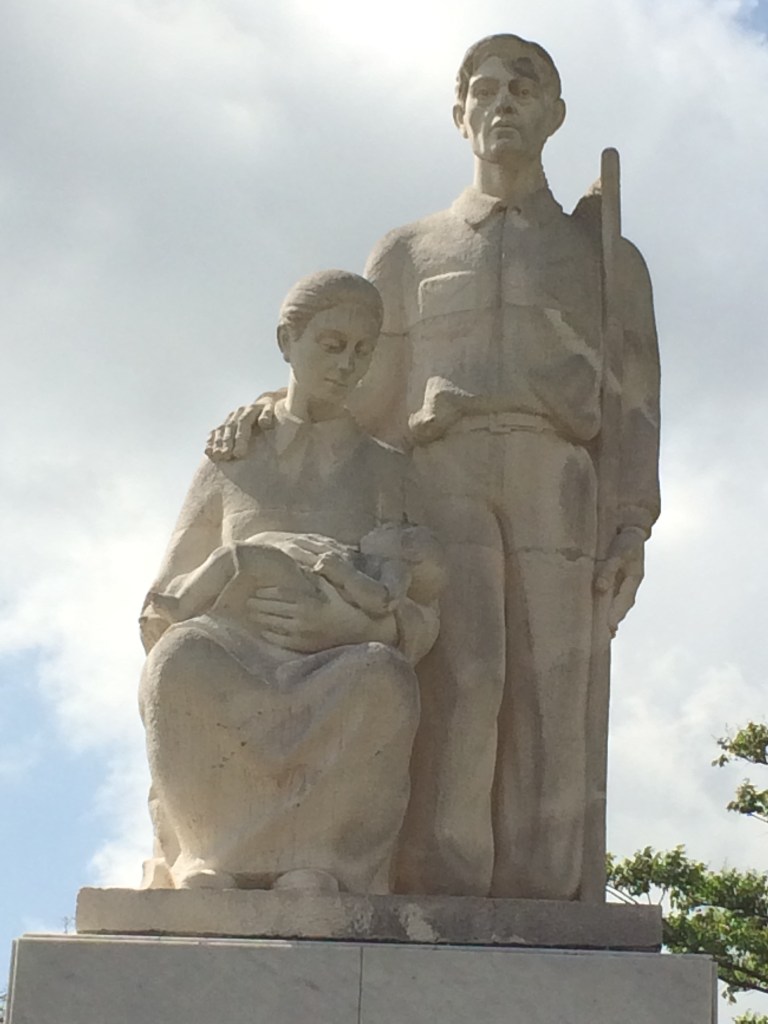
As you drive north, the cities and towns of Aguadilla, Isabela, and Quebradillas offer pristine beaches and a relaxing atmosphere. In Quebradillas you can also find the ruins of the old train that crisscrossed the Island. In the area of Guajataca, the old tunnel offers a pretty cool experience of stepping into history as you walk through it.
These are just some of my favorite places to visit in my Island! Of course, I had to leave so much more, which is equally beautiful. There are haciendas, and parks, and caves, and mountains to hike, and foods to try, and festivals to attend. As you can read, if your visit to the Island only consisted on staying in San Juan, you missed 99% of what makes Puerto Rico, the Enchanted Island of the Caribbean.
 SocioTheology
You must be logged in to post a comment.