Category Archives: justice

Traveling To Honduras this Hispanic Heritage Month

Hispanic Heritage Month is almost over. From September 15th through October 15th, the USA recognizes the history and contributions of the Latino/a/x community during Hispanic Heritage Month. This year, I wanted to share a bit about each country in Latin América where I had the chance to visit. My primary reason was to highlight those countries that are not as visited, but also to share some other less known places in tourism-high countries. Today, I want to share my experiences visiting Honduras.
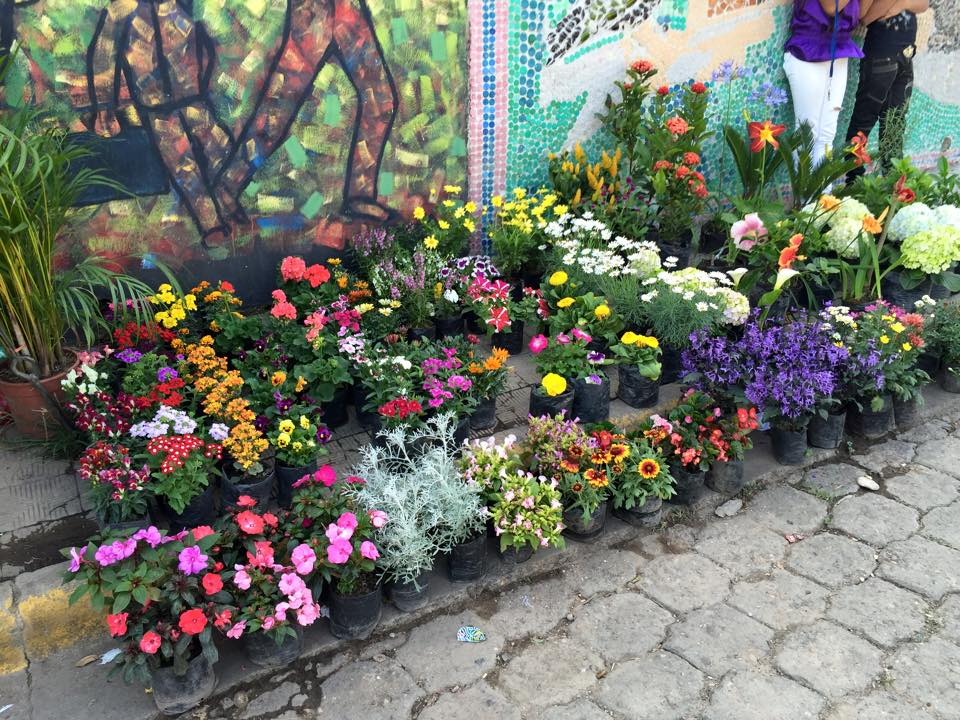
Nothing like the bright colors of the mercados of Latin América.

It is possible that what you have heard about Honduras is all related to violence, death, murders, drugs, and the political instability that feeds those social ills. Although it is true that Honduras has had a history of violence related to gangs and drugs, it is also true that the country is a beautiful place beyond the well known tourist destination of Roatán island.

I have been to Honduras twice. Both times I visited the capital, Tegucigalpa. My travels there were related to work: partnering with the United Nations HIV/AIDS Program, which at the time, was led by a good friend who has since passed. Visiting with a friend who lived there made a huge difference in how I experienced Honduras. However, this doesn’t mean that you will not experience a wonderful country if you go alone or as a tourist.

Tegucigalpa, or Teguz, as the locals call it, and Comayaguela, it’s twin city, are filled with surprises. Walking around the old town of Teguz was a great way to understand the people of the country. The streets are filled with stores, food vendors, and my favorite, bookstores! There is a small hotel district on the modern part of the city, where visitors can stay with low or no concerns about violence reaching them. (But always remember that all big cities have violence and crime, this is not exclusive to Latin American big cities.) The district has great cafés and bars which offer great places to meet locals and learn more about their culture. Every morning, I would walk to the little café near my hotel to get some delicious local coffee and just relax by taking in all the beauty of the district, it’s public art, and to watch as people made their ways to work, school, and engaged in their daily routines.
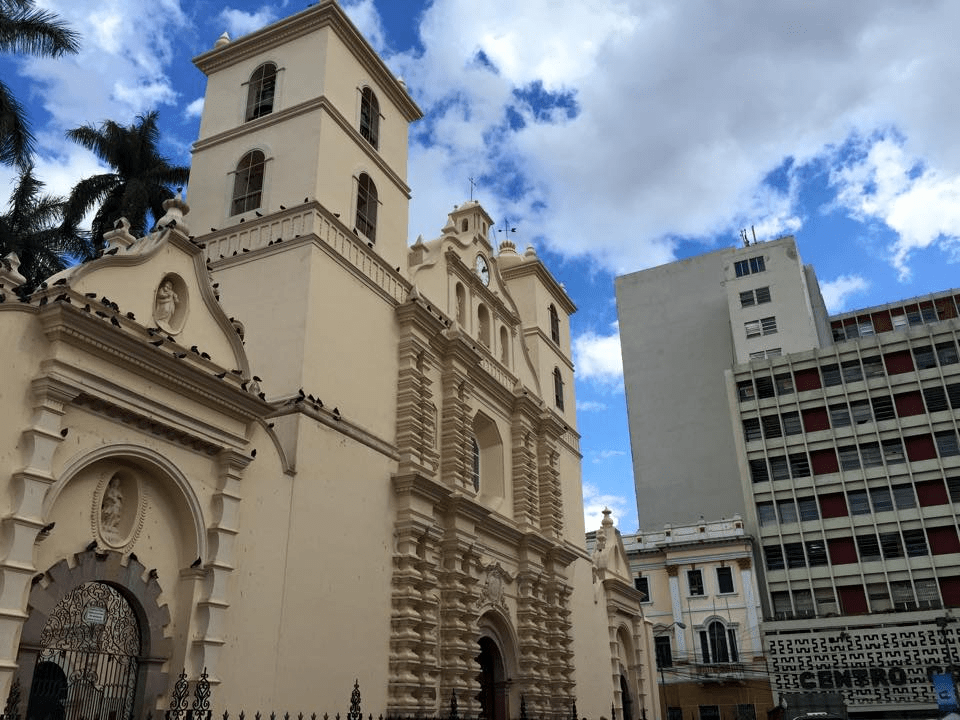
The ever-present contrast of old and new in Latin América.

The second time I was in Honduras, the people were hosting almost daily marches demanding their government to be more transparent and accountable to the people. Of course, I could not just stay by the sides while my siblings were doing the right thing, and I joined the marches and protests for a bit. This is not something I would encourage people to do, of course, as it could be very dangerous. But I was moved to doing it, and I knew I had the privilege of “passing” and not calling to much attention to my participation as a foreigner.

Visiting the mercados, or markets, should be on everyone’s list when traveling to Latin América. We visited a couple of them, and although I cannot remember their names or exact location, I do remember eating some of the best meals there. I was also excited to eat the traditional baleada, a must-have of the Honduran culinary tradition. It was also interesting to see the many fast foods restaurants dedicated solely to baleadas.

One evening, a small group of consisting of my friend, a few of her coworkers, and I took time to enjoy the nightlight. It was great visiting a local establishment with live music and dancing as well as good food. After this, we attended a wonderful concert from Honduran singer-songwriter Guillermo Anderson at the National Theater in Tegucigalpa. Anderson’s music spoke to my soul! He blends some trova with other traditional Latin American music, all with lyrics that speak to the reality of people’s lives, from falling in love to emigrating. I had never heard of Guillermo Anderson before this trip, and now I am obsessed with his music. His song “El encarguito” speaks of the yearning that we all have as we leave our countries and ask whomever can send something to us, to do so. Joining cultural events such as this are important when I travel because it shows me a side of the country which I would not know if I only stayed at hotels with no interaction with the arts scene of the places I visit.

Finally, I would highly recommend a day road trip to Valle de Angeles. This beautiful mountain town is a must-see for any person visiting the area near Tegucigalpa. Valle de Angeles is a quaint, rural town with cafés, craft shops, lowkey bars, and beautiful traditional Honduran architecture. It offers an opportunity to leave the hassle and bustle of the big city to join the quietness of rural life. The road itself is beautiful and a great way to experience a part of the country that very few get to experience. To my surprise, as we
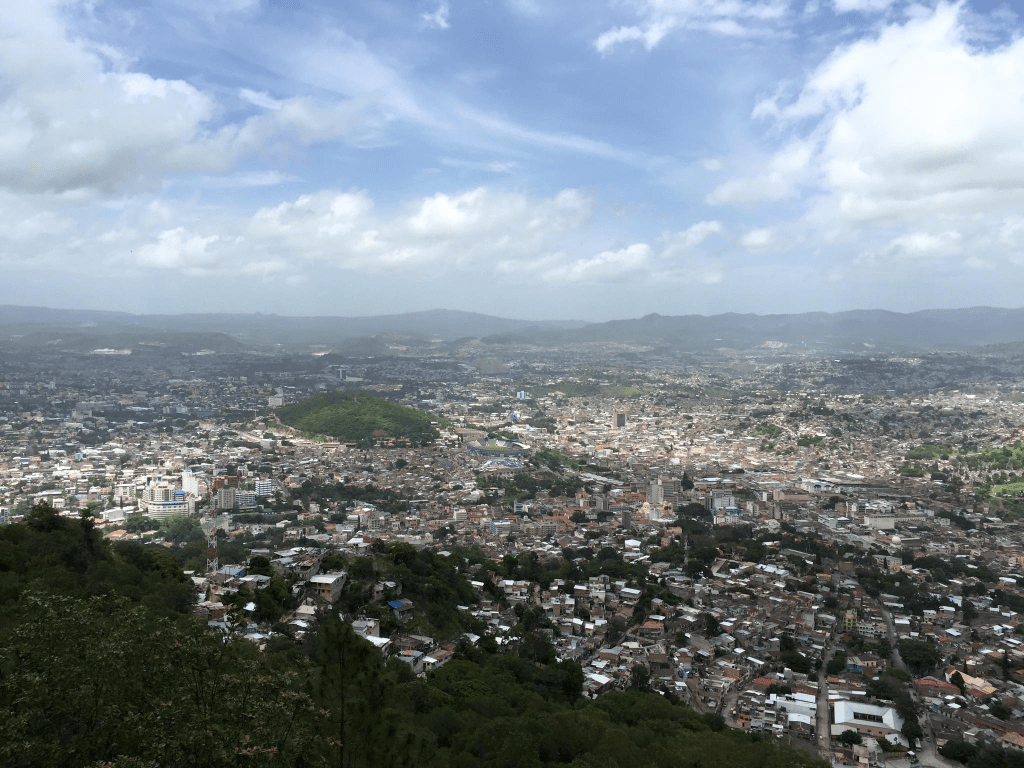
The sprawling city of Tegucigalpa.

were approaching Valle de Angeles, we ran into a Puerto Rican restaurant with very traditional dishes from the Island! A veteran who was at some point stationed in Honduras and married a local woman, decided to stay after service, and they decided to open this restaurant as their way to bringing a piece of home for him, while also generating income during their retirement. Their food was delicious!

Honduras is a beautiful country, with wonderful people and places to visit. It is a shame that people have listened more to the news than to the people of the country. Although I knew I had to take extra precautions while visiting, I also got to experience a country that is thriving with culture, nature, and natural beauty. I can’t wait to visit once more, and I hope you get inspired to visit it too.
Leave a comment

Filed under celebrations, cultural celebrations, Culture, ethnicity, Heritage, Hispanic Heritage Month, Hispanics, Hispanidad, Hispanos, History, Honduras, Identidad, Identity, justice, Latin America, Latinidad, Latino, tradiciones, traditions

Traveling With Quetzal This Hispanic Heritage Month – Guatemala

I want to continue sharing with you my experiences of traveling throughout Latin América this Hispanic Heritage Month. The countries I am sharing about are the ones I have visited, even if just once. Each one of them has their own cultures, their own cuisines, their own beauty, their own challenges, and their own histories. I don’t pretend to be an expert on Latin América, much less on the countries I have visited and only experienced a sliver of what they really are. I am not even an expert in my own country! But these are beautiful places I have visited and I wanted to share a bit of each one with you this Hispanic Heritage Month, in the hopes that it inspires you to visit places that you might have never thought of visiting.

Today, I take you to the land of the Quetzal: Guatemala. The Quetzal is a small bird endemic to certain parts of Central América. Unfortunately, the bird is endangered, and their numbers continue to dwindle. They are also very shy, and in all the years I have visited Central América, including the areas where the Quetzal is present, I have never seen one in real life. That does not take away from the reality that Guatemala is beautiful, full of history and wonderful things to experience, from its culture to its delicious cuisine.

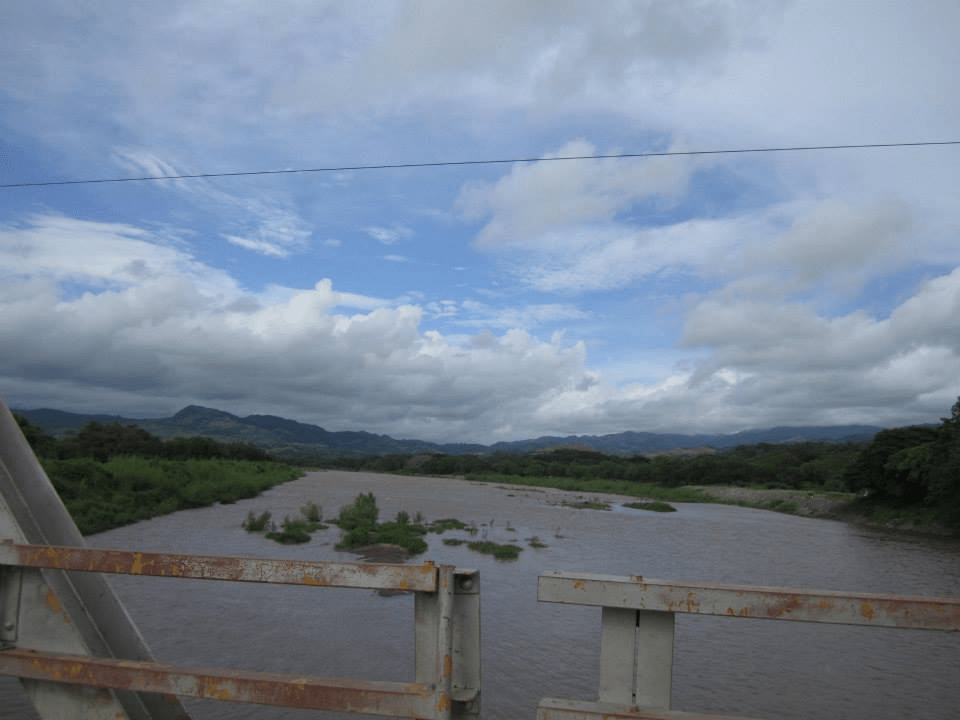
My first visit to Guatemala was by car. I was visiting a friend in El Salvador, and we decided to drive to Guatemala for a long weekend. This was the first — and so far, only — time I crossed a land border in Central América. I drove through the southern part of El Salvador, entering Guatemala through the Hachadura entrance, crossing the Río Paz. This is a border entrance mostly used by trailers, and it wasn’t until almost an hour when I realized that I could’ve skipped the line of trailers and enter through a second gate for passenger cars. The process was different than entering and exiting the land border between the USA and México or Canada, both of which I have crossed in the past. Here, I had to leave the car and

The Río Paz border between El Salvador (right) and Guatemala (left.)

present my passport and pay the entry fee inside the customs and immigration building. Once over the other side, a few miles away from the border, we were stopped and our car searched. Again, a different experience. But the border patrol was really nice and, although I had to pay an extra fee — wink, wink — at the border crossing, the border patrol who stopped us didn’t ask for extra payments. They were curious about the binoculars I had and the Swiss knife I was carrying. Thankfully, they didn’t seize them and we went on our way.

It was fun driving through a country for the first time. We passed several small and large villages and towns, taking in all the beauty of the country. At last, very late at night after I got lost, we entered Antigua Guatemala, the most visited tourist city in the country. Antigua is, without a doubt, one of the most beautiful cities I have ever visited. The first time I was here, with my Salvadorean friend, we visited several churches and ruins, taking in all the history of this previous capital of the former Captaincy General of Guatemala from which many of the administrative business of Central América took place during colonial times.

This first time I visited was during low tourism season, which is honestly the best to visit. The city only had a handful of tourists, and pretty everyone was local. We visited a bar in the main square, and got to chat with the other two people at the bar. It turned out to be a couple of friends, one local to Antigua, and her friend from Perú was visiting. With the only bartender being the other person there, we had a pretty cool, international group: two Guatemalan women, a Peruvian man, a Salvadorean man, and myself, a Puerto Rican man. Central América, the Caribbean, and South América coming together to enjoy some delicious Guatemalan rum.

More recently, I went back to Antigua, as my husband and I visited Guatemala for my birthday last September 2022. The city was as charming and as beautiful as always and my husband was also enamored by the city and its charm. The history of this city is worth learning, as well as taking the time to

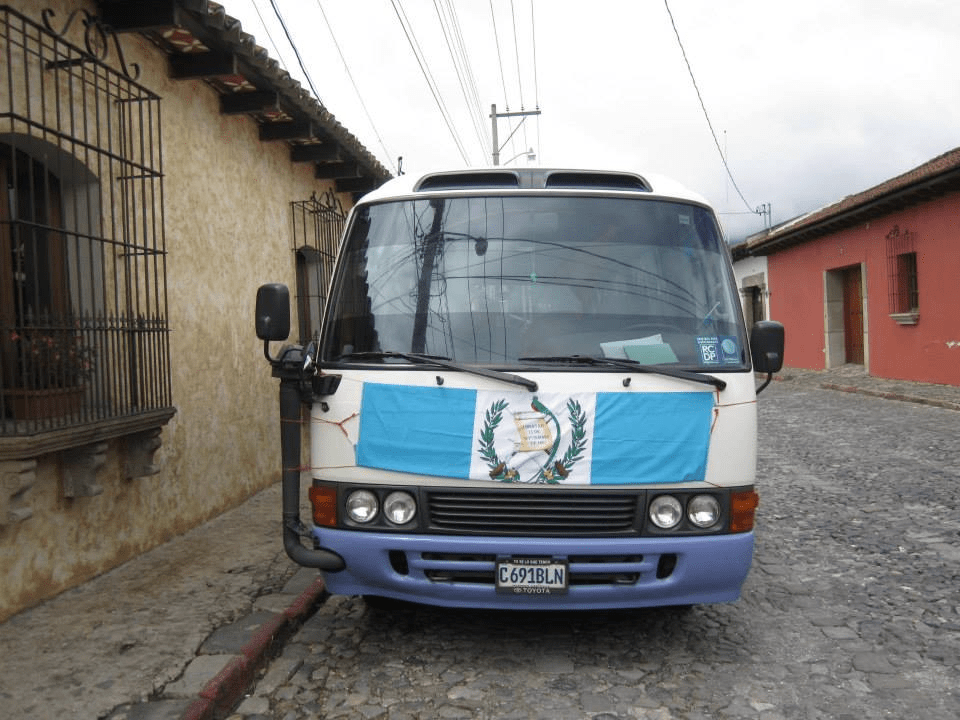
Proudly displaying the national flag on a passenger bus in Antigua Guatemala.

explore every inch of the place. Of course, the food here is like in no other place! From the local carts selling all sorts of delicious traditional Guatemalan snacks to the international restaurants with five-star chefs from around the world! I can still taste the delicious French dishes I ate here, better than at any French restaurant I have visited in the USA thus far.

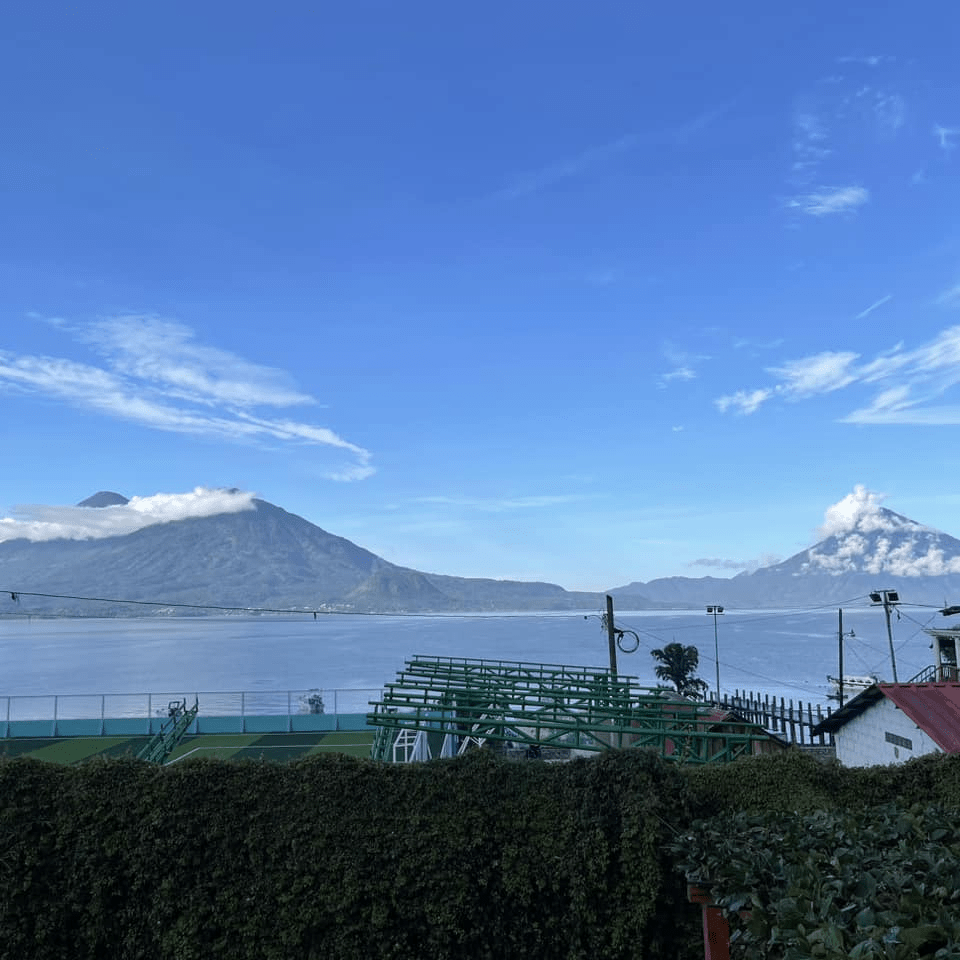
When I returned to Guatemala this past year, our first stop was not Antigua, though. As soon as we stepped out of the airport, we rented a car and drove to Santa Catarina Palopó, a tiny village on the eastern side of Lake Atitlán in the center of the country. The lake itself is beautiful, and the small village was the perfect place to relax and disconnect from the hustle and bustle of work. The village also has a coffee museum, which for me, having grown up in a coffee farm, was wonderful to experience. Santa Catarina also has, like most of Guatemala, a strong Maya identity. This was something that both my husband and I enjoyed, as he is of Maya Yucatec descend. Although their dialects differ (and my husband doesn’t speak Yucatec Mayan, just knows a few phrases and words), there are cultural ties that made this place feel like home for him. The huge window in our room also looked right into the lake, with the tall volcanoes on the other side of the lake. Waking up to this beautiful view was extraordinary. From here we also visited the slightly larger and certainly busier town of Panajachel, where you can walk a couple of miles through their open market and buy all sorts of knickknacks and delicious traditional foods. Our visit to Panajachel was met with a torrential rain that lasted for over an hour, and trapped us at a snacks and beer cart on the boardwalk by the side of the lake.

The view of Lake Atitlán from our hotel room in Santa Catalina Polopó.

An unforgettable experience driving to Santa Catarina from Guatemala City happened as we traversed all the roads with huge mountains on one side and cliffs covered in coffee trees on the other. I am very used to driving through roads like this, as it is very similar to where I grew up. Unfortunately for my husband, this is not what he is accustomed to and he was terrified. At some point, we came to a river — or what would be considered a large creek in the USA — and there was a signed telling drivers to be careful, as the bridge had fallen and cars must cross the river. My husband looked at me terrified and ask, “what are we going to do now?” To which I responded: “We drive through the river!” And off we go! Again, this was not the first time I had driven through a river, and it was just a great and unforgettable experience for us both.

On our way back, we took a slightly different road — although we had to cross the river again — in order to visit the archeological ruins of Iximche. As I drove by, we came to an unfinished road with a gate and a tiny space open on the side. The GPS said that was the route, so we were a bit lost and curious on how the heck we were going to get to the ruins through here. We first asked a kid who walked by and he said the keys to the gate was kept at a neighbor’s house and we should walk there to ask them to open for us. Still perplexed on how we were going to continue our journey, we suddenly saw a small passenger bus drive through the small opening on the side of the gate. I wasn’t sure if this was private property, so I didn’t know if we could go through. But we saw a woman carrying some wood and her kids walking towards our side of the gate and asked her about the route to Iximche. She confirmed we were on the right path, and that everyone has to cross through the small opening next to the gate. We did… and about 30 minutes later, we were at the archeological ruins.

I highly recommend visiting places like this archeological site. The place is a beautiful park for everyone. There is a little museum where you can learn about the Maya culture and the history of the place. Besides, this is so out of the tourists’ path, that you will find yourself as the only non Guatemalans there. It was wonderful!

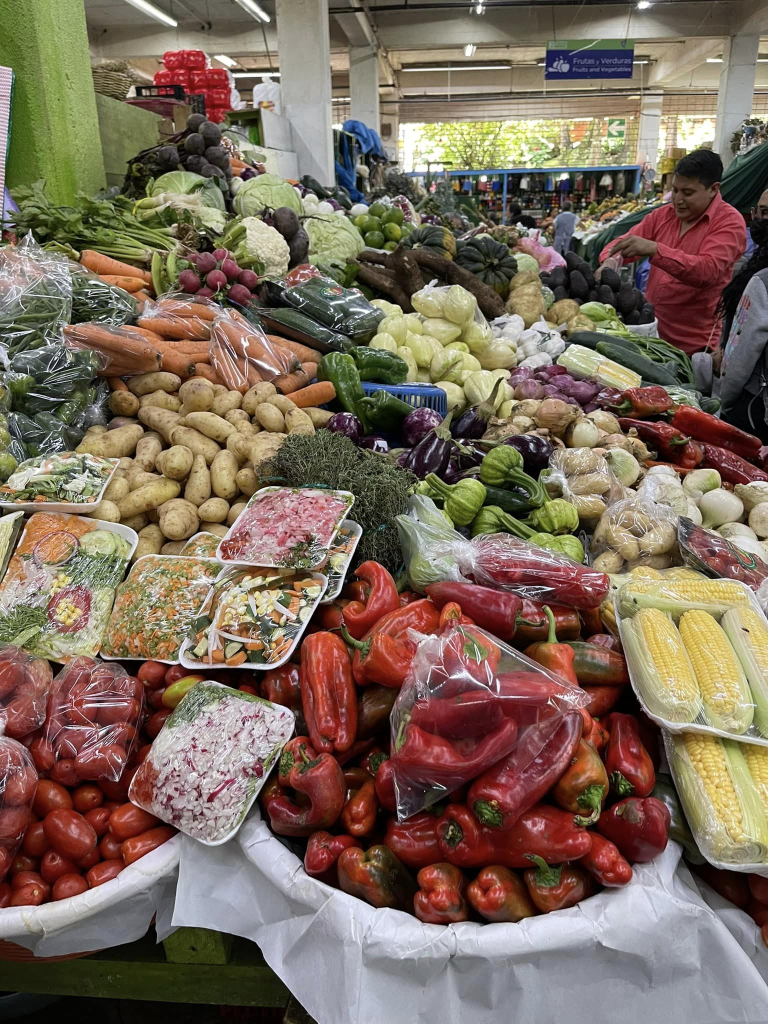
The bounty you can find at the central market in Guatemala City.

From here we went to Antigua and after a few days at the city, we headed to Guatemala City. Guatemala City is, like most Latin American capitals, a city of contrasts. There are the rich suburbs with the people who, belonging to the place, do not feel like they are from there but want to control the lives of those who are. The poor areas where people survive in whichever way they can. The modern areas where poor and rich mingle; some selling stuff and other buying stuff. There is the central market, where you can see the largest carrots ever grown by human — well, at least in my view — and the most beautiful, organic fruits and vegetables you can imagine. You also can also see the beautiful and creative folk art, clothes, and shoes. This was the second time I visited Guatemala City, and can say that I really like this place.

There is one thing about Guatemala for which I highly admire the country and its people. While most of Latin América continues to produce coffee for the international market while falling prey of the Nescafé ruse to strip us from quality coffee and replacing it with the chemical concoctions that are instant coffees, Guatemala has hold on to their real coffee. As one of the staff told me husband when he asked about instant or at least decaf coffee at the hotel in Santa Catarina Polopó: “Here, throughout the country, we only serve quality coffee. You will not find anything of low quality like decaf let along instant coffee anywhere on these lands.” As the proud son of a former coffee farmer, that makes Guatemala one of my favorite places to visit.

Leave a comment

Filed under celebrations, cultural celebrations, Culture, ethnicity, Guatemala, Heritage, Hispanic Heritage Month, Hispanics, Hispanidad, Hispanos, History, Humanity, Identidad, Identity, justice, Latin America, Latinidad, Latino, Racial Relations, resistance, Social Movements, Sociology, tradiciones, traditions

The Next Destination This Hispanic Heritage Month: Panamá!

As I continue inviting you to explore the places I have visited in our beloved and beautiful Latin America this Hispanic Heritage Month, I want to bring you with me to Panamá.

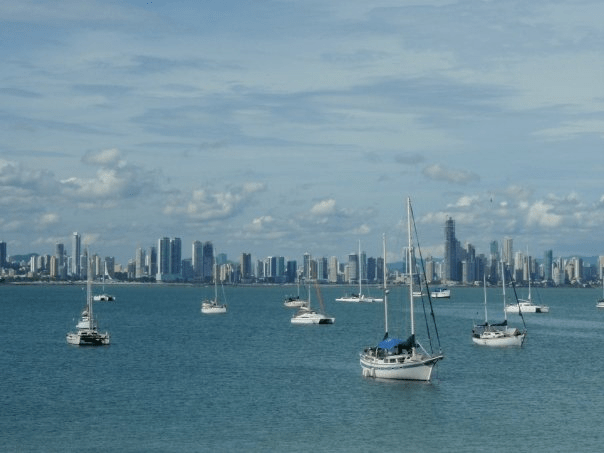
A view of Panamá City from the isthmus. The contrast of modernization with tradition is everywhere in the city.

It is possible that the only thing you know about Panamá is the canal. The Panamá Canal crosses the country north to south, opening a waterway for large container ships to cross from the Caribbean Sea to the Pacific Ocean. The Panamá Canal is quite significant for various reasons. First, because ships no longer have to do the difficult navigation around the southernmost point in the continent through Tierra del Fuego, to reach the Pacific Ocean from the Atlantic. Second, because it helped in cutting Panamá from Colombia, from which it was a department prior to its independence. Third, because the canal was USA territory until 1999, and thus, is another palpable reminder of the way in which the United States have had an overarching presence in Latin American affairs. Finally, the canal is also the big scar that divides the American continent, physically cutting the north and south parts of the large landmass that is América.

I have only visited Panamá once. My mentor, friend, and second mother, whom I met while she was a professor at the university I attended, lives there. Her ties to Panamá are strong. When she attended the same school she eventually taught at, she met the father of her sons, who was at the time, an international student from Panamá. Her sons were born there, and currently, her surviving son’s children live there. It makes sense for her, already retired, to live near her grandchildren and son.

A while ago, I decided I wanted to visit her. It had been quite some time since the last time I had seen her, and I felt it was right for me to visit as she had already traveled to visit me while I lived in NYC and she was in Pennsylvania. I also wanted to meet her son, as I consider her a second mother and it would’ve been great to meet my quasi-brother. Up until that time, Panamá had been a layover stop on my way to other Latin American countries. In fact, I had never stepped out of the Tocumén International Airport in Panamá City before. Thus, I didn’t have any expectations from the country, other than meeting my mentor and friend.

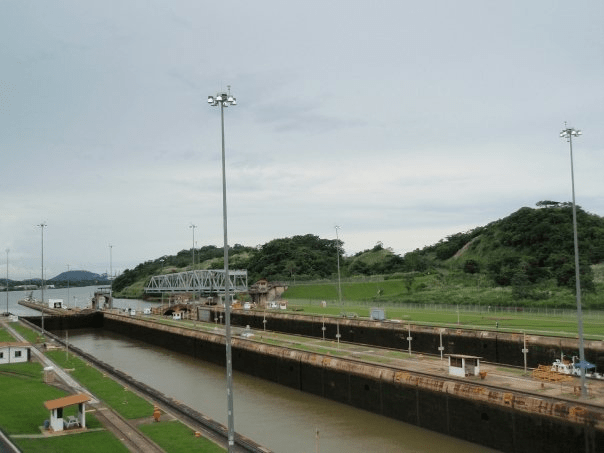
The Panamá Canal is the link between the Atlantic and Pacific Oceans.

What I discovered was way more than a beautiful Latin American country! I discovered a country with a complex history, wonderful people, delicious cuisine, and an accent that was so close to my own that I always felt at home.

My friend is a lesbian activist, and as such, I had the chance to connect with the LGBTQ community in Panamá and experience the country through their eyes.

The most significant experience I had in the country, was a visit to the Kuna or Guna people. The Guna are one of the surviving indigenous peoples who the colonizers were not able to erase. Like many other indigenous cultures from around the world, the Guna do not have a strictly binary gender system. In the Guna communities there is a third sex, the “Wigudum”, who play an important role in their societies.

When I visited with the Guna, I had the wonderful opportunity to meet some Wigudum people. Some of them were concerned because, although they had been accepted by the majority of their communities, US-backed Evangelical churches were growing in their communities. This meant that US puritanical and hypocritical mores were being spread throughout their communities, including the marginalization and demonization of the Wigudum. Moreover, the hypocritical aspect of the US puritanical moral code was using Wigudum young people as sex objects in private while rejecting their humanity from the pulpit. At the time, I was serving in parish ministry, and although the church I served is a very progressive congregation, I couldn’t get the guilt off of me. Modern, US Evangelical Christianity is annihilating a culture that survived millennia of colonization.

Still, visiting with the Guna was the most beautiful part of my visit to Panamá. They did not perform for me as a tourist. They did not put on a show to entertain me. I didn’t act as if I knew more than them about their country, their culture, or their struggle. I visited with humility and an open mind, hoping the learn from and with them, even if for just a few hours. I highly recommend connecting with indigenous communities, if possible, when visiting any Latin American country in which there are indigenous communities. Visiting with them will offer a better understanding of their culture, their history, their current realities, and the damage that colonization continues to do.

Sharing with Guna people was the highlight of my visit to Panamá.

Of course, I had the chance to visit the Panamá Canal. It is an impressive view. Watching the huge vessels travel through this intricate piece of engineering is really a sight. It is also an interesting experience to visit the canal zone. The canal was transferred back to Panamá as it was always intended, in 1999. Since then, Panamanians have moved to the zone, while some service members from the USA have also stayed. It is an interesting reality worth witnessing.

The final place I would suggest visiting in Panamá — of the places I visited, because I cannot speak for the whole country — is the old town. Contrary to other old towns throughout Latin America, Panamá’s is small and not well maintained. The structures are crumbling, and they reminded me more of Havana than San Juan. The ruins of the old city are also nearby and they are an interesting place to visit to learn more about Panamá’s development. I am not sure about the rest of the country, but Panamá City is a sprawling experiment on US capitalist development. Huge skyscrapers are being built everyday. Hundreds of housing units unreachable for locals are being sold to international investors with no intentions to help the people of the country. However, since infrastructure is still lacking, water barely reaches the units beyond the third floor, and power outages are very common.

Visiting Panamá was a great experience for me. It showed me both sides of Latin America: the side still connected to our ancestors, cultures, and traditions, and the side that is the unsuspected victim of globalization and US imperialism. As a Puerto Rican, it was a great way to know that my people, my Island, are not alone in suffering the impact of invasive US imperialist policies. As the late Panamanian poet Dimas Lidio Pitty once wrote:

Panamá, my beloved land

wounded by the many pains

tomorrow, without invaders

an Eden under the sun you shall be.

Leave a comment

Filed under celebrations, cultural celebrations, Culture, ethnicity, Heritage, Hispanic Heritage Month, Hispanics, Hispanidad, Hispanos, History, Human Rights, Humanity, Identidad, Identity, justice, Latin America, Latinidad, Latino, Panama, race, Racial Relations, racism, Recuerdos, resistance, Social Movements, Sociology, tradiciones, traditions, trans, transgender

Celebrating Hispanic History Month? Read This!

Hispanic Heritage Month starts tomorrow, September 15th through October 15th. It was set during this

time as many Latin American countries celebrate their independence sometime during that period. (But not ALL countries do, and my own country, although part of Latin America, it’s still a US colony, so no independence yet for us.) Here are a few notes for those of you who want to observe this celebration in your agencies, groups, churches, clubs, etc.:

– The name of the heritage month is “Hispanic” Heritage Month. We didn’t select it, it does not represent the entirety of the communities, and not all Latinos are Hispanic, etc. …. BUT… it’s the name of the month as it was instituted by the USA federal government. Don’t come up with other names that do not represent the history of our struggle and the history of how this heritage month came to be. That doesn’t stop all of us from advocating for a change. Using the official name as it is right now just helps maintain a connection with our past as we move forward. The most important thing you can do is to add descriptions of the communities you want to celebrate. For instance: “This Hispanic Heritage Month, our agency wants to highlight the contributions of Indigenous and Black people of Latin America by offering x, y, z.” Hopefully, one day — and as a result of our collective advocacy — this will be “Latin America Heritage Month.”

– Although all Mexicans are Latinos/as/xs not all Latinos/as/xs are Mexican. This is the most visible ethnic Latin group in our region, but we can say something similar, with other communities, in other locations. Please know that our community is diverse. When you organize your agency’s HHM celebration around one cultural tradition only, you are telling me two things. First, you don’t care about me as a Latino with roots in a different culture than the one you’re highlighting. Second, you don’t know much about our communities or your own communities, where people might come from any of the many Latin American countries.

– Please, make your celebrations as broad and inclusive as possible! Not all Latin people speak Spanish. Some Latin folk speak English as their primary language. French, Creole, Portuguese, and hundreds of indigenous languages are also Latin American languages and cultures. Keep that in mind, especially when trying to highlight the communities in your area. Don’t patronize us by haphazardly translating things into Spanish with Google translate. Also, be carful with asking a heritage speaker to do the translation! Spanish alone has so many dialects, and many heritage speakers learned from their parents who might not have had the opportunities to have formal education, and thus, do not know the intricacies and nuance of the different dialects. Usually, they have very regional dialects which might hinder clear communication with people from outside their regions. Moreover, heritage speakers — who must be celebrated for their work to preserve the language — are most familiar with spoken Spanish, and not with written Spanish. Celebrate diversity in speech and dialects, but also recognize that there is a standard version of one of our languages — Spanish — that is understood across dialects. Only professional translators who have spent their professional lives doing this will produce good content that is understood across cultures. I also know of a at least another Latin American language, Mayan, that also has many dialects, some of them not even mutually intelligible. So, only translate things when it makes sense for those things to be translated.

– Our music is as diverse as we are. Salsa, tango, merengue, cumbia, bachata, reggaeton, rock en español, plena, and myriad others. Don’t rely only on one type of musical style. HOWEVER, keep in mind that some genres of music — reggaeton which is one my favorite styles, so don’t take this as a negative comment on the genre, and Spanish trap, for instance — contain words or phrases that might be extremely offensive or very vulgar in some dialects. Please vet your music selection with people who speak the dialect of the musician. This way, you will have music that is inviting, instead of having music that might be liked by some people while being offensive to other audiences. Don’t play the music of the popular artist just because they just modeled for Vanity Fair (ha! Some of you will get the reference… and also, I love BB’s social commentary and some of his music, so don’t come for me. I am just using some general examples.) Every time I hear reggaeton music with vulgarity in its lyrics playing at supposedly “family friendly” event sponsored by an organization, I know the people there do not know my dialect and the cultural nuance of the use of curse words and vulgarity across different Latin American cultures. Again, vet your music selection with the people who speak the dialect of the singer.

– Look for as much representation of Latin American cuisine as possible! Generally speaking, south of the middle of Central America, no Latino cuisine uses hot spicy chiles! Perhaps your Argentinian best friend loves hot spicy food, or your Cuban spouse does; but that doesn’t mean Argentinian or Cuban cuisines are spicy hot cuisines. The staples of our cuisines vary also. Of course you are very familiar with the Mexican tortilla. But, did you know the Central American tortillas are thicker and don’t compare with the Mexican ones? Did you know that plantains are the staples of Spanish and Black Caribbean cuisine and that we never, ever use tortillas in our dishes? Did you know that in most South American countries bread is king? Also, find local Latin American restaurants of ALL types of cuisines, not just one. Around the area where I live in Pierce County and south King County in the state of Washington, for instance, there are Peruvian, Puerto Rican, Salvadoran, Argentinian, Colombian, Guatemalan, and Honduran restaurants. Order from them!

– Latinoness does not equal immigration. Do not center your events only on immigration issues! Sure,

that is the biggest reality of our community. But Puerto Ricans are Latino/a/x and we — on paper — do not face this challenge. Cubans and Venezuelans also do not face these challenges in the same way. Tejanos, Californios, Nuevo Mejicanos… and many other groups of Latin folk from the lands stolen from México are as Latino/a/x as we are and they do not face immigration challenges. Expand the issues you work on and you highlight in your celebrations. We have other challenges as well, such as lack of access to well paid jobs, racial and ethnic discrimination, anti-Blackness, lack of access to stable housing, etc. Additionally, we are not our challenges! We have contributed tremendously to USAmerican culture from the very beginning. Celebrate ALL of our contributions also, and don’t see us merely as recipients of your charity.

– Latinidad is not race. Mestizaje is not the only expression of Latinidad. Indigenous peoples are still here and thriving throughout Latin America and many of them here in the USA in spite of the many ways we have tried to erase them and their cultures. Black Latinos/as/xs exist… and they come from every single country in our beloved continent. Highlight their influence, their contributions, their resiliency and their Latinidad! Asian Latinos/as/xs also exist! Their contributions to our histories, cuisine, cultures, music, etc., is undeniable. Plus, Asian-Latino cuisine is the best. Ask any Peruvian! Don’t hide this rich history! Latin folk of Arab and North African heritage also exist! And when it comes to religion, at least two Latin American countries are almost majority Evangelical/Protestant: Guatemala and Puerto Rico. Don’t assume we are all familiar with Roman Catholic traditions and rituals. Almost half of Latin folk in the USA are Protestants or Evangelicals, and there are many, MANY Latin folk of other religious traditions: Jews, Hindus, Buddhists, Muslims, Spiritists, Santeros, Vodoo practitioners, atheists, agnostics, and everything you can think of.

– This note is for my Latino/a/x siblings: pay attention and be in solidarity! Who is not being represented and who is being left out? Are you an advocate for ALL of our cultures and traditions? Are you calling folk in to reflect on how they have centered only your or my culture and not the cultures of the other Latin folk who live in our communities? Speak up and advocate for each other as you also celebrate your own individual cultural heritage. It’s all about celebrating our diversity, not helping the people and institutions with power blend us into one thing. Make ’em learn about us! Don’t conform to their expectations!

– When in doubt: ASK!!!! Ask your colleagues what would be meaningful for them. If they are all from one single heritage, honor that and also, seek out others in your community from other cultural backgrounds so you can be more inclusive. We LOVE sharing our traditions, our stories, our cultures, our foods, our memories of back home, our histories, etc. Invite us to be partners in the celebration, and don’t do something for us, do it WITH us.

Have a wonderful celebration of Hispanic Heritage Month and remember we are still here after October 15th!

Leave a comment

Filed under Afro-Latino, celebrations, cultural celebrations, Culture, Español, ethnicity, familia, family, Heritage, Hispanic Heritage Month, Hispanics, Hispanidad, Hispanos, History, Humanity, Identidad, Identity, immigration, justice, Latinidad, Latino, race, racism, Sociology, tradiciones, United States, USA

The Lazy Spic

10400503_18166125619_9115_nYesterday I worked a twelve-hour workday. The day before I had worked for thirteen hours straight. The day before was nine hours. I had taken exactly two days off in four months since I started my new job. I have worked on weekends and even when I have given my staff a day off, I have gone to the office or worked from home to finish a project or start a new one. My staff is always supportive and they have, on more than one occasion, asked me to take it slow, to pace down, and even encouraged me to take a day off. The Board of Directors of my organization expects me to work hard, but they have also encouraged me to practice self-care, to take time off, and to work at a healthy pace. I can show you emails, texts, and social media messages I have gotten from staff and Board members encouraging me and reminding me of practicing self-care. Yet, I continue to work.
Why do I do this? Sure, I love what I do. I thoroughly enjoy administration, management, strategic planning, and all that comes with this. But there’s a second, equally important reason why I work so much… and it is not because I am a workaholic.

The first new world in learned when I moved to New York City in 2000 was “spic.” There was a definition attached to this term. The spic is a lazy person; they live off of government handouts, they despise work, they are irresponsible, the have moved in droves to New York City and had made the space less livable, less desirable, less safe. The spic didn’t speak English and didn’t want to assimilate to the evidently superior “American” culture.

People – especially USAmericans – have been enraged with President Trump’s comments about how Puerto Ricans have not done enough to help ourselves in light of the major natural disaster we have just experienced. For Trump, we are lazy people who do not want to work collaboratively. This is what he was taught about our community in the New York City of his early childhood. For the USAmerican public, for the most part, these are atrocious accusations. For the Puerto Rican community, these are just the same comments we’ve been hearing since our community started migrating to the mainland in the 1950s.

Although I commend and welcome the rage that Trump’s comments have sparked among my USAmerican friends, you must understand that his comments are not made in a vacuum. Trump is talking about the lazy spic that I have been told I am.

As a Puerto Rican living in exile, you are taught that you are part of a group of people who are, at once, “job stealers” and “lazy people.” How is it possible that we steal “American” jobs and don’t work enough at the same time, I have no idea.

Perhaps for many of you it was a surprise that the President of the United States depicted the people of Puerto Rico as lazy people who do not help ourselves. However, this is what we have heard as a community since the 1950s when our people started migrating in droves to the USA due to the economic realities of the Island cause, precisely, by the USA’s policies towards its colonies. It is this message the one that is still ingrained in my head, to the point that I work and work and work, lest someone accuse me of being lazy and not doing enough.

This is not something I am making up. Neither is this something that happened a while ago and certainly not in so-called “progressive” spaces. On the contrary. This thinking that Puerto Ricans, and Latino people in general, are lazy is still alive. Take, for instance, what happened to me for four years while I served a progressive congregation in one of the most so-called progressive cities in the USA. A woman who self-appointed as the leader of the church would call my office at random hours of the day, just to check that I was there, just to make sure I had come to the office that day. She wouldn’t want to talk to me. She just wanted to make sure that I was there. Her excuse was that she had heard I had not been active in the community, or doing enough home visits to the folk in the congregation. She used her self-appointed status as a leader of the church to let me know that “there were concerns” in the church that I wasn’t being effective. Of course, like any good oppressor, she couldn’t notice the flaw in her argument: I had to be in the office so I could demonstrate that I was doing my job of being in the community and visiting folk.

When you are confronted with this reality every day, you learn to navigate the system. You know that you must be perfect, perform beyond what people’s perceptions of your abilities are, and work twice as hard as anybody else. No wonder the great Nuyorican poet Pedro Pietri wrote about our community:

They worked
They were always on time
They were never late
They never spoke back
when they were insulted
They worked
They never took days off
that were not on the calendar
They never went on strike

without permission
They worked
ten days a week
and were only paid for five
They worked
They worked
They worked
and they died
They died broke
They died owing
They died never knowing
what the front entrance
of the first national city bank looks like

Juan
Miguel
Milagros
Olga
Manuel
All died yesterday today
and will die again tomorrow…[1]

[1] Pedro Pietri, Puerto Rican Obituary, 1969

1 Comment

Filed under Culture, ethnicity, Heritage, Hispanics, Hispanos, Human Rights, Identity, justice, Puerto Rico, race, racism, resistance, Sociology, United States, USA

I March For My Niece

My niece, Emely, is nine years old. She is bright, and funny, and loves to read, and loves math, and wants to become a singer and actress. A couple of years ago she had a list of books she wanted me to buy for her. Of course, as a bibliophile, I complied and bought all the books she asked me for and more. When I visited her again, she told me about one of the books I had given her.img_7249

I still remember when Emely started school. Since Emely grew up in a Spanish-speaking household, when she started school she didn’t speak English. She learned the language from her teachers and her classmates. On one occasion, when I asked her to speak Spanish with us and use English for other conversations in order to help her stay bilingual, she said something that shook me to my core. “Spanish is UUUUGLY!” she said. With a heavy heart, I asked her why she said that. She said that everyone in school said it. Spanish is ugly. English is beautiful.

I have talked with Emely about the importance of learning as many languages as she can. I have told her about the importance of using both English and Spanish to communicate, and to take any opportunity she might have in the future at school to learn other languages. I have told her how proud we are of her. I have continued to make sure that she is proud of her Mexican heritage and that she understands what it means to be a USAmerican too. I have shared with her my own Puerto Rican culture and heritage and have encouraged her to adopt what she might want to adopt from it. I have shared with her how wonderful it is to have a non-traditional family, and what a blessing it is that she has a wonderful, supportive, caring mother, and two dads, and so many uncles and aunts, and siblings who live in different homes, and a madrina and a padrino who care deeply for her.

img_7149Today, as a white supremacist, xenophobe, and sexual predator took the oath of office as President, I worry about Emely and her future as a Latina woman growing up in the USA. I know I cannot protect Emely or her brother all the time. I also know that her parents’ immigration status prevents them from providing all the protections that she – both of them, my niece and my nephew – deserve. But there are some things I can do. I can join the RESISTANCE and stand up for my niece.

And so, Emely, I will march tomorrow, Saturday, January 21st. Emely, I will answer the invitation from other women around the USA and the world to stand up to injustices against women. Even though you might be too young to understand, I will march because I love you, because I respect you, and because I believe in you as a woman.

There are also other reasons why I march in solidarity with my niece tomorrow. These are not the only ones, but here are some reasons to march:

I march because I believe that my niece Emely’s brown body is hers and only hers. No one, no matter what position of authority they might have, even if it’s the Presidency of the USA, has the right to touch your brown body, let alone grab it violently and without permission.

I march because I believe that you have the right to education, and that you have the right to make choices as to how far you want to take your education and what profession to pursue or not pursue. You have the right to access a job that is suitable to your abilities and your passions, and to be paid fairly and at the same rate than any male who will do the same job.img_9337

I march because, when the time comes for you to make choices about your body, it should be you, and only you, who make those decisions. Because your brown body is yours and deserves to be respected and honored. Because your brown skin is beautiful, and normal, and is neither “exotic” nor a stereotype to be paraded at the whim of those with power.

I march because I know that your parents can’t be exposed to deportation and because I want to continue being your uncle, not having to be your foster parent should something were to happen to my brother- and sister-in-law.

I march because I believe that, although you have been raised Roman Catholic, you should have the right to make the decision that makes YOU comfortable. I march because, if in the future you want to wear a hijab, you should be able to do it without fear of intimidation. I march because if in the future you choose not to believe in anything, you should not be punished for having no religion.

I march because I believe that you should feel safe in wearing whatever the hell you want to wear in public. I march because I believe that you should feel safe walking down the street and that no one should be cat-calling you, or intimidating you, or threatening your life and safety.

I march because I believe that you should be free to choose to love whomever you want to love, just as I love your uncle who gave me the blessing of being welcomed by this wonderful family that now both you and I, as outsiders, call “nuestra familia.” I march because I believe that you should love as many people as you wish to love and not being condemn for it.

I march because, if I march today, I know… I know… that by the time your Quinceañera comes, this will be a safer place for you and all your loved ones.

I could continue listing reasons to march, Emely, but I can’t. My eyes are filled with tears – you know how much I cry – and I can’t write anymore. But be sure, sobrina, I will march for you. I march for you, mi querida sobrina. I march because I know that staying home is not an option.

Leave a comment

Filed under Culture, discrimination, ethnicity, familia, Feminism, Heritage, Hispanics, Hispanos, History, Human Rights, Identidad, Identity, immigration, justice, Latino, niña, niñez, niño, Peace, race, racism, resistance, Social Movements, United States, USA, Women rights

I Have No More Tears Today

Oh, no! She sits alone, the city that was once full of people.                     Once great among nations, she has become like a widow.                  Once a queen over provinces, she has become a slave.                             She weeps bitterly in the night, her tears on her cheek.                           None of her lovers comfort her. All her friends lied to her;                   they have become her enemies.                                                                          Lamentations 1.1-2

I have no more tears today. I have cried since last night.

I have cried for the future of my family.
I have cried over the prospect of having a Supreme Court that will undo my marriage, and with it, all the protections that my immigrant spouse has.
I have cried for the well-being of my niece and nephew whose parents might be taken away from them.
downloadI have cried for my other relatives who live and work and contribute to the economy of this country while not being able to access proper documentation.
I have cried for the prospect of my own, Congress-imposed US citizenship been revoked with no other alternative to fall back on.

I have cried for my friends.
I have cried for my gay, lesbian and bisexual friends whose rights are now at the hands of vice-president elect Pence, who has done all in his power to strip LGB Indianans of their rights.
I have cried for my transgender siblings whose lives are placed in great danger due to the same vice-president elect and his antics.
I have cried for the many women I know – young and old – whose safety is not guaranteed anymore as a sexual predator takes over the highest elected position in this country, thus giving permission to other predators to “grab”, to touch, to violate their beings.
I have cried for the workers of this country, whose wages are going to be frozen for decades to come and whose jobs are not guaranteed anymore as they are being shipped overseas as the president-elect has done with all the other bankrupt businesses he has run.
I have cried for the poor and sick who could barely access healthcare and had a last fighting chance with the soon-to-be-overthrown Affordable Care Act.

I have cried for humanity.
I have cried for the black community whose safety – which has never been guaranteed – will now face “stop and frisk” experiences with the proposed changes in law and order.
I have cried for the Native American communities whose ancestral lands will be desecrated without impunity.
I have cried with the immigrants and refugees who will no longer find relative safety in this country nor will they be welcomed to access it anymore.
I have cried with those of us who practice some form of faith – whether Christianity, Judaism, Islam, Hinduism, Sikhism, Buddhism, or any other – whose religious liberties will be at the whim of the far-right Evangelical Christian camp that will dominate this fascist regime.
I have cried for the environment and all the relentless desecration that will occur.
I have cried for all the people of all the countries that the president-elect has promised to destroy making use of the military forces that are now under his control.
I have cried for all the children who will not be safe any longer for a generation or two as laws protecting them will be revoked.

I have no more tears today. The only thing that I still hold on to is the hope that the fascist government ahead will help this country wake up from its deep slumber and that it will shake it to its core as to make it see how terrifying the near future looks like.

Leave a comment

November 9, 2016 · 10:59 am

Vigil For LGBTQ Orlando Victims — Vigilia por las víctimas LGBTQ de Orlando

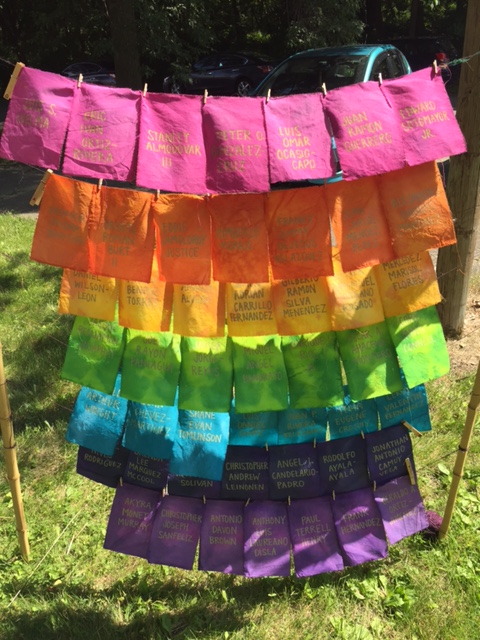
I shared these words with the Madison community during a vigil in honor of the victims of the recent massacre in Orlando. | Compartí estas palabras con la comunidad de Madison durante una vigilia en honor a las víctimas de la reciente masacre en Orlando.


image1

Rainbow flag with the names of the victims of the Orlando massacre. | Arcoiris de banderas con los nombres de las víctimas de la masacre de Orlando.

Buenas tardes, y gracias por decir “presente” en esta vigilia de recordación de nuestros hermanos y hermanas en Orlando. Soy el Rvdo. J. Manny Santiago, director ejecutivo de “The Crossing” un ministerio ecuménico para estudiantes en la Universidad de Wisconsin – Madison. Estaré compartiendo con ustedes unas palabras en español y luego en inglés. | Good afternoon and thank you for being here at this vigil honoring the siblings we lost in Orlando. I am the Rev. J. Manny Santiago, Executive Director of The Crossing campus ministry at the UW-Madison. I will share some words in Spanish first and then in English.

Español

No es fácil para mí el encontrar las palabras para compartir con nuestra comunidad. Hay ocasiones en el ministerio cuando tragedias como la que hemos sufrido nos dejan así: sin palabras, con dolor, con furia y confusión. Al mismo tiempo, sabemos que necesitamos levantar nuestras voces, ya sea para animarnos los unos a los otros, para denunciar injusticias o, en ocasiones, hasta para cuestionar la bondad de Dios cuando solo que podemos ver es violencia y muerte. Todo eso es parte del proceso de duelo y nadie nos debe decir que no sintamos estas cosas. Para mí, he pasado por todas esas etapas en menos de una semana: he sentido dolor, rabia, miedo, confusión y hasta he cuestionado la bondad de Dios que sirvo.

¿Por qué? Pues porque la tragedia de Orlando me ha tocado muy de cerca. No solamente tengo familia en Orlando – algunos de los cuales asisten al Club Pulse de vez en cuando – sino que, igual que la mayoría de las víctimas, soy Latino, puertorriqueño y abiertamente gay. Sí, soy un hombre Latino, pastor y gay. Desde pequeño escuché que esas cosas no podrían vivir juntas en una sola persona. Ese discurso de odio y rechazo que escuché de pequeño en la Iglesia me llevó a cuestionar, no solo mi identidad, sino el mismo amor de Dios y mi familia. Hoy muchas personas – políticos, líderes religiosos, etc. – están tratando de borrar las identidades de las víctimas de la masacre de Orlando. No queremos reconocer que son personas LGBTQ, no queremos reconocer que en su mayoría eran Latinos, no queremos reconocer que había entre ellos personas sin documentos… Algunas personas incluso han intentado poner a nuestras comunidades Latinas o LGBTQ en contra de la comunidad Musulmana.

Para mí, como persona de fe, Latino, puertorriqueño, gay, quiero dejarle saber a todas las personas que estamos tratando de hacer sentido de la tragedia: no va a ser un proceso fácil. Necesitamos crear espacios para procesar el dolor, el miedo, e inclusive para cuestionar la bondad de Dios. Pero en ningún momento podemos dejar de luchar por la justicia, por la paz, por reformas legislativas que ayuden a las comunidades de minoría. Reconozcamos que, en especial en nuestras comunidades Latinas, es tiempo de rechazar el machismo, la homofobia, la violencia, el racismo, la islamofobia y el heterosexismo que tanto permea entre nosotros. Es tiempo de levantarnos en unidad, en honor a todas las victimas de tragedias como esta y decir: ¡BASTA!

Que el Dios que se revela de muchas formas y de muchos nombres nos llene de valor, de amor, de sabiduría y de paz para hacer el trabajo…

___

English

It is not easy for me to find the words to share with you today. There are moments in ministry when tragedies like the one we have just witnessed leave us like this: without words, in pain, furious, and confused. At the same time, we know that we must lift up our voices, whether to support each other, to denounce injustices and even, on occasion, to question God’s goodness when the only thing we can see is violence and death. All this is part of the mourning process and nobody should tell us that we should not have these feelings. As for me, I have gone through all of these stages in the past week: I have been in pain, furious, scared, confused, and yes, I have questioned God’s goodness.

Why? Because the tragedy in Orlando is too close to me. I have family in Orlando – some of whom frequent Pulse Club – but also because, like the majority of the victims, I am Latino, Puerto Rican and openly queer. Yes, I am a gay, Latino pastor. Since childhood I’ve heard that these things cannot coexist. This discourse of hatred and rejection that I heard in Church brought me to question, not only my identity as a human being, but also God’s and my family’s love towards me. Today, many people – politicians and religious leaders in particular – are trying to erase the many identities that the victims embodied. Many do not want to recognize that the victims where LGBTQ, they do not want to recognize that the victims were Latino, they don’t want to recognize that among them there were people without proper documentation to work in the USA… Some have even tried to put our LGBTQ and Latino communities against the Muslim community.

As for me, as a person of faith, as a Latino, a Puerto Rican, and gay, I want to make it clear to all: trying to make sense of this tragedy will not be easy. We must build spaces to process the pain, the fear, and even to question God’s goodness. But under no circumstances must we stop working for justice, for peace, and for legislative reforms that would support minority communities. We, Latinos, must recognize that it is time to reject our machismo, our homophobia, our worshiping of death and violence, our Islamophobia, our racism, and our heterosexism. It is time to rise up, together, in honor of these victims and all the other victims of past violence, and say: ENOUGH!

May the God who is revealed in many forms grant us courage, and love, and wisdom, and peace for the work ahead of us…

Leave a comment

Filed under Church, Culture, Dios, Español, ethnicity, familia, Gay, Heritage, Hispanics, Hispanos, Identidad, Identity, iglesia, immigration, justice, Latino, Lesbian, LGBTQ, ministry, Peace, Puerto Rico, Queer, race, racism, Teología, Theology, trans, United States, USA

What Will Come…

rainbow-flag

(I wrote this poem as a reaction to the recent events of terror and homophobia that have taken from us 49 of our siblings in the city of Orlando, FL.)

What will come
When the lights of the candles are extinguished
When the rage of the moment has passed
When the strength we have found
In community tonight
Has faded into the memory land

What will come
When the queers are once more
Pushed into hiding
When our voices are
Once more overwhelmed
By the money and power
Of the radical hate

What will come
When our tears are silenced
And when our pain is ignored
And when our strength faints
And our wounds are too deep but forgotten

What will happen
When the deafening silence
Of our so-called allies
Becomes once again
The norm

What will happen
When the prayers are fading
When the hugs are no more
When the lights are shut down
And the cold of the night
Overcomes our fickle souls
When the next attention-grabbing
Political squabble
Erases forever
The names and the faces
Of the saints that lay down
In a desecrated sanctuary
That our kisses once housed

What will happen
Once that all is forgotten
Once that their names are not mentioned
For ever no more

What will happen
When I will look at the mirror
And realized once again
That this is not the largest
Nor the last of them
Violence
Against people like me

What will happen
Tomorrow
I wonder
What will happen
I dream.

Leave a comment

Filed under Culture, discrimination, ethnicity, Gay, Heritage, Hispanics, Hispanos, justice, Latino, Lesbian, LGBTQ, Queer, race, racism, United States, USA

La comunidad comes together in Wisconsin

In the past few months, the GOP delegation in the Wisconsin state Assembly, in the hopes to support Governor Walker’s agenda of destroying the state, have been trying to pass anti-family and immoral legislation. They have already succeeded in making easier for big developers to contaminate our waters. We all know that they were pretty successful in stripping workers from their rights, preventing heads of households from securing a future for their children and other IMG_4862dependents. More recently, they have been trying to put students’ lives in danger by proposing to allow criminals to openly carry handguns and other firearms around university campuses and even into classrooms. Now, they are also coming after whole families: immigrants, people of color, and other groups that do not conform to the wealthy, white, WASP majority. Two proposed bills are now before the Assembly, to criminalize brown people just for being brown. The legislators swear is to “protect” the communities, but this is just code talking to say that brown peoples are not to be trusted and we must be controlled just as the police has been encouraged to control black people by threatening their lives.
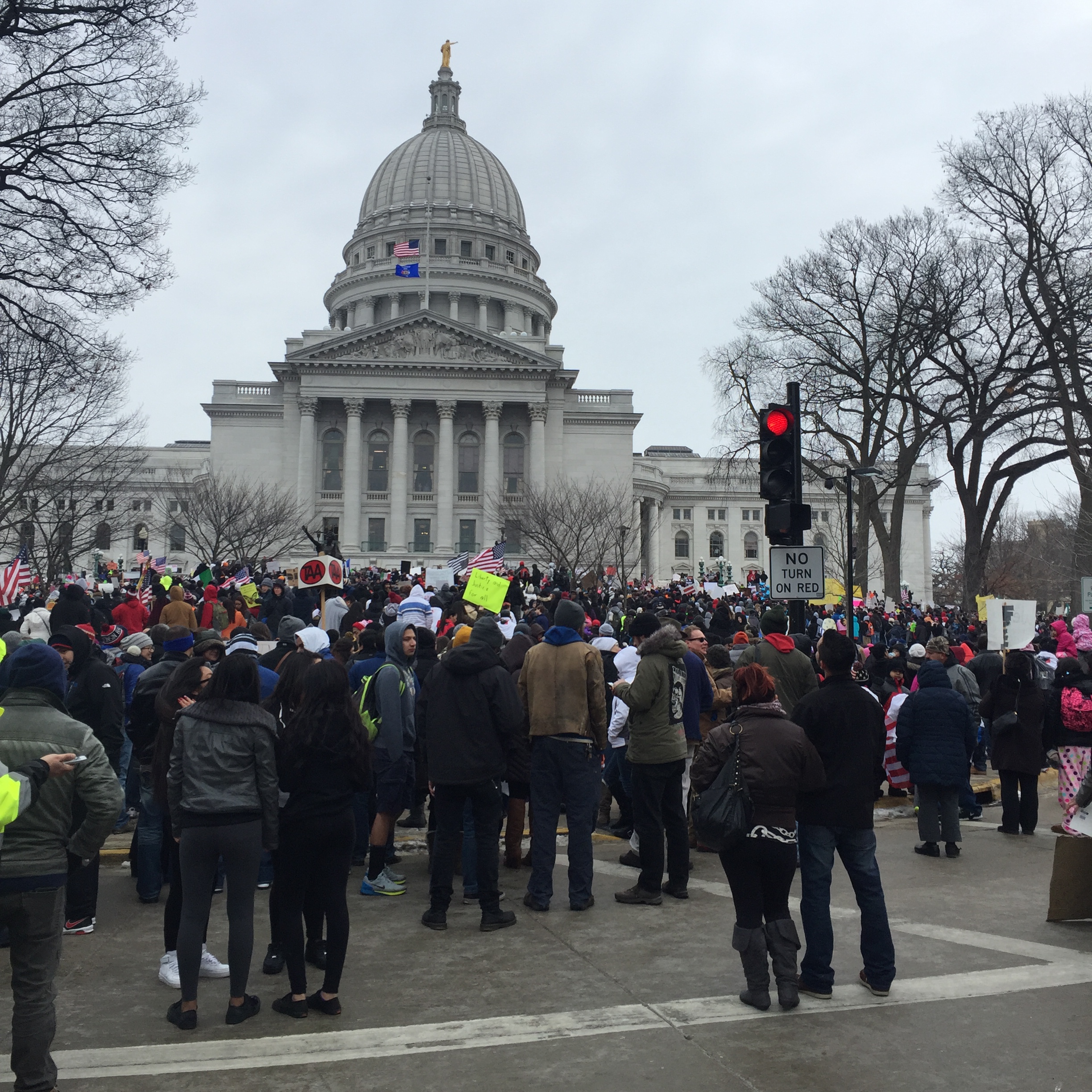
Yesterday, February 18th, the Latinx comunidad from around the state came together in an unprecedented way to say ¡BASTA! People from all over the state came to Madison as the Assembly debated two pieces of anti-family legislation, to let the government and the larger Wisconsin community that our lives matter, that we will not stand idle as they try to destroy our families, and that we not a comunidad and a voz to be dismissed.

Politicians, especially Republican politicians, think that they can play with our lives as they wish. They have stood up against every single moral issue that prevents our lives from being taken from us. In fact, it has been their lack of moral character what has killed so many of us – on the fields, at the hands of police, on the farms and factories, in jail and in immigration detention centers… Their hands are tainted with the blood of thousand Latinxs, yet they keep thirsting for more. It is not enough for them to see our children suffer, our parents mourn, our youth are anxious… They are not satisfied with seeing our IMG_4859suffering, they also want us to completely disappear, just as we bring them water, and tea, and their meals; just as we clean their homes and cultivate their fields or milk their cows; just as we tend to their wounds, and teach their children, and run their businesses… It is not enough. Never enough! Brown bodies are to be disposed of as if we are trash. To this, our comunidad says ¡BASTA!

As I stood at the Capitol square with thousands and thousands of my hermanas y hermanos Latinxs and allies, I could not do anything else but be hopeful. I know that the fight is going to be long and arduous, but we are not going to keep silent. La raza es fuerte. Moreover, we are not as divided as they want others to believe. Yesterday, there were flags from all over Latin America because we know that this “divide and conquer” strategy is not going to work. We are ONE, and as such we will fight. As Calle 13 sings: “cuando más te confías las hormigas / te engañan atacan en equipo como las pirañas / aunque sean pequeñas gracias a la unión / todas juntas se convierten en camión.” We will rise and call out our ancestors, our guiding spirits and the power of the women and men who taught us how to fight and win.

To be there, in the presence of such a beautiful cloud of witnesses was a real blessing for me. It filled me with hope, knowing that I am not just one Puerto Rican fighting alone; I am a part of the great América, and we will stand together to reclaim what is rightly ours. La comunidad came together yesterday in Wisconsin, and we will stand and fight because it is the right thing to do.

Leave a comment

Filed under Culture, ethnicity, familia, Heritage, Hispanics, Hispanos, immigration, justice, Latino, race, racism, United States, USA, Wisconsin