Category Archives: Racial Relations

Traveling With Quetzal This Hispanic Heritage Month – Guatemala

I want to continue sharing with you my experiences of traveling throughout Latin América this Hispanic Heritage Month. The countries I am sharing about are the ones I have visited, even if just once. Each one of them has their own cultures, their own cuisines, their own beauty, their own challenges, and their own histories. I don’t pretend to be an expert on Latin América, much less on the countries I have visited and only experienced a sliver of what they really are. I am not even an expert in my own country! But these are beautiful places I have visited and I wanted to share a bit of each one with you this Hispanic Heritage Month, in the hopes that it inspires you to visit places that you might have never thought of visiting.

Today, I take you to the land of the Quetzal: Guatemala. The Quetzal is a small bird endemic to certain parts of Central América. Unfortunately, the bird is endangered, and their numbers continue to dwindle. They are also very shy, and in all the years I have visited Central América, including the areas where the Quetzal is present, I have never seen one in real life. That does not take away from the reality that Guatemala is beautiful, full of history and wonderful things to experience, from its culture to its delicious cuisine.

My first visit to Guatemala was by car. I was visiting a friend in El Salvador, and we decided to drive to Guatemala for a long weekend. This was the first — and so far, only — time I crossed a land border in Central América. I drove through the southern part of El Salvador, entering Guatemala through the Hachadura entrance, crossing the Río Paz. This is a border entrance mostly used by trailers, and it wasn’t until almost an hour when I realized that I could’ve skipped the line of trailers and enter through a second gate for passenger cars. The process was different than entering and exiting the land border between the USA and México or Canada, both of which I have crossed in the past. Here, I had to leave the car and
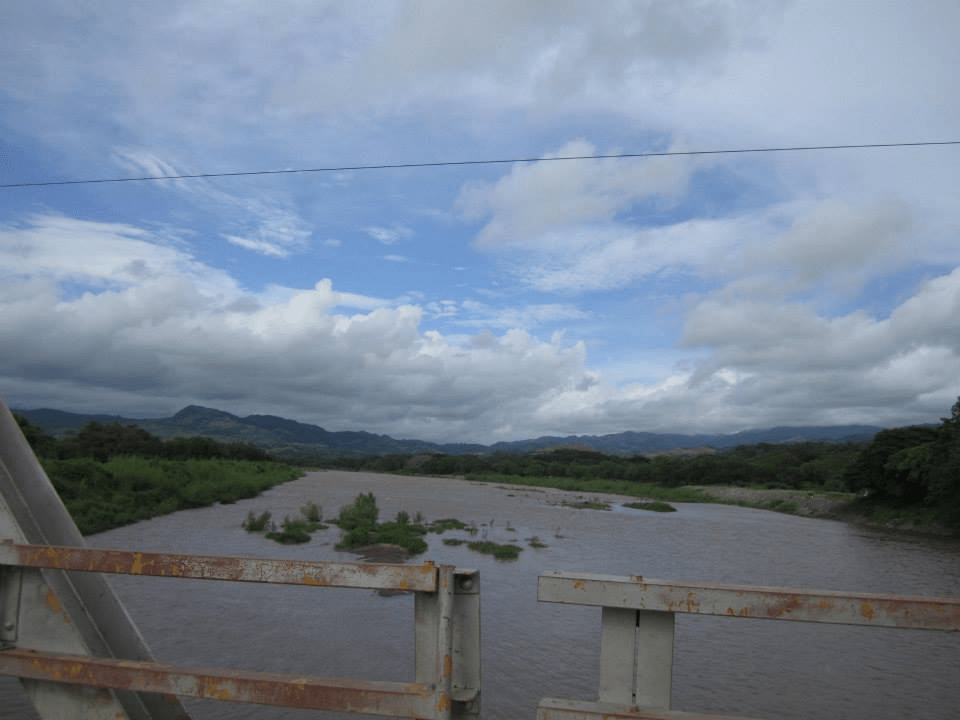
The Río Paz border between El Salvador (right) and Guatemala (left.)

present my passport and pay the entry fee inside the customs and immigration building. Once over the other side, a few miles away from the border, we were stopped and our car searched. Again, a different experience. But the border patrol was really nice and, although I had to pay an extra fee — wink, wink — at the border crossing, the border patrol who stopped us didn’t ask for extra payments. They were curious about the binoculars I had and the Swiss knife I was carrying. Thankfully, they didn’t seize them and we went on our way.

It was fun driving through a country for the first time. We passed several small and large villages and towns, taking in all the beauty of the country. At last, very late at night after I got lost, we entered Antigua Guatemala, the most visited tourist city in the country. Antigua is, without a doubt, one of the most beautiful cities I have ever visited. The first time I was here, with my Salvadorean friend, we visited several churches and ruins, taking in all the history of this previous capital of the former Captaincy General of Guatemala from which many of the administrative business of Central América took place during colonial times.

This first time I visited was during low tourism season, which is honestly the best to visit. The city only had a handful of tourists, and pretty everyone was local. We visited a bar in the main square, and got to chat with the other two people at the bar. It turned out to be a couple of friends, one local to Antigua, and her friend from Perú was visiting. With the only bartender being the other person there, we had a pretty cool, international group: two Guatemalan women, a Peruvian man, a Salvadorean man, and myself, a Puerto Rican man. Central América, the Caribbean, and South América coming together to enjoy some delicious Guatemalan rum.

More recently, I went back to Antigua, as my husband and I visited Guatemala for my birthday last September 2022. The city was as charming and as beautiful as always and my husband was also enamored by the city and its charm. The history of this city is worth learning, as well as taking the time to
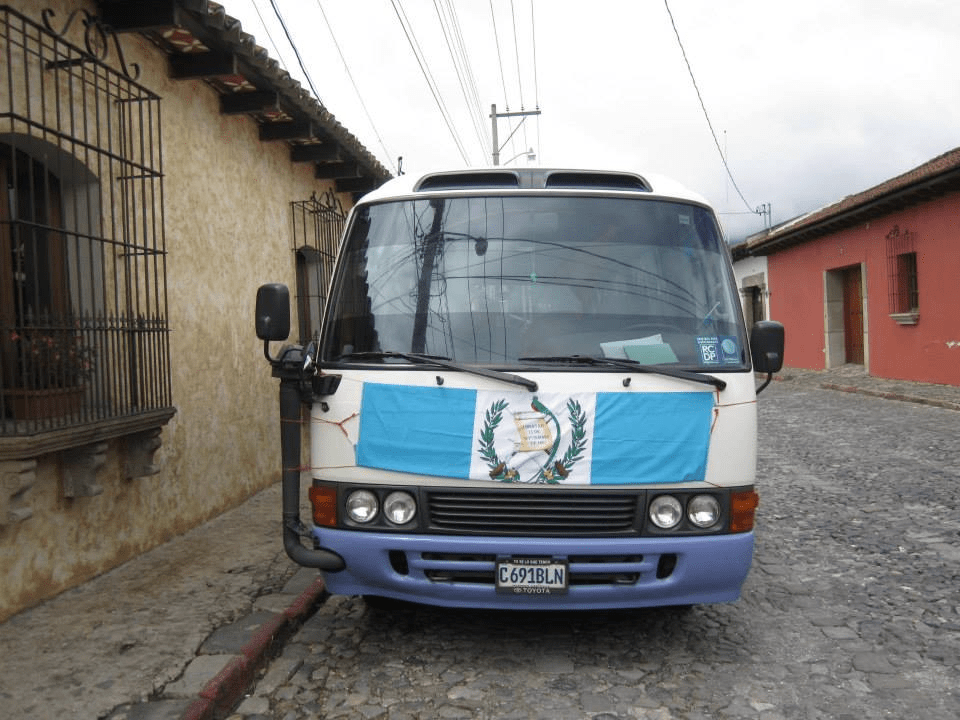
Proudly displaying the national flag on a passenger bus in Antigua Guatemala.

explore every inch of the place. Of course, the food here is like in no other place! From the local carts selling all sorts of delicious traditional Guatemalan snacks to the international restaurants with five-star chefs from around the world! I can still taste the delicious French dishes I ate here, better than at any French restaurant I have visited in the USA thus far.

When I returned to Guatemala this past year, our first stop was not Antigua, though. As soon as we stepped out of the airport, we rented a car and drove to Santa Catarina Palopó, a tiny village on the eastern side of Lake Atitlán in the center of the country. The lake itself is beautiful, and the small village was the perfect place to relax and disconnect from the hustle and bustle of work. The village also has a coffee museum, which for me, having grown up in a coffee farm, was wonderful to experience. Santa Catarina also has, like most of Guatemala, a strong Maya identity. This was something that both my husband and I enjoyed, as he is of Maya Yucatec descend. Although their dialects differ (and my husband doesn’t speak Yucatec Mayan, just knows a few phrases and words), there are cultural ties that made this place feel like home for him. The huge window in our room also looked right into the lake, with the tall volcanoes on the other side of the lake. Waking up to this beautiful view was extraordinary. From here we also visited the slightly larger and certainly busier town of Panajachel, where you can walk a couple of miles through their open market and buy all sorts of knickknacks and delicious traditional foods. Our visit to Panajachel was met with a torrential rain that lasted for over an hour, and trapped us at a snacks and beer cart on the boardwalk by the side of the lake.
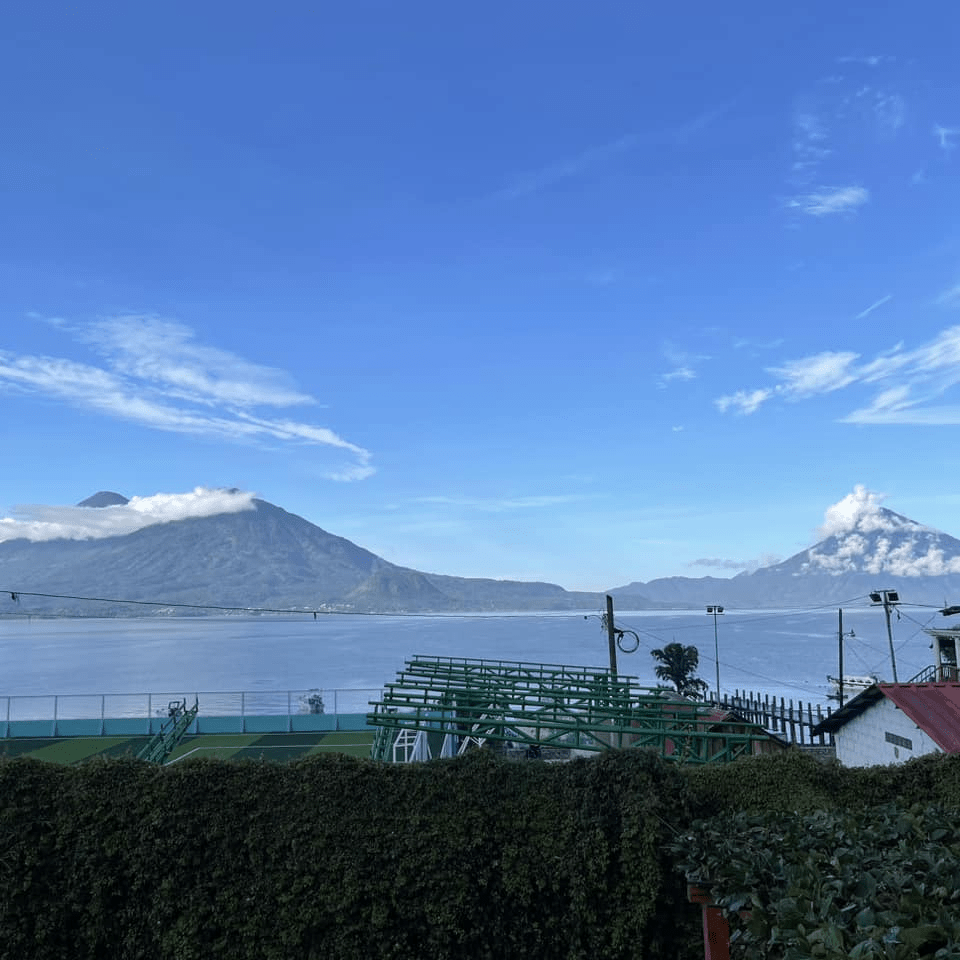
The view of Lake Atitlán from our hotel room in Santa Catalina Polopó.

An unforgettable experience driving to Santa Catarina from Guatemala City happened as we traversed all the roads with huge mountains on one side and cliffs covered in coffee trees on the other. I am very used to driving through roads like this, as it is very similar to where I grew up. Unfortunately for my husband, this is not what he is accustomed to and he was terrified. At some point, we came to a river — or what would be considered a large creek in the USA — and there was a signed telling drivers to be careful, as the bridge had fallen and cars must cross the river. My husband looked at me terrified and ask, “what are we going to do now?” To which I responded: “We drive through the river!” And off we go! Again, this was not the first time I had driven through a river, and it was just a great and unforgettable experience for us both.

On our way back, we took a slightly different road — although we had to cross the river again — in order to visit the archeological ruins of Iximche. As I drove by, we came to an unfinished road with a gate and a tiny space open on the side. The GPS said that was the route, so we were a bit lost and curious on how the heck we were going to get to the ruins through here. We first asked a kid who walked by and he said the keys to the gate was kept at a neighbor’s house and we should walk there to ask them to open for us. Still perplexed on how we were going to continue our journey, we suddenly saw a small passenger bus drive through the small opening on the side of the gate. I wasn’t sure if this was private property, so I didn’t know if we could go through. But we saw a woman carrying some wood and her kids walking towards our side of the gate and asked her about the route to Iximche. She confirmed we were on the right path, and that everyone has to cross through the small opening next to the gate. We did… and about 30 minutes later, we were at the archeological ruins.

I highly recommend visiting places like this archeological site. The place is a beautiful park for everyone. There is a little museum where you can learn about the Maya culture and the history of the place. Besides, this is so out of the tourists’ path, that you will find yourself as the only non Guatemalans there. It was wonderful!
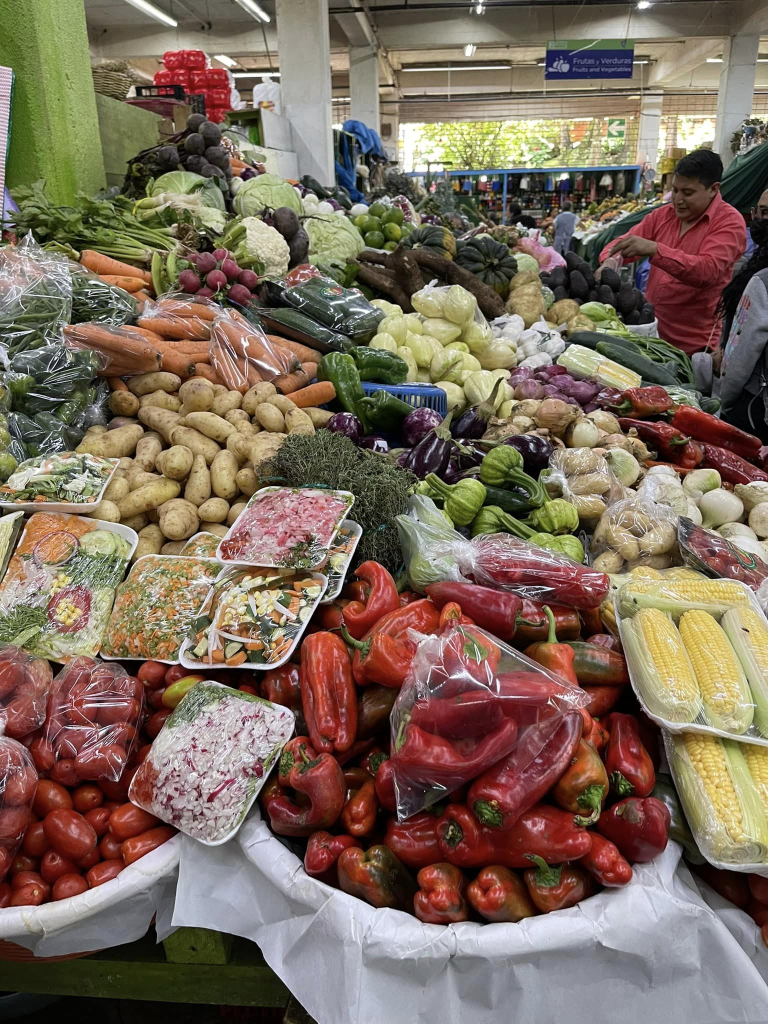
The bounty you can find at the central market in Guatemala City.

From here we went to Antigua and after a few days at the city, we headed to Guatemala City. Guatemala City is, like most Latin American capitals, a city of contrasts. There are the rich suburbs with the people who, belonging to the place, do not feel like they are from there but want to control the lives of those who are. The poor areas where people survive in whichever way they can. The modern areas where poor and rich mingle; some selling stuff and other buying stuff. There is the central market, where you can see the largest carrots ever grown by human — well, at least in my view — and the most beautiful, organic fruits and vegetables you can imagine. You also can also see the beautiful and creative folk art, clothes, and shoes. This was the second time I visited Guatemala City, and can say that I really like this place.

There is one thing about Guatemala for which I highly admire the country and its people. While most of Latin América continues to produce coffee for the international market while falling prey of the Nescafé ruse to strip us from quality coffee and replacing it with the chemical concoctions that are instant coffees, Guatemala has hold on to their real coffee. As one of the staff told me husband when he asked about instant or at least decaf coffee at the hotel in Santa Catarina Polopó: “Here, throughout the country, we only serve quality coffee. You will not find anything of low quality like decaf let along instant coffee anywhere on these lands.” As the proud son of a former coffee farmer, that makes Guatemala one of my favorite places to visit.
Leave a comment

Filed under celebrations, cultural celebrations, Culture, ethnicity, Guatemala, Heritage, Hispanic Heritage Month, Hispanics, Hispanidad, Hispanos, History, Humanity, Identidad, Identity, justice, Latin America, Latinidad, Latino, Racial Relations, resistance, Social Movements, Sociology, tradiciones, traditions

The Next Destination This Hispanic Heritage Month: Panamá!

As I continue inviting you to explore the places I have visited in our beloved and beautiful Latin America this Hispanic Heritage Month, I want to bring you with me to Panamá.

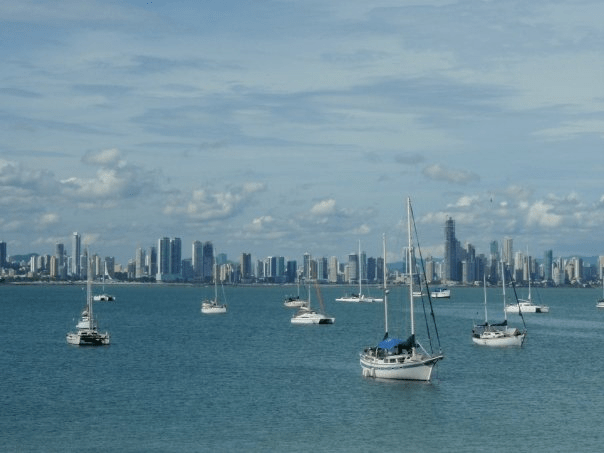
A view of Panamá City from the isthmus. The contrast of modernization with tradition is everywhere in the city.

It is possible that the only thing you know about Panamá is the canal. The Panamá Canal crosses the country north to south, opening a waterway for large container ships to cross from the Caribbean Sea to the Pacific Ocean. The Panamá Canal is quite significant for various reasons. First, because ships no longer have to do the difficult navigation around the southernmost point in the continent through Tierra del Fuego, to reach the Pacific Ocean from the Atlantic. Second, because it helped in cutting Panamá from Colombia, from which it was a department prior to its independence. Third, because the canal was USA territory until 1999, and thus, is another palpable reminder of the way in which the United States have had an overarching presence in Latin American affairs. Finally, the canal is also the big scar that divides the American continent, physically cutting the north and south parts of the large landmass that is América.

I have only visited Panamá once. My mentor, friend, and second mother, whom I met while she was a professor at the university I attended, lives there. Her ties to Panamá are strong. When she attended the same school she eventually taught at, she met the father of her sons, who was at the time, an international student from Panamá. Her sons were born there, and currently, her surviving son’s children live there. It makes sense for her, already retired, to live near her grandchildren and son.

A while ago, I decided I wanted to visit her. It had been quite some time since the last time I had seen her, and I felt it was right for me to visit as she had already traveled to visit me while I lived in NYC and she was in Pennsylvania. I also wanted to meet her son, as I consider her a second mother and it would’ve been great to meet my quasi-brother. Up until that time, Panamá had been a layover stop on my way to other Latin American countries. In fact, I had never stepped out of the Tocumén International Airport in Panamá City before. Thus, I didn’t have any expectations from the country, other than meeting my mentor and friend.

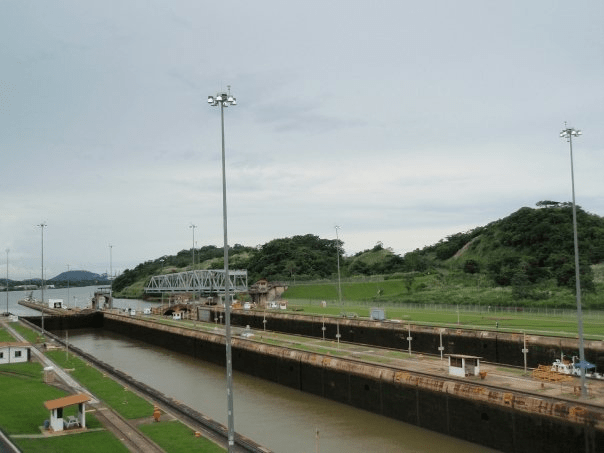
The Panamá Canal is the link between the Atlantic and Pacific Oceans.

What I discovered was way more than a beautiful Latin American country! I discovered a country with a complex history, wonderful people, delicious cuisine, and an accent that was so close to my own that I always felt at home.

My friend is a lesbian activist, and as such, I had the chance to connect with the LGBTQ community in Panamá and experience the country through their eyes.

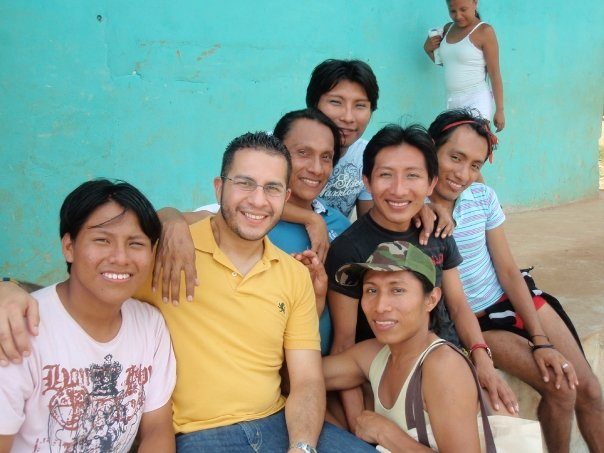
The most significant experience I had in the country, was a visit to the Kuna or Guna people. The Guna are one of the surviving indigenous peoples who the colonizers were not able to erase. Like many other indigenous cultures from around the world, the Guna do not have a strictly binary gender system. In the Guna communities there is a third sex, the “Wigudum”, who play an important role in their societies.

When I visited with the Guna, I had the wonderful opportunity to meet some Wigudum people. Some of them were concerned because, although they had been accepted by the majority of their communities, US-backed Evangelical churches were growing in their communities. This meant that US puritanical and hypocritical mores were being spread throughout their communities, including the marginalization and demonization of the Wigudum. Moreover, the hypocritical aspect of the US puritanical moral code was using Wigudum young people as sex objects in private while rejecting their humanity from the pulpit. At the time, I was serving in parish ministry, and although the church I served is a very progressive congregation, I couldn’t get the guilt off of me. Modern, US Evangelical Christianity is annihilating a culture that survived millennia of colonization.

Still, visiting with the Guna was the most beautiful part of my visit to Panamá. They did not perform for me as a tourist. They did not put on a show to entertain me. I didn’t act as if I knew more than them about their country, their culture, or their struggle. I visited with humility and an open mind, hoping the learn from and with them, even if for just a few hours. I highly recommend connecting with indigenous communities, if possible, when visiting any Latin American country in which there are indigenous communities. Visiting with them will offer a better understanding of their culture, their history, their current realities, and the damage that colonization continues to do.

Sharing with Guna people was the highlight of my visit to Panamá.

Of course, I had the chance to visit the Panamá Canal. It is an impressive view. Watching the huge vessels travel through this intricate piece of engineering is really a sight. It is also an interesting experience to visit the canal zone. The canal was transferred back to Panamá as it was always intended, in 1999. Since then, Panamanians have moved to the zone, while some service members from the USA have also stayed. It is an interesting reality worth witnessing.

The final place I would suggest visiting in Panamá — of the places I visited, because I cannot speak for the whole country — is the old town. Contrary to other old towns throughout Latin America, Panamá’s is small and not well maintained. The structures are crumbling, and they reminded me more of Havana than San Juan. The ruins of the old city are also nearby and they are an interesting place to visit to learn more about Panamá’s development. I am not sure about the rest of the country, but Panamá City is a sprawling experiment on US capitalist development. Huge skyscrapers are being built everyday. Hundreds of housing units unreachable for locals are being sold to international investors with no intentions to help the people of the country. However, since infrastructure is still lacking, water barely reaches the units beyond the third floor, and power outages are very common.

Visiting Panamá was a great experience for me. It showed me both sides of Latin America: the side still connected to our ancestors, cultures, and traditions, and the side that is the unsuspected victim of globalization and US imperialism. As a Puerto Rican, it was a great way to know that my people, my Island, are not alone in suffering the impact of invasive US imperialist policies. As the late Panamanian poet Dimas Lidio Pitty once wrote:

Panamá, my beloved land

wounded by the many pains

tomorrow, without invaders

an Eden under the sun you shall be.

Leave a comment

Filed under celebrations, cultural celebrations, Culture, ethnicity, Heritage, Hispanic Heritage Month, Hispanics, Hispanidad, Hispanos, History, Human Rights, Humanity, Identidad, Identity, justice, Latin America, Latinidad, Latino, Panama, race, Racial Relations, racism, Recuerdos, resistance, Social Movements, Sociology, tradiciones, traditions, trans, transgender

Preventing Cultural Hegemony During Hispanic Heritage Month

When Hispanic Heritage Month was established it was with the idea of recognizing the contributions of Hispanic-Americans (as our community was known) to the United States. Since the term “Hispanic” was a government construct to group a very diverse group of people, other concepts such as “Latino/a” have been used. We understand that not all Latinos/as are Hispanics, and that any terminology used to group our community is going to fall short. Latin America is an extremely diverse region. Our ancestors are Indigenous, African, European, Asian, and of every combination thereof. There are hundreds of different languages spoken throughout the region in addition to Spanish, Portuguese, and Creole. Our histories, cuisines, faiths, values, and every aspect of culture are different. Hispanic Heritage Month is supposed to celebrate this diverse group of peoples, highlighting our contributions to the larger US society, of which Latinos/as have been a part since before the United States was formed as a country.

Yet, for some groups within the Latino/a community, Hispanic Heritage Month can be a reminder of how cultural hegemony erases diversity and identity. The challenge of celebrating a diverse community that does not fit the clear, simple, and binary definitions of the majority Euro-centric American culture reduces Hispanic Heritage Month to a celebration of whichever Latin American cultural heritage is most prominent in a particular context. The month that was meant to celebrate our diversity is reduced to the celebration of the Spanish-Caribbean in the eastern seaboard of the USA, or of Mexican-American communities in the Southwest and West. This cultural hegemony makes invisible large portions of our communities.

Cultural Hegemony Gets Personal

I speak to this from personal experience. When I first moved to the mainland USA it was to the eastern coast. As a Puerto Rican, it was easy for me to find representations of my culture anywhere I went. I didn’t have to adapt my dialect too much and for the most part, people understood when I said “habichuela” or “bizcocho” or “guagua.” The historic large diasporas of Spanish-Caribbean peoples to the easter parts of the USA means that our cultures, dialects, and cuisines are more prevalent. Other people of Latin American descent usually must adapt to these Spanish-Caribbean cultures (Cuba, Dominican Republic, and Puerto Rico.) Once I moved to the West coast, things were totally different. Out here, the prevalent cultures are Mexican and Mexican-American. People from all over Latin America and of any Latin American heritage must adapt to these cultures as they have been adopted by the Euro-American majority as the standard or default definition of “Latinidad.” More concerning is the expansion of this standard definition and its adoption by politicians, nonprofits, businesses, and many other groups.

The invisibilization of non-Mexican Latin people has profound consequences both for our communities and for society at large. Spanish is reduced to one dialect and one accent (usually norteño or chilango) at the expense of the plethora of dialects spoken throughout Latin America and the many variations of the Mexican dialect. Latino Indigeneity is reduced to Aztec and Maya identities at the expense of Mapuche, Arawak, Taíno, Guaraní, Garifuna, and the thousands of indigenous groups that still inhabit Latin America. The Afro-Latino/a identity is forgotten as “mestizaje” – the mixing of European and Indigenous identities – is made the standard of Latinidad. And Protestant, Evangelical, Jewish, Muslim, Buddhist, Hindu, Santero, Espiritista, and other faith traditions practiced by Latin folk are hidden in favor of a particular Roman Catholic experience that doesn’t even consider the beautifully diverse experiences and traditions of non-Mexican Latin Catholic communities. For instance, growing up Protestant, I never observed “Día de los Muertos”, or sang to “La Virgen de Guadalupe” on December 12th. Although I recognize and honor the importance these celebrations have, they do not define my Latinidad, nor do they define Latinidad for at least half of Latinos/as in the United States.

The Mexican cultural hegemony promoted by white supremacy is not only impacting non-Mexican Latin folk. This cultural hegemony also impacts other Mexicans. My husband is Mexican, from the state of Yucatán, and of Maya indigenous identity. In the white supremacist, cultural hegemonic definition of “Mexican” and of “Latinidad”, his accent, his cuisine, and his traditions do not fit. From time immemorial, the Maya people of Yucatán have celebrated “Hanal Pixan”, a month-long observance to welcome back and honor those ancestors who are before us (in Maya tradition, the past is before us, while the present is behind us because we cannot see it.) During this time, families prepare altars, present food and drinks as offerings, and have rituals of welcoming for the ancestors. On three different dates throughout the month a special tamal called “pib” is prepared and eaten with those ancestors. Hanal Pixan has been merged to

some extent with the Roman Catholic tradition of All Souls and All Saints Days, while keeping much of its Mayan roots. But you would never find a hint of this Mexican cultural tradition presented in any of the “Hispanic” celebrations of “Día de los Muertos.” Once again, cultural hegemony erases a part of our identities.

The Causes and Roots of Cultural Hegemony

There are many causes for cultural hegemony. Our own brains try to minimize the use of energy by categorizing things around us in the simplest ways. Culturally, we try to group people as to make it easier for us to understand them. White supremacy in particular has been really great at minimizing differences by grouping folk as “white” and “black” and then assigning value to each category, with lighter skin being more valuable than darker skin. This tool of control offers Latinos/as, who are of every race, a mirage opportunity to “become white” and thus, access power. The lighter our skin, the closer we are to being part of the standard definition of “American.”

It is in this context where we find the first clues to this cultural hegemony imposed in Latinidad. First, the powers-that-be decided that “Hispanic” was a good enough category for people of Latin American descent. This was regardless of their racial background or historical heritage. Whether a person was indigenous to these lands or an Austrian Jew who found refuge in Argentina, now both were classified as “Hispanic” for the mere fact that Spain conquered most of what is today Latin America. Second, when the communities reacted to this misnomer, they came up with “Latino”, and if they were progressive enough, “Latino or Latina.” This at least alleviated the reality of those who, having cultural roots in Latin America, did not have or do not want to be associated with Spanish heritage. The Euro-American majority decided how our community was going to be named, regardless of centuries of self-identification within our communities. Finally, the acceptance of mestizaje as the standard of Latinidad served the purpose of ensuring that Latinos and Latinas thought of ourselves as “almost white” people in the context of the United States. (Please know that this concept is used very differently within Latin America. But I will not be discussing this in this essay.) Erasing Afro Latinidad can only serve the white supremacy agenda, not advance the Latino/a community.

On the other hand, once the stage was set to have a homogenous definition of Latinidad, it was easier for one dominant Latin culture to ignore the rest.

Throughout the years, Mexico has been extremely successful in developing its media presence throughout Latin America. The richest man in Mexico also happens to be the most successful telecommunications executive in Latin American, Carlos Slim Helú. América Móvil, his telecommunications empire, has an almost monopoly of the communications world throughout all of Latin America with the notable exception of Cuba. The Mexican theater and film “Golden Age” marked the scenic arts in ways that no other country was able to do. Today, Mexican novelas (soap operas) and movies dominate most of the TV market throughout the continent. Pretty much any Spanish language singer – and sometimes actors – who wants to have a successful career knows that they must gain over the Mexican market, no matter how successful they might be in their countries of origin and neighboring countries.

As a result of the success of Mexican cultural exports – films, novelas, music, cuisine, etc. – there is no corner of Latin America that has not been exposed to the Mexican dialect (on its norteño and capital city versions), foods, and music, among others. Thus, although pretty much any Spanish-speaker can understand Mexican Spanish, people in Mexico and people of Mexican descent elsewhere have not had the chance to be exposed to our dialects. Therefore, although there are plenty of words in Spanish to call a cake – bizcocho, torta, queque –, pastel has become the “standard” in the USA. If they are only familiar with Mexican Spanish, someone will be very confused when a South American asks them for a torta and find out that they meant a cake, and not a sandwich. That’s because torta is the South American Spanih word for cake, while in Mexico they call cakes, pastel. There are plenty of examples like this, as words for beans (judías, habichuelas, caraotas), pepper (ají, pimiento), banana (guineo, cambur, banano), jacket (chompa, cazadora, abrigo) and many others are Mexicanized and the many different ways in which they are called elsewhere are forgotten.

This is not on the Mexican people’s backs. I am not advocating for the elimination of Mexican dialects in public or private use, nor am I complaining about Mexico’s success in investing in its own arts and cultural programs. On the contrary, I admire the fact that, with the USA being so relentless in spreading American English as the lingua franca, and American music and films as standards, Mexico has successfully overcome this by continuing to produce high-quality content in Spanish in pretty much all the art forms. What I am doing is explaining the reasons why it is so common for the Mexican dialect to be the “standard” for Spanish in the United States.

The white supremacy structures in which the USA operates make it easier for homogenization to take place. It also makes it easier for the rest of us to be invisible during a month that is supposed to highlight the contributions of all our cultures, histories, and identities.

A Possible Solution

Is it possible for this cultural hegemony to be overcome? I believe it is!

If we want to go back to the origins of Hispanic Heritage Month we can hold on to the core of its purpose: to celebrate the contributions of Hispanics and Latinos/as to the USA. It is absolutely perfect to include tacos, tamales, norteño music, and Mexican folk dances in your Hispanic Heritage Month celebrations. And it is equally important to expand this and include other cuisines, dances, histories, and symbols of more Latin American communities. Here are some ideas on how your agency, nonprofit, church, workplace, or any other group can expand their offerings to celebrate our comunidad.

  1. Don’t assume. Ask! It is so simple. Even if you are of Latino heritage, ask around to find out more about the Latino/a community in your area. Even if there is one specific national heritage more prominent than others, I assure you that you will find people of all sorts of Latina/o cultural heritage around. Ask them what would be meaningful to include in any celebration of our cultures.
  2. Learn. Read books from authors of every national background. Follow news from throughout the region so you know what’s affecting local communities with ties to those regions. Read about the history of colonization of USA in our countries of origin so you can understand the patterns of migration of our communities. Watch documentaries about our region and our countries of origin. Attend events created by and for Latinos/as, especially if they are from cultures outside of whichever is the majority Latin culture in your context.
  3. Expand the celebrations. Find out who is the small business owner of a restaurant from a Latin cuisine that is not from the majority Latin community represented in your area. Order from them instead! Introduce even other Latinas/os to cuisines different than theirs. A business can have a whole catered event with different empanadas from all throughout the continent! The same for dances and performances. Bring in tango dancers, include bachata and salsa in your parties, teach a cumbia class during one of the events. (As reggaeton becomes more and more prominent in Hispanic Heritage Month celebrations, I highly recommend checking with people who speak the dialect of the signers, as many of the lyrics can be extremely crass, offensive, and vulgar to specific communities. Also, not all reggaeton lyrics are like this, and I personally enjoy the style, so this is not a judgment on the genre, just a recommendation to make spaces more accessible and safe for all.)
  4. Have fun! Among the many things that unite all our communities is how boisterous, energetic, and fun we are! Whether we call it pachanga, farra, parranda, juerga, fiesta, pary, bembé or whatever other word we have for it, Latin parties are filled with joy and celebration. There might be a time to start, but you never know when the party will end. Have flexibility with your celebrations and let the community enjoy its time together.

Reclaiming La Herencia Hispana y Latina!

Latina trans activist Sylvia Rivera once said, “We have to be visible. We are not ashamed of who we are.” She was referring to the trans community and the LGBTQ community in general. Nevertheless, Rivera was a proud Latina woman too. She never hid her Venezuelan and Puerto Rican heritage. At times, the invisibilization of so many Latinidades makes us ashamed of being public. Many of us switch our accents or use dialects that are not natural to us. Often, we stay silent about our own heritage lest we make those in the majority uncomfortable. That is not the solution to cultural hegemony.

The solution to cultural hegemony is being visible, vocal, and proud of our individual cultural heritage and the many mixes of heritages created in the United States. Our Hispanic Heritage Month celebrations should be expansive and always expanding. It should show every aspect of Hispanic and Latino cultures. Hispanic Heritage Month should be a time to celebrate our diverse Latin heritage in all its extravagance. Let’s bring Garifuna dances, and serve Bolivian salteñas; let’s pour Chilean wines, and enjoy Guatemalan parrilladas; let’s dance to the rhythms of African drums in Puerto Rican bomba and Peruvian landó; serve sopa paraguaya and Dominican mangú… Let’s make every effort to create welcoming and diverse celebrations that honor the richness of our Latin cultures. Let’s proudly and very visibly reclaim our herencia!  

Leave a comment

Filed under Culture, ethnicity, Heritage, Hispanics, Hispanos, Identidad, Identity, Latino, race, Racial Relations, racism, resistance, tradiciones, United States, USA

There Is No Pie! A Reflection on Power Dynamics and Racism

There is no pie.

None. I am not writing about food, though. I am writing about power, power dynamic, and how language fails us to explain these concepts and what it is that communities of color demand from our white colleagues and fellow humans. This is a semi-long opinion essay. Here I discuss several concepts and ideas, starting with language in general, some theological concepts, and finally, various sociological concepts related to social dynamics and power. If these things interest you, this will be a fun read. (Or maybe I have a weird sense of humor…)

Language is probably the most important human invention. It is so important that many anthropologists consider language to be the human invention that helped differentiate our ancestors from other primates. Language is important and one of the most powerful tools we have at our disposal. Nevertheless, like any human invention, language is not perfect. Although language helps us to communicate as clearly as possible, there are still limitations. Many of these limitations can be seen more clearly when it comes to explaining, describing, and understanding immaterial concepts.download (3)

As many communities in the United States engage in difficult conversations about racism, anti-blackness, power dynamics, social interactions, and other relevant realities, I thought of sharing my ideas on how language fails us to describe power dynamics.

In many occasions, humans make use of the tools we have within our languages to make sense of difficult immaterial concepts. It is common for us to use similes, metaphors, analogies, and other linguistic tools to explain difficult concepts. Allow me to use some examples from a field I am quite familiar with: Christian theology.

Perhaps one of the most difficult theological concepts to explain is the Trinity. In the history of Christian theology the concept of the Trinity has been tried to be defined and explained by both Trinitarian Christians and those who object to this understanding of God. If you were raised in any form of Christianity, the concept of the Trinity was presented in simple, easy to understand analogies… that probably were far from what the theological concept of the Trinity really is. You probably heard about the Trinity being like water, which can be liquid, solid, or gas and yet it’s still H2O. Or perhaps you are more familiar with the egg analogy, where the yolk, white, and shell are all part of the egg yet not the whole egg. The analogies are many, and none actually explains what the Trinity is without falling into some sort of heresy, according to historical Trinitarian theology.

A good, simple theological explanation of the Trinity is this: a theological mystery that explains the relationship between the three Persons who make up the reality of God as Parent, Incarnate Expression, and Holy Spirit, all three being one while also being separate from each other but never subjected to each other, they each exist from eternity to eternity and are coequal with each other. Simple, right? Ha! Now you can understand why the tools our languages have to express complicated immaterial realities always fails us. There is no simple way of expressing this theological concept and thus, most theologians hold on to the simplest of explanations: the Trinity is a mystery. Period.

Thankfully, if unless like me, you are not a theologian, this mental gymnastics is not going to affect your life. Nevertheless, there are immaterial concepts that are difficult to explain in simple words and yet affect our daily lives. This is where the concept of “the pie” comes into play.

Power dynamics in the USA live in the context of a complicated history. I will not go into historical details, but I believe we can agree on certain general points that are accepted for most people. First, the USA has a history of racism with which it has not dealt appropriately. Second, racial relations – as well as other power dynamics – permeate pretty much every interaction among people in every social context, from shopping to parenting to education and politics. I would argue that even those hegemonic contexts in which everyone belongs to the same perceived racial background are not exempt from these racial realities. White people assume their superiority based on their socialization regardless of whether they have the chance to interact with people they have been socialized to believe are inferior. On the other hand, communities of color are always aware of these social and power dynamics regardless of whether we are in the presence of white folk or not. In fact, it has been my experience that even in non-academic, family interactions where all are Latino people, we implicitly or explicitly engage in conversations strategizing how to survive and thrive in the majority white contexts in which we interact. Take for instance, when my own family engages with the youngest members of our family to encourage them to be successful in school and life… making use of the patterns, systems, strategies, goals, and mores established by the white majority. We do not have to name the systems and who developed them in order to engage in conversations on how to move within them. Finally, a capitalist and an historical European, Protestant work ethic permeates these power dynamics. Those who can adapt to this socio-religious-economic ethic will have more chances of survival than others.

imagesHere comes the “pie chart” that characterizes most conversations about resources. Power is, in my opinion, another resource. It can be used by those who have it in order to advance, or to access opportunities, or to affect change – good and bad – in society. The problem is that, what I call “the pie understanding of sharing power” negatively affects the way in which we engage in conversations about what it is that minority communities demand from the majority.
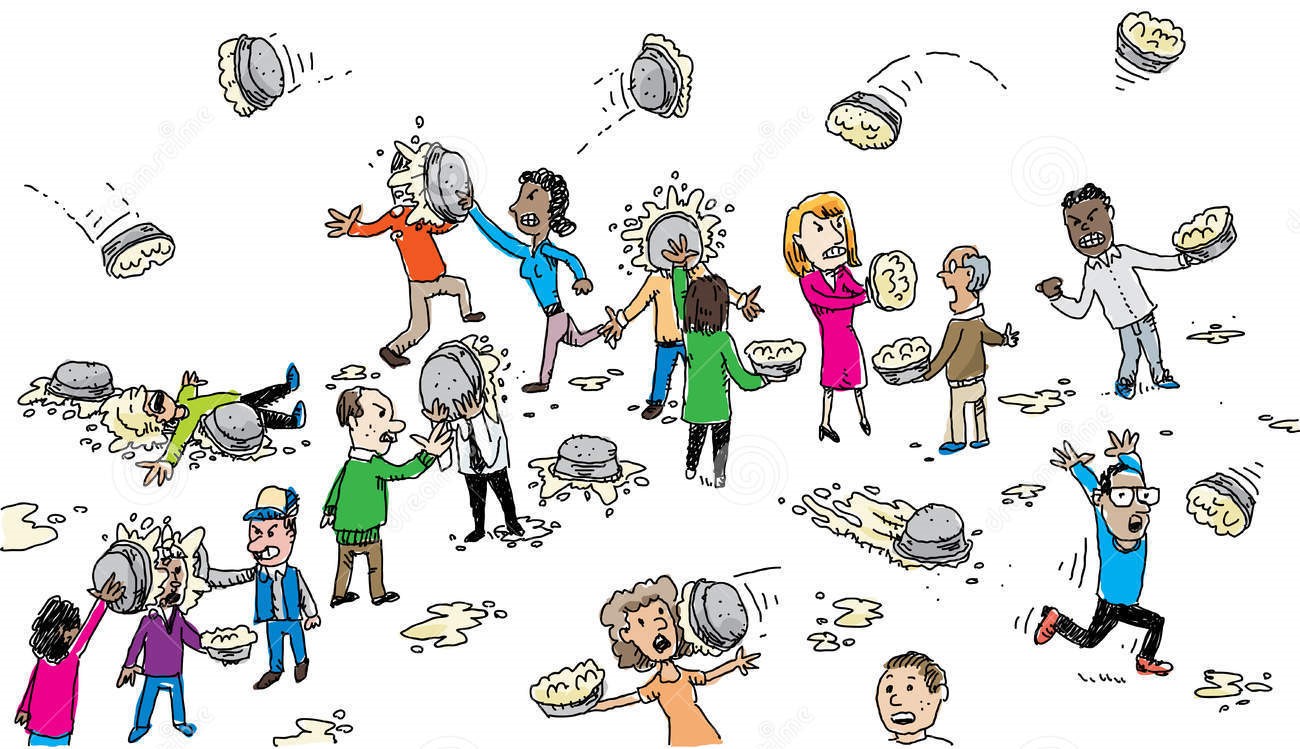
In the European Protestant work ethic, resources determine success. The person with more resources has earned the favor of God, therefore, it is their right to continue amassing power. Moreover, since power is a resource granted by God, and salvation is an individual transaction between a human and their God, it is expected that individuals continue finding ways to gather power, even at the expense of others who will lose their power. This is, I believe, at the core of capitalism. This is also a self-preserving system. The more power you have, the more you show that God has favored you. Therefore, you need to continue amassing power in order to show how much God has favored you. Those with no power have the option of finding ways to obtain power, and with it, show that God has also favored them. Since power can be amassed, those who have it present themselves as an example of how you, too, can receive and amass power if you only work hard enough for it. The problem comes when everyone starts thinking that power is finite. There are several ways to obtain power, but in this context only two are relevant: you earn power by buying it from others, or you fight for it at the expense of others who will lose it to you. Or in simple terms: some people will have large pieces of the pie, others will have slimmer pieces, and others will have no pie whatsoever.

Therein lays the problem with the pie analogy for power. There is no pie! None!

The recent conversations on racism have revolved around how to divvy up the pie. It seems like for the most part, people think that communities of color and other minoritized peoples have been trying to get a piece of the pie that majority groups have been cutting for themselves. To many people who noticed that their pieces of pie were larger than that of others, this is a problem they want to fix by either redistributing the pieces of pie, or – in my opinion, the ones that are a bit more advanced in their understanding of the complex racial realities we live under – they try to share their own pieces in order to show solidarity. Both of these approaches are honorable, as those with pieces of the pie have never experienced any other way to interact with their power. They are, in my opinion, a bit closer to understanding the demands of oppressed communities. Nevertheless, I reaffirm: there is no pie.

The pie analogy is one of the ways in which language fails us. It tries to simplify a very complex concept in order to make it more digestible (yup, pun intended!) Power is, like the Trinity, a complex, immaterial concept that cannot be explained in simple terms. Just like the Trinity is neither an egg nor water, power is neither a pie nor a table in need of more chairs to accommodate minoritized communities. Although these concepts can help us start the conversation, they cannot be the ones used to engage in deep, comprehensive, and serious conversations about systemic change and power relations.       pie-fight-group-cartoon-people-cream-pies-46001112

Marginalized, minoritized, and oppressed communities are not asking to share the pie. In fact, for many of us, is not even about being able to bake a pie! At the heart of the matter is what types of systems are needed to share power in order to identify the needs of the whole. It is also about coming up with solutions that address the very complex realities in which we live. It is about sharing power in all of its complexity, without taking power away from anyone. That is something the pie analogy doesn’t address. Moreover, it is this flawed analogy of the pie the one that makes it scary for the majority to engage in conversations about power dynamics. The thought of losing a piece of the pie is scary, especially when you have been socialized to believe that the piece of the pie is the seal of favor and success from your God.

Language will continue being the most important tool in human history. It is also important to know how to make use of it. Language affects the way in which we interact with each other and whether we can advance in our understanding of each other’s needs and wants. Using analogies will help us start conversations, but it cannot be the end of it. In fact, when an analogy doesn’t help frame the conversation in the best way, perhaps it is time to stop using it. My suggestion is to stop framing the conversation in relation to how the pie is to be sliced and shared, and instead talk about the nuances of shared power and systemic structural changes that will allow for more people to collaborate. The conversation can be framed in ways to collaborate and learn from each other. Instead of scaring people by suggesting that they will lose something in order to share with others, let’s start talking about the infinite amount of resources that exist in our social contexts to help collectively solve complex problems. Besides, I have never liked pies anyway…

Leave a comment

Filed under Culture, discrimination, Human Rights, Leadership, Philosophy, power, race, Racial Relations, racism, Social Movements, Sociology, USA