Category Archives: Recuerdos

The Next Destination This Hispanic Heritage Month: Panamá!

As I continue inviting you to explore the places I have visited in our beloved and beautiful Latin America this Hispanic Heritage Month, I want to bring you with me to Panamá.
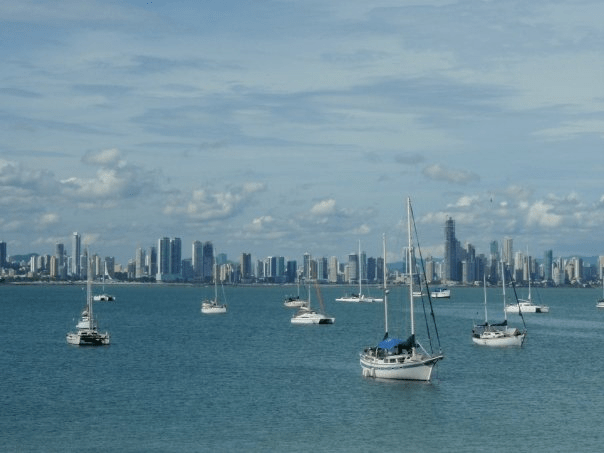
A view of Panamá City from the isthmus. The contrast of modernization with tradition is everywhere in the city.

It is possible that the only thing you know about Panamá is the canal. The Panamá Canal crosses the country north to south, opening a waterway for large container ships to cross from the Caribbean Sea to the Pacific Ocean. The Panamá Canal is quite significant for various reasons. First, because ships no longer have to do the difficult navigation around the southernmost point in the continent through Tierra del Fuego, to reach the Pacific Ocean from the Atlantic. Second, because it helped in cutting Panamá from Colombia, from which it was a department prior to its independence. Third, because the canal was USA territory until 1999, and thus, is another palpable reminder of the way in which the United States have had an overarching presence in Latin American affairs. Finally, the canal is also the big scar that divides the American continent, physically cutting the north and south parts of the large landmass that is América.

I have only visited Panamá once. My mentor, friend, and second mother, whom I met while she was a professor at the university I attended, lives there. Her ties to Panamá are strong. When she attended the same school she eventually taught at, she met the father of her sons, who was at the time, an international student from Panamá. Her sons were born there, and currently, her surviving son’s children live there. It makes sense for her, already retired, to live near her grandchildren and son.

A while ago, I decided I wanted to visit her. It had been quite some time since the last time I had seen her, and I felt it was right for me to visit as she had already traveled to visit me while I lived in NYC and she was in Pennsylvania. I also wanted to meet her son, as I consider her a second mother and it would’ve been great to meet my quasi-brother. Up until that time, Panamá had been a layover stop on my way to other Latin American countries. In fact, I had never stepped out of the Tocumén International Airport in Panamá City before. Thus, I didn’t have any expectations from the country, other than meeting my mentor and friend.
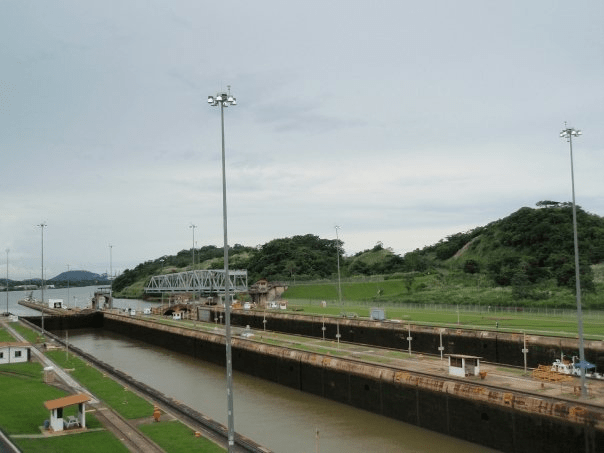
The Panamá Canal is the link between the Atlantic and Pacific Oceans.

What I discovered was way more than a beautiful Latin American country! I discovered a country with a complex history, wonderful people, delicious cuisine, and an accent that was so close to my own that I always felt at home.

My friend is a lesbian activist, and as such, I had the chance to connect with the LGBTQ community in Panamá and experience the country through their eyes.

The most significant experience I had in the country, was a visit to the Kuna or Guna people. The Guna are one of the surviving indigenous peoples who the colonizers were not able to erase. Like many other indigenous cultures from around the world, the Guna do not have a strictly binary gender system. In the Guna communities there is a third sex, the “Wigudum”, who play an important role in their societies.

When I visited with the Guna, I had the wonderful opportunity to meet some Wigudum people. Some of them were concerned because, although they had been accepted by the majority of their communities, US-backed Evangelical churches were growing in their communities. This meant that US puritanical and hypocritical mores were being spread throughout their communities, including the marginalization and demonization of the Wigudum. Moreover, the hypocritical aspect of the US puritanical moral code was using Wigudum young people as sex objects in private while rejecting their humanity from the pulpit. At the time, I was serving in parish ministry, and although the church I served is a very progressive congregation, I couldn’t get the guilt off of me. Modern, US Evangelical Christianity is annihilating a culture that survived millennia of colonization.

Still, visiting with the Guna was the most beautiful part of my visit to Panamá. They did not perform for me as a tourist. They did not put on a show to entertain me. I didn’t act as if I knew more than them about their country, their culture, or their struggle. I visited with humility and an open mind, hoping the learn from and with them, even if for just a few hours. I highly recommend connecting with indigenous communities, if possible, when visiting any Latin American country in which there are indigenous communities. Visiting with them will offer a better understanding of their culture, their history, their current realities, and the damage that colonization continues to do.
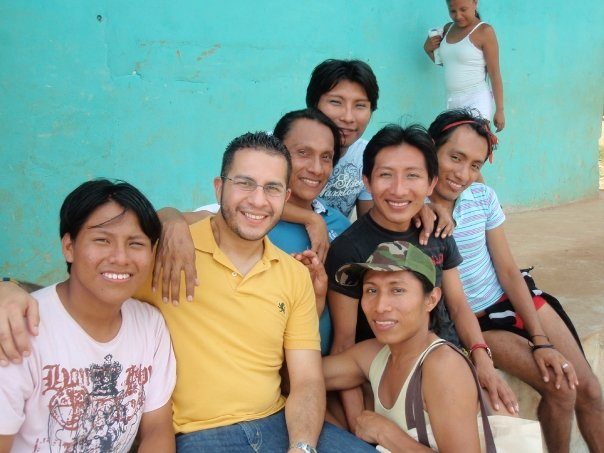
Sharing with Guna people was the highlight of my visit to Panamá.

Of course, I had the chance to visit the Panamá Canal. It is an impressive view. Watching the huge vessels travel through this intricate piece of engineering is really a sight. It is also an interesting experience to visit the canal zone. The canal was transferred back to Panamá as it was always intended, in 1999. Since then, Panamanians have moved to the zone, while some service members from the USA have also stayed. It is an interesting reality worth witnessing.

The final place I would suggest visiting in Panamá — of the places I visited, because I cannot speak for the whole country — is the old town. Contrary to other old towns throughout Latin America, Panamá’s is small and not well maintained. The structures are crumbling, and they reminded me more of Havana than San Juan. The ruins of the old city are also nearby and they are an interesting place to visit to learn more about Panamá’s development. I am not sure about the rest of the country, but Panamá City is a sprawling experiment on US capitalist development. Huge skyscrapers are being built everyday. Hundreds of housing units unreachable for locals are being sold to international investors with no intentions to help the people of the country. However, since infrastructure is still lacking, water barely reaches the units beyond the third floor, and power outages are very common.

Visiting Panamá was a great experience for me. It showed me both sides of Latin America: the side still connected to our ancestors, cultures, and traditions, and the side that is the unsuspected victim of globalization and US imperialism. As a Puerto Rican, it was a great way to know that my people, my Island, are not alone in suffering the impact of invasive US imperialist policies. As the late Panamanian poet Dimas Lidio Pitty once wrote:

Panamá, my beloved land

wounded by the many pains

tomorrow, without invaders

an Eden under the sun you shall be.
Leave a comment

Filed under celebrations, cultural celebrations, Culture, ethnicity, Heritage, Hispanic Heritage Month, Hispanics, Hispanidad, Hispanos, History, Human Rights, Humanity, Identidad, Identity, justice, Latin America, Latinidad, Latino, Panama, race, Racial Relations, racism, Recuerdos, resistance, Social Movements, Sociology, tradiciones, traditions, trans, transgender

Christmas Memories in Exile

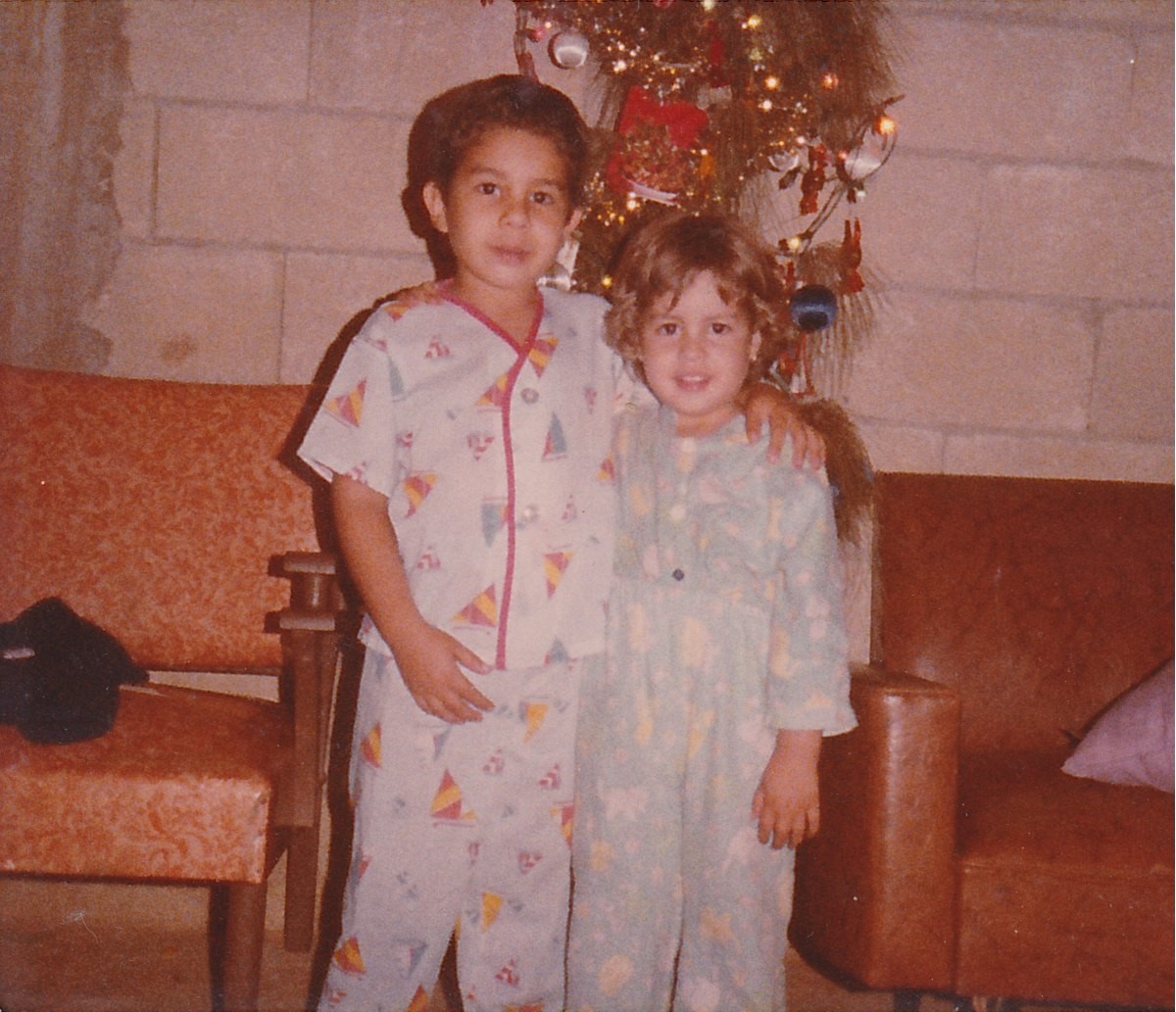
I remember a picture the other day. It was a picture with my sister and I, in front of a Christmas tree. I couldn’t remember what we were wearing, but I do remember that it was taken in the house we grew up in. It was taken many Christmases ago.

When you move as much as I have, memories are all you have left when important dates come up. Living away from the place you consider home means that you always carry with you the memories of special dates. Christmas in particular is a difficult time for me. I grew up in the mountains of Puerto Rico, where the weather this time of the year is cold, but not freezing cold as it is where I live now. The holiday music is festive, cheerful, loud, at a fast tempo, and is everywhere. Caribbean sounds fill up the air; not the slow, often dark, and to me, sad songs with northern European origins. Christmas music for me is drums and guitars, is tambourine and maracas, is güiro and cuatro. Parrandas fill the nights with music as people gather late at night and go throughout their neighborhoods signing traditional music from house to house. All homes are always ready for parrandas. There’s always food: hot chocolate, crackers, guava paste, queso de hoja (a type of homemade white cheese), and of course, the last home that is visited must prepare an “asopao”, or soupy rice with either chicken or pigeon peas.

Our Christmas tree at home was always humble. I still remember the year when my dad decided to just take a coffee tree and wrap its branches with aluminum foil. We placed lights and ornaments and it’s still the most beautiful Christmas tree I had ever had. The tree on the picture I remember was humble as well. We had gone to my grandfather’s farm and cut a pine tree. It did not have the aroma of the fir trees or the spruce trees, but it was beautiful in its humbleness. We put garlands and ornaments and musical lights on it. The tree would not have presents. Ever. Presents were not to be placed under the tree or given on Christmas Eve or Christmas Day. We had to wait until Epiphany, the Feast of the Wise Men, on January 6th. The day before my sister and I would gather some grass for the camels, place it on empty shoe boxes, and place those under our beds. The Three Kings will leave present then… and we will have a week or two to play with them before going back to school.

When you live in exile, or away from home in any form, these memories are all you have. You remember the holiday, and the music, and the presents, and the food, and the family time. You remember that nothing will go back to what it was. You remember that life goes on and you must adapt.

I found the picture among my things. My sister and I are wearing pajamas. The Christmas tree looks as beautiful as I remember. It brought back all the memories of Christmas past, in the mountains of Castañer, waiting for parrandas and for the music. It is Navidad; it is home.

IMG_0002

Leave a comment

Filed under Christmas, Culture, ethnicity, familia, History, Identidad, Identity, Latino, Navidad, niña, niñez, niño, Puerto Rico, Recuerdos, tradiciones, Uncategorized

Después del Huracán

ebb60db07e3f8f1493c405ca43b96ba6

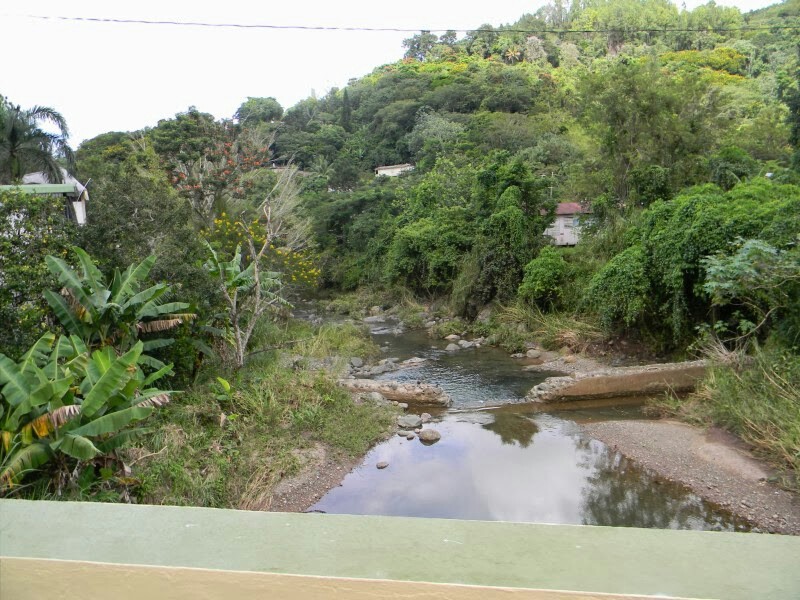
Mi abuela Margot y mi abuelo Quino vivían justo frente al Río Guayo. El puente que une a la municipalidad de Adjuntas con la municipalidad de Lares está justo frente al que fuera su hogar. Era en este río en el que nos bañábamos en el verano. Cuando pasaba el huracán, era en este río donde nos hacíamos más familia y más comunidad.

Dice el dicho que después de la tormenta, viene la calma. Esto es quizás así; pero después de la tormenta también vienen los desafíos de cómo vivir sin las necesidades básicas a las que nos hemos acostumbrado. Después de la tormenta también vienen los días sin luz, sin agua, con comida limitada… vienen los días largos sin saber cuánto tiempo será antes de que la vida vuelva a la normalidad. Después de la tormenta viene el resuelve, como le llamamos en mi pueblo.

No es secreto que cada vez que hace un viento fuerte, la frágil infraestructura de Puerto Rico sufre. En mi barrio, digo yo que cada vez que alguien destornuda duro, la luz se va. El agua potable también es un reto. Esa viene cada dos días; a veces un poco menos seguida. Prácticamente casa cuenta con sus tanques de agua para recolectarla cuando está disponible y así mantener el suministro cuando se vuelva a ir. Cuando chiquito, teníamos acceso a una quebrada de la cual sacábamos agua para tomar. El agua para uso diario la traíamos también de allí, pero por tubos y con bomba que mi papá instaló. Había conexión al sistema de la AAA , pero no dependíamos de ella para abastecernos de agua.

Recuerdo que después de los huracanes, cuando tanto la luz como el agua se iban por semanas, trasladábamos algunas de nuestras rutinas diarias al Río Guayo. Allí, debajo del puente que une a Adjuntas con Lares, un grupo de mujeres – la mayoría de mi familia – sacaba barras de jabones, paletas, cestos y tablas para lavar ropa. Sentadas en piedras o en banquitos que sus maridos le hacían, las mujeres comenzaban a lavar las ropas de sus familias. Con cada estrujada de ropa, con cada movimiento de limpieza, comenzaban los chistes, las carcajadas, las noticias del día y los chismes de barrio. Con cada pieza lavada, se enteraba uno de los planes para las comidas comunitarias de más tarde, de las posibilidades de que la luz y el agua llegaran más tarde de lo esperado, o de dónde ya estaban vendiendo pan caliente…

La niñez recorría el puente y nos tirábamos al río. Las madres nos gritaban que nos quedáramos quietos porque algo nos podía pasar. Algún niño o alguna niña, siempre, nos arruinaba el día cayéndose entre las piedras y abriéndose alguna herida. En ese momento se paraban todas las actividades para darle consuelo primero y un buen regaño después – o quizás era al revés, no recuerdo – al niño o la niña lastimada.

Los maridos, mientras las mujeres limpiaban las ropas, se iban a seguir limpiando los caminos. Vivir en el campo significa dos cosas: siempre hay mucho árbol en la carretera cuando pasa una tormenta, y los caminos no han sido construidos de la mejor manera así que siempre estarán en necesidad de reparación. Recuerdo que mi papá se llevaba la guagua pick-up, su machete, su sierra y cualquier otra herramienta que fuera útil, coordinaba con otros y se iban por caminos que sabían que los gobiernos municipales y estatales no les darían atención. Así era como comenzaban a ayudar a que los vecinos se conectaran. Después del huracán, la comunidad se juntaba para levantarse.

En algún momento del día, cuando ya las ropas estaban limpias, se reunían las mujeres para cocinar. Las ollas eran de tamaño enorme, como para alimentar a un ejército. Se cocinaba lo que hubiese: arroz, habichuelas, gandules, bruquenas del río, chopas del lago, pollos, puerco, guineos, ñames, yahutía, malanga, chayotes, plátanos, huevos… En fin, lo que hubiese por allí se hacía de comida para todos y todas. Después de la comida salían las sillas y las mesas, el juego de dominó estaba listo. Esta era la parte favorita de mi abuela paterna: el juego de dominó. No había en todo Castañer una persona más fanática del dominó que mi abuela Margot. Sus hijos e hijas le temían en la mesa. Ninguna o ninguno la querían tener como pareja de juego, porque si perdías la mano de dominó, ella te desheredaba. ¡Doña Margot no jugaba con su dominó! Abuela gritaba, se emocionaba, se vivía el juego desde el comienzo. Verla jugar dominó con una estrategia nítida, desarrollada por años de devoción a su juego favorito, era toda una experiencia.

Para mí, de niño, el tiempo después del huracán era más como una película de acción y de aventura. Era el tiempo en que la familia y la comunidad se unían. Era el tiempo de jugar debajo del puente del Río Guayo y comer en familia. Era el tiempo de ver las estrellas en el cielo al final del día, cuando se abría el firmamento y se iluminaba el cielo raso con un millón de estrellitas que nos recordaban tanto la fuerza de la naturaleza como el tesón de un pueblo que se levanta su dolor para alcanzarlas.

Leave a comment

Filed under familia, Heritage, Hispanics, Hispanos, Huricaine, Identidad, Identity, Latino, Puerto Rico, Recuerdos, tradiciones

Los callos de mis manos

Hace ya varios meses estoy yendo al gimnasio. Por razones de salud no puedo hacer ejercicios cardiovasculares (cardio) que requieran que mi corazón se acelere mucho. Así que mi entrenador sugirió que hiciera levantamiento de pesas en su lugar. Ya van varios meses levantando pesas. Siendo que no utilizo guantes, he notado cómo mis manos se comienzan a llenar de callos.

De pequeño, mi papá me llevaba a la finca para ayudarle. Tenía mis herramientas propias para trabajar: mi canastita de mimbre para el café y mi pequeño machete para enfrentarme a las yerbas que crecían impávidas por todos lados. Para quien no ha crecido en la finca, en el campo, esta vida es romantizada.

Todo escrito que he leído donde el ambiente es el campo, nos hacen pensar que esto es el idilio. Levantarse temprano, trabajar la tierra, producir nuestro propio alimento con el sudor de nuestra propia frente. Todo muy bonito y romantizado, como he escrito, pero nada de verdad.

La verdad es que esto es trabajo duro. Es fuerte. Es trabajo que, para el niño que era, no se sentía ni romántico ni satisfactorio. Aunque no creo que mi papá nunca se haya arrepentido de haber trabajado la tierra, la verdad es que él mismo nos repetía una y otra vez, la necesidad de estudiar para poder salir del campo. Tener una carrera y bc20ee0e87b18cbfe71303719e126ee4un trabajo estable. La vida en el campo y el trabajo de la finca son duros.

El tomar el pequeño machete me creaba callos en mis manos. Recuerdo que detestaba verme las manos al final del día y sentir la protuberancia que se convertiría en una ampolla de agua y que luego dejaría a su vez una marca callosa. Recuerdo el no querer ni siquiera mirar mis manos para no darme cuenta de esta horrorosa realidad que me marcaba como niño pobre, como niño del campo, como niño jíbaro…
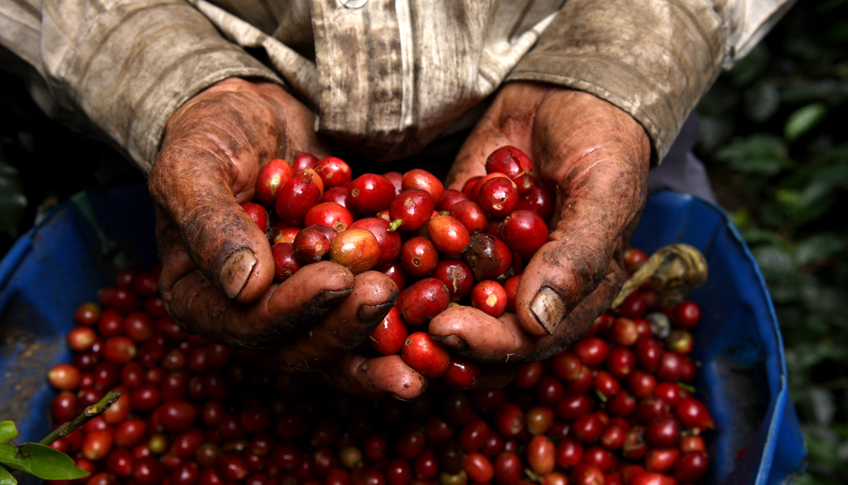
Me ha parecido interesante que ahora, cuando ya estoy adulto y tengo más o menos la misma edad que tenía mi papá cuando me llevaba con él a la finca, mi comprensión de los callos en mis manos es diferente. Ahora, aunque no tengo callos por las mismas razones, veo mis manos y recuerdo a mi papá. Recuerdo el machetito que yo usaba para cortar las yerbas del patio y de la finca. Recuerdo los granos del café, color del rubí, cuando recolectábamos los granos en las cestas de mimbre. Recuerdo el levantarme temprano – quejándome, no queriendo ir – para llenarnos del sereno de la madrugada mientras subíamos y bajábamos cerros para encontrar los arbustos más llenos de los granos de café. Recuerdo las manos de mi papá, acariciándonos con cariño por el trabajo completado, por haberle acompañado, por hacerle sentir orgulloso. Recuerdo sus manos callosas sobre las mías, recordándome la importancia de los estudios para que no tuviese que vivir toda la vida en la finca.

Ahora, los callos de mis manos, aunque no vienen de las mismas tareas, me recuerdan a mi procedencia campesina. Soy parte de esa jaibería boricua que salió de las montañas, también llenas de callos y de cicatrices en sus tierras…

Leave a comment

Filed under Culture, familia, Hispanics, Hispanos, Identidad, Latino, Puerto Rico, Recuerdos, tradiciones