Category Archives: Uncategorized

Why I Vote

i-votedThere are people in the United States, especially those – usually young, and white, and from middle and upper middle classes – that espouse “anarchist” and “leftist” views, who say that voting is a waste of time. Why should we vote if the candidates all have the same platforms? Candidates all work for the same corporate interests and look only after their own kind. Why bother with voting?

I do not disagree that many, if not most, candidates are just clones one of the other. However, for me it is still important to cast my vote. Why? Because of whom I am.
It is easy to dismiss your right to vote when you are white, or young, or male, or rich, or educated, or healthy… or any combination thereof. It is easy to dismiss the electoral process and complain about politicians and their work while not wanting to be part of the process. I understand the frustration, because I have felt it myself at times. But when you are not part of the majority, your vote is extremely important.

This is why I vote: because I am not white, because I am not straight, because I am not rich, because I am an immigrant, because my first language is not English, because my spouse can’t vote, because I am a feminist, because I am a progressive, because I am a person of faith, because I am not willing to let others dictate what I think is best for me… Voting allows me to reclaim my space in the public square. Voting allows me to stand up and say that I am part of the process even when the majority of those in power do not want to recognize my mere existence. Voting allows me to stand up for what I believe, even when the politicians making the decisions are those I voted for!

No candidate and elected official are going to share all of my values. However, I feel empowered to raise my voice when I vote. I can tell those politicians and elected officials that I have the power that the US Constitution grants me and I will make use of that power. Voting is not the “fix-all” solution. It is not perfect and it is not going to make the government work exactly as it should. But, when you are not part of the majority it is extremely important to show up at the voting booth (or to mail in your ballot!)

I vote because I am not white, because I am not straight, because I am not rich, because I am an immigrant, because my first language is not English, because my spouse can’t vote, because I am a feminist, because I am a progressive, because I am a person of faith, because I am not willing to let others dictate what I think is best for me…

Leave a comment

Filed under Uncategorized

I Have An Accent… Get Over It!

It was the first board meeGlobe_of_languageting of the year for a large, international organization. As there were going to be new members for the board, it was needed to go around and introduce ourselves. There were people from the four nations where the organization has a presence plus individuals from other nations who reside in one of the four nations represented. Everyone was sharing their names, location, and their job. It was right there when it happened…

With no hint of irony in her voice, the white, middle age, college-educated woman states that she lives in one of the places that was taken first from the native inhabitants and then from the nation to the south. Proudly she tells her audience – an international audience – that she “teaches foreign students how to lose their accents so they can get jobs” in the United States. Yup. Right as you read it. Immigrants who had spent years of education, who probably speak more than one or even two languages, needed this woman’s help to lose their accents so they could get in with the system.

I looked around for the reaction of my fellow immigrants and non-white colleagues, and, unsurprisingly, we all cringed a little. What this woman was saying, unconsciously, is that our accents make us look dumb, uneducated and unprepared for the professional challenges that jobs in this country offer.

Not long ago, something similar happened to me as I was about to take a new position and someone suggested that the organization paid for a coach who would help me lose my accent. (Full disclosure: I was not informed of this until after I had accepted the position, which caused much pain as I worked there.)

The USA culture states that, no matter how ethnically diverse the country is, those of us who have kept our accents from our mother tongues do not quite belong. For some immigrant communities this has meant that their ancestors’ languages have been lost because the parents are worried their children might not be able to find work or succeed in life. Interestingly, the culture has also incorporated words from other languages into the US English. Think, for instance, about words such as Kindergarten (German), pierogi (Polish), mesa (Spanish), bouquet (French), Brooklyn (Dutch), finale (Italian), tycoon (Japanese) and shtick (Yiddish), just to name a few. Other languages are part of the US culture, but nobody wants to acknowledge it. Moreover, if those of us who emigrated here from other countries with a different language use our own languages to communicate or express ourselves in English with an accent, then we are scolded for it.

Yet, nobody pays attention or asks Australians, South Africans, Jamaicans, New Zealanders, Trinidadians or British to lose their accents. Why?

It is true that communication is extremely important in academic and professional settings. (The personal settings are a bit different due to the familiarity of the people involved.) However, our accents and language backgrounds should not dictate our – the immigrant’s – capabilities to do the work. Being able to speak a language different than English does not mean that we have less education, less knowledge or less professional abilities. It only means that our education was in a language that was comprehensible to us as we grew up and became professionals. In fact, nobody questions the intelligence of English-speakers when you come to our countries and often times refuse to learn at least basic phrases to communicate with the people who live there.

Here are three other things that US Americans need to understand about people who speak other languages. First, most of us do speak English. Our accents only mean that English is a second, third and sometimes even fourth language (I had a seminary professor for whom this was the case, where English was the fourth language he learned.) The use of English along our own mother tongues only points to the fact that we are bi- or multi-lingual. How many languages you, English-speaker, are able to read, understand and speak?

Second, the truth is that every chance we have, we use to learn how to pronounce words, how to expand our vocabulary, and how to find the correct way to use your language in all contexts. Have you thought how difficult it is for a foreigner who was only exposed to “proper” English to figure out some of the common idioms and day-to-day phrases of your language? Take, for instance, “cut the mustard”. I know what the verb “cut” is, and I know that “mustard” is a condiment. How in the world am I supposed to know that “cut the mustard” means “to succeed”?! My mental references for mustard do not even allow for cutting! Mustard, as a seed, is too small to be able to be cut, and as paste, there is no need to be cut as it spreads. Do you follow my thoughts? (There’s another one!) I can tell you, from my personal experience, that I even take time to listen and practice pronouncing a word over and over and over again trying to find the correct way to pronounce it.

Third, there is the issue of pronunciation and hearing. You, who grew up listening to words in your language all the time, might be able to catch the subtle difference between “leave”, “live” and “leaf” but, trust me; it all sounds exactly the same to me! I need to pay attention to the context in which you used these words to find which one you used. How hard it is for you to do the same exercise? All of this is tiring, but it is exactly what non-English speakers have to do every day of our lives in this country (and what English-speakers have to do every day if they live in countries outside of the English-speaking world.)

There are two final thoughts I want to share with all of you. First, is the issue of regional accents within the United States. Most people fret about and want to change the accent of foreigners, but you seldom hear about changing the accents of people from different regions within the country. There are not-too-small differences between the accents of an Alaskan, a West Virginian from the mountains, a person from Brooklyn and one from Massachusetts. Yet, nobody will dare recommending that we all come to an agreement about speaking with the same “standard” English accent. Why? Because there is no such thing as a standard accent in any language! All languages have regional differences! Hence the ridiculous idea of asking British, Jamaicans, Australians, South Africans and Trinidadians to change their accents… they all speak English with regionalisms and it is a matter of adapting our ears to those regionalisms in order to understand each other.

Finally, my accent is, to me, a point of pride. It tells me that I speak more than one language, that I am able to communicate with more people than mono-lingual persons, and that I bring with me to this country a history. It defines who I am at this moment of my life and it makes me feel part of the global community, not just of a small community of either people of the United States or people of Puerto Rico. I can drive through the northern border of the USA and make myself understand just as I can cross the southern border and still engage in conversations. (Unfortunately, I do not speak French; therefore any visit to Quebec would be an adventure… And one that I would gladly welcome!)

My best advice to those who complain about my accent, or about any accent for that matter? Get over it.

Leave a comment

Filed under Culture, discrimination, ethnicity, Heritage, Hispanics, History, Puerto Rico, race, racism, Sociology, Uncategorized, United States, USA

An Update

It’s been a while since my last post on this blog. Way too much has happened since. I hope to be in a more regular schedule of writings in the months to come, but for now, I thought appropriate to share some of the reasons I have been so silent in the past few months. 

First, I have traveled quite a bit these past few months. First a mission trip to Tijuana, México where I was volunteering at a women’s shelter. Then a short vacation to Puerto Rico with my spouse and some friends. Then spent some time in Cuba for the International Journey Against Homophobia. I promise I will share some of the stories later in the year. 

Second, a painful loss in my family. My beloved abuela, Palmira Rivera, died on April 30th, the same day I was returning to Seattle from my vacation in Puerto Rico. Thankfully, my husband and I got to spend a great time with my abuela the Sunday before she died. Abuela Palmira made us laugh… she laughed and made jokes and had a great time. I feel at peace knowing that the last I saw of my abuela was her laugh. There are many other stories about abuela that I’ll be sharing with you. For now, all I want to say is that she was the biggest one of my supporters. Even when my parents cut me off their lives, abuela welcomed me and showed her unconditional love for me and my spouse. I will miss her dearly.

Finally, some big news: I will be moving from Seattle, WA to Madison, WI. I had been called to serve as the Executive Director of The Crossing, an ecumenical (American Baptist, United Church of Christ and United Methodist) campus ministry at the University of Wisconsin – Madison. This is a huge change for me. I am leaving behind over 15 years of parish ministry and starting something completely new. I am both excited and nervous about this new chance. I look forward to working with students and also reaching out to local congregations and individuals who are passionate about reaching out to new generations of leaders. 

I have done quite a few other things here and there. But right now I am in the middle of important transitions in my life and the life of my family. I look forward to the many more opened doors that are ahead of me and to close some chapters in my life as well. That’s it for now. I will be coming back with more stories and commentaries in the coming weeks. 

Leave a comment

Filed under Uncategorized

Cheo y Gabo se encuentran

… y de repente se acercó, caminando lentamente las escaleras hacia la eternidad. Fue en ese momento cuando escuchó desde lejos la voz aguda diciéndole, “¡Familia! Pero, ¿y desde cuándo anda usted por acá?” El viejo alzó la mirada entre las nubes y pudo ver el hombre negro unos escalones más arriba. Su sonrisa era inconfundible. Definitivamente era él. El viejo le dice al hombre, “Amigo, acabo de cruzar las puertas de entrada. No sabía que te me habías adelantado. ¡Qué bueno verte por acá!”

Ambos comenzaron a platicar como amigos de siempre, a pesar de que en realidad no se habían conocido en persona nunca. Pero algo más fuerte que el haberse conocido los unía. El arte. El arte los unía en la vida y en la eternidad. El uno le dice al otro, “Amigo, cuántas veces llenaste de alegría las noches de mi casa. Allá cuando mi esposa y yo escuchábamos en solitario tus baladas. La salsa no era para nosotros. Pero esas baladas. Esa pasión. Esa dulzura de tu voz y el sentimiento con el cual cantabas.”

El otro se sonrío. Con esa sonrisa que siempre le caracterizó. Y le dice al viejo, “Pues fueron muchas las noches que disfruté de tus letras. Precisamente en Macondo. Allí donde tú creaste y yo viví. Tus sueños fueron mi realidad. Tus letras eran las vidas mías. Cien años pasé en la soledad de tus letras. Algunas hasta me inspiraron las canciones. Gracias, hermano. Gracias.”

Y entonces se confundieron en un abrazo. Lloraron por haber dejado a la gente que amaron atrás. Lloraron por sus pueblos, que son un pueblo. Lloraron por Puerto Rico y por Colombia, por México y por Cuba. Su amada Cuba. La isla esmeralda que ambos compartieron y que tanto amaron. Lloraron por las letras y por la música. Lloraron por el pasado de sus pueblos y por el presente que aun viven. Lloraron por las maravillas que dejaron atrás y por las hermosuras que todavía hubiesen disfrutado. Pero después de llorar y de abrazarse, comenzaron la larga jornada hacia la eternidad. Se contaron historias y se cantaron canciones. Se imaginaron que los pueblos que dejaron atrás seguirían escribiendo; escribiendo canciones de amor y de regocijo, escribiendo cuentos y leyendas. Se imaginaron que los pueblos que dejaron atrás seguirían amando y cantando, porque en la vida hay amores que nunca, ni en cien años de soledad, se pueden olvidar. 

Leave a comment

Filed under Uncategorized

Justin Beiber and “José Pérez”

Much has been said about Justin Bieber’s case. Unless you live under a rock, you probably already know that even CNN had to stop an important interview with a US Congresswoman in order to report about the Biebs’ arrest. There is much that can be said about the whole thing, but I want to focus my attention on the one thing that has been abuzz around Spanish media but completely ignored by the mainstream media: Justin Bieber’s immigration status.

That is right, my dear Bielevers… The Biebs is 100% foreigner. He’s an immigrant worker. Like Ted Cruz, maple syrup and socialized medical care, the Biebs comes from Canada! Living and working in the United States legally, Justin Bieber should still be bound by the immigration laws of the great United States. This means that, for his infractions (driving under the influence of alcohol and controlled substances, drag racing and resisting arrest) he should be placed on deportation proceedings. But of course, this is not possible to do with a white, English-speaking, rich, young man. These immigration laws and procedures only apply to brown-skinned, middle-class, poor, and non-English-speaking residents.

Imagine for a second that the person arrested was not Bieber, but José Pérez (these being the most common first and last names throughout the Spanish-speaking world.) Imagine if a hard-working, young, Hispanic male was arrested for DUI, drag racing and resisting arrest on the streets of Miami? And I am not going to say an undocumented immigrant; but a legal resident. Someone who entered the country legally – say from Colombia or Venezuela, which are the two largest non-Cuban communities in Miami. What would have happened? Certainly, not a $2,500 fine and a slap on the wrist. If José Pérez had been caught on this situation, his family would be visiting him at the Glades County Detention Center right now, waiting for a judge to set a hearing, and certain that his legal residency status would be revoked and he would be deported. José Pérez’s family would be scrambling and trying to find the money for the onerous fine imposed by the judge while visiting a few dozen lawyers trying to find who would give them the chance to pay on installments. José Pérez would not be waving at his fans from the roof of a limo while surrounded by bodyguards, but rather waving at his children from inside a federal vehicle who will be transporting him from one detention center to another while a judge decides when to grant him a hearing.

This is what is wrong with the system. This immigration system works pretty well for the wealthy, white, English-speaking immigrant like Bieber. But it is hell for the one that is “the other.” Every day, thousands of men and women of all ages are placed on deportation procedures for less than what Bieber did. Yet, he walks out with a big smile and the certainty that no one will do anything against him. Why? Why are we allowing this system to continue? Why do we have these double standards in immigration? And when are we going to acknowledge that the current system does not work and needs to be fixed?

Leave a comment

Filed under Uncategorized

A New Reading of Luke 2.1-7

It has been a very long time since that last time I wrote something for my blog. I hope that I can keep a better schedule of posting for next year and perhaps even have a few readers! =) In the meantime, I came up with this new reading of the story of Christmas as it is found on Luke 2.1-7. It is based on recent news about Israel’s building of new settlements on Palestinian territory. As a Christian theologian, it is my hope and my prayer that both the Palestinians and the Israeli could find a way of living peacefully and recognizing each other’s humanity. May peace reign in Palestine and Israel for Jews, Muslims, Christians, Druze, atheists, Humanists, and every other person of faith or of no faith that lives on this part of the wonderful Mother Earth.

——

That December, while Palestinian Christians were celebrating the Nativity of Christ, and in a move that could jeopardize the US-brokered peace talks, the Israeli government decided to build even more settlements on Palestinian territory. This happened while Benjamin Netanyahu was Prime Minister of Israel, and the Palestinian National Authority was still debating the legitimacy of Mahmoud Abbas as its President.

Many people decided to move to safer communities. Among them was a couple that lived in Nazareth. Yusuf, a Muslim man from the town of Bethlehem, had married Miriam, a Jewish woman from Tel-Aviv. It was not uncommon for men and women from different faith traditions to fall in love and get married, although it was frown upon by the government officials and religious authorities who put a lot of hurdles for such couples to get married. Miriam was eight months pregnant by now and Yusuf thought that it would be best for them to travel to the town of his forebears, thinking that the Christian majority in Bethlehem will protectthem from any violence that might ignite due to the building of the new settlements.

As Yusuf was driving his old car, they came upon one of the check-points that dot the border between the State of Israel and the Palestinian National Authority.There, Yusuf and Miriam were stopped and asked to exit the vehicle while the guards searched it. Upon noticing that Miriam was Jewish, one of the guards was suspicious of Yusuf and took him into custody. Miriam pleaded with the guard but he did not want to hear her. She was so nervous and stressed that she went into labor before the baby was due. The guards didn’t want to pay attention to Miriam’s pleads and told her that there wasn’t a place for them or for the baby to come on either one of the countries. The guards kept telling the family that there was no space for them anywhere within Palestine or Israel. They had both betrayed their faith, their people and their ancestors by loving each other and building a family…

Leave a comment

Filed under Uncategorized

Who Am I to Judge Papa Paco*? A Response to the Media Hoopla on What the Pope DIDN’T Say About LGBT Rights

It is public knowledge that the media tries to catch our eye with interesting – and often times, misleading – headlines. Such was the recent hoopla about Pope Francis’ interview in which he mentioned the word “gay.” I wish I didn’t have to burst anyone’s bubble, and I really wished Papa Paco had said something really, well, significant, regarding LGBT rights; but the truth is that he didn’t say absolutely anything important.

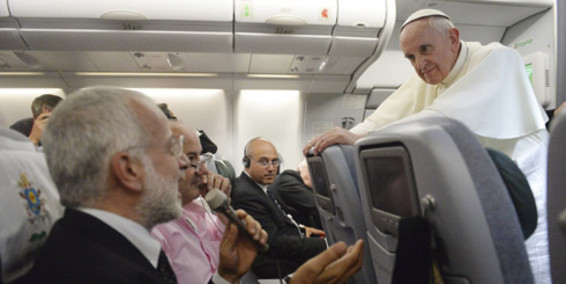
IMAGEN-12955092-2Let us start in the beginning. Papa Paco has already surprised the world with his humility, his openness, and his matter-of-factly attitude. The media world was caught off guard by a Pope that is as open as Francis. In comparison with Blessed John Paul II who was charismatic but reserved, or with Benedict XVI who was as secretive as any Pope in the Middle Ages, Francis’ attitude is something completely new.  Moreover, we do not expect the representative of an organization as secretive as the Roman Catholic Church to be as open with his remarks as Francis has been. Add to this the fact that the US-centric media, with centuries of lay-led Protestantism in this country, has no clue how the Roman Catholic Church operates, nor does it understand the matters of Roman Catholic doctrine, dogma, traditions, etcetera.

When Pope Francis met with the media on the papal aircraft, he was showing his openness. This is still shocking, of course. However, by now we should start getting acquainted with the ways of the new Pope. Therefore, my first call to the US-centric media is: stop exaggerating! Second, please research before you print! Really. A really close examination of the interview and a google search regarding the Catholic Church’s position on LGBT issues should be enough to understand that what Papa Paco said is completely in line with Catholic moral doctrine. He has changed nothing!

To the LGBT advocate groups in the USA and around the world, I ask that, please, for the love of all the souls we have lost to religious intolerance, DO NOT play the game! You are actually doing more harm than good!

This brings me to my second point on this response; namely, that the media totally missed the Pope’s words. If you read any transcript of the interview carefully, you will notice that the Pope, more than once, tells the reporters that the “hot issues” they want him to address have already been addressed by the Catechism of the Church. One by one, he addresses the issues of women ordination (“The Church has already spoken”), abortion and same-sex marriage (“[I ] hold the position of the Church, I am a son of the Church”), divorced people taking the Eucharist (“Regarding the matter of people in second marriages – because divorced people can take Communion – I believe that this is something to look at from the whole perspective of pastoral care for marriages.”), and finally, homosexuality (“The Catechism of the Church explains it beautifully.”)

Given that the Pope wants us to read what the Catechism says about these issues, let us take just a quick look at the one that made headlines: homosexuality.

The Catechism of the Roman Catholic Church, second edition, Part Three, Section II, Chapter 2, Article 6.II.2357 reads: “Homosexuality refers to relations between men or between women who experience an exclusive or predominant sexual attraction toward persons of the same sex. It has taken a great variety of forms through the centuries and in different cultures. Its psychological genesis remains largely unexplained. Basing itself on Sacred Scripture, which presents homosexual acts as acts of grave depravity, tradition has always declared that ‘homosexual acts are intrinsically disordered.’ They are contrary to the natural law. They close the sexual act to the gift of life. They do not proceed from a genuine affective and sexual complementarity. Under no circumstances can they be approved.” On Article 6.II.2359 it reads: “Homosexual persons are called to chastity. By the virtues of self-mastery that teach them inner freedom, at times by the support of disinterested friendship, by prayer and sacramental grace, they can and should gradually and resolutely approach Christian perfection.

What does this mean? First, that according to Catholic moral teachings, homosexuality is and will always be a form of “depravity.” Second, that there are no scientifically proven origins for homosexual orientation. Third, that the fact that there are no scientifically proven origins does not take away from moral teachings regarding homosexual orientation since the Church is “Mother and Teacher” in these regards. Fourth, that the Church recognizes this “depraved disorder” as a cross to bear for the Catholic gay man and lesbian woman. Fifth, that the only life that a homosexual Roman Catholic can aspire to is the life of chastity (and yes, that means life with no sex! Ever!)

This is what Francis believes regarding homosexuality. Moreover, he also exposes that the Church is called to act with care and compassion. Again I quote the Catechism of the Roman Catholic Church, Part Three, Section I, Chapter 1. Article 7.II.1822: “Charity is the theological virtue by which we love God above all things for his own sake, and our neighbor as ourselves for the love of God.” Charity is the theological virtue, according to Roman Catholic dogma, which calls us to love God and to love neighbor as ourselves. Those who love God and love neighbor as themselves will not judge. Living by this virtue applies even to the Bishop of Rome and Vicar of Christ. Thus, when Papa Paco said “Who am I to judge?” he is just reciting the Catechism and even the Bible!

Later on the same part of the Catechism, Article 7.II.1829 we read: “The fruits of charity are joy, peace, and mercy; charity demands beneficence and fraternal correction; it is benevolence; it fosters reciprocity and remains disinterested and generous; it is friendship and communion: Love is itself the fulfillment of all our works. There is the goal; that is why we run: we run toward it, and once we reach it, in it we shall find rest.” Note here that one of the things that charity demands is… FRATERNAL CORRECTION! With that, what Papa Paco actually told the reporters is that, because he loves and cares for the gay and lesbian person, he is called, compelled, mandated even, by Christ and by the teachings of the Church to CORRECT our ways. Doesn’t sound that progressive now, does it?

Perhaps is because I have spent too much time studying Roman Catholicism as a Protestant. Perhaps is because I just can’t believe that the media was so dumb as to be duped by the Pope. Perhaps is because I love being non-celibate, happily married gay man… but I just can’t take the whole hoopla regarding this interview to Papa Paco anymore. But really, who am I to judge Papa Paco? The guy knows what he’s doing and how to play the media! Go Paco!

———

* Note: In Spanish, people with the name “Francisco” are called “Paco.” Since both the Bishop of Rome and I are Latinos, I feel like I can call him by his nickname. Hopefully, this will not make headlines tomorrow! (I can see the media frenzy… “Heretic Latino Protestant Minister Does Not Respect The Bishop of Rome!” Or something like that!)

Leave a comment

Filed under Uncategorized

Who Is My Neighbor?

A legal expert stood up to test Jesus. “Teacher,” he said, “what must I do to gain eternal life?” Jesus replied, “What is written in the Law? How do you interpret it?”  He responded, “You must love the Lord your God with all your heart, with all your being, with all your strength, and with all your mind, and love your neighbor as yourself.” Jesus said to him, “You have answered correctly. Do this and you will live.”  But the legal expert wanted to prove that he was right, so he said to Jesus, “And who is my neighbor?” 
Luke 10.25-29 (CEB)

            There are times when I am amazed at how God works in the world. There are ways in which the Spirit teaches you lessons in totally unexpected ways. The moments that I enjoy the most, are those when the Spirit teaches you lessons that go hand in hand with next Sunday’s sermon! Today I want to share with you one of those teaching moments from this past week. Interestingly, the story goes perfect with next Sunday’s Lectionary readings. Thus, if you are a preacher, feel free to use this story for your convenience next week.

            This past Sunday, I sat down with an elderly woman from my congregation as we waited for her bus to arrive. The bus, as always, was really late and we got to talk for some time. Although my sister in faith is frail, she is witty and funny and can make you laugh for hours with her stories and her jokes. Sitting next to us was our neighbor…

            For the past few months Joe* has been sleeping outside the sanctuary. A few weeks ago during Joys & Concerns one of our parishioners lifted up a prayer for him and for those who are still struggling to find a permanent place to live. Although Joe usually sleeps through our services, this past Sunday he gathered his belongings and joined us for worship. He was an active participant in the service; singing with us, praying with us, breaking bread and drinking from the cup (it was Communion Sunday) and talking with other church friends during coffee hour.

            After the service, while the elder woman from my congregation and I were waiting for her bus to arrive, Joe stayed to talk with us. Our congregation shares space with another church whose services end later than ours. That other congregation was hosting a picnic on the patio that our churches share.

            Knowing that we had been there for several hours, Joe realized that the elderly woman must be hungry, and here is where the miracle happened. Joe, who doesn’t have a permanent place to live, who doesn’t know where his next meal is going to come from, who doesn’t know us, stood up, went to the picnic and brought a hotdog and iced tea for this woman.

            During the whole time that Joe shared with us at church, at coffee hour and waiting for the bus, he never once asked for anything. He shared his story of how he ended up without permanent housing, but not once did he ask for our help in any way. He didn’t even ask for prayers! He just shared with us like any old friend would have. He told us about his time growing up in South Seattle and playing drums in his Baptist church. He told us about his losing his job and not being able to pay those last months of rent (which left him without a home). He even talked about the sermon and about the service. But not once did he ask us for any type of help. The only thing he did was to bless us with his presence, his company, his stories and now, by feeding the hungry and caring for the least of these.

            The actions of this man reminded me of the parable of the Good Samaritan. The parable is pretty tame nowadays, because have read it so many times and in a historical context so removed from its original that it does not mean the same anymore. However, this parable was one meant to shock the audience. The Samaritans and the Israelites did not mix. Customs, religious rituals and other socio-historical realities made it virtually impossible for Israelites and Samaritans to mix. But not only that: the parable is meant to shocks it audience (Israelites) by showing someone who is in “need of redemption” (Samaritans) as the heroes of the story. Basically, what Jesus is telling the religious teachers is:  “You are wrong; the person who gets it is the one you despise.”

            Of course, progressive churches like mine don’t usually despise homeless people (unfortunately, there are always exceptions to this.) However, we don’t get it all the time. We know that it is our duty to provide for the homeless but we forget that the homeless is a human being too, who is as capable of embodying God as we are!

            As Joe came with that hotdog and iced tea to feed the elderly woman he had just met, he was showing me who my neighbor is. According to Jesus, my neighbor is the one who does the will of God, regardless of their circumstances, their way of life, their histories, and more importantly, the way in which we in the church have defined them.

            I will forever be thankful to Joe for his mercy and for revealing to me the face of Christ as he did that Sunday. I am also grateful for helping me write my next sermon a whole week before I have to deliver it! Truly, you are a man of God! =) 

___

*I have changed his name in order to protect his identity. I have also made the decision not to give many details about the elderly woman with the intention of protecting her identity as well.


Leave a comment

Filed under Uncategorized

Family Matters

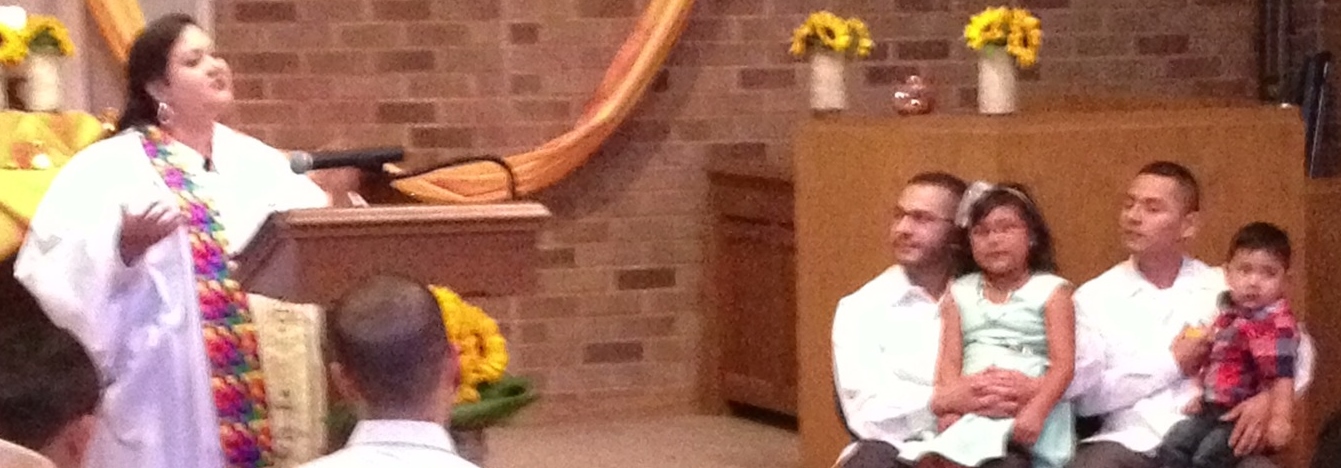
On Saturday was my wedding. As the minister was preaching, our two-years old nephew danced in front of us, and then approached my husband to sit on his lap. I looked at the first row of chairs in the sanctuary, where my husband’s family was sitting, and noticed that our six-years old niece wanted to move and join us to. I did what I thought was appropriate: I signaled her to come forward and sit with us. 

There we were; my husband holding our nephew on his lap, and me holding our niece on my lap. Then I looked around and saw my new family. There was my brother-in-law and his (female) partner, my husband’s cousin and his girlfriend, and a couple of friends who have been like brothers to either my husband or me. There was not a single one of my blood relatives. None could be there for different reasons and my parents and sister have already decided I am not part of their lives. But as I was looking around at my new family, I realized how “family” is such a wonderfully diverse reality. 

ImagePeople talk about “traditional families” as if there was always such thing. In reality, families have always been diverse. There is no such thing as a “traditional” family. There is ideal of family. Our families come in many forms and expressions. I looked around and saw how my family present there was the “new normal” if you will. My brother-in-law and his partner have been together for many years but are yet to get married. He is raising her eldest daughter, who spends time with her birth dad and his family every other weekend. Our nephew was born two years ago, the product of the love of my brother-in-law and his female partner. Then, there was my husband’s cousin, who is dating a lovely, young, white American woman who speaks no Spanish (believe me, that in itself is a HUGE thing!) They were attending the wedding of two men who had decided to commit to each other and to love each other.

Believe it or not, this is more common than people want to admit. Families come in so many varieties and forms! It is such a wonderful thing to see the diversity that exists in life, and to enjoy this diversity with all of its wonders and beauty. Family is family is family… no matter what form it takes… 

Leave a comment

Filed under Uncategorized

Today Is My Wedding Day

Today is my wedding day. Growing up, I never thought this would be something I would say. Back when I was a teenager and realized I was attracted to other boys, the dream of a wedding was not something I had. But after a long journey, today this is a reality. I can get married. The minister can pronounce us “legally married.” I can say to the world that I have a husband and I will proudly wear my wedding ring. 

Unfortunately, marriage equality is not universal throughout the United States, which means that, once I cross the eastern or southern border of my state of Washington, my marriage is not recognized. This is why I will continue to work for marriage equality, because I want other gay and lesbian couples in the country to have the same rights that my soon-to-be-husband and me have. I want to make sure that other couples in the United States have the right to stand in front of their family and friends and show their love through the bonds of marriage. I want other gay and lesbian couples to feel the excitement of waking up one morning and say… “TODAY IS MY WEDDING DAY!” 

Leave a comment

Filed under Uncategorized