Celebrating Hispanic History Month? Read This!

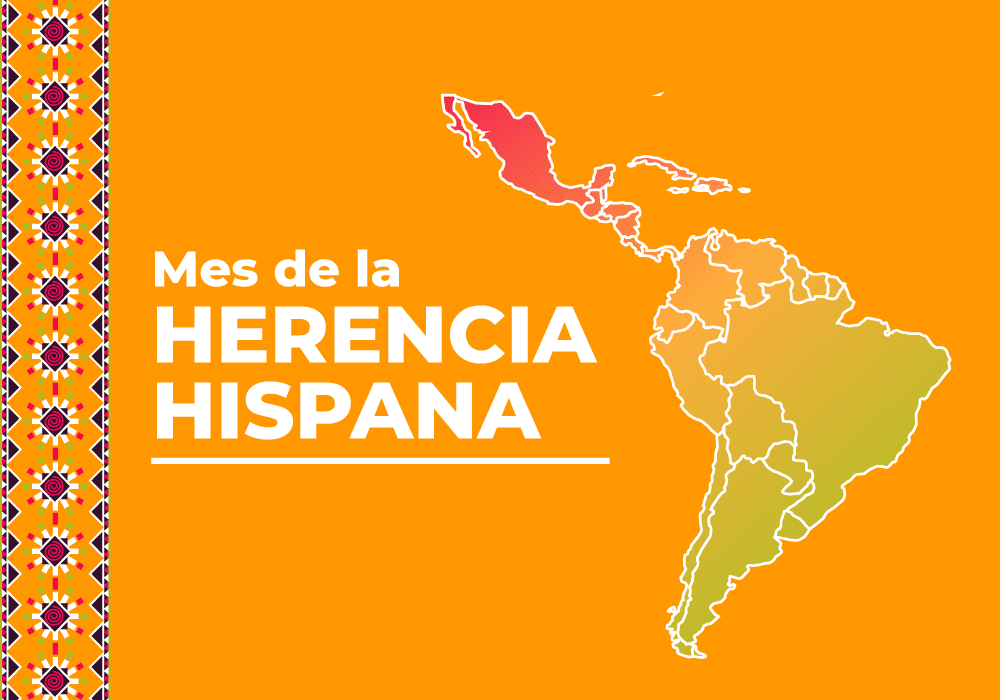
Hispanic Heritage Month starts tomorrow, September 15th through October 15th. It was set during this

time as many Latin American countries celebrate their independence sometime during that period. (But not ALL countries do, and my own country, although part of Latin America, it’s still a US colony, so no independence yet for us.) Here are a few notes for those of you who want to observe this celebration in your agencies, groups, churches, clubs, etc.:

– The name of the heritage month is “Hispanic” Heritage Month. We didn’t select it, it does not represent the entirety of the communities, and not all Latinos are Hispanic, etc. …. BUT… it’s the name of the month as it was instituted by the USA federal government. Don’t come up with other names that do not represent the history of our struggle and the history of how this heritage month came to be. That doesn’t stop all of us from advocating for a change. Using the official name as it is right now just helps maintain a connection with our past as we move forward. The most important thing you can do is to add descriptions of the communities you want to celebrate. For instance: “This Hispanic Heritage Month, our agency wants to highlight the contributions of Indigenous and Black people of Latin America by offering x, y, z.” Hopefully, one day — and as a result of our collective advocacy — this will be “Latin America Heritage Month.”

– Although all Mexicans are Latinos/as/xs not all Latinos/as/xs are Mexican. This is the most visible ethnic Latin group in our region, but we can say something similar, with other communities, in other locations. Please know that our community is diverse. When you organize your agency’s HHM celebration around one cultural tradition only, you are telling me two things. First, you don’t care about me as a Latino with roots in a different culture than the one you’re highlighting. Second, you don’t know much about our communities or your own communities, where people might come from any of the many Latin American countries.

– Please, make your celebrations as broad and inclusive as possible! Not all Latin people speak Spanish. Some Latin folk speak English as their primary language. French, Creole, Portuguese, and hundreds of indigenous languages are also Latin American languages and cultures. Keep that in mind, especially when trying to highlight the communities in your area. Don’t patronize us by haphazardly translating things into Spanish with Google translate. Also, be carful with asking a heritage speaker to do the translation! Spanish alone has so many dialects, and many heritage speakers learned from their parents who might not have had the opportunities to have formal education, and thus, do not know the intricacies and nuance of the different dialects. Usually, they have very regional dialects which might hinder clear communication with people from outside their regions. Moreover, heritage speakers — who must be celebrated for their work to preserve the language — are most familiar with spoken Spanish, and not with written Spanish. Celebrate diversity in speech and dialects, but also recognize that there is a standard version of one of our languages — Spanish — that is understood across dialects. Only professional translators who have spent their professional lives doing this will produce good content that is understood across cultures. I also know of a at least another Latin American language, Mayan, that also has many dialects, some of them not even mutually intelligible. So, only translate things when it makes sense for those things to be translated.

– Our music is as diverse as we are. Salsa, tango, merengue, cumbia, bachata, reggaeton, rock en español, plena, and myriad others. Don’t rely only on one type of musical style. HOWEVER, keep in mind that some genres of music — reggaeton which is one my favorite styles, so don’t take this as a negative comment on the genre, and Spanish trap, for instance — contain words or phrases that might be extremely offensive or very vulgar in some dialects. Please vet your music selection with people who speak the dialect of the musician. This way, you will have music that is inviting, instead of having music that might be liked by some people while being offensive to other audiences. Don’t play the music of the popular artist just because they just modeled for Vanity Fair (ha! Some of you will get the reference… and also, I love BB’s social commentary and some of his music, so don’t come for me. I am just using some general examples.) Every time I hear reggaeton music with vulgarity in its lyrics playing at supposedly “family friendly” event sponsored by an organization, I know the people there do not know my dialect and the cultural nuance of the use of curse words and vulgarity across different Latin American cultures. Again, vet your music selection with the people who speak the dialect of the singer.

– Look for as much representation of Latin American cuisine as possible! Generally speaking, south of the middle of Central America, no Latino cuisine uses hot spicy chiles! Perhaps your Argentinian best friend loves hot spicy food, or your Cuban spouse does; but that doesn’t mean Argentinian or Cuban cuisines are spicy hot cuisines. The staples of our cuisines vary also. Of course you are very familiar with the Mexican tortilla. But, did you know the Central American tortillas are thicker and don’t compare with the Mexican ones? Did you know that plantains are the staples of Spanish and Black Caribbean cuisine and that we never, ever use tortillas in our dishes? Did you know that in most South American countries bread is king? Also, find local Latin American restaurants of ALL types of cuisines, not just one. Around the area where I live in Pierce County and south King County in the state of Washington, for instance, there are Peruvian, Puerto Rican, Salvadoran, Argentinian, Colombian, Guatemalan, and Honduran restaurants. Order from them!

– Latinoness does not equal immigration. Do not center your events only on immigration issues! Sure,

that is the biggest reality of our community. But Puerto Ricans are Latino/a/x and we — on paper — do not face this challenge. Cubans and Venezuelans also do not face these challenges in the same way. Tejanos, Californios, Nuevo Mejicanos… and many other groups of Latin folk from the lands stolen from México are as Latino/a/x as we are and they do not face immigration challenges. Expand the issues you work on and you highlight in your celebrations. We have other challenges as well, such as lack of access to well paid jobs, racial and ethnic discrimination, anti-Blackness, lack of access to stable housing, etc. Additionally, we are not our challenges! We have contributed tremendously to USAmerican culture from the very beginning. Celebrate ALL of our contributions also, and don’t see us merely as recipients of your charity.

– Latinidad is not race. Mestizaje is not the only expression of Latinidad. Indigenous peoples are still here and thriving throughout Latin America and many of them here in the USA in spite of the many ways we have tried to erase them and their cultures. Black Latinos/as/xs exist… and they come from every single country in our beloved continent. Highlight their influence, their contributions, their resiliency and their Latinidad! Asian Latinos/as/xs also exist! Their contributions to our histories, cuisine, cultures, music, etc., is undeniable. Plus, Asian-Latino cuisine is the best. Ask any Peruvian! Don’t hide this rich history! Latin folk of Arab and North African heritage also exist! And when it comes to religion, at least two Latin American countries are almost majority Evangelical/Protestant: Guatemala and Puerto Rico. Don’t assume we are all familiar with Roman Catholic traditions and rituals. Almost half of Latin folk in the USA are Protestants or Evangelicals, and there are many, MANY Latin folk of other religious traditions: Jews, Hindus, Buddhists, Muslims, Spiritists, Santeros, Vodoo practitioners, atheists, agnostics, and everything you can think of.

– This note is for my Latino/a/x siblings: pay attention and be in solidarity! Who is not being represented and who is being left out? Are you an advocate for ALL of our cultures and traditions? Are you calling folk in to reflect on how they have centered only your or my culture and not the cultures of the other Latin folk who live in our communities? Speak up and advocate for each other as you also celebrate your own individual cultural heritage. It’s all about celebrating our diversity, not helping the people and institutions with power blend us into one thing. Make ’em learn about us! Don’t conform to their expectations!

– When in doubt: ASK!!!! Ask your colleagues what would be meaningful for them. If they are all from one single heritage, honor that and also, seek out others in your community from other cultural backgrounds so you can be more inclusive. We LOVE sharing our traditions, our stories, our cultures, our foods, our memories of back home, our histories, etc. Invite us to be partners in the celebration, and don’t do something for us, do it WITH us.

Have a wonderful celebration of Hispanic Heritage Month and remember we are still here after October 15th!
Leave a comment

Filed under Afro-Latino, celebrations, cultural celebrations, Culture, Español, ethnicity, familia, family, Heritage, Hispanic Heritage Month, Hispanics, Hispanidad, Hispanos, History, Humanity, Identidad, Identity, immigration, justice, Latinidad, Latino, race, racism, Sociology, tradiciones, United States, USA

Grieving the Loss of a Pet Companion

In 2009 I was living in the Upper West Side neighborhood of New York City while serving a congregation there. My then-partner and I had some fish as pets. In my childhood, I was allergic to cats, and although not super allergic, it was of enough concern that we never had cats in our home. However, cats have always been my favorite pets. One day, I walked to the pet store to get some food and other supplies for my pet fish and discovered that the pet shop was having an adoption event for rescued cats. That single visit to the pet shop changed my life in ways I am just now understanding.

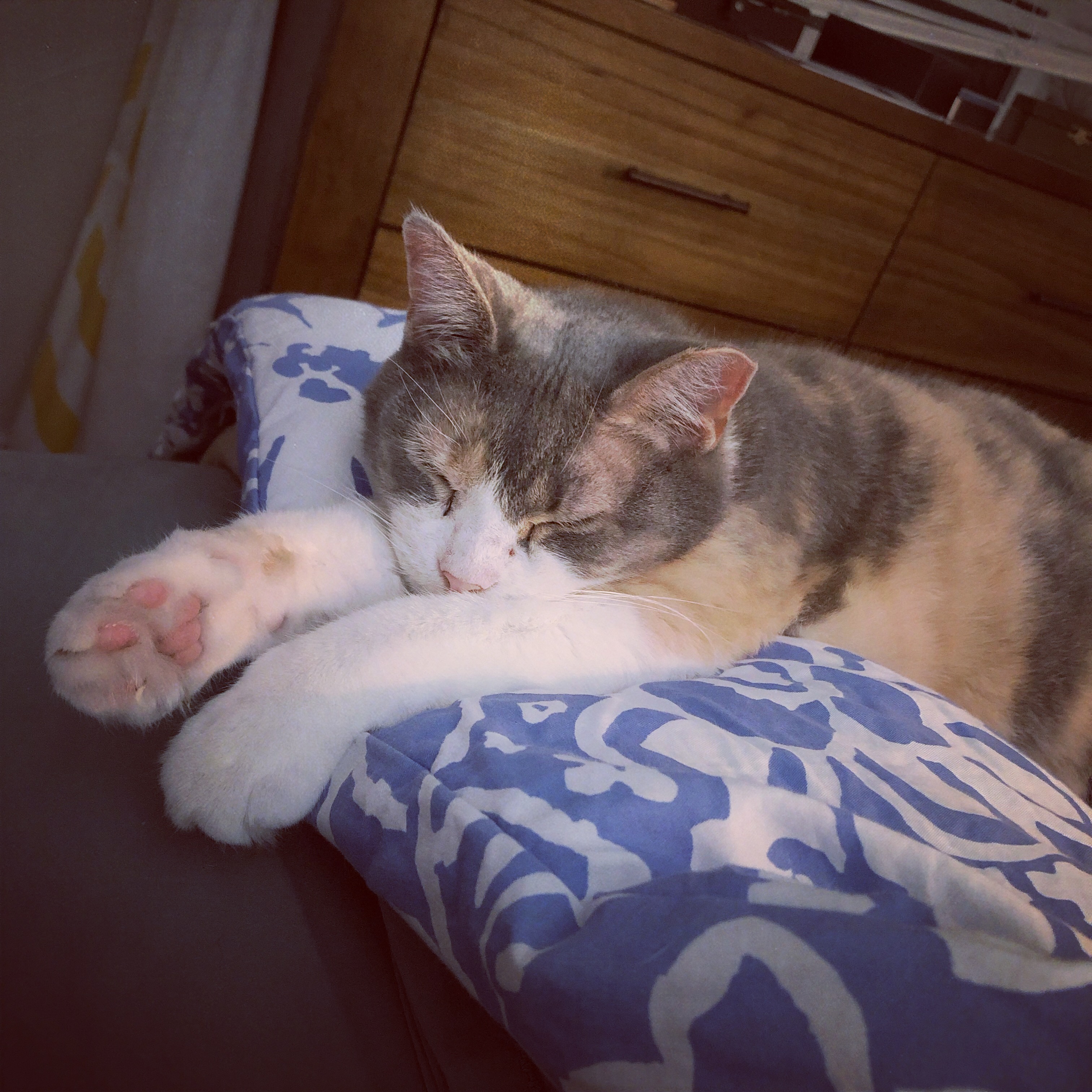
I knew that my ex-partner liked cats too. When I saw the little kittens at the pet shop, I couldn’t just ignore them. I approached the kittens and they all jumped to greet me… except for one little, shy kitty that stayed behind. After playing with the kittens a little bit, I approached the solitary kitty on the corner. She looked at me and extended her paw and it was love at first sight. I knew that was going to be my kitty!

Lo and behold, although I was concerned about my childhood allergy, my interactions with the kittens didn’t make me feel as if I was grasping for air. In fact, the reaction was quite mild, especially in comparison to what I experienced as a kid. So, I decided to inquire about the adoption process and within a couple of weeks, I had adopted my very first pet cat.

Her given name was “Suzette”, but I couldn’t quite see her with that name. I decided to give her a more Latina name… after all, they told me they had rescued her from the streets of The Bronx! What Bronx cat is called “Suzette”? I also didn’t want to go too far off from the name she was probably starting to understand (she was between 9-10 months when I adopted her.) I remembered a comedy character from a TV show back home, called “Susa.” Puerto Rican comedian Carmen Nydia Velázquez impersonated the character of Jesusa Cruz Avilés, and Susa, for short. Her character was funny, and I thought that my little kitty deserved a Latina name that had some sort of connection to who I am. So, I decided to do what any other Latino parent would do, give her a proper, Latina name. Since I was a parish pastor at the time, it made sense to give her a proper, Christian name also. And thus Jesusa María de los Ángeles Madej-Santiago, Susa, for short. (Madej is my ex-partner’s last name, and since we adopted Susa together, it was appropriate to give her his name.)

In New York City, I lived in an apartment with a very long hall. Susa would run and slide on that hall and have the time of her life. She never once destroyed any of the Christmas trees I had, but she loved munching on the many plants around any of the places I’ve lived. She wasn’t the most social of kitties, but she loved sitting on my lap whenever I picked up a book and started reading.

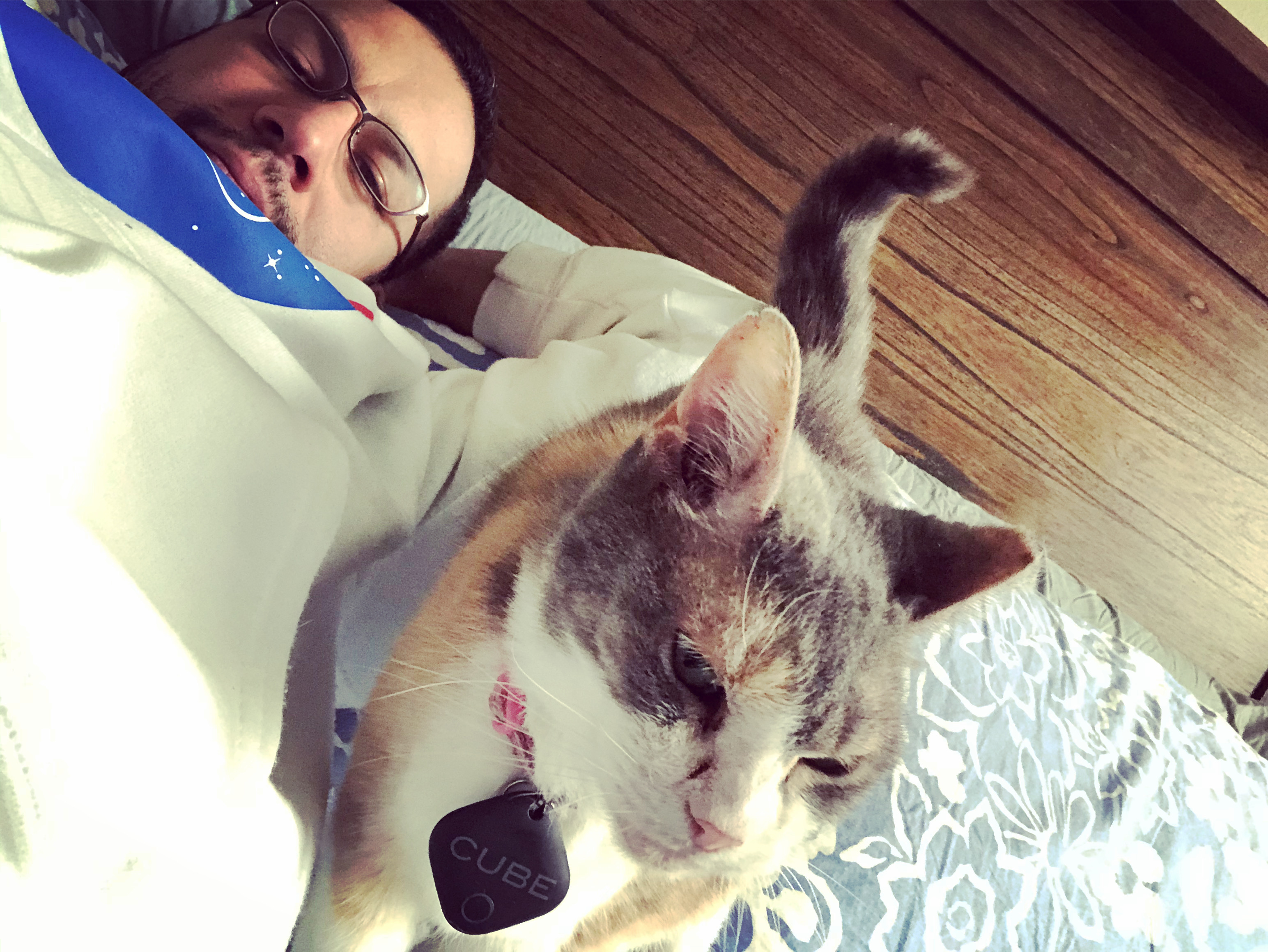
Susa was with me at some of the most important or difficult times in my life. She was there to support me when my ex and I separated. I drove with her from New York City to Seattle when I first moved to Washington. She was there with me on the road again as I moved to Madison, Wisconsin, and then back to Tacoma, Washington. Susa was the first living being that met my now husband. She was there when we got married. Susa was also with me when I was diagnosed with cancer.

Some folks say that animals, and especially cats, can’t be too intelligent. I’ve even heard people say that cats are not intelligent at all. But I beg to differ. When I was diagnosed with cancer, and whenever depression was taking over me, Susa would feel it. She would come and cuddle with me, even though she wasn’t social. She sensed my pain, and she would extend her paw as if to caress and comfort me. She also hated when I traveled. I remember once when I went on a short trip. When I opened to door of the apartment, Susa was there, sitting as if waiting for me to come home. Once I entered and greeted her, she looked at me, put her nose up, and walked away not to see her again in two whole days! I knew she had not run away because her food bowl would be empty every morning. I also remember the one time she refused to eat her dry food because it was not the right shape. Yup, she stayed without food for two days until I went back to the store and got her the shape she liked, even though the food I had fed her was the exact same brand.

When my husband and I bought our home in Tacoma, it was the first time Susa had a backyard and plenty of room to play. On sunny days – whether it was cold or warm – she would beg for us to open the door to the backyard. Our home has a little pet door that goes to the backyard, but Susa never wanted to learn how to use it, no matter how much I tried to teach her. But, she would beg to be let out… and then, if it was cold, wanted to be let in once again five minutes later. On sunny and warm days, though, she would sit under the sun and sunbathe for hours. She would play hunt – never actually hunting anything – and entertain herself in the backyard.

Grieving the loss of my beloved pet companion has been an extremely difficult thing. Although I had seen how she was deteriorating, and I knew that her time in this world was coming to a close, I was not prepared for the pain that is losing a pet companion. Since I had the make the extremely difficult decision to end her life, I have not stopped crying, feeling guilty about the things I could’ve done, or thinking about how I could have saved her. The truth is that none of this is true; I couldn’t have done much to save her. But our minds play tricks on us, trying to get us to change the painful reality before us.

Some of my readers know that in my previous professional life, I was a mainline Protestant Christian minister. During my seminary training, I took a whole course on bereavement and in spiritual counseling to those who have experienced loss. During my chaplaincy internship (Clinical Pastoral Education), I even held the hands of people as they breathed their last breath. I accompanied an elderly woman to say goodbye to her husband of over 50 years in a hospital morgue. My experience accompanying those who are mourning is extensive, as I served over 15 years in ministry. And yet, I was not prepared to experience it myself. In my head, I have all the knowledge to navigate this mourning; but in my heart, everything I was taught to recognize and help others navigate through, is dominating my emotions right now. It is an intense, human experience that I on a conscious level am grateful to have as a human being, and on a heart level I can’t fathom that such pain can exist.

Mourning and grieving are different for every person. Mourning and grieving the loss of a pet is a completely different thing. I was never prepared to work with people who have lost a pet. It is also true that every person’s relationship with their pets is different. In my case, Susa was not only a pet companion, but she was also a therapy pet, who accompanied me through some very difficult life situations. The other day, we picked up Susa’s ashes from the veterinary’s office. They put her ashes in an engraved little box. The vet technician had kept Susa’s collar and nametag. I so much appreciated this simple gesture. I added Susa’s nametag to my keychain so she can always be near me. I put the ashes on the chimney mantle and placed her collar on top. I accept that she is gone from this physical reality; and accept that, for as long as I live and are able to, I will remember her. My husband has been instrumental in helping me navigate this loss. He is also hurting and mourning, but his relationship with Susa was slightly different, so he has been able to stay stronger and offer me the support I need as I grieve. I am also grateful for the support and words of encouragement of friends and family. My mom has called pretty much every day as she knows me very well and knows I was going to take a bit longer to process the loss. Even writing this piece has been healing. It took me three days to work through all my thoughts and elaborate on them here, and I am sure some of it reads like a ramble. But in the end, even with the pian of the loss, I am at peace.

Leave a comment

Filed under familia, family, Grief, Home, Pets

A note to my beloved LGBTQ siblings, *especially* to my beloved trans and gender expansive siblings, friends, and acquaintances

It is extremely frustrating right now. Both the opposition and those who are scared because of their ignorance on these issues are constantly attacking us. Even from within the LGBTQ community, we hear people attacking each other. Many of these internal attacks come from the colonized thinking that power is limited and thus we must fight those who are not *exactly* like us in order to keep our power. These fractions see transness and expansive gender expression as a personal attack to their acceptance into the heteronormative structures, or as attacks on their fight to make visible communities within our own community. The attacks from the opposition are easy to understand, because they are based on one of two things: ignorance regarding our identities or pure evil because of their own maligned hearts. The attacks from within our own communities are more hurtful because, regardless of how these small fraction see us, we still recognize them as our own.

I have read “jokes” posted by friends or colleagues, who think that they are so “enlightened” that they can’t see how they are still playing the role of high school bully. I have heard comments from beloved friends and family members who are completely ignorant regarding these issues, and can’t understand why their comments hurt and how they affect our lives as LGBTQ people. Because of my work, I have read proposals to systemically erase our own existence at every level of society. What I want to say is, yes, I know this is a horrible time for all of us and our allies.

Here’s the thing I want you to remember, though. This is not the first time — in history, in this country, in our countries of origin, etc.– where people have tried to erase us from society. Yet, HERE WE ARE! Bruised. Beaten. Tired. Crying. Hurt. BUT HERE WE ARE. They have tried to erase us so many times and yet, they can’t!

You know why they can’t erase us? Because our identity is inherent to who we are. Life itself has given us the power to BE! No one, anywhere, anytime, will be able to erase US. Our ancestors and transcestors still live through us too! They also experienced this pain and hurt and disempowerment. And yet, here we are.

I am 44 years old, and I am as queer and as gay today as I was when I was 2, or 6, or 11, or 15, or 24, or 36… LGBTQ adults were all LGBTQ children, and no prayer, no “therapy”, no witchcraft, no law, no regulation, no DeSatan, no Catechism, no former drag-queen turned Governor in TN, will change that!

Remember a few things. First, we’ve got each other. Remember that you are not alone. If you need to reach out to someone for support, do it. Second, we are legion! Yes, we are! Not because “more people are becoming LGBTQ”, but because more and more LGBTQ folk find strength in safe communities to come out at any stage of their lives. Third, you are not single handedly responsible for the preservation of our rights! Nope… each person plays a role. Maybe yours is to be at the forefront of the marches, or at the Legislature, or at the grassroots health cooperative, etc. But maybe your role is just to BE YOU; be you with friends and colleagues, be you with family and strangers, be you at work and at temple… We all do our part and nobody should ever have the need to compare themselves to others. Fourth, rest if you need to! I cannot underline this enough. REST. RESTORE. REFRESH. RECHARGE. Whatever you are doing for and with the community, make sure to center your own safety and needs. We need your beautiful self here with us in whichever capacity you can be here.

Finally, remember this: the LGBTQ experience is also JOY, CELEBRATION, EMPOWERMENT, AFFIRMATION, LOVE, ACCEPTANCE… It is also a remembrance that our ancestors and our transcestors are dancing with and for us as we march towards full liberation for ALL of our people!

¡Les quiero, mi gente! I love you my peeps! We keep moving forward no matter what!

Leave a comment

Filed under Gay, Lesbian, LGBTQ, trans, transgender

What Is Time? Or What Is Latino Time, Anyway?

One of the places I love to visit when I go to Yucatán is the Grand Museum of Maya Culture. Each time I visit, I learn something new or pay closer attention to something I missed the last time I visited. A few weeks ago, when I visited, I paid closer attention to a note about the concept of time in the Maya culture. It explained that the Mayas understand time as cyclical. This is one of the reasons why spheres were used to mark time – the Mayan Calendar. A linear time makes no sense in the Maya culture. The future is behind us, the present is unknown, and the past is right before us. The future is behind us because we do not know how that time will be used and what it will bring. The present is unknown because it is happening as we live, and therefore, we cannot actually see it until it is in front of us. The past is clearly in front of us because we remember.

Each culture has a concept of time that works for them. Everyone knows the USAmerican adage: “time is money!” The whole USAmerican culture is fixated on this cultural reality. Although I have not studied the origins of this, I assume it comes from the Protestant work ethic. According to some early Protestant theologians – specifically, Calvinists – labor is not only honorable, but it also shows whether you have been chosen by God. People in Calvinist societies wanted to show everyone that they had been chosen, and thus, they worked hard to demonstrate that they had been chosen.

Sociologist Max Weber was the person who defined this concept. In his work, Weber argued that this approach influenced the way in which the earlier Anglo settlers of what became the USA were able to succeed. Since then, this approach has permeated USAmerican society. “Time is money” is just a different way of saying that you must not “waste” time; you must use every minute of your life on a task that is productive. Time is seen as something linear, and you complete one task after the other in a linear way, in order to be as productive as possible. You can control time, and it is a limited resource that should not be wasted. I just learned that this perspective is called “monochronic.”

According to the definition I found, “In monochronic societies, people take time seriously, adhere to a fixed schedule, and value the sequential completion of tasks.”[1] This perspective flourished during the Industrial Revolution, as it made sense for this period of history when the main goal was to produce as much as possible.

On the other hand, there are polychronic societies. In these societies “people perceive time as more fluid, where multitasking and interruptions are normal. Time aligns more with the sun, the moon, and Mother Nature than it does with the hands of a clock.”[2]

In Latin America, our societies tend to be polychronic. This, of course, is a generalization. The Protestant work ethic and the USAmerican obsession with making money have definitely influenced most Latin American societies. Nevertheless, our cultures tend to be more polychronic, understanding time in more flexible ways than European and most North American cultures (with the notable exception of México.)

When I first moved to the mainland USA, the understanding of time was one of the greatest cultural shocks. I couldn’t quite comprehend what I understood to be an obsession with timeliness, cutoff times, hard deadlines, etc. I would be flabbergasted at how little quality time people spent in each other’s company. To this date, I still cannot comprehend how many of my USAmerican friends can be exactly on time for something. I do have a theory that they probably just arrive super early and park nearby until the clock marks two minutes before the scheduled time, and then they just walk up to your door. I don’t know! I haven’t cracked the code yet…

As I spend more time in the USA – I have officially lived longer in the USA than in my own country – I have adapted to some cultural and professional norms, mores, and customs. I understand that certain people need me to show up right on time, or sometimes even a few minutes earlier. I try as hard as I can to comply with the expectations. However, culturally, I am definitely wired to see time as a flexible reality.

In my own culture, when it comes to spending time with others, it is not about “being on time” but about the quality of time you spend with someone. Since time is flexible, it is expected that you prioritize companionship more than setting up specific times to start and end. There is a running joke that Latino folk – and in my case, Puerto Rican folk – spend pretty much the same amount of time saying goodbye as the time they spent visiting with you. Of course, this is a bit of an exaggeration, but it is quite close to reality.

Since time is flexible, it also means that you can work on many different tasks at once; or have timelines that look nothing like the linear timelines that are common in corporate settings. A Latin person will most likely go back and forth between projects and within stages of that project. There is no need to follow a specific timeline because it is not necessary. You will have the product finished when it is finished, and it will be a quality product because you gave it the attention that it needed regardless of whether it was “on time” or not. This causes much frustration among multicultural groups! It is especially hard when those groups are made up of people who have adapted to the USAmerican understanding of “time is money” but come from polychronic backgrounds. In these instances, the majority USAmerican coworkers use the example of the people who follow their understanding of time to dismiss the very real different understanding of time of the others in the group.

It turns out that social scientists and researchers in the field of business have already studied these interactions. I read an article online[3] that describes project management from these different perspectives and how multicultural workgroups can manage to be successful.

I will not go into the details of that paper. However, I would like to present some of my own perspectives and understanding of how to approach this reality of differences in understanding time.

First, I think it is important to recognize that “different” does not mean “better” or “bad.” It just means… DIFFERENT! Different societies and cultures have different ways to approach time. We must understand that our own understanding of the world around us is shaped by our histories, social locations, personal experiences, and myriad other things. It is wrong to expect others to behave like me, even in professional settings. It is also wrong to assume that everyone must conform to my understanding of the world. Accept and embrace differences.

Second, it is always best to foster a culture of communication and trust in the workplace – or any other place! This will help communicate effectively when these differences show up. It also helps with setting communal expectations that are born of the collective ideas and different approaches brought in by the members of the group. When there is trust and communication, people will feel empowered to share their own understanding of time, and a good project leader will help negotiate a workflow that makes sense for the group. This brings me to the next point.

Flexibility is key. What works today might not work tomorrow. Once a workflow has been established for a project, it cannot be assumed that the next project will follow the same timeline or workflow. Good project leaders will need to go back to the drawing board and go over the whole process of listening, learning, negotiating, and adapting a new workflow that works for that group and that project in particular.

These strategies can also work in personal relationships. I understand my friends’ perspectives on time, and I honor them the best I can. They also understand my own understanding of time, and you will never see one of my USAmerican friends showing up at my house for a party at the exact time I invited them! This sounds silly, but it’s true! In my Latinoness, I think I will have everything ready by the exact time I invited my guests, but there’s always something that makes it not possible to be right on time. Thankfully, my friends understand this, and they know they should show up at least ten minutes past the time I asked them. They also know that I value their company more than I value ending a party “on time” – whatever that means in this context – so they are never rushed to leave my home at a particular time.  

To finish this article, I want to leave you with a smile on your face. A few years ago, FLAMA, a Latino YouTube channel, posted a really great video titled “Perception of Time – Latino Field Studies.” Please watch it, for a laugh… and to understand better what I have just written about!


[1] https://www.spanish.academy/blog/polychronic-culture-in-latin-america-thoughts-and-facts-on-time/

[2] https://www.spanish.academy/blog/polychronic-culture-in-latin-america-thoughts-and-facts-on-time/

[3] Duranti, G. & Di Prata, O. (2009). Everything is about time: does it have the same meaning all over the world? Paper presented at PMI® Global Congress 2009—EMEA, Amsterdam, North Holland, The Netherlands. Newtown Square, PA: Project Management Institute. https://www.pmi.org/learning/library/everything-time-monochronism-polychronism-orientation-6902

Leave a comment

Filed under Creativity, Culture, ethnicity, Heritage, Hispanics, Hispanos, Identidad, Identity, Latino, Leadership, Sociology, Time

Preventing Cultural Hegemony During Hispanic Heritage Month

When Hispanic Heritage Month was established it was with the idea of recognizing the contributions of Hispanic-Americans (as our community was known) to the United States. Since the term “Hispanic” was a government construct to group a very diverse group of people, other concepts such as “Latino/a” have been used. We understand that not all Latinos/as are Hispanics, and that any terminology used to group our community is going to fall short. Latin America is an extremely diverse region. Our ancestors are Indigenous, African, European, Asian, and of every combination thereof. There are hundreds of different languages spoken throughout the region in addition to Spanish, Portuguese, and Creole. Our histories, cuisines, faiths, values, and every aspect of culture are different. Hispanic Heritage Month is supposed to celebrate this diverse group of peoples, highlighting our contributions to the larger US society, of which Latinos/as have been a part since before the United States was formed as a country.

Yet, for some groups within the Latino/a community, Hispanic Heritage Month can be a reminder of how cultural hegemony erases diversity and identity. The challenge of celebrating a diverse community that does not fit the clear, simple, and binary definitions of the majority Euro-centric American culture reduces Hispanic Heritage Month to a celebration of whichever Latin American cultural heritage is most prominent in a particular context. The month that was meant to celebrate our diversity is reduced to the celebration of the Spanish-Caribbean in the eastern seaboard of the USA, or of Mexican-American communities in the Southwest and West. This cultural hegemony makes invisible large portions of our communities.

Cultural Hegemony Gets Personal

I speak to this from personal experience. When I first moved to the mainland USA it was to the eastern coast. As a Puerto Rican, it was easy for me to find representations of my culture anywhere I went. I didn’t have to adapt my dialect too much and for the most part, people understood when I said “habichuela” or “bizcocho” or “guagua.” The historic large diasporas of Spanish-Caribbean peoples to the easter parts of the USA means that our cultures, dialects, and cuisines are more prevalent. Other people of Latin American descent usually must adapt to these Spanish-Caribbean cultures (Cuba, Dominican Republic, and Puerto Rico.) Once I moved to the West coast, things were totally different. Out here, the prevalent cultures are Mexican and Mexican-American. People from all over Latin America and of any Latin American heritage must adapt to these cultures as they have been adopted by the Euro-American majority as the standard or default definition of “Latinidad.” More concerning is the expansion of this standard definition and its adoption by politicians, nonprofits, businesses, and many other groups.

The invisibilization of non-Mexican Latin people has profound consequences both for our communities and for society at large. Spanish is reduced to one dialect and one accent (usually norteño or chilango) at the expense of the plethora of dialects spoken throughout Latin America and the many variations of the Mexican dialect. Latino Indigeneity is reduced to Aztec and Maya identities at the expense of Mapuche, Arawak, Taíno, Guaraní, Garifuna, and the thousands of indigenous groups that still inhabit Latin America. The Afro-Latino/a identity is forgotten as “mestizaje” – the mixing of European and Indigenous identities – is made the standard of Latinidad. And Protestant, Evangelical, Jewish, Muslim, Buddhist, Hindu, Santero, Espiritista, and other faith traditions practiced by Latin folk are hidden in favor of a particular Roman Catholic experience that doesn’t even consider the beautifully diverse experiences and traditions of non-Mexican Latin Catholic communities. For instance, growing up Protestant, I never observed “Día de los Muertos”, or sang to “La Virgen de Guadalupe” on December 12th. Although I recognize and honor the importance these celebrations have, they do not define my Latinidad, nor do they define Latinidad for at least half of Latinos/as in the United States.

The Mexican cultural hegemony promoted by white supremacy is not only impacting non-Mexican Latin folk. This cultural hegemony also impacts other Mexicans. My husband is Mexican, from the state of Yucatán, and of Maya indigenous identity. In the white supremacist, cultural hegemonic definition of “Mexican” and of “Latinidad”, his accent, his cuisine, and his traditions do not fit. From time immemorial, the Maya people of Yucatán have celebrated “Hanal Pixan”, a month-long observance to welcome back and honor those ancestors who are before us (in Maya tradition, the past is before us, while the present is behind us because we cannot see it.) During this time, families prepare altars, present food and drinks as offerings, and have rituals of welcoming for the ancestors. On three different dates throughout the month a special tamal called “pib” is prepared and eaten with those ancestors. Hanal Pixan has been merged to

some extent with the Roman Catholic tradition of All Souls and All Saints Days, while keeping much of its Mayan roots. But you would never find a hint of this Mexican cultural tradition presented in any of the “Hispanic” celebrations of “Día de los Muertos.” Once again, cultural hegemony erases a part of our identities.

The Causes and Roots of Cultural Hegemony

There are many causes for cultural hegemony. Our own brains try to minimize the use of energy by categorizing things around us in the simplest ways. Culturally, we try to group people as to make it easier for us to understand them. White supremacy in particular has been really great at minimizing differences by grouping folk as “white” and “black” and then assigning value to each category, with lighter skin being more valuable than darker skin. This tool of control offers Latinos/as, who are of every race, a mirage opportunity to “become white” and thus, access power. The lighter our skin, the closer we are to being part of the standard definition of “American.”

It is in this context where we find the first clues to this cultural hegemony imposed in Latinidad. First, the powers-that-be decided that “Hispanic” was a good enough category for people of Latin American descent. This was regardless of their racial background or historical heritage. Whether a person was indigenous to these lands or an Austrian Jew who found refuge in Argentina, now both were classified as “Hispanic” for the mere fact that Spain conquered most of what is today Latin America. Second, when the communities reacted to this misnomer, they came up with “Latino”, and if they were progressive enough, “Latino or Latina.” This at least alleviated the reality of those who, having cultural roots in Latin America, did not have or do not want to be associated with Spanish heritage. The Euro-American majority decided how our community was going to be named, regardless of centuries of self-identification within our communities. Finally, the acceptance of mestizaje as the standard of Latinidad served the purpose of ensuring that Latinos and Latinas thought of ourselves as “almost white” people in the context of the United States. (Please know that this concept is used very differently within Latin America. But I will not be discussing this in this essay.) Erasing Afro Latinidad can only serve the white supremacy agenda, not advance the Latino/a community.

On the other hand, once the stage was set to have a homogenous definition of Latinidad, it was easier for one dominant Latin culture to ignore the rest.

Throughout the years, Mexico has been extremely successful in developing its media presence throughout Latin America. The richest man in Mexico also happens to be the most successful telecommunications executive in Latin American, Carlos Slim Helú. América Móvil, his telecommunications empire, has an almost monopoly of the communications world throughout all of Latin America with the notable exception of Cuba. The Mexican theater and film “Golden Age” marked the scenic arts in ways that no other country was able to do. Today, Mexican novelas (soap operas) and movies dominate most of the TV market throughout the continent. Pretty much any Spanish language singer – and sometimes actors – who wants to have a successful career knows that they must gain over the Mexican market, no matter how successful they might be in their countries of origin and neighboring countries.

As a result of the success of Mexican cultural exports – films, novelas, music, cuisine, etc. – there is no corner of Latin America that has not been exposed to the Mexican dialect (on its norteño and capital city versions), foods, and music, among others. Thus, although pretty much any Spanish-speaker can understand Mexican Spanish, people in Mexico and people of Mexican descent elsewhere have not had the chance to be exposed to our dialects. Therefore, although there are plenty of words in Spanish to call a cake – bizcocho, torta, queque –, pastel has become the “standard” in the USA. If they are only familiar with Mexican Spanish, someone will be very confused when a South American asks them for a torta and find out that they meant a cake, and not a sandwich. That’s because torta is the South American Spanih word for cake, while in Mexico they call cakes, pastel. There are plenty of examples like this, as words for beans (judías, habichuelas, caraotas), pepper (ají, pimiento), banana (guineo, cambur, banano), jacket (chompa, cazadora, abrigo) and many others are Mexicanized and the many different ways in which they are called elsewhere are forgotten.

This is not on the Mexican people’s backs. I am not advocating for the elimination of Mexican dialects in public or private use, nor am I complaining about Mexico’s success in investing in its own arts and cultural programs. On the contrary, I admire the fact that, with the USA being so relentless in spreading American English as the lingua franca, and American music and films as standards, Mexico has successfully overcome this by continuing to produce high-quality content in Spanish in pretty much all the art forms. What I am doing is explaining the reasons why it is so common for the Mexican dialect to be the “standard” for Spanish in the United States.

The white supremacy structures in which the USA operates make it easier for homogenization to take place. It also makes it easier for the rest of us to be invisible during a month that is supposed to highlight the contributions of all our cultures, histories, and identities.

A Possible Solution

Is it possible for this cultural hegemony to be overcome? I believe it is!

If we want to go back to the origins of Hispanic Heritage Month we can hold on to the core of its purpose: to celebrate the contributions of Hispanics and Latinos/as to the USA. It is absolutely perfect to include tacos, tamales, norteño music, and Mexican folk dances in your Hispanic Heritage Month celebrations. And it is equally important to expand this and include other cuisines, dances, histories, and symbols of more Latin American communities. Here are some ideas on how your agency, nonprofit, church, workplace, or any other group can expand their offerings to celebrate our comunidad.

  1. Don’t assume. Ask! It is so simple. Even if you are of Latino heritage, ask around to find out more about the Latino/a community in your area. Even if there is one specific national heritage more prominent than others, I assure you that you will find people of all sorts of Latina/o cultural heritage around. Ask them what would be meaningful to include in any celebration of our cultures.
  2. Learn. Read books from authors of every national background. Follow news from throughout the region so you know what’s affecting local communities with ties to those regions. Read about the history of colonization of USA in our countries of origin so you can understand the patterns of migration of our communities. Watch documentaries about our region and our countries of origin. Attend events created by and for Latinos/as, especially if they are from cultures outside of whichever is the majority Latin culture in your context.
  3. Expand the celebrations. Find out who is the small business owner of a restaurant from a Latin cuisine that is not from the majority Latin community represented in your area. Order from them instead! Introduce even other Latinas/os to cuisines different than theirs. A business can have a whole catered event with different empanadas from all throughout the continent! The same for dances and performances. Bring in tango dancers, include bachata and salsa in your parties, teach a cumbia class during one of the events. (As reggaeton becomes more and more prominent in Hispanic Heritage Month celebrations, I highly recommend checking with people who speak the dialect of the signers, as many of the lyrics can be extremely crass, offensive, and vulgar to specific communities. Also, not all reggaeton lyrics are like this, and I personally enjoy the style, so this is not a judgment on the genre, just a recommendation to make spaces more accessible and safe for all.)
  4. Have fun! Among the many things that unite all our communities is how boisterous, energetic, and fun we are! Whether we call it pachanga, farra, parranda, juerga, fiesta, pary, bembé or whatever other word we have for it, Latin parties are filled with joy and celebration. There might be a time to start, but you never know when the party will end. Have flexibility with your celebrations and let the community enjoy its time together.

Reclaiming La Herencia Hispana y Latina!

Latina trans activist Sylvia Rivera once said, “We have to be visible. We are not ashamed of who we are.” She was referring to the trans community and the LGBTQ community in general. Nevertheless, Rivera was a proud Latina woman too. She never hid her Venezuelan and Puerto Rican heritage. At times, the invisibilization of so many Latinidades makes us ashamed of being public. Many of us switch our accents or use dialects that are not natural to us. Often, we stay silent about our own heritage lest we make those in the majority uncomfortable. That is not the solution to cultural hegemony.

The solution to cultural hegemony is being visible, vocal, and proud of our individual cultural heritage and the many mixes of heritages created in the United States. Our Hispanic Heritage Month celebrations should be expansive and always expanding. It should show every aspect of Hispanic and Latino cultures. Hispanic Heritage Month should be a time to celebrate our diverse Latin heritage in all its extravagance. Let’s bring Garifuna dances, and serve Bolivian salteñas; let’s pour Chilean wines, and enjoy Guatemalan parrilladas; let’s dance to the rhythms of African drums in Puerto Rican bomba and Peruvian landó; serve sopa paraguaya and Dominican mangú… Let’s make every effort to create welcoming and diverse celebrations that honor the richness of our Latin cultures. Let’s proudly and very visibly reclaim our herencia!  

Leave a comment

Filed under Culture, ethnicity, Heritage, Hispanics, Hispanos, Identidad, Identity, Latino, race, Racial Relations, racism, resistance, tradiciones, United States, USA

There Is No Pie! A Reflection on Power Dynamics and Racism

There is no pie.

None. I am not writing about food, though. I am writing about power, power dynamic, and how language fails us to explain these concepts and what it is that communities of color demand from our white colleagues and fellow humans. This is a semi-long opinion essay. Here I discuss several concepts and ideas, starting with language in general, some theological concepts, and finally, various sociological concepts related to social dynamics and power. If these things interest you, this will be a fun read. (Or maybe I have a weird sense of humor…)

Language is probably the most important human invention. It is so important that many anthropologists consider language to be the human invention that helped differentiate our ancestors from other primates. Language is important and one of the most powerful tools we have at our disposal. Nevertheless, like any human invention, language is not perfect. Although language helps us to communicate as clearly as possible, there are still limitations. Many of these limitations can be seen more clearly when it comes to explaining, describing, and understanding immaterial concepts.download (3)

As many communities in the United States engage in difficult conversations about racism, anti-blackness, power dynamics, social interactions, and other relevant realities, I thought of sharing my ideas on how language fails us to describe power dynamics.

In many occasions, humans make use of the tools we have within our languages to make sense of difficult immaterial concepts. It is common for us to use similes, metaphors, analogies, and other linguistic tools to explain difficult concepts. Allow me to use some examples from a field I am quite familiar with: Christian theology.

Perhaps one of the most difficult theological concepts to explain is the Trinity. In the history of Christian theology the concept of the Trinity has been tried to be defined and explained by both Trinitarian Christians and those who object to this understanding of God. If you were raised in any form of Christianity, the concept of the Trinity was presented in simple, easy to understand analogies… that probably were far from what the theological concept of the Trinity really is. You probably heard about the Trinity being like water, which can be liquid, solid, or gas and yet it’s still H2O. Or perhaps you are more familiar with the egg analogy, where the yolk, white, and shell are all part of the egg yet not the whole egg. The analogies are many, and none actually explains what the Trinity is without falling into some sort of heresy, according to historical Trinitarian theology.

A good, simple theological explanation of the Trinity is this: a theological mystery that explains the relationship between the three Persons who make up the reality of God as Parent, Incarnate Expression, and Holy Spirit, all three being one while also being separate from each other but never subjected to each other, they each exist from eternity to eternity and are coequal with each other. Simple, right? Ha! Now you can understand why the tools our languages have to express complicated immaterial realities always fails us. There is no simple way of expressing this theological concept and thus, most theologians hold on to the simplest of explanations: the Trinity is a mystery. Period.

Thankfully, if unless like me, you are not a theologian, this mental gymnastics is not going to affect your life. Nevertheless, there are immaterial concepts that are difficult to explain in simple words and yet affect our daily lives. This is where the concept of “the pie” comes into play.

Power dynamics in the USA live in the context of a complicated history. I will not go into historical details, but I believe we can agree on certain general points that are accepted for most people. First, the USA has a history of racism with which it has not dealt appropriately. Second, racial relations – as well as other power dynamics – permeate pretty much every interaction among people in every social context, from shopping to parenting to education and politics. I would argue that even those hegemonic contexts in which everyone belongs to the same perceived racial background are not exempt from these racial realities. White people assume their superiority based on their socialization regardless of whether they have the chance to interact with people they have been socialized to believe are inferior. On the other hand, communities of color are always aware of these social and power dynamics regardless of whether we are in the presence of white folk or not. In fact, it has been my experience that even in non-academic, family interactions where all are Latino people, we implicitly or explicitly engage in conversations strategizing how to survive and thrive in the majority white contexts in which we interact. Take for instance, when my own family engages with the youngest members of our family to encourage them to be successful in school and life… making use of the patterns, systems, strategies, goals, and mores established by the white majority. We do not have to name the systems and who developed them in order to engage in conversations on how to move within them. Finally, a capitalist and an historical European, Protestant work ethic permeates these power dynamics. Those who can adapt to this socio-religious-economic ethic will have more chances of survival than others.

imagesHere comes the “pie chart” that characterizes most conversations about resources. Power is, in my opinion, another resource. It can be used by those who have it in order to advance, or to access opportunities, or to affect change – good and bad – in society. The problem is that, what I call “the pie understanding of sharing power” negatively affects the way in which we engage in conversations about what it is that minority communities demand from the majority.
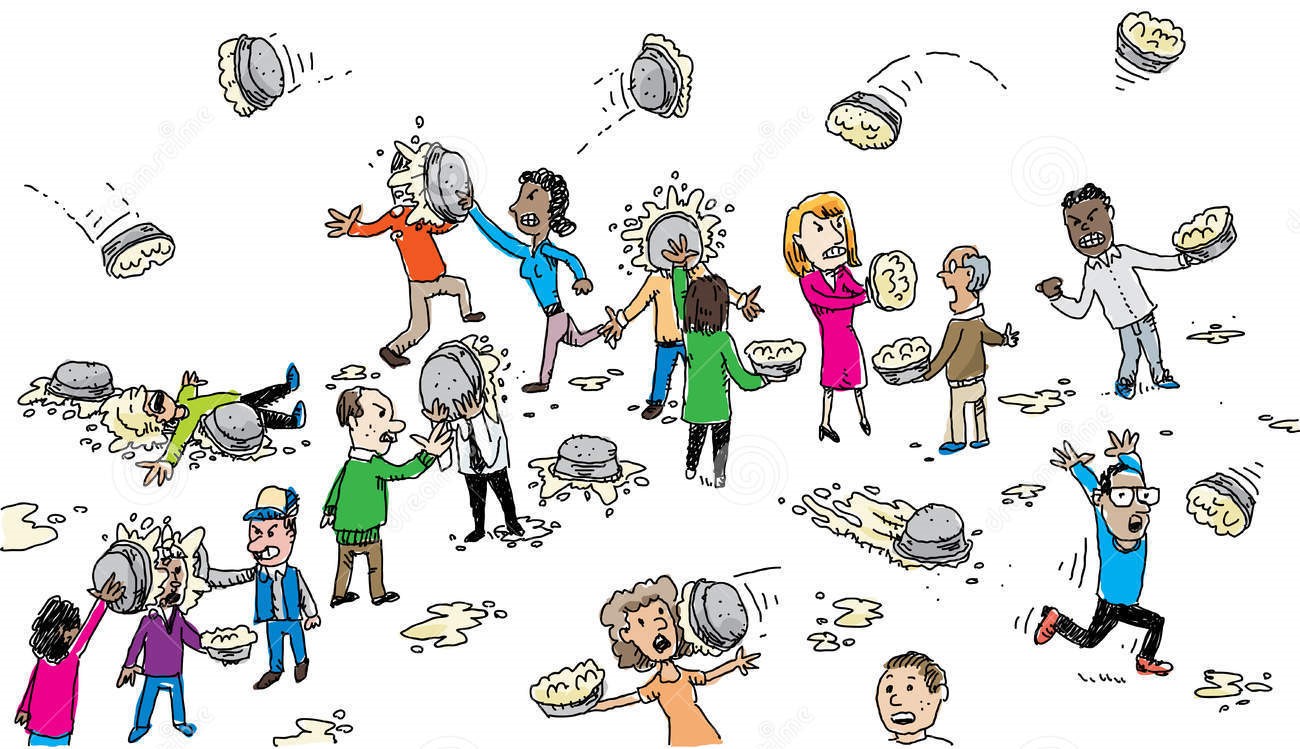
In the European Protestant work ethic, resources determine success. The person with more resources has earned the favor of God, therefore, it is their right to continue amassing power. Moreover, since power is a resource granted by God, and salvation is an individual transaction between a human and their God, it is expected that individuals continue finding ways to gather power, even at the expense of others who will lose their power. This is, I believe, at the core of capitalism. This is also a self-preserving system. The more power you have, the more you show that God has favored you. Therefore, you need to continue amassing power in order to show how much God has favored you. Those with no power have the option of finding ways to obtain power, and with it, show that God has also favored them. Since power can be amassed, those who have it present themselves as an example of how you, too, can receive and amass power if you only work hard enough for it. The problem comes when everyone starts thinking that power is finite. There are several ways to obtain power, but in this context only two are relevant: you earn power by buying it from others, or you fight for it at the expense of others who will lose it to you. Or in simple terms: some people will have large pieces of the pie, others will have slimmer pieces, and others will have no pie whatsoever.

Therein lays the problem with the pie analogy for power. There is no pie! None!

The recent conversations on racism have revolved around how to divvy up the pie. It seems like for the most part, people think that communities of color and other minoritized peoples have been trying to get a piece of the pie that majority groups have been cutting for themselves. To many people who noticed that their pieces of pie were larger than that of others, this is a problem they want to fix by either redistributing the pieces of pie, or – in my opinion, the ones that are a bit more advanced in their understanding of the complex racial realities we live under – they try to share their own pieces in order to show solidarity. Both of these approaches are honorable, as those with pieces of the pie have never experienced any other way to interact with their power. They are, in my opinion, a bit closer to understanding the demands of oppressed communities. Nevertheless, I reaffirm: there is no pie.

The pie analogy is one of the ways in which language fails us. It tries to simplify a very complex concept in order to make it more digestible (yup, pun intended!) Power is, like the Trinity, a complex, immaterial concept that cannot be explained in simple terms. Just like the Trinity is neither an egg nor water, power is neither a pie nor a table in need of more chairs to accommodate minoritized communities. Although these concepts can help us start the conversation, they cannot be the ones used to engage in deep, comprehensive, and serious conversations about systemic change and power relations.       pie-fight-group-cartoon-people-cream-pies-46001112

Marginalized, minoritized, and oppressed communities are not asking to share the pie. In fact, for many of us, is not even about being able to bake a pie! At the heart of the matter is what types of systems are needed to share power in order to identify the needs of the whole. It is also about coming up with solutions that address the very complex realities in which we live. It is about sharing power in all of its complexity, without taking power away from anyone. That is something the pie analogy doesn’t address. Moreover, it is this flawed analogy of the pie the one that makes it scary for the majority to engage in conversations about power dynamics. The thought of losing a piece of the pie is scary, especially when you have been socialized to believe that the piece of the pie is the seal of favor and success from your God.

Language will continue being the most important tool in human history. It is also important to know how to make use of it. Language affects the way in which we interact with each other and whether we can advance in our understanding of each other’s needs and wants. Using analogies will help us start conversations, but it cannot be the end of it. In fact, when an analogy doesn’t help frame the conversation in the best way, perhaps it is time to stop using it. My suggestion is to stop framing the conversation in relation to how the pie is to be sliced and shared, and instead talk about the nuances of shared power and systemic structural changes that will allow for more people to collaborate. The conversation can be framed in ways to collaborate and learn from each other. Instead of scaring people by suggesting that they will lose something in order to share with others, let’s start talking about the infinite amount of resources that exist in our social contexts to help collectively solve complex problems. Besides, I have never liked pies anyway…

Leave a comment

Filed under Culture, discrimination, Human Rights, Leadership, Philosophy, power, race, Racial Relations, racism, Social Movements, Sociology, USA

Disruptive Nature

I don’t remember when was the last time I posted something to this blog. I do know that it’s been a very long time, and that much has happened since then. At some point I thought I would just leave this blog there, untouched, with a series of mementos that were put into writing. But among the many things that have happened in the time since my last post, is the disruption of our lives to such an extent that I needed to write again.

It’s already been months since a novel coronavirus disrupted our lives. By now, I have been working from home for almost a month. My husband is also home for about the same length of time, due, first to a cough that kept him away from work and then because the restaurant where he works laid him off after having to close that location during the pandemic. Adjusting to this new reality has been rough, to say the least. It’s taken us some time to adjust and find our new routines.

One of the things I do now daily is take long walks around my neighborhood. Every day after I finish with work, I put on my jacket, hat, and walking shoes, place a little bottle of disinfectant on my pocket, grab the keys and head for a walk. It’s been really enjoyable to see things from a different perspective. I prefer to walk without any headphones. I want to enjoy the sounds around me. Cars passing by. Birds chirping as they welcome the first glimpses of Spring. People jogging or families walking together while chatting. The sound of a lawn mower in a sunny early evening. The orchestra of leafs and branches captivating my attention as I walk by. I see new things that I rarely if ever noticed when driving by the same places. Light. Colors. Forms. Beauty.

IMG_3537

This afternoon during my walk I noticed sometime that made me stop on my walk. Although I rarely take pictures during my walks, I took the picture that accompany this writing today. These little flowers are some of my favorite. They are wild flowers that grow wherever they feel like growing. Wherever a bee or a butterfly or a beetle or the wind took their seeds, there they grow and blossom.

These past few months we have experienced how nature can drastically disrupt our lives. A tiny, microscopic living being — a virus — has come to disrupt our lives in such a way that nothing will feel or be the same again for us. Nature can disrupt our lives in this way; without notice. As a theologian — albeit, atheist by choice, but a theologian nonetheless — this feels like creation. The disruptive nature of a world that is always being created, never stopping, always changing… It is the disruption of what we thought natural, orderly, comforting. This creation that along with the hurricanes that devastated my Island, and the earthquakes that finished it up, shake us up to the core and leave us in pain, grieving, mourning, pleading achingly for a moment of rest in the midst of all the chaos.

And then, on my walk, I find another sign of the always happening creation: a tiny plant breaks through the earth, and the grass that surrounds it, and parts of the human-made pavement that tried with all its apparent might to drown it. Nature disrupts again. It disrupts to remind us that, little and as insignificant as we might think it to be, it can burst through it all and still blossom.

I stopped. I touched this marvelous tiny piece of creation. I smiled to and with it. I acknowledged that just like the virus that has disrupted our lives, this too is creation. Nature disrupts us in ways we cannot imagine. It has done with in painful ways. It also does it in beautiful, inspiring, uplifting, and hopeful ways. Let it be. Let nature disrupt us with its beauty and passion. Let nature disrupt us with the reminder that it can burst out of the most unimaginable places to remind us that there will always be beauty and strength.

Leave a comment

April 1, 2020 · 8:01 pm

Christmas Memories in Exile

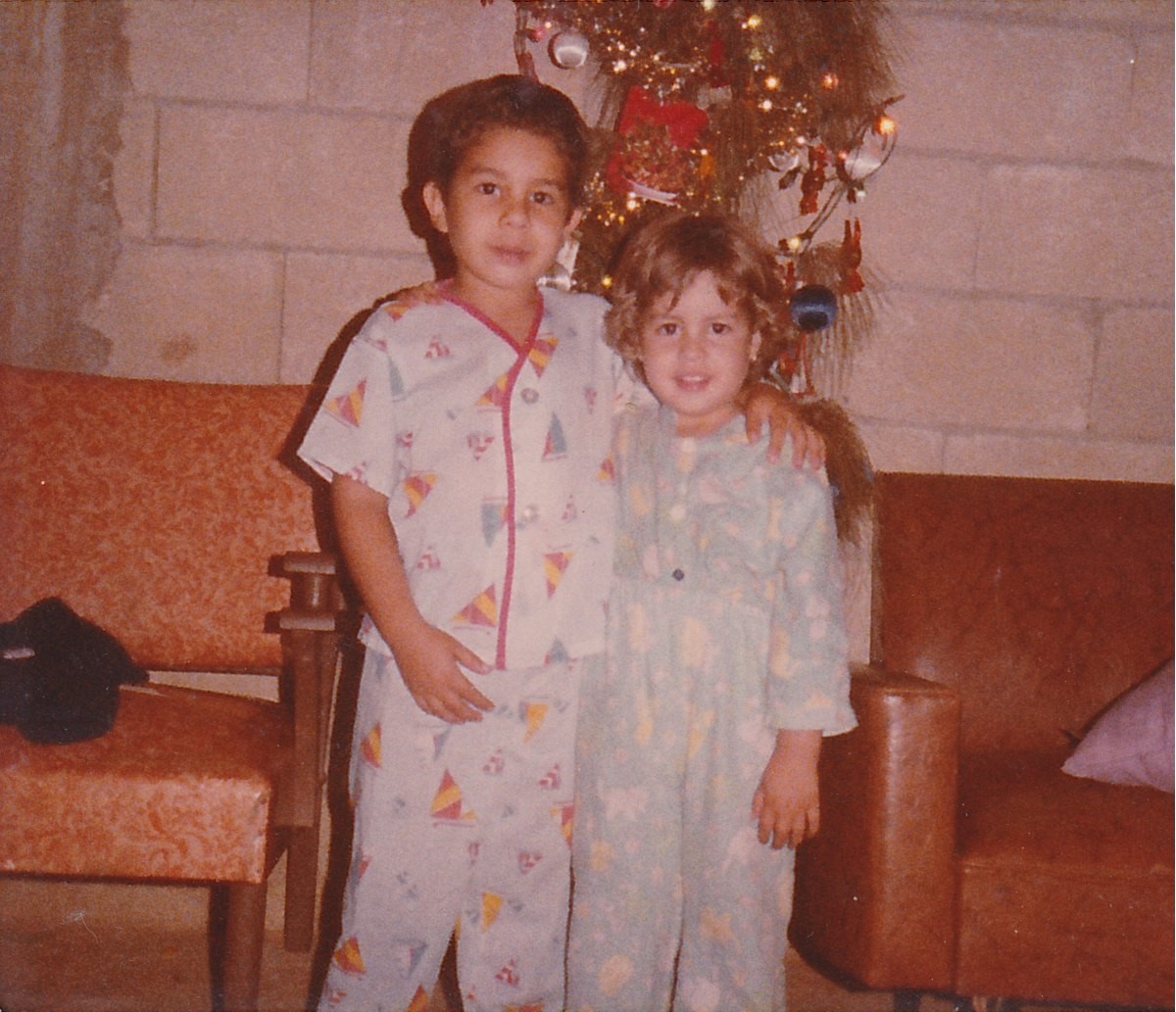
I remember a picture the other day. It was a picture with my sister and I, in front of a Christmas tree. I couldn’t remember what we were wearing, but I do remember that it was taken in the house we grew up in. It was taken many Christmases ago.

When you move as much as I have, memories are all you have left when important dates come up. Living away from the place you consider home means that you always carry with you the memories of special dates. Christmas in particular is a difficult time for me. I grew up in the mountains of Puerto Rico, where the weather this time of the year is cold, but not freezing cold as it is where I live now. The holiday music is festive, cheerful, loud, at a fast tempo, and is everywhere. Caribbean sounds fill up the air; not the slow, often dark, and to me, sad songs with northern European origins. Christmas music for me is drums and guitars, is tambourine and maracas, is güiro and cuatro. Parrandas fill the nights with music as people gather late at night and go throughout their neighborhoods signing traditional music from house to house. All homes are always ready for parrandas. There’s always food: hot chocolate, crackers, guava paste, queso de hoja (a type of homemade white cheese), and of course, the last home that is visited must prepare an “asopao”, or soupy rice with either chicken or pigeon peas.

Our Christmas tree at home was always humble. I still remember the year when my dad decided to just take a coffee tree and wrap its branches with aluminum foil. We placed lights and ornaments and it’s still the most beautiful Christmas tree I had ever had. The tree on the picture I remember was humble as well. We had gone to my grandfather’s farm and cut a pine tree. It did not have the aroma of the fir trees or the spruce trees, but it was beautiful in its humbleness. We put garlands and ornaments and musical lights on it. The tree would not have presents. Ever. Presents were not to be placed under the tree or given on Christmas Eve or Christmas Day. We had to wait until Epiphany, the Feast of the Wise Men, on January 6th. The day before my sister and I would gather some grass for the camels, place it on empty shoe boxes, and place those under our beds. The Three Kings will leave present then… and we will have a week or two to play with them before going back to school.

When you live in exile, or away from home in any form, these memories are all you have. You remember the holiday, and the music, and the presents, and the food, and the family time. You remember that nothing will go back to what it was. You remember that life goes on and you must adapt.

I found the picture among my things. My sister and I are wearing pajamas. The Christmas tree looks as beautiful as I remember. It brought back all the memories of Christmas past, in the mountains of Castañer, waiting for parrandas and for the music. It is Navidad; it is home.

IMG_0002

Leave a comment

Filed under Christmas, Culture, ethnicity, familia, History, Identidad, Identity, Latino, Navidad, niña, niñez, niño, Puerto Rico, Recuerdos, tradiciones, Uncategorized

Seven Words of Christmas

Word ArtThe news have reported that the current White House administration instructed the Centers for Disease Control (CDC) from using seven words on their budget documents. With seven days left for Christmas, I decided to take the time to write a piece each day highlighting one of the seven words.

In the Christian tradition there is the sharing of the Seven Words. These are phrases that Jesus shared while being crucified. Many Christian churches share and preach on these Seven Words during their Good Friday liturgies. The Seven Words are the climax of what Christian theology calls “the story of salvation.” The last words that Jesus shares are: “it is finished” (John 19.30) and “into your hands I commend my spirit” (Luke 23.46.) After these words, Jesus expires.

According to the timeline of events, after Jesus expires on the cross he is placed into the tomb and on the third day he is resurrected. This is the hope of the Christian person: no matter how difficult the journey is, no matter how painful the culmination of life is, there is always the hope of resurrection. This is the message of Holy Week.

Why am I writing about Holy Week on the season of Advent leading into Christmas? Because the Seven Banned Words of the CDC are a mirror of those other Seven Words of Holy Week.

The current federal administration has been crucifying the remnants of the facsimile of democracy that the United States had. With each carefully orchestrated move, the current administration tries to diminish the people’s confidence and trust on institutions serve the country. They are intentional in the use of words to describe the institutions that keep some resemblance of democracy. The administration’s furious attack on the free press, their obsession with political rallies a year after elections, their systemic appointment of people completely unprepared and unqualified to lead the agencies they are appointed to oversee, their deliberate construction of lies disguised as truth, the unashamed use of FOX News as state propaganda television, and a myriad other big and small actions that undermine democratic processes are just the tip of the iceberg. The United States democracy is being crucified.

Diversity

Fetus

Transgender

Vulnerable

Entitlement

Science-based

Evidence-based

These words represent all that society stands for when they are on their way to progress. French philosopher and founder of Sociology, Auguste Comte, wrote about the stages of human progress. In Comte’s theory, societies move towards progress. There are three stages of society: theological, metaphysical, and positivist. A theological society looks at an unknown occurrence and places all responsibility on unseen beings that control our destinies. Any possibility of progress is thwarted by the society’s fear of angering their mythological beings. A metaphysical society is in the middle stage. Societies in this stage begin to understand that there are certain things that have an explanation. The understanding of actions and their consequences are part and parcel of this society’s natural development. Neither one of these two types of societies is inherently corrupt or ignorant. You cannot know what you do not know. However, these are not ideal societies. The ideal society is one in which members are exposed to a systemic way of understanding truth. To this Comte called a “positivist society.”

Although Auguste Comte’s positivist approach to explaining society is not ideal, it does have merit, especially taking into consideration the banning of words in certain official documents by the current administration. A positivist society understands that humanity is on a journey forward. This journey cannot be contained, no matter how much the powers that be may try to stop it. Resurrection is the conclusion to the crucifixion. Progress is the conclusion to temporary repression.

Democracies are vulnerable entities. They can suffer from the ego of leaders who place power over service. Interestingly, Christmas is the time of vulnerability. In the Christian tradition, Christmas commemorates the birth of a vulnerable child, from a vulnerable family, who was threatened, even as a fetus, with destruction by its enemies – political, economic, societal, cultural, and religious, among others. Christianity proclaims that this child that was born transcended what humanity understood at that moment about the relationship between humanity and its divine sovereign. Some theologians propose that this transcending experience of God made Sophia, the common image of God as Wisdom, take the form of Christ in the person of Jesus, thus making God a transgender reality showing humanity how close the Divinity is to all of humanity. The diversity of opinions that ages of science-based social studies and evidence-based conclusions have shown us, is evidence that societies do tend to move forward towards progress and positivism. It is our responsibility, our duty, and even out entitlement as engaged members of a functional society, to be in solidarity with the vulnerable democracy that we are so desperately trying to save. Resurrection is the conclusion of crucifixion, even during the time of Advent and Christmas.

Leave a comment

Filed under Academy, Creativity, Culture, discrimination, Human Rights, Identity, LGBTQ, Philosophy, Queer, resistance, Sociology, Theology, trans, transgender, United States, USA

La mata de guineo que resistió

Hace casi un mes el huracán María destrozó mi país. Por una semana estuve sin ningún tipo de comunicación con mi familia. Hasta el momento, la comunicación es esporádica, puesto que la infrastructura está dañada y mi familia vive en la zona rural de las montañas, donde la ayuda llega tarde – si es que llega algún día.

Hace unos días, le pedí a mi hermana que me enviara fotos para ver cómo quedó todo después del huracán. Cuando vi las fotos, hubo una que atrajo mi atención. En medio de una finca con casi todos los árboles y plantas en el piso, se mantiene de pie una mata de guineo, todavía cargando el racimo lleno de fruta. Esta planta resistió; no hubo fuerza de viento que pudiera doblar a esta mata de guineo. IMG_3712

Desde que pasó el huracán, mi gente puertorriqueña ha proclamado que #PuertoRicoSeLevanta. La capacidad de recuperación de mi gente es maravillosa. Con esto no quiero decir que no se sufra y se sienta el dolor de la pérdida. Por el contrario, se siente todo el dolor y todos lo sentimientos de haber perdido lo que se tenía y que con tanto sacrificio se había logrado. Pero al mismo tiempo, podemos ver cómo la valentía del pueblo hará que poco a poco se reconstruya el país. El pueblo sigue de pie, aunque todo a nuestro alrededor haya sido tumbado por el huracán.

Fue precisamente esto lo que pude ver en esta mata de guineo que resistió: el espíritu del pueblo tenaz, que resiste cargando su historia y su razón de ser. Esta planta representa para mí al pueblo que no tiene porqué levantarse porque es que nunca lo tumbaron.

Leave a comment

Filed under Huricaine, Puerto Rico