Hispanic Heritage Month 2013 Reading List

September 15th through October 15th is “Hispanic Heritage Month.” Here is a list I put together of books that talk about the Hispanic/Latin@ experience in the United States from different perspectives. I have only included books I have read and deemed interesting. I have also tried to capture different aspects of the Hispanic/Latin@ vida: from religion to sociology to economy to immigration… (I still have a very long list of other books to read… once I do read them, they will show up on this list!)

It is my hope that you can grab at least one of these books during this month and learn more about the Latin@/Hispanic experience in the United States. All of the books are in English, as my intention is to reach out to the English-speaking friends of all ethnicities and races. Hope you enjoy!

9.15.12.HispanicHeritageMonth


Religion:

1. Mañana: Christian Theology from a Hispanic Perspective by Justo L. González

2. En la lucha / In the Struggle: Elaborating a mujerista theology. A Hispanic Women’s Liberation Theology by Ada María Isasi-Díaz

3. La Cosecha: Harvesting Cotemporary United States Hispanic Theology by Eduardo C. Fernández

4. Latina Evangélicas: A Theological Survey from the Margins by Loida I. Martell-Otero, Zaida Maldonado Perez and Elizabeth Conde-Frazier

5. Galilean Journey: The Mexican-American Promise by Virgilio Elizondo

Literature:

1. When I Was Puerto Rican: A Memoir by Esmeralda Santiago

2. Almost a Woman by Esmeralda Santiago

3. The Turkish Lover by Esmeralda Santiago

4. The House on Mango Street by Sandra Cisneros

5. The Circuit : Stories From the Life of a Migrant Child by Francisco Jiménez

6. Breaking Through by Francisco Jiménez

7. Reaching Out by Francisco Jiménez

8. How the Garcia Girls Lost Their Accents by Julia Álvarez

9. Christ-Like by Emanuel Xavier

10. Americano: Growing up Gay and Latino in the USA by Emanuel Xavier

11. Santo de la Pata Alzada: Poems from the Queer/Xicano/Positive Pen by Lorenzo Herrera y Lozano

12. My Beloved World by Sonia Sotomayor

History

1. Bacardi and the Long Fight for Cuba by Tom Gjelten

2. Latino Americans: The 500-Year Legacy That Shaped a Nation by Ray Suárez

3. Latinos: A Biography of the People by Earl Shorris

4. Harvest of Empire: A History of Latinos in America by Juan González

5. Latinos: Remaking America edited by Marcelo M. Suárez-Orozco and Mariela Páez

6. Historical Perspective on Puerto Rican Survival in the United States edited by Clara E. Rodríguez and Virginia Sánchez Korrol

Cultural Studies

1. From Bomba to Hip-Hop: Puerto Rican Culture and Latino Identity by Juan Flores

2. It’s All in the Frijoles: 100 Famous Latinos Share Stories, Time-Tested Dichos, Favorite Folktales, and Inspiring Words of Wisdom by Yolanda Nava

3. Latinos in America: Philosophy and Social Identity by Jorge J. E. García

Social & Contemporary Issues

1. Empire’s Workshop: Latin America, the United States, and the Rise of the New Imperialism by Greg Grandin

2. HIS-Panic: Why Americans Fear Hispanics in the U.S. by Geraldo Rivera

3. Illegal People: How Globalization Creates Migration and Criminalizes Immigrants by David Bacon

4. The Presumed Alliance: The Unspoken Conflict Between Latinos and Blacks and What It Means for America by Nicolás C. Vaca

5. “They Take Our Jobs!” And 20 Other Myths About Immigration by Aviva Chomsky

Leave a comment

Filed under Culture, Heritage, Hispanics, History, Latino, Puerto Rico, United States, USA

Who Am I to Judge Papa Paco*? A Response to the Media Hoopla on What the Pope DIDN’T Say About LGBT Rights

It is public knowledge that the media tries to catch our eye with interesting – and often times, misleading – headlines. Such was the recent hoopla about Pope Francis’ interview in which he mentioned the word “gay.” I wish I didn’t have to burst anyone’s bubble, and I really wished Papa Paco had said something really, well, significant, regarding LGBT rights; but the truth is that he didn’t say absolutely anything important.

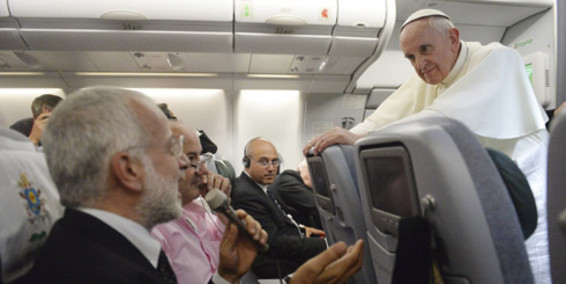
IMAGEN-12955092-2Let us start in the beginning. Papa Paco has already surprised the world with his humility, his openness, and his matter-of-factly attitude. The media world was caught off guard by a Pope that is as open as Francis. In comparison with Blessed John Paul II who was charismatic but reserved, or with Benedict XVI who was as secretive as any Pope in the Middle Ages, Francis’ attitude is something completely new.  Moreover, we do not expect the representative of an organization as secretive as the Roman Catholic Church to be as open with his remarks as Francis has been. Add to this the fact that the US-centric media, with centuries of lay-led Protestantism in this country, has no clue how the Roman Catholic Church operates, nor does it understand the matters of Roman Catholic doctrine, dogma, traditions, etcetera.

When Pope Francis met with the media on the papal aircraft, he was showing his openness. This is still shocking, of course. However, by now we should start getting acquainted with the ways of the new Pope. Therefore, my first call to the US-centric media is: stop exaggerating! Second, please research before you print! Really. A really close examination of the interview and a google search regarding the Catholic Church’s position on LGBT issues should be enough to understand that what Papa Paco said is completely in line with Catholic moral doctrine. He has changed nothing!

To the LGBT advocate groups in the USA and around the world, I ask that, please, for the love of all the souls we have lost to religious intolerance, DO NOT play the game! You are actually doing more harm than good!

This brings me to my second point on this response; namely, that the media totally missed the Pope’s words. If you read any transcript of the interview carefully, you will notice that the Pope, more than once, tells the reporters that the “hot issues” they want him to address have already been addressed by the Catechism of the Church. One by one, he addresses the issues of women ordination (“The Church has already spoken”), abortion and same-sex marriage (“[I ] hold the position of the Church, I am a son of the Church”), divorced people taking the Eucharist (“Regarding the matter of people in second marriages – because divorced people can take Communion – I believe that this is something to look at from the whole perspective of pastoral care for marriages.”), and finally, homosexuality (“The Catechism of the Church explains it beautifully.”)

Given that the Pope wants us to read what the Catechism says about these issues, let us take just a quick look at the one that made headlines: homosexuality.

The Catechism of the Roman Catholic Church, second edition, Part Three, Section II, Chapter 2, Article 6.II.2357 reads: “Homosexuality refers to relations between men or between women who experience an exclusive or predominant sexual attraction toward persons of the same sex. It has taken a great variety of forms through the centuries and in different cultures. Its psychological genesis remains largely unexplained. Basing itself on Sacred Scripture, which presents homosexual acts as acts of grave depravity, tradition has always declared that ‘homosexual acts are intrinsically disordered.’ They are contrary to the natural law. They close the sexual act to the gift of life. They do not proceed from a genuine affective and sexual complementarity. Under no circumstances can they be approved.” On Article 6.II.2359 it reads: “Homosexual persons are called to chastity. By the virtues of self-mastery that teach them inner freedom, at times by the support of disinterested friendship, by prayer and sacramental grace, they can and should gradually and resolutely approach Christian perfection.

What does this mean? First, that according to Catholic moral teachings, homosexuality is and will always be a form of “depravity.” Second, that there are no scientifically proven origins for homosexual orientation. Third, that the fact that there are no scientifically proven origins does not take away from moral teachings regarding homosexual orientation since the Church is “Mother and Teacher” in these regards. Fourth, that the Church recognizes this “depraved disorder” as a cross to bear for the Catholic gay man and lesbian woman. Fifth, that the only life that a homosexual Roman Catholic can aspire to is the life of chastity (and yes, that means life with no sex! Ever!)

This is what Francis believes regarding homosexuality. Moreover, he also exposes that the Church is called to act with care and compassion. Again I quote the Catechism of the Roman Catholic Church, Part Three, Section I, Chapter 1. Article 7.II.1822: “Charity is the theological virtue by which we love God above all things for his own sake, and our neighbor as ourselves for the love of God.” Charity is the theological virtue, according to Roman Catholic dogma, which calls us to love God and to love neighbor as ourselves. Those who love God and love neighbor as themselves will not judge. Living by this virtue applies even to the Bishop of Rome and Vicar of Christ. Thus, when Papa Paco said “Who am I to judge?” he is just reciting the Catechism and even the Bible!

Later on the same part of the Catechism, Article 7.II.1829 we read: “The fruits of charity are joy, peace, and mercy; charity demands beneficence and fraternal correction; it is benevolence; it fosters reciprocity and remains disinterested and generous; it is friendship and communion: Love is itself the fulfillment of all our works. There is the goal; that is why we run: we run toward it, and once we reach it, in it we shall find rest.” Note here that one of the things that charity demands is… FRATERNAL CORRECTION! With that, what Papa Paco actually told the reporters is that, because he loves and cares for the gay and lesbian person, he is called, compelled, mandated even, by Christ and by the teachings of the Church to CORRECT our ways. Doesn’t sound that progressive now, does it?

Perhaps is because I have spent too much time studying Roman Catholicism as a Protestant. Perhaps is because I just can’t believe that the media was so dumb as to be duped by the Pope. Perhaps is because I love being non-celibate, happily married gay man… but I just can’t take the whole hoopla regarding this interview to Papa Paco anymore. But really, who am I to judge Papa Paco? The guy knows what he’s doing and how to play the media! Go Paco!

———

* Note: In Spanish, people with the name “Francisco” are called “Paco.” Since both the Bishop of Rome and I are Latinos, I feel like I can call him by his nickname. Hopefully, this will not make headlines tomorrow! (I can see the media frenzy… “Heretic Latino Protestant Minister Does Not Respect The Bishop of Rome!” Or something like that!)

Leave a comment

Filed under Uncategorized

Who Is My Neighbor?

A legal expert stood up to test Jesus. “Teacher,” he said, “what must I do to gain eternal life?” Jesus replied, “What is written in the Law? How do you interpret it?”  He responded, “You must love the Lord your God with all your heart, with all your being, with all your strength, and with all your mind, and love your neighbor as yourself.” Jesus said to him, “You have answered correctly. Do this and you will live.”  But the legal expert wanted to prove that he was right, so he said to Jesus, “And who is my neighbor?” 
Luke 10.25-29 (CEB)

            There are times when I am amazed at how God works in the world. There are ways in which the Spirit teaches you lessons in totally unexpected ways. The moments that I enjoy the most, are those when the Spirit teaches you lessons that go hand in hand with next Sunday’s sermon! Today I want to share with you one of those teaching moments from this past week. Interestingly, the story goes perfect with next Sunday’s Lectionary readings. Thus, if you are a preacher, feel free to use this story for your convenience next week.

            This past Sunday, I sat down with an elderly woman from my congregation as we waited for her bus to arrive. The bus, as always, was really late and we got to talk for some time. Although my sister in faith is frail, she is witty and funny and can make you laugh for hours with her stories and her jokes. Sitting next to us was our neighbor…

            For the past few months Joe* has been sleeping outside the sanctuary. A few weeks ago during Joys & Concerns one of our parishioners lifted up a prayer for him and for those who are still struggling to find a permanent place to live. Although Joe usually sleeps through our services, this past Sunday he gathered his belongings and joined us for worship. He was an active participant in the service; singing with us, praying with us, breaking bread and drinking from the cup (it was Communion Sunday) and talking with other church friends during coffee hour.

            After the service, while the elder woman from my congregation and I were waiting for her bus to arrive, Joe stayed to talk with us. Our congregation shares space with another church whose services end later than ours. That other congregation was hosting a picnic on the patio that our churches share.

            Knowing that we had been there for several hours, Joe realized that the elderly woman must be hungry, and here is where the miracle happened. Joe, who doesn’t have a permanent place to live, who doesn’t know where his next meal is going to come from, who doesn’t know us, stood up, went to the picnic and brought a hotdog and iced tea for this woman.

            During the whole time that Joe shared with us at church, at coffee hour and waiting for the bus, he never once asked for anything. He shared his story of how he ended up without permanent housing, but not once did he ask for our help in any way. He didn’t even ask for prayers! He just shared with us like any old friend would have. He told us about his time growing up in South Seattle and playing drums in his Baptist church. He told us about his losing his job and not being able to pay those last months of rent (which left him without a home). He even talked about the sermon and about the service. But not once did he ask us for any type of help. The only thing he did was to bless us with his presence, his company, his stories and now, by feeding the hungry and caring for the least of these.

            The actions of this man reminded me of the parable of the Good Samaritan. The parable is pretty tame nowadays, because have read it so many times and in a historical context so removed from its original that it does not mean the same anymore. However, this parable was one meant to shock the audience. The Samaritans and the Israelites did not mix. Customs, religious rituals and other socio-historical realities made it virtually impossible for Israelites and Samaritans to mix. But not only that: the parable is meant to shocks it audience (Israelites) by showing someone who is in “need of redemption” (Samaritans) as the heroes of the story. Basically, what Jesus is telling the religious teachers is:  “You are wrong; the person who gets it is the one you despise.”

            Of course, progressive churches like mine don’t usually despise homeless people (unfortunately, there are always exceptions to this.) However, we don’t get it all the time. We know that it is our duty to provide for the homeless but we forget that the homeless is a human being too, who is as capable of embodying God as we are!

            As Joe came with that hotdog and iced tea to feed the elderly woman he had just met, he was showing me who my neighbor is. According to Jesus, my neighbor is the one who does the will of God, regardless of their circumstances, their way of life, their histories, and more importantly, the way in which we in the church have defined them.

            I will forever be thankful to Joe for his mercy and for revealing to me the face of Christ as he did that Sunday. I am also grateful for helping me write my next sermon a whole week before I have to deliver it! Truly, you are a man of God! =) 

___

*I have changed his name in order to protect his identity. I have also made the decision not to give many details about the elderly woman with the intention of protecting her identity as well.


Leave a comment

Filed under Uncategorized

Lo que la decisión de la Corte Suprema significa para mi familia

Hoy ha sido un día histórico. La Corte Suprema de los Estados Unidos ha determinado que el gobierno federal no tiene razón constitucional para negar los derechos a las parejas del mismo sexo que hayan entrado en contratos matrimoniales donde esos contratos sean aceptados. O sea, que si vives en un estado de la Unión donde el matrimonio igualitario es una realidad, entonces el gobierno federal tiene que reconocer tu matrimonio.

A veces pensamos en asuntos de derechos y los vemos como cosas que pasan “por allá”, “a otra gente”, pero pocas veces le vemos las caras a quienes se afectan por estos hechos. Pues hoy quiero que sepan que estos asuntos tiene nombres, apellidos, familias y que queremos futuros seguros. Mi esposo y yo somos parte de esas miles de parejas que, a partir de hoy, tenemos accesos a derechos que antes no teníamos. Hace un mes somos esposos. Hace poco más de un mes, mi empleador, la Iglesia Bautista Universitaria de Seattle (University Baptist Church) le ofrece seguro médico a mi esposo. Hace ya casi dos años que vivimos juntos, compartiendo todo en el hogar. Sí, el nuestro es un HOGAR. Somos una FAMILIA.

Pero no es hasta hoy que el gobierno federal ha reconocido nuestra relación.

Esta es nuestra situación: hasta hoy, teníamos miedo. ¿Por qué? Pues porque mi esposo está en este país sin los documentos necesarios para residir legalmente en los Estados Unidos. A pesar de que trabaja, paga impuestos, contribuye a la nación, tiene seguro médico, tiene familia en el país, etc., su estatus migratorio nos mantenía en vilo. Hasta hoy, no había nada que pudiéramos hacer. Vivíamos en miedo. Pero hoy ese miedo se ha convertido en alegría…

Hoy mi esposo y yo nos regocijamos de que podemos comenzar el proceso para normalizar su estatus migratorio. Hay por fin una luz – una luz intensa y esperanzadora – al final del túnel. Hoy, gracias a la decisión de la Corte Suprema, puedo patrocinar a mi esposo para que viva y trabaje legalmente en los Estados Unidos. Más que eso, ya no tenemos que tener miedos.

Estas decisiones cambian vidas. Esas vidas que esta decisión ha de cambiar son reales. No importa lo que fundamentalistas pseudoreligiosos digan, estamos hablando de personas, de familias, de seres humanos… Hoy, mi humanidad y la humanidad de mi esposo fueron afirmadas. Nuestros derechos fueron reconocidos. Derechos que hasta hoy solo eran el privilegio de parejas heterosexuales. Pero no. Hoy la Corte Suprema dijo que YO TAMBIEN SOY PERSONA y que mis derechos son tan importantes como los de cualquier otro ciudadano de este país. Mi familia es hoy feliz y no vive en miedo nada más.

Leave a comment

Filed under amor, boda, familia, Gay, Hispanics, Latino, Lesbian, LGBTQ, matrimonio, Puerto Rico

Family Matters

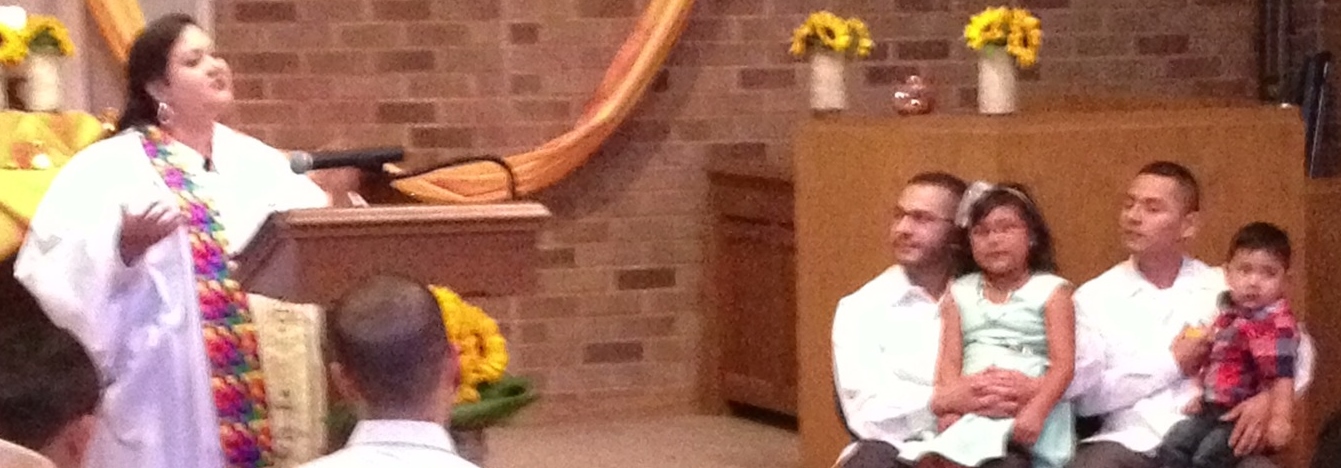
On Saturday was my wedding. As the minister was preaching, our two-years old nephew danced in front of us, and then approached my husband to sit on his lap. I looked at the first row of chairs in the sanctuary, where my husband’s family was sitting, and noticed that our six-years old niece wanted to move and join us to. I did what I thought was appropriate: I signaled her to come forward and sit with us. 

There we were; my husband holding our nephew on his lap, and me holding our niece on my lap. Then I looked around and saw my new family. There was my brother-in-law and his (female) partner, my husband’s cousin and his girlfriend, and a couple of friends who have been like brothers to either my husband or me. There was not a single one of my blood relatives. None could be there for different reasons and my parents and sister have already decided I am not part of their lives. But as I was looking around at my new family, I realized how “family” is such a wonderfully diverse reality. 

ImagePeople talk about “traditional families” as if there was always such thing. In reality, families have always been diverse. There is no such thing as a “traditional” family. There is ideal of family. Our families come in many forms and expressions. I looked around and saw how my family present there was the “new normal” if you will. My brother-in-law and his partner have been together for many years but are yet to get married. He is raising her eldest daughter, who spends time with her birth dad and his family every other weekend. Our nephew was born two years ago, the product of the love of my brother-in-law and his female partner. Then, there was my husband’s cousin, who is dating a lovely, young, white American woman who speaks no Spanish (believe me, that in itself is a HUGE thing!) They were attending the wedding of two men who had decided to commit to each other and to love each other.

Believe it or not, this is more common than people want to admit. Families come in so many varieties and forms! It is such a wonderful thing to see the diversity that exists in life, and to enjoy this diversity with all of its wonders and beauty. Family is family is family… no matter what form it takes… 

Leave a comment

Filed under Uncategorized

Today Is My Wedding Day

Today is my wedding day. Growing up, I never thought this would be something I would say. Back when I was a teenager and realized I was attracted to other boys, the dream of a wedding was not something I had. But after a long journey, today this is a reality. I can get married. The minister can pronounce us “legally married.” I can say to the world that I have a husband and I will proudly wear my wedding ring. 

Unfortunately, marriage equality is not universal throughout the United States, which means that, once I cross the eastern or southern border of my state of Washington, my marriage is not recognized. This is why I will continue to work for marriage equality, because I want other gay and lesbian couples in the country to have the same rights that my soon-to-be-husband and me have. I want to make sure that other couples in the United States have the right to stand in front of their family and friends and show their love through the bonds of marriage. I want other gay and lesbian couples to feel the excitement of waking up one morning and say… “TODAY IS MY WEDDING DAY!” 

Leave a comment

Filed under Uncategorized

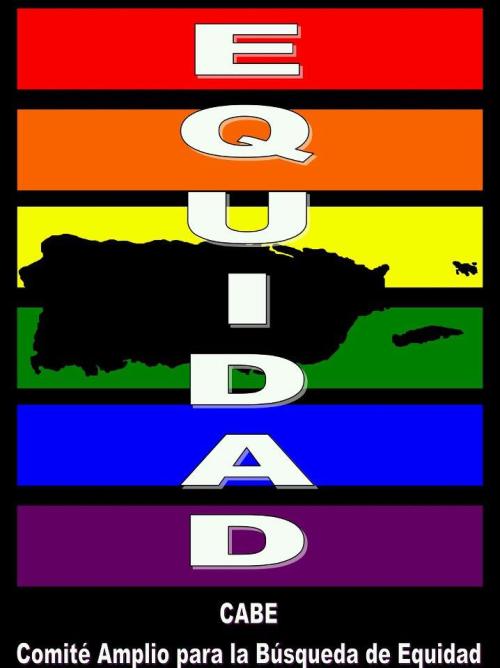
Equidad… para TOD@S en Puerto RIco

Equidad... para TOD@S en Puerto RIco

EQUIDAD… IGUALDAD… DERECHOS…

Leave a comment

May 16, 2013 · 9:51 am

La conversación más difícil que he tenido

Bueno, comencemos por decir que en realidad, no ha sido la conversación más difícil de mi vida. Pero fue bastante difícil. Les cuento la historia…

He pasado muchos años haciendo activismo. En mis años de activismo, desde que estaba en la universidad hasta el día de hoy, me he reunido con presidentes de instituciones, miembros de la legislatura, miembros de la prensa, líderes religiosos tanto a niveles locales como internacionales y hace no mucho tuve la oportunidad de hasta sentarme a convencer al gobernador de mi estado de que tenía que hacer algo por las comunidades hispanas de Washington. A pesar de estas experiencias, no me sentía en lo mínimo preparado para la conversación que tuvo lugar hace unas semanas atrás.

En estos pasados meses, mi compañero y yo hemos estado planeando nuestra boda. Como esto es algo nuevo para su sobrina de seis años yo me ofrecí a explicarle a ésta todo el asunto de que su amado tío Nando (como su familia le llama) y yo nos uniríamos en matrimonio.

Pasé semanas revisando la conversación en mi mente. Traté de visualizar todos los posibles escenarios. Busqué en mi mente las mejores palabras para explicarle a Emely lo que significa el matrimonio y por qué su tío y yo tendríamos una boda. Bueno, que por semanas estuve planeando para una conversación que me parecía medio sencilla – por aquello de mis años en el activismo – y natural. Después de todo, es nuestra sobrina de seis años que mide menos de tres pies de altura y no el Gobernador Inslee que mide más de seis…  ¿Qué podría salir mal?

Pues cuando el momento llegó todo resultó más difícil de lo que pensé. Emely nos quiso enseñar el nuevo vestido verde menta que su mamá le compró. También sacó los zapatos plateados que se pondría con el vestido. Pero había un problema, Emely no sabía para qué ocasión especial era ese vestido nuevo. Sabiendo que esta era nuestra oportunidad, su mamá le dice que me pregunte a mí.

Con todas las bases cubiertas, le digo a Emely que el vestido es para una ocasión especial. Ella se interesa y pregunta qué ocasión tan especial es esa. Yo le pregunto, “Emely, cuando dos personas se quieren mucho, ¿qué hacen?” Su repuesta, después de pensarlo un poco, es, “¡Se casan!” “Así es. Pues tu tío y yo nos queremos mucho. Como nos queremos mucho, vamos a tener una boda.”

Hasta ahora, todo va como planeado. La nena me sigue la conversación. Hay un momento de explicar que existen diferentes tipos de familia. Ella reacciona como lo más normal del mundo, porque, después de todo, ella también tiene un hermanito, una mamá y un papá con quienes vive y un papá, una mamá y un segundo hermanito con quienes pasa los fines de semana. El concepto de “familia no tradicional” es… pues lo tradicional para ella. Así como lo es para millones de niños y niñas en los Estados Unidos. “Bien hecho, tío” pensé yo.

Pero de repente la conversación se tornó difícil. Comenzaron a salir las preguntas que no esperaba. Emergieron aquellas curiosidades infantiles para las que nunca me prepararon los años de activismo. Resurgieron todos los temores que pueden surgir cuando le tratas de explicar a una niña de seis años que su tío, un hombre, se va a casar con otro hombre. Y aquí fue que me encontré en la disyuntiva de si seguía la conversación o si me levantaba y salía corriendo de allí porque no tenía la más mínima idea de cómo contestarle a nuestra sobrina sobre sus preocupaciones más grandes e importantes sobre la boda de su tío conmigo.

Mi mente quedó en blanco. Mi corazón palpitó más rápido. Mis manos me sudaban y las palabras no me llegaban a la boca. ¿Cómo contestarle a Emely estas preguntas tan profundas e importantes que nunca pensé que fueran las prioridades de una niña de seis años?

Resulta que, en medio de nuestra conversación, a Emely no le pareció nada extraño que dos hombres se fueran a casar. Pero cuando le expliqué que su tío y yo tendríamos una boda y que sería en una iglesia, con una sacerdote mujer y que tendríamos una fiesta con pastel/bizcocho (mi compañero es mexicano, así que hay que explicar las cosas en español MexiRiqueño), Emely puso sobre la mesa sus preocupaciones más grandes… “¿Habrá ice-cream?”

Totalmente desconcertado. Así me dejó su pregunta. ¿Habrá helado/nieve en la boda? Le di la única respuesta que tenía. Con una voz trémula porque no sabía cómo contestar tan profunda pregunta, le dije, “No. No habrá helado en la boda.”

De toda la conversación, de todo lo que le podríamos explicar sobre que dos personas del mismo sexo se vayan a casar, de todo lo que había ensayado en mi mente, nada me preparó para contestar esta pregunta. Pero las cosas no se quedaron allí. Todavía quedaba una pregunta aún más importante… “Tío, ¿y va a haber una piñata?”

Me quedé tieso. Ninguno de los tres adultos en la sala supo qué decir. Lo único que se nos ocurrió fue decirle que, por tradición, no hay piñatas en las bodas. Que las piñatas son para los cumpleaños y para otras fiestas, pero no para bodas

Emely no estuvo satisfecha. “¿Por qué no va a haber piñata en la fiesta cuando tío Nando y tú se casen? ¡Es una fiesta! ¡Yo quiere ice-cream y una piñata en su boda!”

Mientras yo todavía turbado por una conversación tan difícil, la niña no se detuvo en su afán de entender el extraño mundo de la gente adulta, donde las fiestas se celebran sin helado/nieve y sin piñata. “¿Cuándo es la boda?”, preguntó ella. “Pues al fin de mes.” “¡Pero yo quiero que tengan la boda ya y que haya ice-cream y piñata!

¡Qué trabajo tan difícil! Explicarle a una niña lo que es el amor y lo que es la igualdad matrimonial resultó mucho más difícil de lo que preveía. Quizás por esto es que aquellas personas que se oponen a la igualdad matrimonial no quieren que tengamos derechos. Es muy difícil explicarle a un niño o a una niña que en la fiesta de bodas de sus dos tíos hombres o sus dos tías mujeres, no habrá piñata ni helado. Quizás lo que temen los fundamentalistas religiosos es que no tienen la capacidad intelectual para explicarle a la niñez que cuando los adultos hacen fiestas, el helado y las piñatas no son prioridad.

No sé, quizás las personas que se oponen a la igualdad matrimonial por razones religiosas no tienen las palabras para explicar el extraño mundo de los adultos a la niñez. Les entiendo. La niñez entiende el concepto de amor muy fácil. Pero es extremadamente difícil explicarle las fiestas de adultos a la niñez. Son fiestas donde no hay helado ni piñatas. ¿De qué vale una fiesta de este tipo? ¿Qué más da si las dos personas que se paran frente al ministro o la ministra son dos hombres, dos mujeres, o un hombre y una mujer, si cuando ese amor se celebre no va a haber helado ni piñata?

Ya mi compañero y yo hemos hablado. Vamos a tener helado en la boda. Todavía no estamos convencidos de que haya piñata. Pero, ¿quién sabe? La sacerdote mujer que nos va a casar ya parece estar convencida de que es necesario que haya piñata en la boda para que la niña sea aún más feliz. Yo espero que ella la traiga en una de sus maletas cuando venga…

Emely tiene dos tíos que la adoran, que la respetan, que le ayudan con sus asignaciones de la escuela y que toman el tiempo para jugar con ella y enseñarle muchas cosas. Eso ella lo sabe. Ya la veo dando vueltas en la iglesia, con su vestido verde menta, comiendo helado/nieve y dispuesta a romper la piñata que marcará el día que sus tíos se juraron amor para siempre.

Leave a comment

Filed under amor, boda, Dios, Español, familia, Gay, iglesia, Latino, LGBTQ, matrimonio, niña, niñez, niño

El Peligro de la Educación

(NOTA: Este es un artículo extenso, como respuesta a los discursos públicos en Puerto Rico con respecto a las leyes propuestas que protegerían a las comunidades LGBT de la Isla. Por favor, tomen el tiempo para leerlo, no lo lean a prisa. Es un ensayo socio-teológico, no solamente un artículo de opinión.)

——–

Cuando entré en la adolescencia comencé a sentir un dolor horrible en mi rodilla derecha. La verdad es que no había razón para ello. Nunca he sido deportista. No me había lastimado. Sólo me dolía la rodilla. Preocupada, mi madre me llevó a la pediatra. Después da varios exámenes, la pediatra llegó con su diagnóstico. “Mayi,” le dice la pediatra a mi mamá, “lo que tu hijo tiene no es nada grave. Es solo que está creciendo. Esos dolores son normales. Es parte del proceso de crecimiento.”

Nunca me voy a olvidar de este incidente. De hecho, en más de una ocasión esta historia me ha servido para mis sermones. El proceso de crecimiento duele. Crecer implica cambios y transformaciones que en ocasiones pueden ser dolorosas. Algo así es lo que pasa con el proceso de educación.  Si se toma en serio, la educación no es algo de un solo día. La educación es – o debería ser – un proceso de aprendizaje continuo que, de una manera u otra, conlleva transformación y por ende, un poco de dolor e incomodidad. He ahí donde está el peligro de la educación…

Debo aclarar que “educación” e “instrucción”, aunque pueden utilizarse coloquialmente como sinónimos, no lo son. La instrucción es una forma de enseñanza en la cual se adiestra para un propósito en particular. Por ejemplo, podemos obtener instrucción de cómo armar un aparato electrónico. Para armar dicho aparato, no necesitamos saber el porqué, solo necesitamos el dónde van las piezas y ponerlas en su lugar. Una persona instruida sabe crear algo. La instrucción es muy importante en el campo laboral, puesto que nos ayuda a llevar a cabo nuestras tareas y producir resultados. De hecho, toda disciplina requiere de instrucción.

Pero la educación es más que instrucción. La educación es un conjunto de conocimientos que nos permiten interactuar en la sociedad. La educación no solamente instruye a un individuo a llevar a cabo una tarea sino que nos ayuda a entender el contexto en el cual esta tarea se lleva a cabo.

Les comparto dos ejemplos de cómo la instrucción y la educación van de la mano pero son diferentes.

Digamos que una ingeniera civil quiere hacer un puente que cruce de un lado del río al otro. La ingeniera tiene la capacidad de diseñar el puente. También puede ella determinar los materiales a utilizarse, los procedimientos necesarios y las dimensiones del proyecto. Su instrucción le permite hacer todo esto. Pero digamos que esta ingeniera no tuvo educación, solo tuvo instrucción. ¿Para qué es bueno ese puente? ¿Sólo para pasar de un lado al otro? ¿Cuál es la razón por la cual se quieran conectar un lado del río al otro? ¿Qué beneficios traerá este puente?

En su educación – probablemente universitaria – esta ingeniera fue expuesta a una educación comprensiva. Durante sus años de estudio, ella tomó cursos no solamente de diseño y materiales, sino que tomó cursos de economía y sociología, de historia y de redacción.

Podrás preguntarte – como se preguntaban muchos/as de mis compañeros/as de estudio – el porqué es importante tener todos esos “cursos irrelevantes” en el currículo universitario. Pues vayamos de regreso a las preguntas que cito arriba. ¿Por qué hacer el puente? Puede ser que hayan razones económicas: un lado del río tiene las fábricas mientras el otro tiene las tiendas que venden los productos. Esto es economía, no ingeniería ni química. ¿Dónde hacer el puente? Pues en el lugar más accesible para la población (demografía), pero suficientemente apartado como para no disturbar las sociedades expuestas al mismo (sociología) ni el medio ambiente (ecología). ¿Por qué hacerlo hoy y no esperar unos años? Porque el movimiento de personas al área lo requiere (historia). ¿Habrá dinero para construirlo? Pues una buena presentación a las compañías inversionistas (redacción) podría convencerles de que es necesario (retórica).

En fin, que la educación comprensiva a la que la ingeniera se haya expuesto le dará las herramientas para llevar a cabo su labor.

Ahora, permítanme compartir otro ejemplo más personal.

Mi profesión es el ministerio. O, en español sencillo, soy pastor de iglesia. Contrario a lo que muchas personas piensan, el pastor o la pastora no es – o no debería ser, como muchas personas que hay por ahí – un títere de Dios. Si bien es cierto que para quienes practicamos el ministerio “el llamado” es importante – o sea, nuestro sentido de que la Divinidad nos ha extendido una invitación al ministerio – también es cierto que es necesario obtener una educación comprensiva para ser un ministro o una ministra efectiva.

O sea, podemos tener una buena instrucción de cómo predicar. Pero eso es solo uno de muchos aspectos del ministerio. Un pastor o una pastora educada, también entenderá la historia de la fe (historia y humanidades), el contexto sociológico en el cual los textos sagrados fueron escritos (sociología y antropología), las características de la congregación a la que sirve (antropología, economía y demografía), etcétera. Pero también debe el ministro o la ministra tener conocimiento de la sicología y la biología – ¿está una persona con depresión porque perdió un ser querido o lo está porque tiene una condición de desequilibrio hormonal o de problemas químicos de los neurotransmisores dentro del cerebro? Además, tenemos que tener en cuenta aspectos económicos y financieros (¿cuánto se puede hacer con los recursos que contamos?) ¡Y todo esto es solo el comienzo!

Una educación comprensiva, contrario a una instrucción, lleva a tomar todo lo que tenemos alrededor en consideración. Pero además, la educación comprensiva trae consigo el “peligro” de que tengamos que cambiar de parecer de acuerdo a los datos nuevos que nos lleguen. O sea, que cuando se presentan nuevas alternativas, o se presentan nuevas realidades, debemos aceptarlos y utilizar los mismos para tomar nuevas decisiones. Hay ocasiones en que estas decisiones serán diferentes a las que en un momento pensamos que eran las únicas que debían tomarse. Esto, por supuesto, trae consigo el “peligro” de transformación, de cambio, de dejar atrás las cosas que conocemos y que nos hacen sentir cómodos para poder movernos hacia adelante.

En días recientes el debate público en Puerto Rico ha traído a la luz el peligro de la educación. Pero aun más, este debate ha demostrado que muchas personas que se autoproclaman “líderes” – ya sean políticos, comunitarios o religiosos – no tienen el deseo de exponerse a una educación. De hecho, ellos y ellas parecen estar conformes con su instrucción y han tomado la decisión de dejar de crecer como individuos y como miembros productivos de la sociedad. Prefieren, estos “líderes”, mantenerse enajenados y enajenadas de los datos y las nuevas realidades que el resto de la sociedad vive.

Lo más desafortunado es que, junto a sus posiciones erróneas, han tratado de arrastrar a una masa de personas que también han tomado la decisión de dejar de aprender. Y no digo que esta masa sea la mayoría. No lo creo. De hecho, sé – porque he sido parte de la facultad de una universidad en la Isla – que hay muchas personas que atesoran la educación y que la saben importante dentro de su necesidad de instrucción para ejercer diferentes profesiones.

Ahora, les comparto algunos datos específicos de las ridículas ocurrencias que han pasado durante los debates públicos en Puerto Rico.

Comencemos con la falta de educación de la legisladora que llamó – y sigue llamando – “orientación sexual” a la pedofilia y al bestialismo. Esta legisladora aprendió a ejercer una profesión (se instruyó), en su caso, la abogacía. Como no conozco su record con respecto a su profesión, digamos que es buena abogada. Digamos que representó a sus clientes de manera justa y profesional. Digamos que ganó varios casos y que perdió otros, como cualquier otra persona ejerciendo su profesión. Su instrucción le ayudó a ejercer la abogacía y hasta le ofreció herramientas para convencer al pueblo de que era la mejor candidata para ocupar un puesto público. Desafortunadamente, a esta legisladora no le interesa la educación. Como la educación implica transformación y por ende, un proceso de dolor al dejar atrás creencias, mitos, prejuicios y mores que han estado integrados a nuestra psiquis cultural, la legisladora ha preferido ignorar los datos, las realidades y los argumentos que se le han presentado tratando de corregir sus errores. No ha podido la legisladora reconocer su error y APRENDER, exponerse a una transformación y a un crecimiento. Así que sigue ella en su ignorancia y haciéndose la víctima.

¿Qué se puede hacer con un caso como el de esta legisladora y de otros y otras personas que pertenecen a la élite política del país? En su caso, esperar unos años para presentarla de nuevo ante las masas educadas de los y las votantes.

El segundo caso es más peligroso. Este es el caso de una señora que se autoproclamó “apóstol” y que dirige una congregación bastante grande en la Isla. Digo que este caso es más peligroso por varias razones. Primero, como pastor y teólogo, veo crasos errores teológicos en las enseñanzas de esta señora. Segundo, porque esta señora no tiene educación teológica ni entrenamiento profesional, por lo que ha estado poniendo en peligro la salud emocional y espiritual de miles de personas que han pasado por su congregación. Tercero, porque esta señora ha estado teniendo un protagonismo tremendo y controlando los medios de comunicación, dando una perspectiva errónea de quienes nos dedicamos al ministerio y de quienes hacemos teología, no sin señalar el daño que le hace al pueblo al no querer reconocer sus errores.

Cualquier persona puede ser entrenada (instruida) para predicar. Esto es fácil. Pero no toda persona tiene el deseo de aprender y educarse en el ministerio. No quiero entrar en muchos detalles porque ya este ensayo está suficientemente largo. Pero les dejo con varias observaciones teológicas que desmienten las posiciones de la señora que se autoproclama “apóstol”.

¿Puede alguien proclamarse “apóstol” hoy día? Según las Escrituras Cristianas – las mismas que esta señora demuestra que no ha leído – la respuesta es un rotundo NO.

¿Cuáles, pues, son los requisitos para ser apóstol? Pues son tres. Primero, haber estado con Jesús durante su ministerio y haber sido testigo de su resurrección (Hechos 1.12-26 y 1 Corintios 9.1) Y le cito esta parte de la Biblia Reina-Valera 1960 que esta señora dice que vino directa del cielo – “Es necesario, pues, que de estos hombres que han estado juntos con nosotros todo el tiempo que el Señor Jesús entraba y salía entre nosotros, comenzando desde el bautismo de Juan hasta el día en que de entre nosotros fue recibido arriba, uno sea hecho testigo con nosotros, de su resurrección.” (Hechos 1.21-22, esto ocurre cuando los Apóstoles se reunieron para escoger el sucesor de Judas Iscariote.) Segundo, un apóstol debe haber sido llamado o llamada directamente por Jesús u por el Espíritu Santo para tal trabajo (Mateo 10:1-15; Marcos 3:13-19; Lucas 6:12-16; Juan 20.1-18 [este es el llamado y la encomienda a María Magdalena, quien también fue apóstol en todo el sentido de la palabra]; Hechos 1:12-26; 9:1-19; 22:6-21; 26:12-23). Finalmente, los y las apóstoles tenían el poder de hacer milagros (Macos 3:15; 16:17-20; Lucas 9:1-2; Juan 14:12,26; 15:24-27; 16:13; Hechos 2:43; 4:29-31,33; 5:12,15-16; 6:6; 8:14-18; 19:6; 2 Timoteo 1:6; Romanos 1:11; Hebreos 2:3-4). Esta lista de versículos que hablan tan claramente de las características de un apóstol nos da la certeza de que la señora que se ha autoproclamado “apóstol” nunca ha abierto la Biblia para leerla.

Tenemos que tener en cuenta que el poder de hacer milagros es concedido a TODA persona creyente, no solamente a los y las apóstoles. Sin embargo, las tres características tienen que estar unidas para poder determinar si una persona es en realidad “apóstol” en el sentido bíblico de la palabra. Si no es así, entonces debemos hacer lo que la misma Biblia nos enseña, “Amados, no creáis a todo espíritu, sino probad los espíritus si son de Dios; porque muchos falsos profetas han salido por el mundo.” (1 Juan 4.11) Cuando tomo todo en consideración, la única conclusión a la que puedo llegar con respecto a esta señora es que es una falsa profetiza. Desafortunadamente, como dice la Biblia, “son ciegos guías de ciegos; y si el ciego guiare al ciego, ambos caerán en el hoyo.” (Mateo 15.14)

En fin, que tanto la legisladora como la señora autoproclamada “apóstol” han sido instruidas, pero su temor a la transformación y al crecimiento como personas le han impedido educarse. Ese es el peligro de la educación: que duele, que hace que nos sintamos incómodos, que nos toca en lo más profundo y no nos deja iguales… En fin, que si queremos crecer como personas, tenemos que exponernos a los peligros de la educación. De otra manera, solo somos “metal que resuena, o címbalo que retiñe” (1 Corintios 13.1) pero completamente huecos.
1 Comment

Filed under Uncategorized

Las Manos de Dios Are Working for Immigration Reform

Does your church know you are here?” Before we introduced each other, this was the first question I got from a Latina activist.

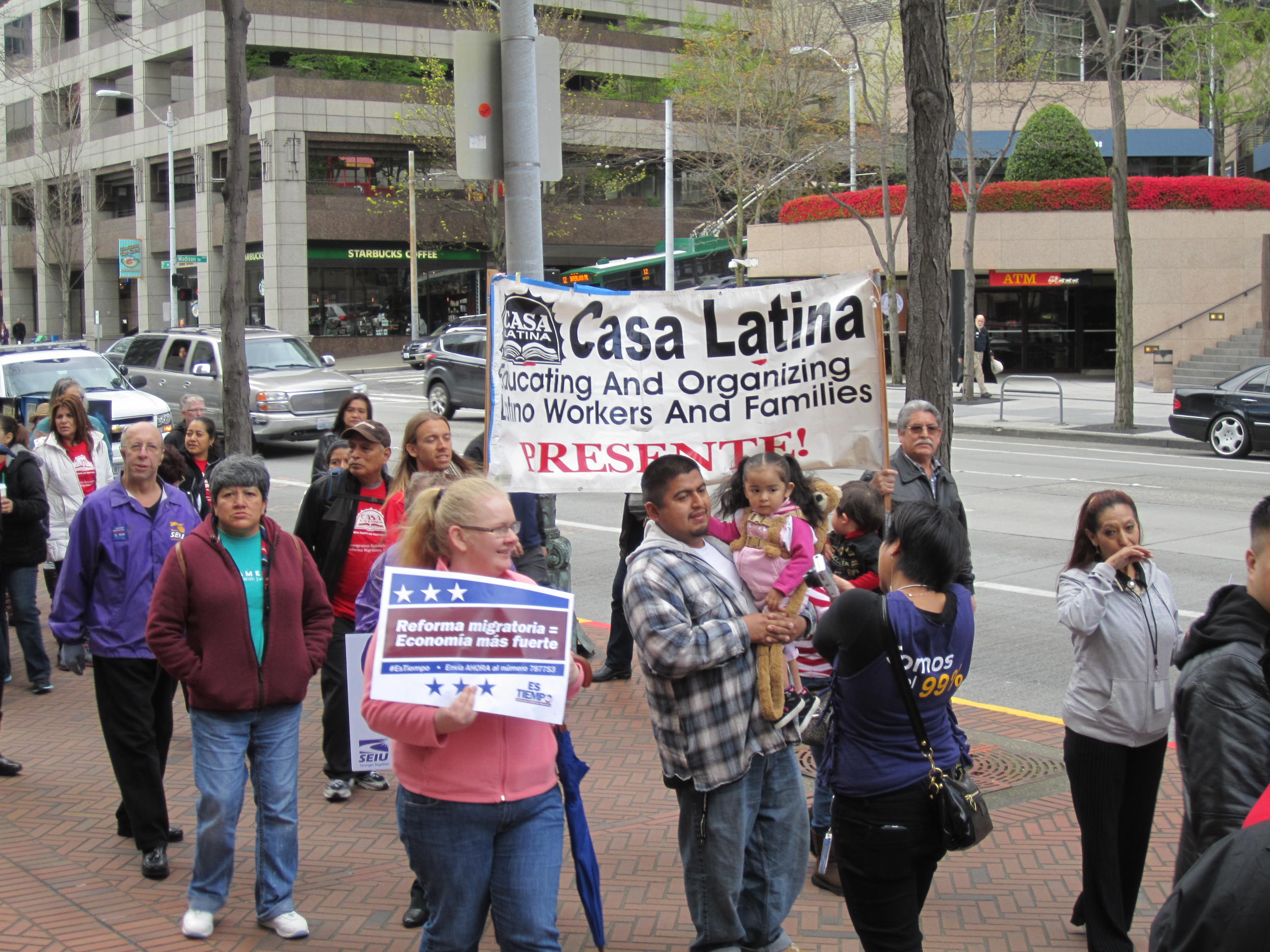
ImageI was participating of a demonstration for immigration reform in Seattle. A few minutes after I arrived, I met this mother of two who was holding one of the signs and started a conversation with her. I shared that I was the pastor of a Baptist church in town. She looked at me surprised and asked the question above.

It turns out that, as this mujer activista told me, every time her organization approaches an iglesia evangélica Latina, they are turned away. She said that the most common excuse is, “Nosotros dejamos esos asuntos en manos de Dios.

Since I have been working on (mostly) Anglo congregations for most of my parish ministry, I had no idea that this was the current situation among Latino Protestant communities. (I have to say that most of the Latino congregations active on issues of immigration in Washington State are indeed Roman Catholic parishes.) It certainly pained me to hear the experience of this mujer. I assured her that my parish and indeed my denomination, the American Baptist Churches, USA support comprehensive immigration reform.

Standing by the side of this mujer y sus hij@s, holding a banner and chanting, was indeed a spiritual experience for me. How come other Latin@ evangelic@s are not praying in this way? I met Jesucristo yesterday at this demonstration. How come are there churches refusing to meet him? As the saying goes, “A Dios orando y con el mazo dando.” I cannot pray to God while at the same time sit idle to wait for the Spirit to “do” what I ought to do. In fact, I believe that the Spirit moves me to work for this! After all, I was taught that I am las manos de Dios! 

Por

J. Manny Santiago

Seattle, WA 

Leave a comment

Filed under Uncategorized