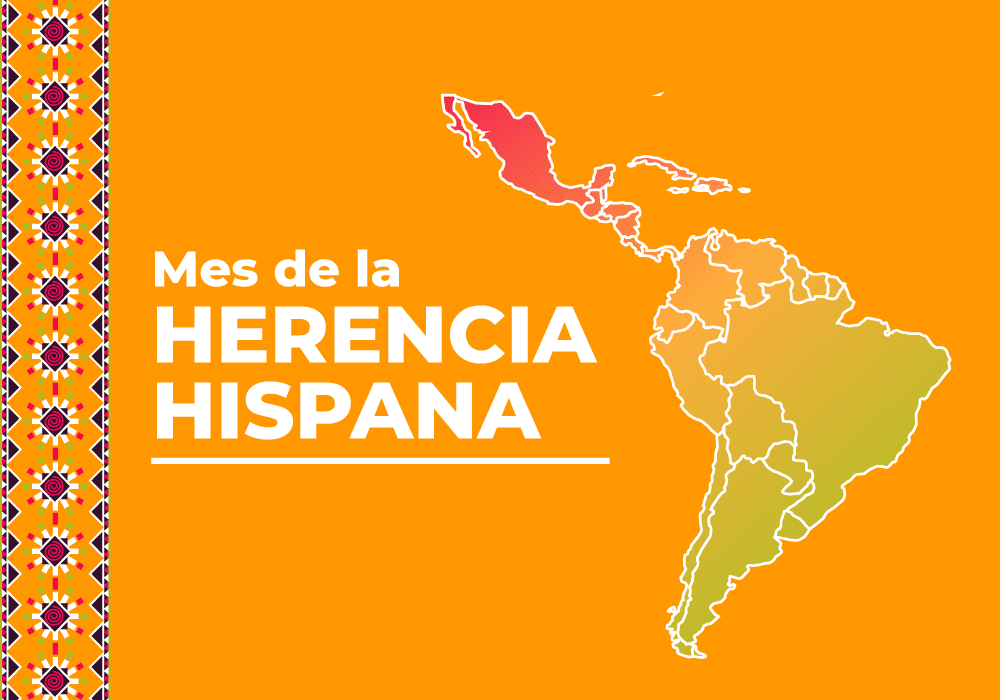
When Hispanic Heritage Month was established it was with the idea of recognizing the contributions of Hispanic-Americans (as our community was known) to the United States. Since the term “Hispanic” was a government construct to group a very diverse group of people, other concepts such as “Latino/a” have been used. We understand that not all Latinos/as are Hispanics, and that any terminology used to group our community is going to fall short. Latin America is an extremely diverse region. Our ancestors are Indigenous, African, European, Asian, and of every combination thereof. There are hundreds of different languages spoken throughout the region in addition to Spanish, Portuguese, and Creole. Our histories, cuisines, faiths, values, and every aspect of culture are different. Hispanic Heritage Month is supposed to celebrate this diverse group of peoples, highlighting our contributions to the larger US society, of which Latinos/as have been a part since before the United States was formed as a country.
Yet, for some groups within the Latino/a community, Hispanic Heritage Month can be a reminder of how cultural hegemony erases diversity and identity. The challenge of celebrating a diverse community that does not fit the clear, simple, and binary definitions of the majority Euro-centric American culture reduces Hispanic Heritage Month to a celebration of whichever Latin American cultural heritage is most prominent in a particular context. The month that was meant to celebrate our diversity is reduced to the celebration of the Spanish-Caribbean in the eastern seaboard of the USA, or of Mexican-American communities in the Southwest and West. This cultural hegemony makes invisible large portions of our communities.
Cultural Hegemony Gets Personal
I speak to this from personal experience. When I first moved to the mainland USA it was to the eastern coast. As a Puerto Rican, it was easy for me to find representations of my culture anywhere I went. I didn’t have to adapt my dialect too much and for the most part, people understood when I said “habichuela” or “bizcocho” or “guagua.” The historic large diasporas of Spanish-Caribbean peoples to the easter parts of the USA means that our cultures, dialects, and cuisines are more prevalent. Other people of Latin American descent usually must adapt to these Spanish-Caribbean cultures (Cuba, Dominican Republic, and Puerto Rico.) Once I moved to the West coast, things were totally different. Out here, the prevalent cultures are Mexican and Mexican-American. People from all over Latin America and of any Latin American heritage must adapt to these cultures as they have been adopted by the Euro-American majority as the standard or default definition of “Latinidad.” More concerning is the expansion of this standard definition and its adoption by politicians, nonprofits, businesses, and many other groups.
The invisibilization of non-Mexican Latin people has profound consequences both for our communities and for society at large. Spanish is reduced to one dialect and one accent (usually norteño or chilango) at the expense of the plethora of dialects spoken throughout Latin America and the many variations of the Mexican dialect. Latino Indigeneity is reduced to Aztec and Maya identities at the expense of Mapuche, Arawak, Taíno, Guaraní, Garifuna, and the thousands of indigenous groups that still inhabit Latin America. The Afro-Latino/a identity is forgotten as “mestizaje” – the mixing of European and Indigenous identities – is made the standard of Latinidad. And Protestant, Evangelical, Jewish, Muslim, Buddhist, Hindu, Santero, Espiritista, and other faith traditions practiced by Latin folk are hidden in favor of a particular Roman Catholic experience that doesn’t even consider the beautifully diverse experiences and traditions of non-Mexican Latin Catholic communities. For instance, growing up Protestant, I never observed “Día de los Muertos”, or sang to “La Virgen de Guadalupe” on December 12th. Although I recognize and honor the importance these celebrations have, they do not define my Latinidad, nor do they define Latinidad for at least half of Latinos/as in the United States.
The Mexican cultural hegemony promoted by white supremacy is not only impacting non-Mexican Latin folk. This cultural hegemony also impacts other Mexicans. My husband is Mexican, from the state of Yucatán, and of Maya indigenous identity. In the white supremacist, cultural hegemonic definition of “Mexican” and of “Latinidad”, his accent, his cuisine, and his traditions do not fit. From time immemorial, the Maya people of Yucatán have celebrated “Hanal Pixan”, a month-long observance to welcome back and honor those ancestors who are before us (in Maya tradition, the past is before us, while the present is behind us because we cannot see it.) During this time, families prepare altars, present food and drinks as offerings, and have rituals of welcoming for the ancestors. On three different dates throughout the month a special tamal called “pib” is prepared and eaten with those ancestors. Hanal Pixan has been merged to

some extent with the Roman Catholic tradition of All Souls and All Saints Days, while keeping much of its Mayan roots. But you would never find a hint of this Mexican cultural tradition presented in any of the “Hispanic” celebrations of “Día de los Muertos.” Once again, cultural hegemony erases a part of our identities.
The Causes and Roots of Cultural Hegemony
There are many causes for cultural hegemony. Our own brains try to minimize the use of energy by categorizing things around us in the simplest ways. Culturally, we try to group people as to make it easier for us to understand them. White supremacy in particular has been really great at minimizing differences by grouping folk as “white” and “black” and then assigning value to each category, with lighter skin being more valuable than darker skin. This tool of control offers Latinos/as, who are of every race, a mirage opportunity to “become white” and thus, access power. The lighter our skin, the closer we are to being part of the standard definition of “American.”
It is in this context where we find the first clues to this cultural hegemony imposed in Latinidad. First, the powers-that-be decided that “Hispanic” was a good enough category for people of Latin American descent. This was regardless of their racial background or historical heritage. Whether a person was indigenous to these lands or an Austrian Jew who found refuge in Argentina, now both were classified as “Hispanic” for the mere fact that Spain conquered most of what is today Latin America. Second, when the communities reacted to this misnomer, they came up with “Latino”, and if they were progressive enough, “Latino or Latina.” This at least alleviated the reality of those who, having cultural roots in Latin America, did not have or do not want to be associated with Spanish heritage. The Euro-American majority decided how our community was going to be named, regardless of centuries of self-identification within our communities. Finally, the acceptance of mestizaje as the standard of Latinidad served the purpose of ensuring that Latinos and Latinas thought of ourselves as “almost white” people in the context of the United States. (Please know that this concept is used very differently within Latin America. But I will not be discussing this in this essay.) Erasing Afro Latinidad can only serve the white supremacy agenda, not advance the Latino/a community.
On the other hand, once the stage was set to have a homogenous definition of Latinidad, it was easier for one dominant Latin culture to ignore the rest.
Throughout the years, Mexico has been extremely successful in developing its media presence throughout Latin America. The richest man in Mexico also happens to be the most successful telecommunications executive in Latin American, Carlos Slim Helú. América Móvil, his telecommunications empire, has an almost monopoly of the communications world throughout all of Latin America with the notable exception of Cuba. The Mexican theater and film “Golden Age” marked the scenic arts in ways that no other country was able to do. Today, Mexican novelas (soap operas) and movies dominate most of the TV market throughout the continent. Pretty much any Spanish language singer – and sometimes actors – who wants to have a successful career knows that they must gain over the Mexican market, no matter how successful they might be in their countries of origin and neighboring countries.
As a result of the success of Mexican cultural exports – films, novelas, music, cuisine, etc. – there is no corner of Latin America that has not been exposed to the Mexican dialect (on its norteño and capital city versions), foods, and music, among others. Thus, although pretty much any Spanish-speaker can understand Mexican Spanish, people in Mexico and people of Mexican descent elsewhere have not had the chance to be exposed to our dialects. Therefore, although there are plenty of words in Spanish to call a cake – bizcocho, torta, queque –, pastel has become the “standard” in the USA. If they are only familiar with Mexican Spanish, someone will be very confused when a South American asks them for a torta and find out that they meant a cake, and not a sandwich. That’s because torta is the South American Spanih word for cake, while in Mexico they call cakes, pastel. There are plenty of examples like this, as words for beans (judías, habichuelas, caraotas), pepper (ají, pimiento), banana (guineo, cambur, banano), jacket (chompa, cazadora, abrigo) and many others are Mexicanized and the many different ways in which they are called elsewhere are forgotten.
This is not on the Mexican people’s backs. I am not advocating for the elimination of Mexican dialects in public or private use, nor am I complaining about Mexico’s success in investing in its own arts and cultural programs. On the contrary, I admire the fact that, with the USA being so relentless in spreading American English as the lingua franca, and American music and films as standards, Mexico has successfully overcome this by continuing to produce high-quality content in Spanish in pretty much all the art forms. What I am doing is explaining the reasons why it is so common for the Mexican dialect to be the “standard” for Spanish in the United States.
The white supremacy structures in which the USA operates make it easier for homogenization to take place. It also makes it easier for the rest of us to be invisible during a month that is supposed to highlight the contributions of all our cultures, histories, and identities.
A Possible Solution
Is it possible for this cultural hegemony to be overcome? I believe it is!
If we want to go back to the origins of Hispanic Heritage Month we can hold on to the core of its purpose: to celebrate the contributions of Hispanics and Latinos/as to the USA. It is absolutely perfect to include tacos, tamales, norteño music, and Mexican folk dances in your Hispanic Heritage Month celebrations. And it is equally important to expand this and include other cuisines, dances, histories, and symbols of more Latin American communities. Here are some ideas on how your agency, nonprofit, church, workplace, or any other group can expand their offerings to celebrate our comunidad.
- Don’t assume. Ask! It is so simple. Even if you are of Latino heritage, ask around to find out more about the Latino/a community in your area. Even if there is one specific national heritage more prominent than others, I assure you that you will find people of all sorts of Latina/o cultural heritage around. Ask them what would be meaningful to include in any celebration of our cultures.
- Learn. Read books from authors of every national background. Follow news from throughout the region so you know what’s affecting local communities with ties to those regions. Read about the history of colonization of USA in our countries of origin so you can understand the patterns of migration of our communities. Watch documentaries about our region and our countries of origin. Attend events created by and for Latinos/as, especially if they are from cultures outside of whichever is the majority Latin culture in your context.
- Expand the celebrations. Find out who is the small business owner of a restaurant from a Latin cuisine that is not from the majority Latin community represented in your area. Order from them instead! Introduce even other Latinas/os to cuisines different than theirs. A business can have a whole catered event with different empanadas from all throughout the continent! The same for dances and performances. Bring in tango dancers, include bachata and salsa in your parties, teach a cumbia class during one of the events. (As reggaeton becomes more and more prominent in Hispanic Heritage Month celebrations, I highly recommend checking with people who speak the dialect of the signers, as many of the lyrics can be extremely crass, offensive, and vulgar to specific communities. Also, not all reggaeton lyrics are like this, and I personally enjoy the style, so this is not a judgment on the genre, just a recommendation to make spaces more accessible and safe for all.)
- Have fun! Among the many things that unite all our communities is how boisterous, energetic, and fun we are! Whether we call it pachanga, farra, parranda, juerga, fiesta, pary, bembé or whatever other word we have for it, Latin parties are filled with joy and celebration. There might be a time to start, but you never know when the party will end. Have flexibility with your celebrations and let the community enjoy its time together.
Reclaiming La Herencia Hispana y Latina!
Latina trans activist Sylvia Rivera once said, “We have to be visible. We are not ashamed of who we are.” She was referring to the trans community and the LGBTQ community in general. Nevertheless, Rivera was a proud Latina woman too. She never hid her Venezuelan and Puerto Rican heritage. At times, the invisibilization of so many Latinidades makes us ashamed of being public. Many of us switch our accents or use dialects that are not natural to us. Often, we stay silent about our own heritage lest we make those in the majority uncomfortable. That is not the solution to cultural hegemony.
The solution to cultural hegemony is being visible, vocal, and proud of our individual cultural heritage and the many mixes of heritages created in the United States. Our Hispanic Heritage Month celebrations should be expansive and always expanding. It should show every aspect of Hispanic and Latino cultures. Hispanic Heritage Month should be a time to celebrate our diverse Latin heritage in all its extravagance. Let’s bring Garifuna dances, and serve Bolivian salteñas; let’s pour Chilean wines, and enjoy Guatemalan parrilladas; let’s dance to the rhythms of African drums in Puerto Rican bomba and Peruvian landó; serve sopa paraguaya and Dominican mangú… Let’s make every effort to create welcoming and diverse celebrations that honor the richness of our Latin cultures. Let’s proudly and very visibly reclaim our herencia!
 Yesterday I worked a twelve-hour workday. The day before I had worked for thirteen hours straight. The day before was nine hours. I had taken exactly two days off in four months since I started my new job. I have worked on weekends and even when I have given my staff a day off, I have gone to the office or worked from home to finish a project or start a new one. My staff is always supportive and they have, on more than one occasion, asked me to take it slow, to pace down, and even encouraged me to take a day off. The Board of Directors of my organization expects me to work hard, but they have also encouraged me to practice self-care, to take time off, and to work at a healthy pace. I can show you emails, texts, and social media messages I have gotten from staff and Board members encouraging me and reminding me of practicing self-care. Yet, I continue to work.
 “What are you?” is, then, the amalgam of the identities we espouse and embody. These are identities that we have chosen and identities that are inherent to our being. The problem comes with the way in which the question is posed. Humans are not things. We are a very complex animal with both physiological and psychological characteristics. The integration of these characteristics is what makes us unique in the animal realm. Humans can overcome our desire to associate by tribe – or herd, or school, or pack, or whatever we call the different groups of animals that exist – precisely because we can answer the question “what are you?” Yet, the answer to this question is not an “it is” but an “I am”. In using this form of recognition of the self – something that other animals lack – we acknowledge that we are more than just our instincts.
 dependents. More recently, they have been trying to put students’ lives in danger by proposing to allow criminals to openly carry handguns and other firearms around university campuses and even into classrooms. Now, they are also coming after whole families: immigrants, people of color, and other groups that do not conform to the wealthy, white, WASP majority. Two proposed bills are now before the Assembly, to criminalize brown people just for being brown. The legislators swear is to “protect” the communities, but this is just code talking to say that brown peoples are not to be trusted and we must be controlled just as the police has been encouraged to control black people by threatening their lives.
 suffering, they also want us to completely disappear, just as we bring them water, and tea, and their meals; just as we clean their homes and cultivate their fields or milk their cows; just as we tend to their wounds, and teach their children, and run their businesses… It is not enough. Never enough! Brown bodies are to be disposed of as if we are trash. To this, our comunidad says ¡BASTA!
 SocioTheology
You must be logged in to post a comment.