I hate, I reject your festivals;
I don’t enjoy your joyous assemblies.
If you bring me your entirely burned offerings and gifts of food—
I won’t be pleased;
I won’t even look at your offerings of well-fed animals.
Take away the noise of your songs;
I won’t listen to the melody of your harps.
But let justice roll down like waters,
and righteousness like an ever-flowing stream.
Amos 5.21-24
Let me start by saying that I am not saying that prayers are a bad thing. If they help you process the awfulness of recent events and of the systemic extermination of Black individuals from US society, then use prayer. But I want to make something clear: prayers alone are not keeping Black, brown and other minority individuals safe. No matter how much you pray, no matter to whom you pray, no matter how strong your faith is, no matter how powerful your god/goddess/spirit/divine being is, prayers are not working.
Upon hearing the news about the massacre of Black sisters and brothers by a white terrorist at Mother Emmanuel African Methodist Episcopal Church in Charleston, South Carolina, what first came to mind were the words from God that the prophet Amos shares in his book and with which I opened this post. Immediately I knew that many of my friends and colleagues were going to start posting images of candles and words of prayer on their social media platforms. It is always the same pattern: hear the news of a white individual – police, young man, white supremacist, state-sponsored executioners paid by tax dollars… – and immediately there is outrage by allies and people of color alike, followed by posts on Facebook/Twitter/Instagram and prayer vigils.
 All of these are fine. Use whatever means you have at your disposal to process the rage, the hurt, the fear and the pain. But again, hear this: NO PRAYER, NO GOD, NO POST is helping save Black, brown and other minority individuals from the systemic purge that we are experiencing.
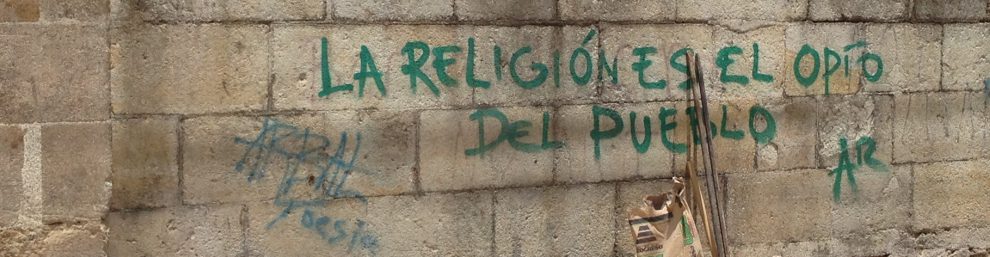
The prophet Amos states that the God of the people of Israel is disgusted with so much ritual with no action. When prayer is not followed by actions of justice, it becomes hollowed. As I interpret my relationship with God, God depends on us working together to change the world. This is collaboration. And I believe that we are way past time to take action.
Here is what I propose, particularly to my white, Anglo/Euro-American friends and allies: shut up, listen, and act. I don’t care that your best friend is Black. I don’t care that your sons and daughters are adopted from Asian countries. I don’t care that your significant other is Latin@. This systemic purge is not affecting you as a white individual as it is affecting us as people of color. Thank you for your solidarity, but please let be our voices that ones that are heard. Do you want to know what it feels like to be Black in the United States? Ask your friend! Do you want to know what it feels to be a racial minority? Ask your children or your spouse or your best friend or whomever it is that you have used as an excuse to state that you know what we are going through. But don’t pretend that you will ever understand our fear. I am Latino, queer and cisgender. I can only tell you what MY fear is. I cannot speak for my Black siblings or my trans siblings. I cannot speak for my women siblings either. I can only speak of my experience. The only experience that a white person can speak of in the United States is that of privilege (yes, even those who are poor. More on how this plays out here: http://thefeministbreeder.com/explaining-white-privilege-broke-white-person)
There are other things that I would like to share about what can be done instead of prayers to change this situation. This is not a comprehensive list, and I encourage you to post your own ideas and recommendations on the comments below. Just be respectful and civil on your comments. I monitor the comments on my page and will not tolerate racism, xenophobia, LGB-phobia, transphobia, misogyny, ableism, or any other form of hate speech.
Here are some ideas:
- Reach out to people of color in your communities. Be intentional in this reaching out. Form friendships and alliances.
- If you are white, recognize your privilege. Recognize that the system in which we currently live was created for you. You might be a fifth generation trailer park kid, but the founding people of this country were only interested in the wellbeing of the white, Anglo establishment. Things have not changed much throughout the years, and your skin color grants you privileges that are still unreachable to the rest of us.
- Learn about the history of privilege in the USA. Learn about the slave trade and the uprooting of millions of people from their lands. Learn about the stealing of lands from Indigenous peoples. Learn about the snatching of land from Mexico. Learn about the invasion on Cuba, the Philippines, Puerto Rico, Guam and Marshall Islands. Learn about the USA’s role in placing blood-thirsty dictators in the rest of America and in the Middle East… Learn the history of your privilege!
- When you see racism happening, denounce it! Publicly and loud. Don’t just lift up a prayer for the victim… ACT! We – people of color – are literally taking bullets because we are speaking up on our rights to walk on the streets, use public pools, pray in our sanctuaries… Why are you still so afraid of speaking up? Believe me, nobody is going to take out a gun to shoot YOU for speaking up. Not the police, not the KKK member, not the “unstable young man”.
- Use the right language when talking about these events: these are not “mentally unstable young men”; they are white supremacists with a desire to exterminate Black, brown and other minorities. These are not “unrelated events”; these are all part of the systemic extermination of non-white individuals in the USA. Language matters. How we communicate what is happening will counteract the fallacies that the media create around these acts of terror.
- To my Latino and Latina siblings: recognize that the violence against Black individuals is just the tip of the iceberg. You and I are marked for systemic extermination too. Additionally, recognize that racism and anti-Blackness exist in our communities.
- Let us scream, shout, cry, curse… This is fucking terrifying and we need to express our fears! We might even say “you” when talking to you about the terror that the white majority is inflicting on us. Just take it. We are not “coming for you”, we just need to express the panic we are feeling right now and we are NOT colorblind; we see that you are white.
- Related to that, we do not need you to “allow” us to do anything. We are going to do it because we are entitled to do it as human beings, not because a white person grants us permission.
- Be present, but don’t take over. Listen. Ask questions. Answer if we ask, not before.
- Do not be afraid of engaging your own family or friends in conversations about racial relations and your own privilege as white people. If you are going to be an ally and help change the system, it is not to us – people of color – that you have to be talking to. It is to your grandparents and your aunts; to your white co-workers and nephews and nieces. It is to your next door neighbor and your golf buddies…
I am sure I will come up with more ideas as I continue to process all these events. But in the meantime, we can start with this list. Just keep in mind this: God despises hollow prayers and rituals, but She states: “But let justice roll down like waters, and righteousness like an ever-flowing stream.”

 daughter is the music she creates for us and with us and who has given her life to fight for equality and justice for all of her children… I celebrated with all the mothers, some women, some men, who brought all of whom they are to church that day and who held me in prayer as I shared with them my hurt.
 SocioTheology
You must be logged in to post a comment.