Tag Archives: family

Grieving the Loss of a Pet Companion

In 2009 I was living in the Upper West Side neighborhood of New York City while serving a congregation there. My then-partner and I had some fish as pets. In my childhood, I was allergic to cats, and although not super allergic, it was of enough concern that we never had cats in our home. However, cats have always been my favorite pets. One day, I walked to the pet store to get some food and other supplies for my pet fish and discovered that the pet shop was having an adoption event for rescued cats. That single visit to the pet shop changed my life in ways I am just now understanding.

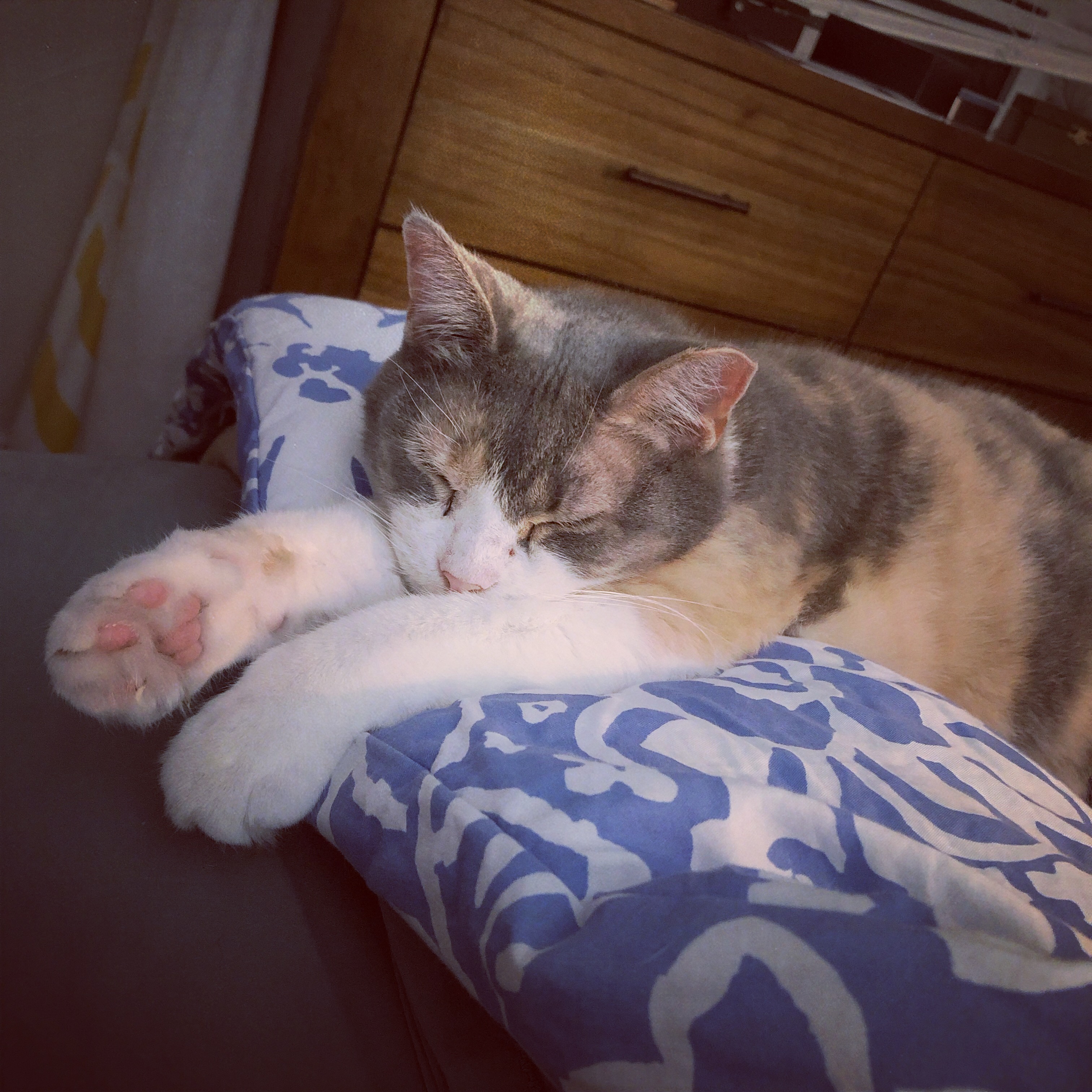
I knew that my ex-partner liked cats too. When I saw the little kittens at the pet shop, I couldn’t just ignore them. I approached the kittens and they all jumped to greet me… except for one little, shy kitty that stayed behind. After playing with the kittens a little bit, I approached the solitary kitty on the corner. She looked at me and extended her paw and it was love at first sight. I knew that was going to be my kitty!

Lo and behold, although I was concerned about my childhood allergy, my interactions with the kittens didn’t make me feel as if I was grasping for air. In fact, the reaction was quite mild, especially in comparison to what I experienced as a kid. So, I decided to inquire about the adoption process and within a couple of weeks, I had adopted my very first pet cat.

Her given name was “Suzette”, but I couldn’t quite see her with that name. I decided to give her a more Latina name… after all, they told me they had rescued her from the streets of The Bronx! What Bronx cat is called “Suzette”? I also didn’t want to go too far off from the name she was probably starting to understand (she was between 9-10 months when I adopted her.) I remembered a comedy character from a TV show back home, called “Susa.” Puerto Rican comedian Carmen Nydia Velázquez impersonated the character of Jesusa Cruz Avilés, and Susa, for short. Her character was funny, and I thought that my little kitty deserved a Latina name that had some sort of connection to who I am. So, I decided to do what any other Latino parent would do, give her a proper, Latina name. Since I was a parish pastor at the time, it made sense to give her a proper, Christian name also. And thus Jesusa María de los Ángeles Madej-Santiago, Susa, for short. (Madej is my ex-partner’s last name, and since we adopted Susa together, it was appropriate to give her his name.)

In New York City, I lived in an apartment with a very long hall. Susa would run and slide on that hall and have the time of her life. She never once destroyed any of the Christmas trees I had, but she loved munching on the many plants around any of the places I’ve lived. She wasn’t the most social of kitties, but she loved sitting on my lap whenever I picked up a book and started reading.

Susa was with me at some of the most important or difficult times in my life. She was there to support me when my ex and I separated. I drove with her from New York City to Seattle when I first moved to Washington. She was there with me on the road again as I moved to Madison, Wisconsin, and then back to Tacoma, Washington. Susa was the first living being that met my now husband. She was there when we got married. Susa was also with me when I was diagnosed with cancer.

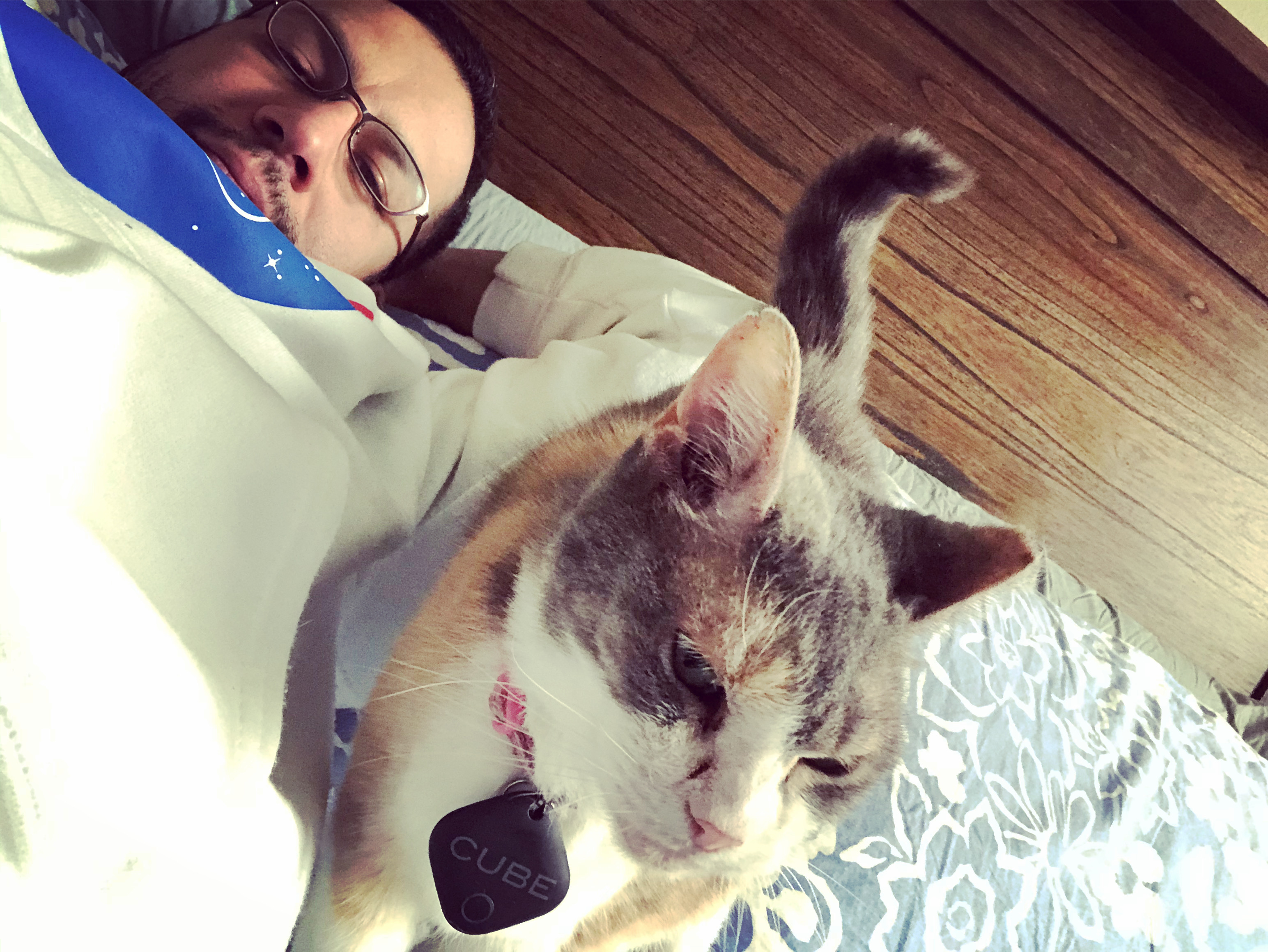
Some folks say that animals, and especially cats, can’t be too intelligent. I’ve even heard people say that cats are not intelligent at all. But I beg to differ. When I was diagnosed with cancer, and whenever depression was taking over me, Susa would feel it. She would come and cuddle with me, even though she wasn’t social. She sensed my pain, and she would extend her paw as if to caress and comfort me. She also hated when I traveled. I remember once when I went on a short trip. When I opened to door of the apartment, Susa was there, sitting as if waiting for me to come home. Once I entered and greeted her, she looked at me, put her nose up, and walked away not to see her again in two whole days! I knew she had not run away because her food bowl would be empty every morning. I also remember the one time she refused to eat her dry food because it was not the right shape. Yup, she stayed without food for two days until I went back to the store and got her the shape she liked, even though the food I had fed her was the exact same brand.
When my husband and I bought our home in Tacoma, it was the first time Susa had a backyard and plenty of room to play. On sunny days – whether it was cold or warm – she would beg for us to open the door to the backyard. Our home has a little pet door that goes to the backyard, but Susa never wanted to learn how to use it, no matter how much I tried to teach her. But, she would beg to be let out… and then, if it was cold, wanted to be let in once again five minutes later. On sunny and warm days, though, she would sit under the sun and sunbathe for hours. She would play hunt – never actually hunting anything – and entertain herself in the backyard.

Grieving the loss of my beloved pet companion has been an extremely difficult thing. Although I had seen how she was deteriorating, and I knew that her time in this world was coming to a close, I was not prepared for the pain that is losing a pet companion. Since I had the make the extremely difficult decision to end her life, I have not stopped crying, feeling guilty about the things I could’ve done, or thinking about how I could have saved her. The truth is that none of this is true; I couldn’t have done much to save her. But our minds play tricks on us, trying to get us to change the painful reality before us.

Some of my readers know that in my previous professional life, I was a mainline Protestant Christian minister. During my seminary training, I took a whole course on bereavement and in spiritual counseling to those who have experienced loss. During my chaplaincy internship (Clinical Pastoral Education), I even held the hands of people as they breathed their last breath. I accompanied an elderly woman to say goodbye to her husband of over 50 years in a hospital morgue. My experience accompanying those who are mourning is extensive, as I served over 15 years in ministry. And yet, I was not prepared to experience it myself. In my head, I have all the knowledge to navigate this mourning; but in my heart, everything I was taught to recognize and help others navigate through, is dominating my emotions right now. It is an intense, human experience that I on a conscious level am grateful to have as a human being, and on a heart level I can’t fathom that such pain can exist.
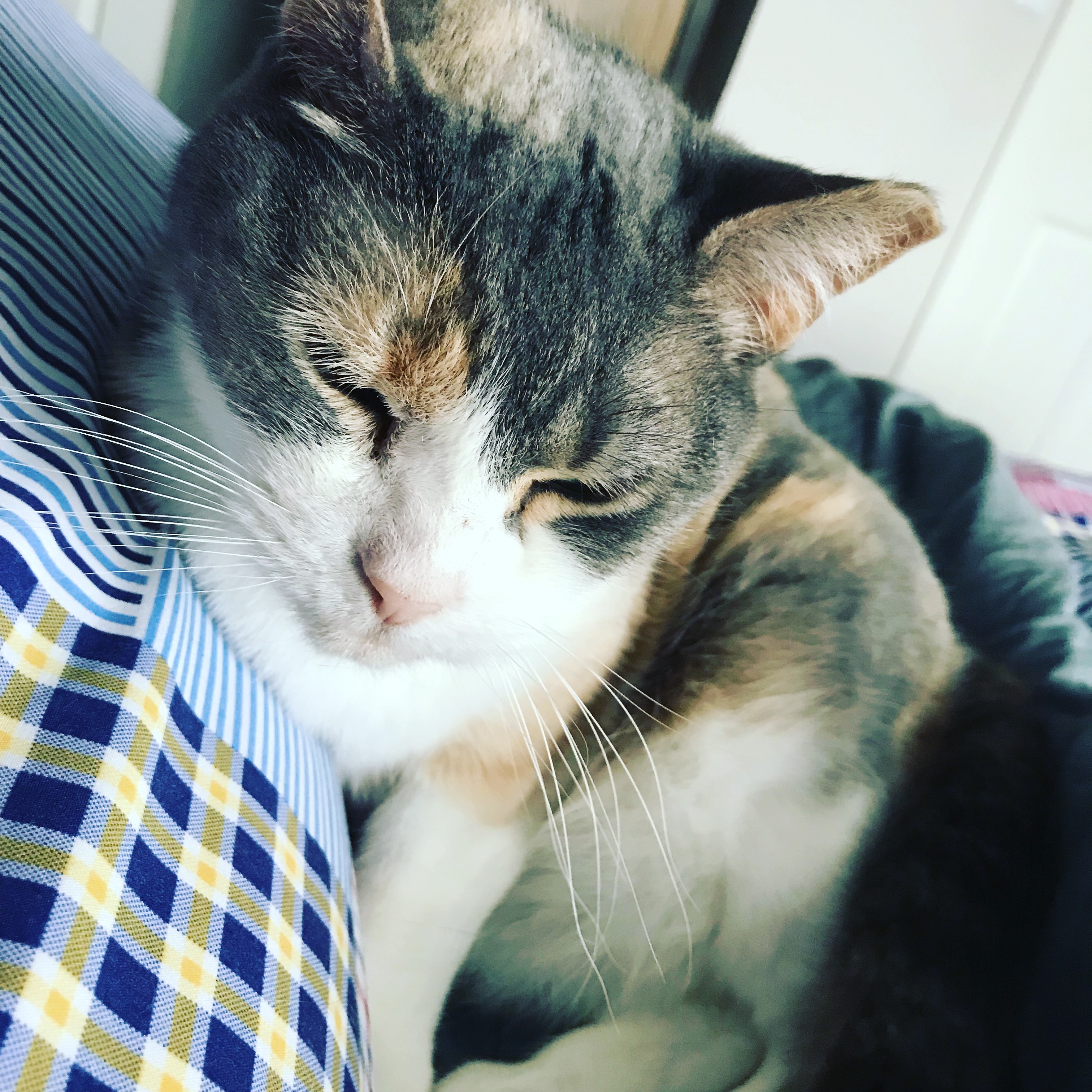
Mourning and grieving are different for every person. Mourning and grieving the loss of a pet is a completely different thing. I was never prepared to work with people who have lost a pet. It is also true that every person’s relationship with their pets is different. In my case, Susa was not only a pet companion, but she was also a therapy pet, who accompanied me through some very difficult life situations. The other day, we picked up Susa’s ashes from the veterinary’s office. They put her ashes in an engraved little box. The vet technician had kept Susa’s collar and nametag. I so much appreciated this simple gesture. I added Susa’s nametag to my keychain so she can always be near me. I put the ashes on the chimney mantle and placed her collar on top. I accept that she is gone from this physical reality; and accept that, for as long as I live and are able to, I will remember her. My husband has been instrumental in helping me navigate this loss. He is also hurting and mourning, but his relationship with Susa was slightly different, so he has been able to stay stronger and offer me the support I need as I grieve. I am also grateful for the support and words of encouragement of friends and family. My mom has called pretty much every day as she knows me very well and knows I was going to take a bit longer to process the loss. Even writing this piece has been healing. It took me three days to work through all my thoughts and elaborate on them here, and I am sure some of it reads like a ramble. But in the end, even with the pian of the loss, I am at peace.

Leave a comment

Filed under familia, family, Grief, Home, Pets

Christmas Memories in Exile

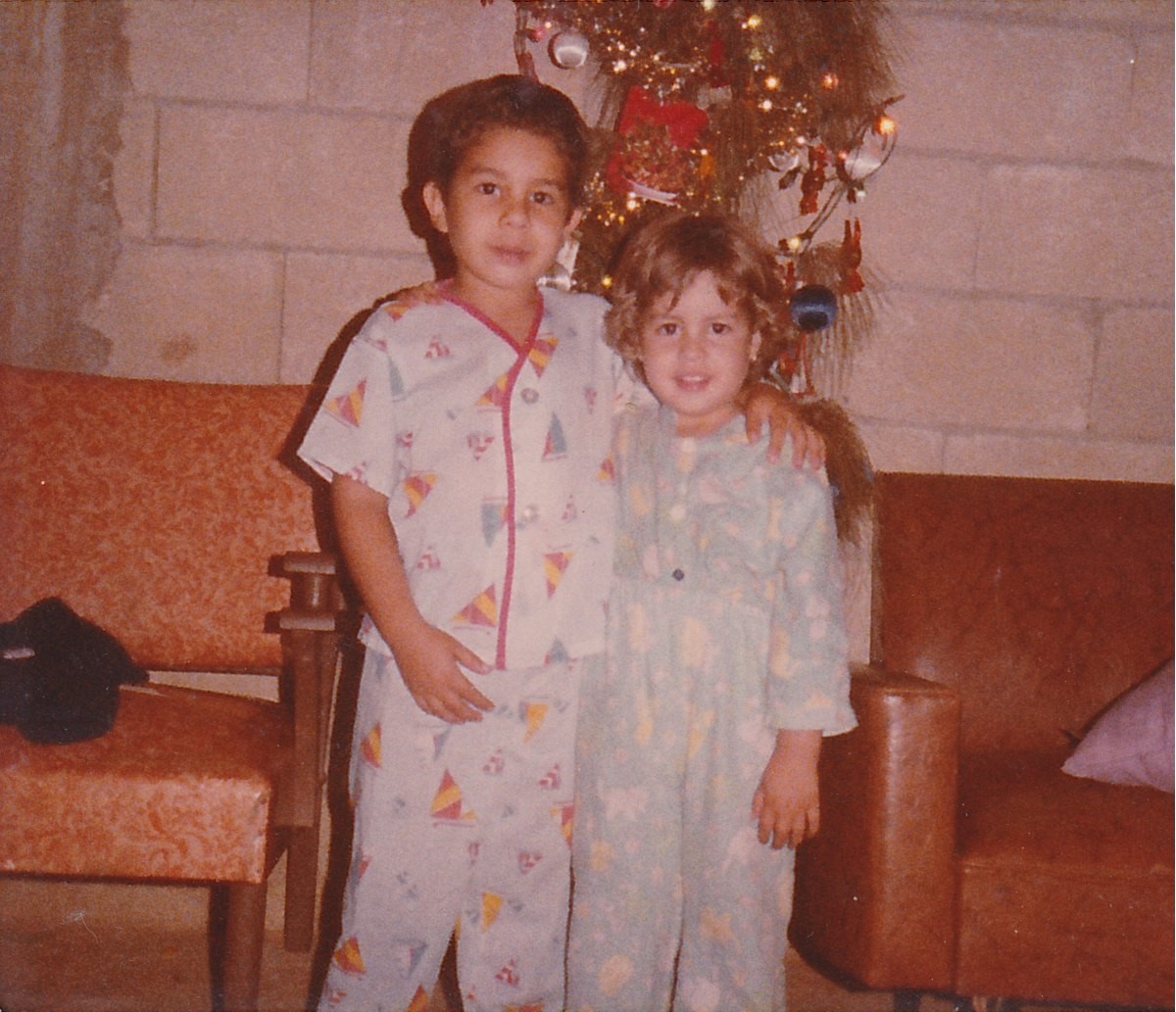
I remember a picture the other day. It was a picture with my sister and I, in front of a Christmas tree. I couldn’t remember what we were wearing, but I do remember that it was taken in the house we grew up in. It was taken many Christmases ago.

When you move as much as I have, memories are all you have left when important dates come up. Living away from the place you consider home means that you always carry with you the memories of special dates. Christmas in particular is a difficult time for me. I grew up in the mountains of Puerto Rico, where the weather this time of the year is cold, but not freezing cold as it is where I live now. The holiday music is festive, cheerful, loud, at a fast tempo, and is everywhere. Caribbean sounds fill up the air; not the slow, often dark, and to me, sad songs with northern European origins. Christmas music for me is drums and guitars, is tambourine and maracas, is güiro and cuatro. Parrandas fill the nights with music as people gather late at night and go throughout their neighborhoods signing traditional music from house to house. All homes are always ready for parrandas. There’s always food: hot chocolate, crackers, guava paste, queso de hoja (a type of homemade white cheese), and of course, the last home that is visited must prepare an “asopao”, or soupy rice with either chicken or pigeon peas.

Our Christmas tree at home was always humble. I still remember the year when my dad decided to just take a coffee tree and wrap its branches with aluminum foil. We placed lights and ornaments and it’s still the most beautiful Christmas tree I had ever had. The tree on the picture I remember was humble as well. We had gone to my grandfather’s farm and cut a pine tree. It did not have the aroma of the fir trees or the spruce trees, but it was beautiful in its humbleness. We put garlands and ornaments and musical lights on it. The tree would not have presents. Ever. Presents were not to be placed under the tree or given on Christmas Eve or Christmas Day. We had to wait until Epiphany, the Feast of the Wise Men, on January 6th. The day before my sister and I would gather some grass for the camels, place it on empty shoe boxes, and place those under our beds. The Three Kings will leave present then… and we will have a week or two to play with them before going back to school.

When you live in exile, or away from home in any form, these memories are all you have. You remember the holiday, and the music, and the presents, and the food, and the family time. You remember that nothing will go back to what it was. You remember that life goes on and you must adapt.

I found the picture among my things. My sister and I are wearing pajamas. The Christmas tree looks as beautiful as I remember. It brought back all the memories of Christmas past, in the mountains of Castañer, waiting for parrandas and for the music. It is Navidad; it is home.

IMG_0002

Leave a comment

Filed under Christmas, Culture, ethnicity, familia, History, Identidad, Identity, Latino, Navidad, niña, niñez, niño, Puerto Rico, Recuerdos, tradiciones, Uncategorized

Después del Huracán

ebb60db07e3f8f1493c405ca43b96ba6

Mi abuela Margot y mi abuelo Quino vivían justo frente al Río Guayo. El puente que une a la municipalidad de Adjuntas con la municipalidad de Lares está justo frente al que fuera su hogar. Era en este río en el que nos bañábamos en el verano. Cuando pasaba el huracán, era en este río donde nos hacíamos más familia y más comunidad.

Dice el dicho que después de la tormenta, viene la calma. Esto es quizás así; pero después de la tormenta también vienen los desafíos de cómo vivir sin las necesidades básicas a las que nos hemos acostumbrado. Después de la tormenta también vienen los días sin luz, sin agua, con comida limitada… vienen los días largos sin saber cuánto tiempo será antes de que la vida vuelva a la normalidad. Después de la tormenta viene el resuelve, como le llamamos en mi pueblo.

No es secreto que cada vez que hace un viento fuerte, la frágil infraestructura de Puerto Rico sufre. En mi barrio, digo yo que cada vez que alguien destornuda duro, la luz se va. El agua potable también es un reto. Esa viene cada dos días; a veces un poco menos seguida. Prácticamente casa cuenta con sus tanques de agua para recolectarla cuando está disponible y así mantener el suministro cuando se vuelva a ir. Cuando chiquito, teníamos acceso a una quebrada de la cual sacábamos agua para tomar. El agua para uso diario la traíamos también de allí, pero por tubos y con bomba que mi papá instaló. Había conexión al sistema de la AAA , pero no dependíamos de ella para abastecernos de agua.

Recuerdo que después de los huracanes, cuando tanto la luz como el agua se iban por semanas, trasladábamos algunas de nuestras rutinas diarias al Río Guayo. Allí, debajo del puente que une a Adjuntas con Lares, un grupo de mujeres – la mayoría de mi familia – sacaba barras de jabones, paletas, cestos y tablas para lavar ropa. Sentadas en piedras o en banquitos que sus maridos le hacían, las mujeres comenzaban a lavar las ropas de sus familias. Con cada estrujada de ropa, con cada movimiento de limpieza, comenzaban los chistes, las carcajadas, las noticias del día y los chismes de barrio. Con cada pieza lavada, se enteraba uno de los planes para las comidas comunitarias de más tarde, de las posibilidades de que la luz y el agua llegaran más tarde de lo esperado, o de dónde ya estaban vendiendo pan caliente…

La niñez recorría el puente y nos tirábamos al río. Las madres nos gritaban que nos quedáramos quietos porque algo nos podía pasar. Algún niño o alguna niña, siempre, nos arruinaba el día cayéndose entre las piedras y abriéndose alguna herida. En ese momento se paraban todas las actividades para darle consuelo primero y un buen regaño después – o quizás era al revés, no recuerdo – al niño o la niña lastimada.

Los maridos, mientras las mujeres limpiaban las ropas, se iban a seguir limpiando los caminos. Vivir en el campo significa dos cosas: siempre hay mucho árbol en la carretera cuando pasa una tormenta, y los caminos no han sido construidos de la mejor manera así que siempre estarán en necesidad de reparación. Recuerdo que mi papá se llevaba la guagua pick-up, su machete, su sierra y cualquier otra herramienta que fuera útil, coordinaba con otros y se iban por caminos que sabían que los gobiernos municipales y estatales no les darían atención. Así era como comenzaban a ayudar a que los vecinos se conectaran. Después del huracán, la comunidad se juntaba para levantarse.

En algún momento del día, cuando ya las ropas estaban limpias, se reunían las mujeres para cocinar. Las ollas eran de tamaño enorme, como para alimentar a un ejército. Se cocinaba lo que hubiese: arroz, habichuelas, gandules, bruquenas del río, chopas del lago, pollos, puerco, guineos, ñames, yahutía, malanga, chayotes, plátanos, huevos… En fin, lo que hubiese por allí se hacía de comida para todos y todas. Después de la comida salían las sillas y las mesas, el juego de dominó estaba listo. Esta era la parte favorita de mi abuela paterna: el juego de dominó. No había en todo Castañer una persona más fanática del dominó que mi abuela Margot. Sus hijos e hijas le temían en la mesa. Ninguna o ninguno la querían tener como pareja de juego, porque si perdías la mano de dominó, ella te desheredaba. ¡Doña Margot no jugaba con su dominó! Abuela gritaba, se emocionaba, se vivía el juego desde el comienzo. Verla jugar dominó con una estrategia nítida, desarrollada por años de devoción a su juego favorito, era toda una experiencia.

Para mí, de niño, el tiempo después del huracán era más como una película de acción y de aventura. Era el tiempo en que la familia y la comunidad se unían. Era el tiempo de jugar debajo del puente del Río Guayo y comer en familia. Era el tiempo de ver las estrellas en el cielo al final del día, cuando se abría el firmamento y se iluminaba el cielo raso con un millón de estrellitas que nos recordaban tanto la fuerza de la naturaleza como el tesón de un pueblo que se levanta su dolor para alcanzarlas.

Leave a comment

Filed under familia, Heritage, Hispanics, Hispanos, Huricaine, Identidad, Identity, Latino, Puerto Rico, Recuerdos, tradiciones

While Waiting for News of My Family After Hurricane Maria

69735502People have asked me how I’ve been able to function these past few days. It has not been easy. My parents, sister, and I had been estranged for years. When I was diagnosed with cancer, they reached out. My husband and I visited with them for the first time on December 25th for their Christmas party. We’ve been in communication ever since.

As the hurricane approached, we stayed in communication through text. Then I called a few days before to check up on them. My mom was calmed and not too worried. Cellphone signal had came back just the day before I called. They still had no power in the neighborhood, but the water was back. They were prepared; they had water, food, fuel, and an electric plant. My sister – who works for the Department of the Family of the Commonwealth – had visited a shelter and checked up on her clients. They were ready to face the hurricane. The last I heard from my mom was a reply to my text saying: “yes, I am calmed.”

Those are the last few words I have from my family. I have not heard from them yet.

I have read news reports that tell me my neighborhood is fine and that there are no registered deaths in my hometown as of today. I read about the efforts to clear the roads and make sure that people have access to larger towns to get supplies. But there are no ways to get in touch with the outside world. How does the word go out about what’s happening? People from the metro area in San Juan who have family in Adjuntas go down to check up on them and then share what they had seen and heard on social media as the limited access to cellphone coverage allows them to.

But now going back to the question: How have I been able to function?

I have compartmentalized my self. Having to communicate in English helps. It is not my language. It is not my soul. It is not what connects me emotionally to the world. I focused on the tasks. I focused on the routine (of not having a routine), and pay attention only to the work in front of me. I have the news in the background and read the texts and news that I get constantly. But those are in español, those do not belong to the workplace. Those belong to mí.

I have compartmentalized my life in the past few days. Sure, I have shared news with coworkers and friends who ask. I have even shed a tear or two while doing so. I have tried to perform what is asked of me by the US society: calmness, be collected, show little emotion when talking about such things, etc. Like always, I have learned how to perform according to the social rules of the social mores of the society I live in. I have completely disconnected myself from all, creating walls that separate the mí from the me.

When I am home, or when I am speaking with a close friend, or when I am alone in my office and listening to the news, I cry. I let it all go and finally feel mí.

I know that my family is fine. Something within me tells me so. I also know that it will be probably weeks before I hear from them. I, too, am from those areas in the world where nobody cares about you; where the government has nothing to gain but votes every so often, where “charities” have no good faces or locations for photo-ops. I am from the place where the only thing that helps us is ourselves: the community who stands up, puts on their boots, picks up their machetes, brave the remainder rain and winds, and goes out to join one by one as they clear paths and help restore their comunidad. That resiliency is what helps me function. I am a jíbaro, and jíbaros don’t give up.

Leave a comment

Filed under Español, ethnicity, familia, Heritage, Hispanics, Hispanos, Huricaine, Identidad, Identity, Latino, Puerto Rico

I March For My Niece

My niece, Emely, is nine years old. She is bright, and funny, and loves to read, and loves math, and wants to become a singer and actress. A couple of years ago she had a list of books she wanted me to buy for her. Of course, as a bibliophile, I complied and bought all the books she asked me for and more. When I visited her again, she told me about one of the books I had given her.img_7249

I still remember when Emely started school. Since Emely grew up in a Spanish-speaking household, when she started school she didn’t speak English. She learned the language from her teachers and her classmates. On one occasion, when I asked her to speak Spanish with us and use English for other conversations in order to help her stay bilingual, she said something that shook me to my core. “Spanish is UUUUGLY!” she said. With a heavy heart, I asked her why she said that. She said that everyone in school said it. Spanish is ugly. English is beautiful.

I have talked with Emely about the importance of learning as many languages as she can. I have told her about the importance of using both English and Spanish to communicate, and to take any opportunity she might have in the future at school to learn other languages. I have told her how proud we are of her. I have continued to make sure that she is proud of her Mexican heritage and that she understands what it means to be a USAmerican too. I have shared with her my own Puerto Rican culture and heritage and have encouraged her to adopt what she might want to adopt from it. I have shared with her how wonderful it is to have a non-traditional family, and what a blessing it is that she has a wonderful, supportive, caring mother, and two dads, and so many uncles and aunts, and siblings who live in different homes, and a madrina and a padrino who care deeply for her.

img_7149Today, as a white supremacist, xenophobe, and sexual predator took the oath of office as President, I worry about Emely and her future as a Latina woman growing up in the USA. I know I cannot protect Emely or her brother all the time. I also know that her parents’ immigration status prevents them from providing all the protections that she – both of them, my niece and my nephew – deserve. But there are some things I can do. I can join the RESISTANCE and stand up for my niece.

And so, Emely, I will march tomorrow, Saturday, January 21st. Emely, I will answer the invitation from other women around the USA and the world to stand up to injustices against women. Even though you might be too young to understand, I will march because I love you, because I respect you, and because I believe in you as a woman.

There are also other reasons why I march in solidarity with my niece tomorrow. These are not the only ones, but here are some reasons to march:

I march because I believe that my niece Emely’s brown body is hers and only hers. No one, no matter what position of authority they might have, even if it’s the Presidency of the USA, has the right to touch your brown body, let alone grab it violently and without permission.

I march because I believe that you have the right to education, and that you have the right to make choices as to how far you want to take your education and what profession to pursue or not pursue. You have the right to access a job that is suitable to your abilities and your passions, and to be paid fairly and at the same rate than any male who will do the same job.img_9337

I march because, when the time comes for you to make choices about your body, it should be you, and only you, who make those decisions. Because your brown body is yours and deserves to be respected and honored. Because your brown skin is beautiful, and normal, and is neither “exotic” nor a stereotype to be paraded at the whim of those with power.

I march because I know that your parents can’t be exposed to deportation and because I want to continue being your uncle, not having to be your foster parent should something were to happen to my brother- and sister-in-law.

I march because I believe that, although you have been raised Roman Catholic, you should have the right to make the decision that makes YOU comfortable. I march because, if in the future you want to wear a hijab, you should be able to do it without fear of intimidation. I march because if in the future you choose not to believe in anything, you should not be punished for having no religion.

I march because I believe that you should feel safe in wearing whatever the hell you want to wear in public. I march because I believe that you should feel safe walking down the street and that no one should be cat-calling you, or intimidating you, or threatening your life and safety.

I march because I believe that you should be free to choose to love whomever you want to love, just as I love your uncle who gave me the blessing of being welcomed by this wonderful family that now both you and I, as outsiders, call “nuestra familia.” I march because I believe that you should love as many people as you wish to love and not being condemn for it.

I march because, if I march today, I know… I know… that by the time your Quinceañera comes, this will be a safer place for you and all your loved ones.

I could continue listing reasons to march, Emely, but I can’t. My eyes are filled with tears – you know how much I cry – and I can’t write anymore. But be sure, sobrina, I will march for you. I march for you, mi querida sobrina. I march because I know that staying home is not an option.

Leave a comment

Filed under Culture, discrimination, ethnicity, familia, Feminism, Heritage, Hispanics, Hispanos, History, Human Rights, Identidad, Identity, immigration, justice, Latino, niña, niñez, niño, Peace, race, racism, resistance, Social Movements, United States, USA, Women rights

Seeing God in Abuela

When my father and my mother forsake me, then the Lord will take me up.
Psalm 27.10, KJV

My abuela Palmira left this world on March 30th, 2014. She was the last one of my grandparents to leave us. I had been blessed with three sets of grandparents as my father had two sets of parents, his birth parents, abuelo Quino and abuela Margot, and the couple of welcomed him into their family when he was quite young and working away from his hometown, abuelo Jobito and abuela Ester. My maternal grandfather, abuelo Juanito, left us when I was 8 years old but I still remember him very well. Every Sunday afternoon, when the family gathered at their home, he would sit on his rocking chair and tell us funny stories that would make us laugh for hours. Abuela Palmira would stand next to him and laugh with all of us.

Abuela Palmira   There was something peculiar about my maternal grandparents. They practiced Spiritism, a religion in which every human being is of sacred worth and where spirits guide us to be in communion with the Great Spirit that is sometimes called God. At their home, everyone was welcomed and celebrated. They never rejected anyone. My grandparents believed in serving everyone and in welcoming everyone without distinction. Although I was too young when my grandfather died and thus not even aware of my own sexual orientation, I know that my grandfather would have accepted me and celebrated me. My grandmother, however, had the chance to know who I am as a whole person and she always, without doubt and without excuses, celebrated me for who I am.

When I think about abuela Palmira, the verse that always comes to mind is that of Psalm 27.10: “When my father and my mother forsake me, then the Lord will take me up.” When my parents rejected me for being queer, it was abuela who welcomed me. She always supported me and celebrated my life. When I introduced her to my now husband, I was told that she spent months telling everyone who would listen about the wonderful man I had met. Recently, while talking with an aunt, she told me how they found among abuela’s personal items the wedding invitation I had sent her for my marriage. I knew she would not be able to attend my wedding due to health problems, but she had kept that invitation as an important memento. Through these actions, I can say that abuela embodied the Holy One in my life. Thus, when my parents disowned me, God took me up through the love, support and affirmation of my abuela Palmira.

The Sunday before abuela departed this world, my husband and I spent time with her. We had been in Puerto Rico for vacation, and of course I had to go visit abuela. She made us laugh with her witty remarks. This was abuela. She was always making jokes and laughing about things, even when her health wasn’t the best, she always found joy in living. I am not naïve to say that she was perfect, because none of us are. She had her flaws and made mistakes like the rest of us. But her love and support meant the world to me, and it is those values that will stay with me throughout my life. Her love, her support, her laughter that last time I saw her will always be the manifestation of God in my life. I will keep her memory alive as long as I live and I will always share with the world the values that she shared with me.

Abuela Palmira, you are now gone from us, as you would have said, you are now “unfleshed”, but your spirit will continue to guide me just as the spirit of abuelo Juanito has never left me. Gracias por todo, abuelita.


Leave a comment

Filed under amor, Culture, Dios, familia, Gay, Heritage, Hispanics, Latino, Lesbian, LGBTQ, Puerto Rico, Queer, Theology

An Update

It’s been a while since my last post on this blog. Way too much has happened since. I hope to be in a more regular schedule of writings in the months to come, but for now, I thought appropriate to share some of the reasons I have been so silent in the past few months. 

First, I have traveled quite a bit these past few months. First a mission trip to Tijuana, México where I was volunteering at a women’s shelter. Then a short vacation to Puerto Rico with my spouse and some friends. Then spent some time in Cuba for the International Journey Against Homophobia. I promise I will share some of the stories later in the year. 

Second, a painful loss in my family. My beloved abuela, Palmira Rivera, died on April 30th, the same day I was returning to Seattle from my vacation in Puerto Rico. Thankfully, my husband and I got to spend a great time with my abuela the Sunday before she died. Abuela Palmira made us laugh… she laughed and made jokes and had a great time. I feel at peace knowing that the last I saw of my abuela was her laugh. There are many other stories about abuela that I’ll be sharing with you. For now, all I want to say is that she was the biggest one of my supporters. Even when my parents cut me off their lives, abuela welcomed me and showed her unconditional love for me and my spouse. I will miss her dearly.

Finally, some big news: I will be moving from Seattle, WA to Madison, WI. I had been called to serve as the Executive Director of The Crossing, an ecumenical (American Baptist, United Church of Christ and United Methodist) campus ministry at the University of Wisconsin – Madison. This is a huge change for me. I am leaving behind over 15 years of parish ministry and starting something completely new. I am both excited and nervous about this new chance. I look forward to working with students and also reaching out to local congregations and individuals who are passionate about reaching out to new generations of leaders. 

I have done quite a few other things here and there. But right now I am in the middle of important transitions in my life and the life of my family. I look forward to the many more opened doors that are ahead of me and to close some chapters in my life as well. That’s it for now. I will be coming back with more stories and commentaries in the coming weeks. 

Leave a comment

Filed under Uncategorized

Family Matters

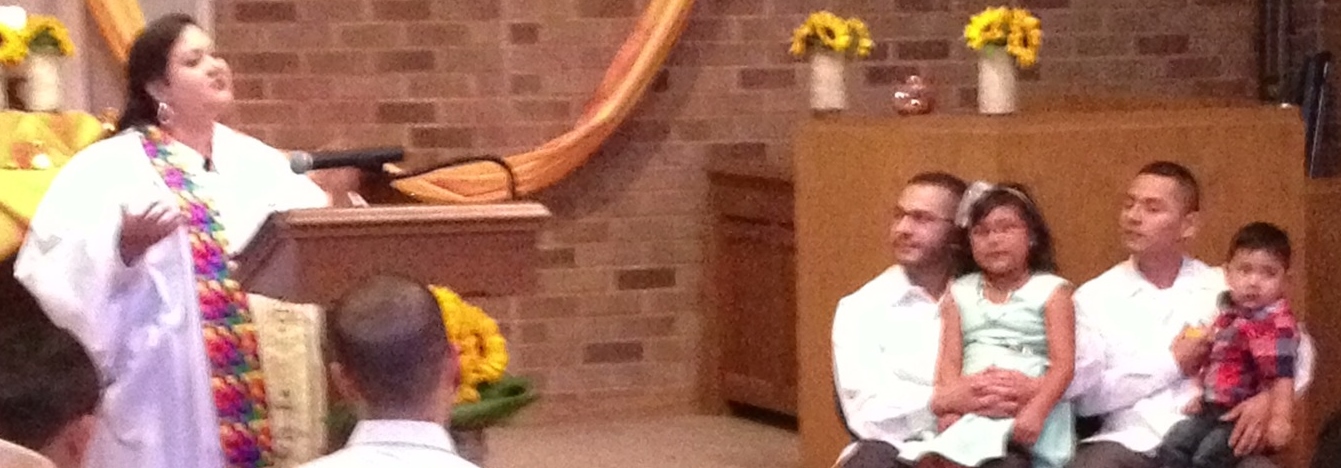
On Saturday was my wedding. As the minister was preaching, our two-years old nephew danced in front of us, and then approached my husband to sit on his lap. I looked at the first row of chairs in the sanctuary, where my husband’s family was sitting, and noticed that our six-years old niece wanted to move and join us to. I did what I thought was appropriate: I signaled her to come forward and sit with us. 

There we were; my husband holding our nephew on his lap, and me holding our niece on my lap. Then I looked around and saw my new family. There was my brother-in-law and his (female) partner, my husband’s cousin and his girlfriend, and a couple of friends who have been like brothers to either my husband or me. There was not a single one of my blood relatives. None could be there for different reasons and my parents and sister have already decided I am not part of their lives. But as I was looking around at my new family, I realized how “family” is such a wonderfully diverse reality. 

ImagePeople talk about “traditional families” as if there was always such thing. In reality, families have always been diverse. There is no such thing as a “traditional” family. There is ideal of family. Our families come in many forms and expressions. I looked around and saw how my family present there was the “new normal” if you will. My brother-in-law and his partner have been together for many years but are yet to get married. He is raising her eldest daughter, who spends time with her birth dad and his family every other weekend. Our nephew was born two years ago, the product of the love of my brother-in-law and his female partner. Then, there was my husband’s cousin, who is dating a lovely, young, white American woman who speaks no Spanish (believe me, that in itself is a HUGE thing!) They were attending the wedding of two men who had decided to commit to each other and to love each other.

Believe it or not, this is more common than people want to admit. Families come in so many varieties and forms! It is such a wonderful thing to see the diversity that exists in life, and to enjoy this diversity with all of its wonders and beauty. Family is family is family… no matter what form it takes… 

Leave a comment

Filed under Uncategorized