Tag Archives: Heritage

The Next Destination This Hispanic Heritage Month: Panamá!

As I continue inviting you to explore the places I have visited in our beloved and beautiful Latin America this Hispanic Heritage Month, I want to bring you with me to Panamá.
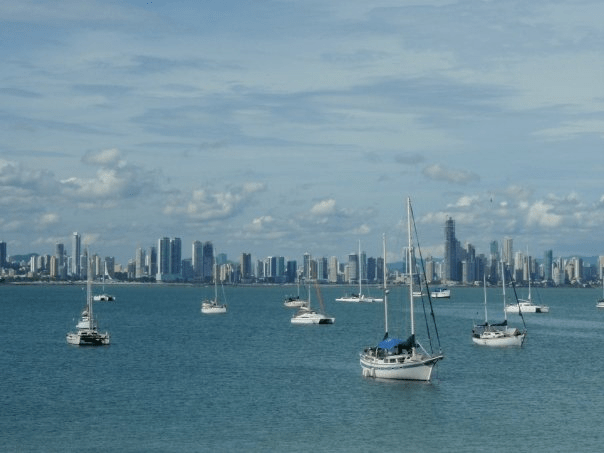
A view of Panamá City from the isthmus. The contrast of modernization with tradition is everywhere in the city.

It is possible that the only thing you know about Panamá is the canal. The Panamá Canal crosses the country north to south, opening a waterway for large container ships to cross from the Caribbean Sea to the Pacific Ocean. The Panamá Canal is quite significant for various reasons. First, because ships no longer have to do the difficult navigation around the southernmost point in the continent through Tierra del Fuego, to reach the Pacific Ocean from the Atlantic. Second, because it helped in cutting Panamá from Colombia, from which it was a department prior to its independence. Third, because the canal was USA territory until 1999, and thus, is another palpable reminder of the way in which the United States have had an overarching presence in Latin American affairs. Finally, the canal is also the big scar that divides the American continent, physically cutting the north and south parts of the large landmass that is América.

I have only visited Panamá once. My mentor, friend, and second mother, whom I met while she was a professor at the university I attended, lives there. Her ties to Panamá are strong. When she attended the same school she eventually taught at, she met the father of her sons, who was at the time, an international student from Panamá. Her sons were born there, and currently, her surviving son’s children live there. It makes sense for her, already retired, to live near her grandchildren and son.

A while ago, I decided I wanted to visit her. It had been quite some time since the last time I had seen her, and I felt it was right for me to visit as she had already traveled to visit me while I lived in NYC and she was in Pennsylvania. I also wanted to meet her son, as I consider her a second mother and it would’ve been great to meet my quasi-brother. Up until that time, Panamá had been a layover stop on my way to other Latin American countries. In fact, I had never stepped out of the Tocumén International Airport in Panamá City before. Thus, I didn’t have any expectations from the country, other than meeting my mentor and friend.
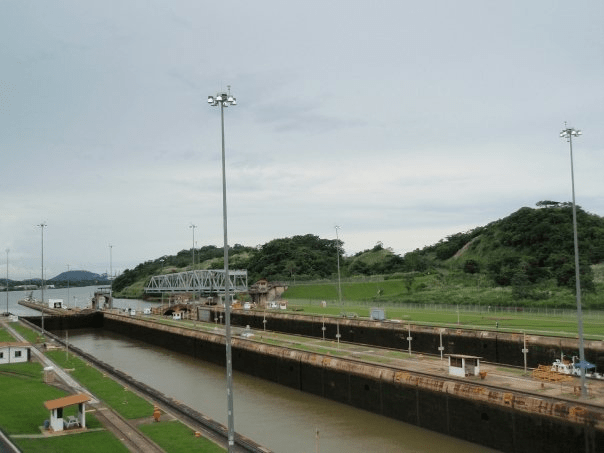
The Panamá Canal is the link between the Atlantic and Pacific Oceans.

What I discovered was way more than a beautiful Latin American country! I discovered a country with a complex history, wonderful people, delicious cuisine, and an accent that was so close to my own that I always felt at home.

My friend is a lesbian activist, and as such, I had the chance to connect with the LGBTQ community in Panamá and experience the country through their eyes.

The most significant experience I had in the country, was a visit to the Kuna or Guna people. The Guna are one of the surviving indigenous peoples who the colonizers were not able to erase. Like many other indigenous cultures from around the world, the Guna do not have a strictly binary gender system. In the Guna communities there is a third sex, the “Wigudum”, who play an important role in their societies.

When I visited with the Guna, I had the wonderful opportunity to meet some Wigudum people. Some of them were concerned because, although they had been accepted by the majority of their communities, US-backed Evangelical churches were growing in their communities. This meant that US puritanical and hypocritical mores were being spread throughout their communities, including the marginalization and demonization of the Wigudum. Moreover, the hypocritical aspect of the US puritanical moral code was using Wigudum young people as sex objects in private while rejecting their humanity from the pulpit. At the time, I was serving in parish ministry, and although the church I served is a very progressive congregation, I couldn’t get the guilt off of me. Modern, US Evangelical Christianity is annihilating a culture that survived millennia of colonization.

Still, visiting with the Guna was the most beautiful part of my visit to Panamá. They did not perform for me as a tourist. They did not put on a show to entertain me. I didn’t act as if I knew more than them about their country, their culture, or their struggle. I visited with humility and an open mind, hoping the learn from and with them, even if for just a few hours. I highly recommend connecting with indigenous communities, if possible, when visiting any Latin American country in which there are indigenous communities. Visiting with them will offer a better understanding of their culture, their history, their current realities, and the damage that colonization continues to do.
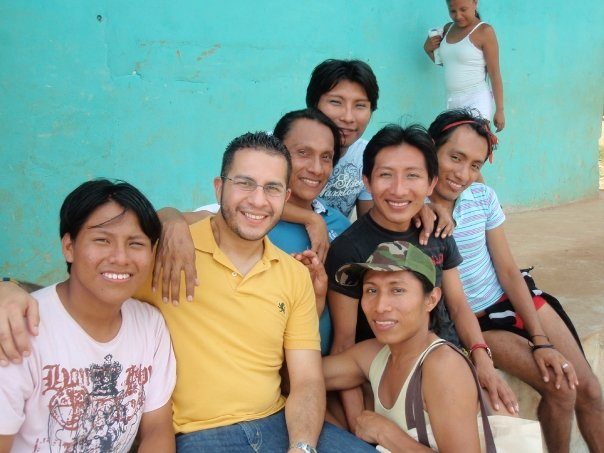
Sharing with Guna people was the highlight of my visit to Panamá.

Of course, I had the chance to visit the Panamá Canal. It is an impressive view. Watching the huge vessels travel through this intricate piece of engineering is really a sight. It is also an interesting experience to visit the canal zone. The canal was transferred back to Panamá as it was always intended, in 1999. Since then, Panamanians have moved to the zone, while some service members from the USA have also stayed. It is an interesting reality worth witnessing.

The final place I would suggest visiting in Panamá — of the places I visited, because I cannot speak for the whole country — is the old town. Contrary to other old towns throughout Latin America, Panamá’s is small and not well maintained. The structures are crumbling, and they reminded me more of Havana than San Juan. The ruins of the old city are also nearby and they are an interesting place to visit to learn more about Panamá’s development. I am not sure about the rest of the country, but Panamá City is a sprawling experiment on US capitalist development. Huge skyscrapers are being built everyday. Hundreds of housing units unreachable for locals are being sold to international investors with no intentions to help the people of the country. However, since infrastructure is still lacking, water barely reaches the units beyond the third floor, and power outages are very common.

Visiting Panamá was a great experience for me. It showed me both sides of Latin America: the side still connected to our ancestors, cultures, and traditions, and the side that is the unsuspected victim of globalization and US imperialism. As a Puerto Rican, it was a great way to know that my people, my Island, are not alone in suffering the impact of invasive US imperialist policies. As the late Panamanian poet Dimas Lidio Pitty once wrote:

Panamá, my beloved land

wounded by the many pains

tomorrow, without invaders

an Eden under the sun you shall be.
Leave a comment

Filed under celebrations, cultural celebrations, Culture, ethnicity, Heritage, Hispanic Heritage Month, Hispanics, Hispanidad, Hispanos, History, Human Rights, Humanity, Identidad, Identity, justice, Latin America, Latinidad, Latino, Panama, race, Racial Relations, racism, Recuerdos, resistance, Social Movements, Sociology, tradiciones, traditions, trans, transgender

Cuba – Our Next Stop On Hispanic Heritage Month

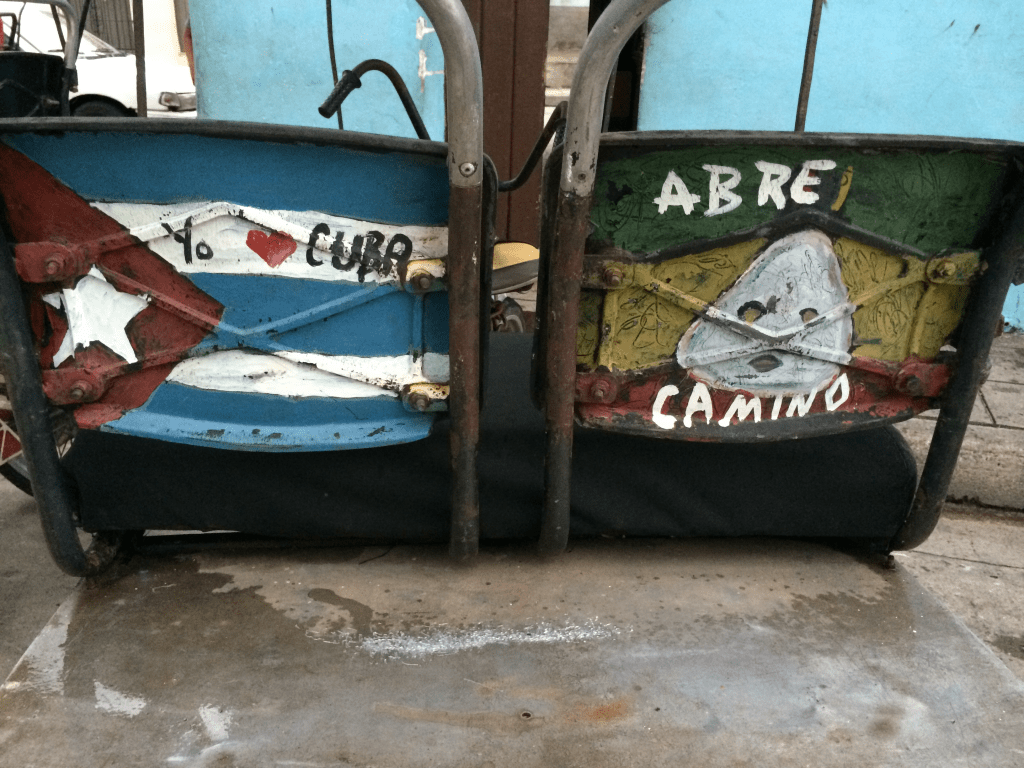
Today I continue my Hispanic Heritage Month project of sharing some highlights of the Latin American countries I have visited, by sharing about one of my favorite countries: Cuba.

Puerto Rican poet and revolutionary patriot, Lola Rodríguez de Tió, once wrote a poem which has the following lines:

Cuba y Puerto Rico son | Cuba and Puerto Rico are
de un pájaro las dos alas, | of the same bird, it’s two wings
reciben flores o balas | they get flowers or bullets
sobre el mismo corazón…
| over the same heart…

Rodríguez de Tió captured this way the closeness between the histories of her — and my — native Puerto Rico, and our beloved sibling, Cuba. Indeed, the history of the two islands is closely related. Perhaps this is one of the reasons why I always felt attracted by Cuba. Since I was a kid, I wanted to visit our sister island. I had the first chance to visit as part of a religious delegation to work with local churches. Since then, I have visited Cuba a few times in different capacities. Always learning more, and always exploring more places. Havana, Matanzas, Santa Clara, Holguín, Bayamo, and Santiago de Cuba, are some of the most recognized places I have visited in Cuba. I have also been to small towns and communities that are not as recognized, and visited places that are either off limit to tourists or that are not as well known outside of local circles.

Once I finally visited Cuba I understood how close my country and Cuba really are. The people, the food, the colonial architecture, the popular sayings… there is so much in common! No wonder Cubans have been migrating to Puerto Rico for centuries, even before the Revolution. Moreover, the accent of eastern Cuba is quite similar to the mountain accent of Puerto Rico — which is my natural accent.

I have loved every inch of Cuba that I have visited. But continuing with the goal of sharing just a few highlights of my favorite places, I will focus on the places I have enjoyed visiting the most.

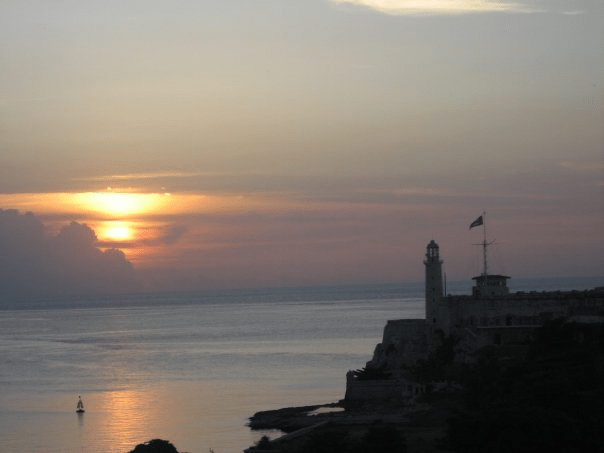
Havana is a place that every Latin person should visit at least once in their lifetimes. The city is filled with the resiliency of the people who live in this beautiful island. Walking through the streets of this Caribbean metropolis is stepping into a piece of history of our beloved Latin America. Each building is the still life of a time that is no more. As the rest of the continent moved forward after 1960, Havana stayed there,

frozen in time. The structures, like the people, have witnessed all types of change with bravado and resiliency. Some buildings, like some people, have given in to neglect. The old cars carry the dreams and hopes of a community that desperately claims for some respite. Everyone has someone to blame: the Revolution, the system, the murderous USA blockade, etc. The truths is, as always, more complexed than what we want it to be. This is also reflected in life in Cuba. All these feelings can only be understood if you really listened to the people… both what they tell you publicly, and what they imply subtly through their words. Havana is the place where you will feel this the most.

Walking along the Malecón, you will experience the reality of Cubans. People pacing back and forth. Some looking for their friends. Others just wanting to escape for a few hours from their homes, work, or any other responsibilities by enjoying the sound of the waves and the music coming from all around. Others walk around hoping to fall madly in love with the person who will finally offer them the ticket to liberty. While others, just walk around hoping for a client with whom they can escape their reality if only for a few hours, while also making a buck to bring food back to their families. Havana is a city of raw emotions and complexity.

Santa Clara is the city with which I really fell in love. This city is filled with art, and music, and innovation. Wherever you turn, there is another new experience to have. The pace of the city is slower, calmer, more reflective than in the big city of Havana. It was in Santa Clara where I first experience the inventiveness of the Cuban people. It was here where I fell in love with the art of a local artist who is now famous and lifting Cuba’s artistic heritage up around the world. Santa Clara is one of my happy places, and I can’t wait to visit again.

Matanzas is the city that reconnected me to my Yoruba ancestors. It was the place where I came face to face with the Orishas, who called me back home to their protection. Matanzas was also the place where I learned of the potential that Cuban theologians have to really transform the face of Christianity should the blockade wasn’t there. Their voices are clear, filled with wisdom rooted in their realities, and centered in love, affirmation, and empowerment. Perhaps I wouldn’t have left the church had I studied with these theologians instead of where I went. It was also in Matanzas where I felt for the first time the “summer love” feelings so ubiquitous of teen romance movies. Matanzas keeps one of my most beautiful memories of deep connections with one of the most fascinating human beings I have ever met and whom I will always love.

Finally, Santiago de Cuba is a place that will always be in my heart. Not only does the city and I share a name, but there is much more we share. The eastern provinces have a similar accent to the Puerto Rican accent. It is here where I can visit any place and be welcomed as one of their own. In Santiago, I am just the other wing of that same bird. In Santiago, I am no longer just Puerto Rican, I am Cuban too. It is from Santiago de Cuba where the Bacardí family hailed. They moved to Puerto Rico where they finally established their rum business. Funnily, I have been three times to Santiago and have yet to visit the Museum Bacardí. Each time I visit, the museum is closed for one reason or another. An inconvenience for me. The reality of a tired system for them. Santiago has the fortresses that remind me of home. It is the place where I can eat like a local, in local establishments not for tourists, pay with Cuban pesos instead of the currency for foreigners, the place where I can visit any museum without even having the show a national identity card because they take for granted that I belong there. If there was a city I can call my second hometown, it would be Santiago de Cuba.

There are, of course, many other beautiful places to visit in Cuba. Throughout my years traveling there and nurturing friendships in the island, I have visited the beach town of Guardalavaca, the Bellamar Caves, the Martin Luther King Jr Center, and so many other wonderful, hidden gems. Cuba really is the Pearl of the Caribbean.

Leave a comment

Filed under celebrations, Cuba, cultural celebrations, Culture, ethnicity, Heritage, Hispanic Heritage Month, Hispanics, Hispanidad, Hispanos, History, Humanity, Identidad, Identity, immigration, Latin America, Latinidad, Latino, resistance, tradiciones, traditions, Uncategorized

Traveling Throughout Latin American This Hispanic Heritage Month – Venezuela

I want to continue taking you on a journey with me throughout my beautiful Latin America. Of course, I can only share the experiences of the places I have traveled, which is what I am doing with this series of publications. Today, I want to take you on a journey to the second Latin American country I visited: Venezuela.

I visited Venezuela for the first time in 1997, right after my trip to Nicaragua. In fact, my little group — three young women and I, all from the same religious group from college — flew from Nicaragua, through Panamá, to Venezuela. There we met with a larger group from the same religious organization from college. However, while we were in Nicaragua, there were general strikes in the country. The public transportation sector had joined the students in strike as prices were going to be raised in the public universities in the country. This meant that the ferries from Ometepe to the mainland were suspended.

Moreover, during this time, there was also an earthquake in Venezuela that devastated parts of the country. This was our first trip to Venezuela and we had no idea where the earthquake happened and whether it was close to where we were supposed to stay.

Thankfully, we were able to clear everything up and were able to travel to Venezuela after all. This was the first of many trips I took to Venezuela. I have visited before, during, and after the Chávez presidency. I have seen the country transform in many ways. Here, I will not take share about those transformations, as I believe this is a delicate topic that should never be entered into without first engaging the brilliant minds of Venezuelans who support, oppose, and are ambivalent about the political reality of their country. I would do a disservice to my Venezuelan siblings by focusing on my political opinions instead of highlighting the beauty of their motherland.

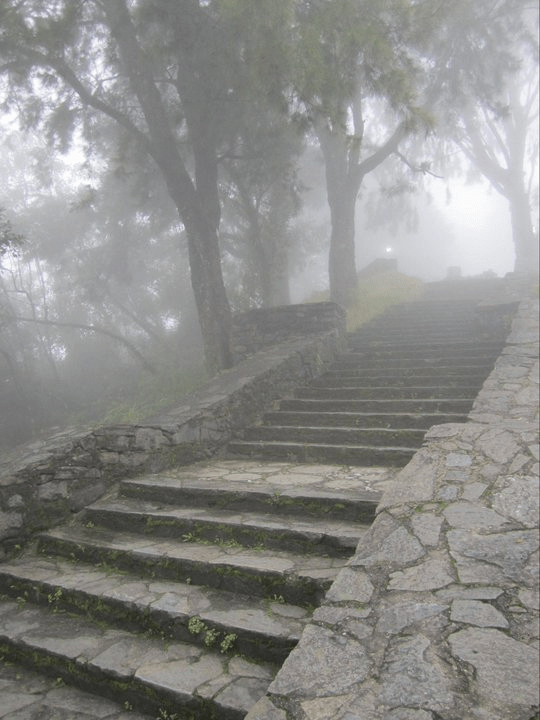
Stairs enveloped in mist as you continue the journey up once you get to the top of Cerro Avila in Caracas.

The first time I visited Venezuela, I stayed in the home of the local pastor whose church we were working with. His house was on a very scary cliff, in the town of El Junquito. He was a dentist, and made good money through his job. His service to the local church in an impoverished neighborhood of Caracas was part-time. He used his skills as a dentist to provide free service to the community too, and the church had a dental clinic for the people in the community.

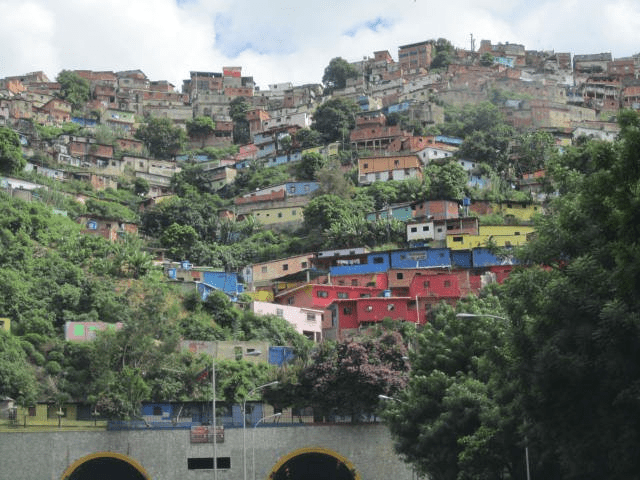
El Junquito wasn’t particularly interesting to me. But Caracas was! The city is a huge sprawl in a valley and extends to the foot of the mountains around it. As you come up from the Maiquetía Airport, you can see the haphazardly built structures covering miles and miles of mountain slopes. At night, the lights look beautiful. During the day, it looks impressive and dangerous. In the neighborhood where we were working, the passages and narrow paths crisscrossing the slopes from house to house, some built one on top of another, were a maze we did not dare to walk through. This in itself was a beautiful sight. It was beautiful because you could feel how much the community cared for each other, as they helped each other navigate this network of paths that were so confusing that outsiders were warned not to venture in. The Caracas that I experienced that first time, and the second, and third time I visited, was a city of drastic contrasts. It was a city filled with cars, motorcycles, public buses, and a pretty impressive urban metro system. It was a cosmopolitan city filled with culture and arts. It was a city filled with the delicious aromas of national and international cuisines.

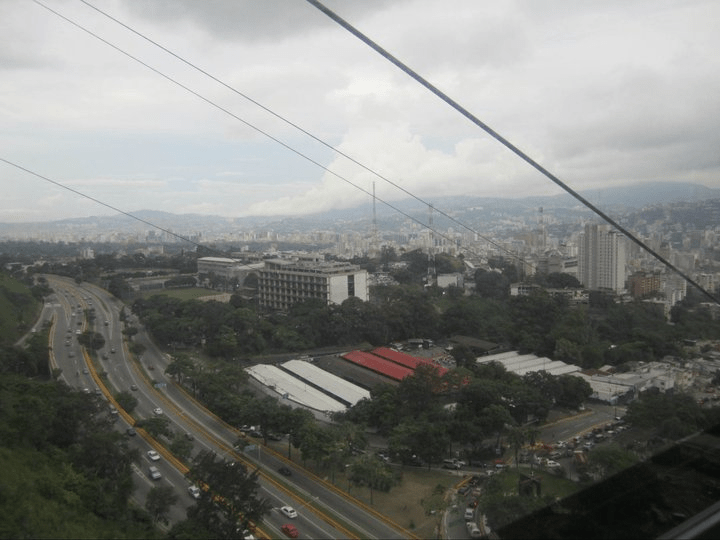
A view of Caracas from Cerro Avila.

Caracas is my favorite place in Venezuela. Contrary to many Latin American cities, Caracas doesn’t have a very defined and preserved “old town.” You walked through history and modernity all the same time. As you step out of the old Roman Catholic Cathedral in the center of the city, there are modern buildings and shopping malls all over the perimeter. This contrast was new to me, and I enjoyed it very much.

In Caracas is also where you can find Cerro Avila. The impressive mountain on the side of the city is reachable through a cable car. The first few times I rode this cable car, I had no worries. However, the last time I visited Caracas, I guess my age showed, as I was scared to death to go up! I positioned myself in the center of the car and curled up in the fetal position until we reached the top of the mountain to the amusement of my sister and my friend who were serving as our tour guide. But once on the top, you get to see the city through the fog.

Another place that is magical in Venezuela is Colonia Tovar in the state of Aragua. I have visited this place a couple of times. This town up in the mountains is the result of German immigrants arriving in Venezuela over a hundred years ago. The climate on the mountain was reminiscent of the climate in their home towns. They produce some of the sweetest and biggest strawberries I have ever had! It is worth visiting the colony and enjoying a day or two trying all of their traditional German dishes and strawberry creations.

Valencia and Maracaibo are the other two places I have spent time in. Although I didn’t get to explore much in Valencia, it was a family visit and we got to enjoy some good time with my aunt and her husband’s extended family who lives there. Having some street food late at night was probably one of the greatest experiences in Valencia. Maracaibo, on the other hand, was also a magical place. Every morning, I would wake up early and walk to the nearby bakery to buy freshly baked bread for the group with which I was. The team there made a delicious strawberry jam (I get to see the thread here!) Eating that freshly baked bread was heaven!

The views of the houses on the cliffs as you drive up from the Maiquetía airport to Caracas.

Venezuela has my heart because of many other, more personal experiences I had while traveling and shortly living there in my youth. Although it’s been a few years since my last visit, I do hope to return someday. I want to continue eating the delicious street foods, especially, the arepas reina pepiada (my favorite), and their empanadas — there’s a story about empanadas and a visit to Simón Bolívar’s hacienda from which I will spare you this time. Venezuela is a beautiful country, with wonderful people, and way to much to discover in just a few days over a decade of visiting it. I know in my heart that I will visit more places and get to see the Salto del Angel with my own eyes someday. Until then, I live with the wonderful memories of many, many months spent exploring the streets of Caracas, and the memory of the wonderful smell of freshly baked bread in Maracaibo.

Leave a comment

Filed under celebrations, cultural celebrations, Culture, ethnicity, Heritage, Hispanic Heritage Month, Hispanics, Hispanidad, Hispanos, History, Humanity, Identidad, Identity, immigration, Latin America, Latinidad, Latino, race, racism, Sociology, tradiciones, traditions, Venezuela

Celebrating Hispanic History Month? Read This!

Hispanic Heritage Month starts tomorrow, September 15th through October 15th. It was set during this

time as many Latin American countries celebrate their independence sometime during that period. (But not ALL countries do, and my own country, although part of Latin America, it’s still a US colony, so no independence yet for us.) Here are a few notes for those of you who want to observe this celebration in your agencies, groups, churches, clubs, etc.:

– The name of the heritage month is “Hispanic” Heritage Month. We didn’t select it, it does not represent the entirety of the communities, and not all Latinos are Hispanic, etc. …. BUT… it’s the name of the month as it was instituted by the USA federal government. Don’t come up with other names that do not represent the history of our struggle and the history of how this heritage month came to be. That doesn’t stop all of us from advocating for a change. Using the official name as it is right now just helps maintain a connection with our past as we move forward. The most important thing you can do is to add descriptions of the communities you want to celebrate. For instance: “This Hispanic Heritage Month, our agency wants to highlight the contributions of Indigenous and Black people of Latin America by offering x, y, z.” Hopefully, one day — and as a result of our collective advocacy — this will be “Latin America Heritage Month.”

– Although all Mexicans are Latinos/as/xs not all Latinos/as/xs are Mexican. This is the most visible ethnic Latin group in our region, but we can say something similar, with other communities, in other locations. Please know that our community is diverse. When you organize your agency’s HHM celebration around one cultural tradition only, you are telling me two things. First, you don’t care about me as a Latino with roots in a different culture than the one you’re highlighting. Second, you don’t know much about our communities or your own communities, where people might come from any of the many Latin American countries.

– Please, make your celebrations as broad and inclusive as possible! Not all Latin people speak Spanish. Some Latin folk speak English as their primary language. French, Creole, Portuguese, and hundreds of indigenous languages are also Latin American languages and cultures. Keep that in mind, especially when trying to highlight the communities in your area. Don’t patronize us by haphazardly translating things into Spanish with Google translate. Also, be carful with asking a heritage speaker to do the translation! Spanish alone has so many dialects, and many heritage speakers learned from their parents who might not have had the opportunities to have formal education, and thus, do not know the intricacies and nuance of the different dialects. Usually, they have very regional dialects which might hinder clear communication with people from outside their regions. Moreover, heritage speakers — who must be celebrated for their work to preserve the language — are most familiar with spoken Spanish, and not with written Spanish. Celebrate diversity in speech and dialects, but also recognize that there is a standard version of one of our languages — Spanish — that is understood across dialects. Only professional translators who have spent their professional lives doing this will produce good content that is understood across cultures. I also know of a at least another Latin American language, Mayan, that also has many dialects, some of them not even mutually intelligible. So, only translate things when it makes sense for those things to be translated.

– Our music is as diverse as we are. Salsa, tango, merengue, cumbia, bachata, reggaeton, rock en español, plena, and myriad others. Don’t rely only on one type of musical style. HOWEVER, keep in mind that some genres of music — reggaeton which is one my favorite styles, so don’t take this as a negative comment on the genre, and Spanish trap, for instance — contain words or phrases that might be extremely offensive or very vulgar in some dialects. Please vet your music selection with people who speak the dialect of the musician. This way, you will have music that is inviting, instead of having music that might be liked by some people while being offensive to other audiences. Don’t play the music of the popular artist just because they just modeled for Vanity Fair (ha! Some of you will get the reference… and also, I love BB’s social commentary and some of his music, so don’t come for me. I am just using some general examples.) Every time I hear reggaeton music with vulgarity in its lyrics playing at supposedly “family friendly” event sponsored by an organization, I know the people there do not know my dialect and the cultural nuance of the use of curse words and vulgarity across different Latin American cultures. Again, vet your music selection with the people who speak the dialect of the singer.

– Look for as much representation of Latin American cuisine as possible! Generally speaking, south of the middle of Central America, no Latino cuisine uses hot spicy chiles! Perhaps your Argentinian best friend loves hot spicy food, or your Cuban spouse does; but that doesn’t mean Argentinian or Cuban cuisines are spicy hot cuisines. The staples of our cuisines vary also. Of course you are very familiar with the Mexican tortilla. But, did you know the Central American tortillas are thicker and don’t compare with the Mexican ones? Did you know that plantains are the staples of Spanish and Black Caribbean cuisine and that we never, ever use tortillas in our dishes? Did you know that in most South American countries bread is king? Also, find local Latin American restaurants of ALL types of cuisines, not just one. Around the area where I live in Pierce County and south King County in the state of Washington, for instance, there are Peruvian, Puerto Rican, Salvadoran, Argentinian, Colombian, Guatemalan, and Honduran restaurants. Order from them!

– Latinoness does not equal immigration. Do not center your events only on immigration issues! Sure,

that is the biggest reality of our community. But Puerto Ricans are Latino/a/x and we — on paper — do not face this challenge. Cubans and Venezuelans also do not face these challenges in the same way. Tejanos, Californios, Nuevo Mejicanos… and many other groups of Latin folk from the lands stolen from México are as Latino/a/x as we are and they do not face immigration challenges. Expand the issues you work on and you highlight in your celebrations. We have other challenges as well, such as lack of access to well paid jobs, racial and ethnic discrimination, anti-Blackness, lack of access to stable housing, etc. Additionally, we are not our challenges! We have contributed tremendously to USAmerican culture from the very beginning. Celebrate ALL of our contributions also, and don’t see us merely as recipients of your charity.

– Latinidad is not race. Mestizaje is not the only expression of Latinidad. Indigenous peoples are still here and thriving throughout Latin America and many of them here in the USA in spite of the many ways we have tried to erase them and their cultures. Black Latinos/as/xs exist… and they come from every single country in our beloved continent. Highlight their influence, their contributions, their resiliency and their Latinidad! Asian Latinos/as/xs also exist! Their contributions to our histories, cuisine, cultures, music, etc., is undeniable. Plus, Asian-Latino cuisine is the best. Ask any Peruvian! Don’t hide this rich history! Latin folk of Arab and North African heritage also exist! And when it comes to religion, at least two Latin American countries are almost majority Evangelical/Protestant: Guatemala and Puerto Rico. Don’t assume we are all familiar with Roman Catholic traditions and rituals. Almost half of Latin folk in the USA are Protestants or Evangelicals, and there are many, MANY Latin folk of other religious traditions: Jews, Hindus, Buddhists, Muslims, Spiritists, Santeros, Vodoo practitioners, atheists, agnostics, and everything you can think of.

– This note is for my Latino/a/x siblings: pay attention and be in solidarity! Who is not being represented and who is being left out? Are you an advocate for ALL of our cultures and traditions? Are you calling folk in to reflect on how they have centered only your or my culture and not the cultures of the other Latin folk who live in our communities? Speak up and advocate for each other as you also celebrate your own individual cultural heritage. It’s all about celebrating our diversity, not helping the people and institutions with power blend us into one thing. Make ’em learn about us! Don’t conform to their expectations!

– When in doubt: ASK!!!! Ask your colleagues what would be meaningful for them. If they are all from one single heritage, honor that and also, seek out others in your community from other cultural backgrounds so you can be more inclusive. We LOVE sharing our traditions, our stories, our cultures, our foods, our memories of back home, our histories, etc. Invite us to be partners in the celebration, and don’t do something for us, do it WITH us.

Have a wonderful celebration of Hispanic Heritage Month and remember we are still here after October 15th!

Leave a comment

Filed under Afro-Latino, celebrations, cultural celebrations, Culture, Español, ethnicity, familia, family, Heritage, Hispanic Heritage Month, Hispanics, Hispanidad, Hispanos, History, Humanity, Identidad, Identity, immigration, justice, Latinidad, Latino, race, racism, Sociology, tradiciones, United States, USA

Hispanic Heritage Month 2013 Reading List

September 15th through October 15th is “Hispanic Heritage Month.” Here is a list I put together of books that talk about the Hispanic/Latin@ experience in the United States from different perspectives. I have only included books I have read and deemed interesting. I have also tried to capture different aspects of the Hispanic/Latin@ vida: from religion to sociology to economy to immigration… (I still have a very long list of other books to read… once I do read them, they will show up on this list!)

It is my hope that you can grab at least one of these books during this month and learn more about the Latin@/Hispanic experience in the United States. All of the books are in English, as my intention is to reach out to the English-speaking friends of all ethnicities and races. Hope you enjoy!

9.15.12.HispanicHeritageMonth


Religion:

1. Mañana: Christian Theology from a Hispanic Perspective by Justo L. González

2. En la lucha / In the Struggle: Elaborating a mujerista theology. A Hispanic Women’s Liberation Theology by Ada María Isasi-Díaz

3. La Cosecha: Harvesting Cotemporary United States Hispanic Theology by Eduardo C. Fernández

4. Latina Evangélicas: A Theological Survey from the Margins by Loida I. Martell-Otero, Zaida Maldonado Perez and Elizabeth Conde-Frazier

5. Galilean Journey: The Mexican-American Promise by Virgilio Elizondo

Literature:

1. When I Was Puerto Rican: A Memoir by Esmeralda Santiago

2. Almost a Woman by Esmeralda Santiago

3. The Turkish Lover by Esmeralda Santiago

4. The House on Mango Street by Sandra Cisneros

5. The Circuit : Stories From the Life of a Migrant Child by Francisco Jiménez

6. Breaking Through by Francisco Jiménez

7. Reaching Out by Francisco Jiménez

8. How the Garcia Girls Lost Their Accents by Julia Álvarez

9. Christ-Like by Emanuel Xavier

10. Americano: Growing up Gay and Latino in the USA by Emanuel Xavier

11. Santo de la Pata Alzada: Poems from the Queer/Xicano/Positive Pen by Lorenzo Herrera y Lozano

12. My Beloved World by Sonia Sotomayor

History

1. Bacardi and the Long Fight for Cuba by Tom Gjelten

2. Latino Americans: The 500-Year Legacy That Shaped a Nation by Ray Suárez

3. Latinos: A Biography of the People by Earl Shorris

4. Harvest of Empire: A History of Latinos in America by Juan González

5. Latinos: Remaking America edited by Marcelo M. Suárez-Orozco and Mariela Páez

6. Historical Perspective on Puerto Rican Survival in the United States edited by Clara E. Rodríguez and Virginia Sánchez Korrol

Cultural Studies

1. From Bomba to Hip-Hop: Puerto Rican Culture and Latino Identity by Juan Flores

2. It’s All in the Frijoles: 100 Famous Latinos Share Stories, Time-Tested Dichos, Favorite Folktales, and Inspiring Words of Wisdom by Yolanda Nava

3. Latinos in America: Philosophy and Social Identity by Jorge J. E. García

Social & Contemporary Issues

1. Empire’s Workshop: Latin America, the United States, and the Rise of the New Imperialism by Greg Grandin

2. HIS-Panic: Why Americans Fear Hispanics in the U.S. by Geraldo Rivera

3. Illegal People: How Globalization Creates Migration and Criminalizes Immigrants by David Bacon

4. The Presumed Alliance: The Unspoken Conflict Between Latinos and Blacks and What It Means for America by Nicolás C. Vaca

5. “They Take Our Jobs!” And 20 Other Myths About Immigration by Aviva Chomsky

Leave a comment

Filed under Culture, Heritage, Hispanics, History, Latino, Puerto Rico, United States, USA