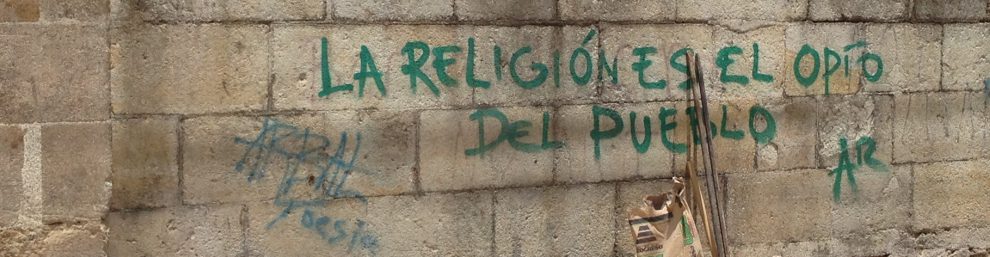
As I continue inviting you to explore the places I have visited in our beloved and beautiful Latin America this Hispanic Heritage Month, I want to bring you with me to Panamá.
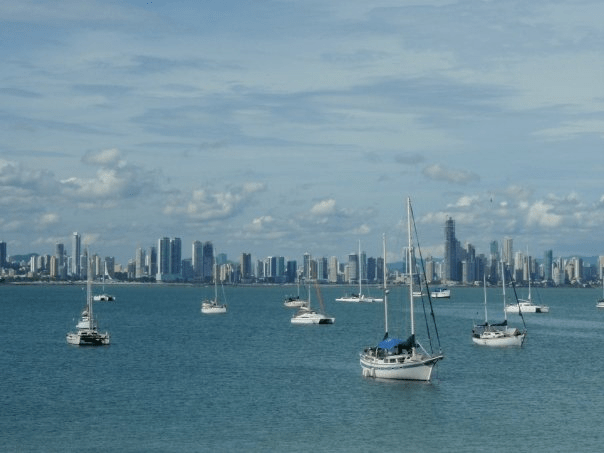
It is possible that the only thing you know about Panamá is the canal. The Panamá Canal crosses the country north to south, opening a waterway for large container ships to cross from the Caribbean Sea to the Pacific Ocean. The Panamá Canal is quite significant for various reasons. First, because ships no longer have to do the difficult navigation around the southernmost point in the continent through Tierra del Fuego, to reach the Pacific Ocean from the Atlantic. Second, because it helped in cutting Panamá from Colombia, from which it was a department prior to its independence. Third, because the canal was USA territory until 1999, and thus, is another palpable reminder of the way in which the United States have had an overarching presence in Latin American affairs. Finally, the canal is also the big scar that divides the American continent, physically cutting the north and south parts of the large landmass that is América.
I have only visited Panamá once. My mentor, friend, and second mother, whom I met while she was a professor at the university I attended, lives there. Her ties to Panamá are strong. When she attended the same school she eventually taught at, she met the father of her sons, who was at the time, an international student from Panamá. Her sons were born there, and currently, her surviving son’s children live there. It makes sense for her, already retired, to live near her grandchildren and son.
A while ago, I decided I wanted to visit her. It had been quite some time since the last time I had seen her, and I felt it was right for me to visit as she had already traveled to visit me while I lived in NYC and she was in Pennsylvania. I also wanted to meet her son, as I consider her a second mother and it would’ve been great to meet my quasi-brother. Up until that time, Panamá had been a layover stop on my way to other Latin American countries. In fact, I had never stepped out of the Tocumén International Airport in Panamá City before. Thus, I didn’t have any expectations from the country, other than meeting my mentor and friend.
What I discovered was way more than a beautiful Latin American country! I discovered a country with a complex history, wonderful people, delicious cuisine, and an accent that was so close to my own that I always felt at home.
My friend is a lesbian activist, and as such, I had the chance to connect with the LGBTQ community in Panamá and experience the country through their eyes.
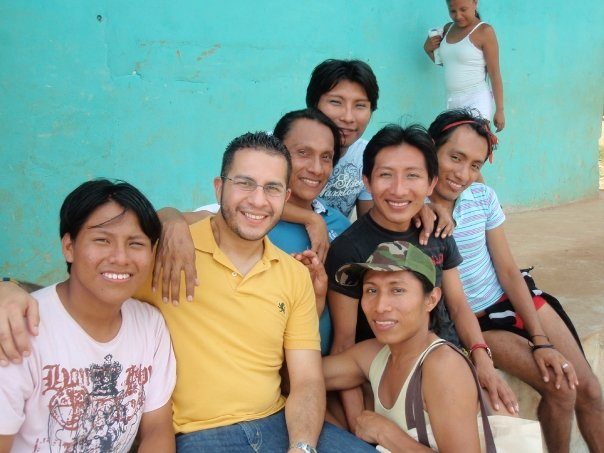
The most significant experience I had in the country, was a visit to the Kuna or Guna people. The Guna are one of the surviving indigenous peoples who the colonizers were not able to erase. Like many other indigenous cultures from around the world, the Guna do not have a strictly binary gender system. In the Guna communities there is a third sex, the “Wigudum”, who play an important role in their societies.
When I visited with the Guna, I had the wonderful opportunity to meet some Wigudum people. Some of them were concerned because, although they had been accepted by the majority of their communities, US-backed Evangelical churches were growing in their communities. This meant that US puritanical and hypocritical mores were being spread throughout their communities, including the marginalization and demonization of the Wigudum. Moreover, the hypocritical aspect of the US puritanical moral code was using Wigudum young people as sex objects in private while rejecting their humanity from the pulpit. At the time, I was serving in parish ministry, and although the church I served is a very progressive congregation, I couldn’t get the guilt off of me. Modern, US Evangelical Christianity is annihilating a culture that survived millennia of colonization.
Still, visiting with the Guna was the most beautiful part of my visit to Panamá. They did not perform for me as a tourist. They did not put on a show to entertain me. I didn’t act as if I knew more than them about their country, their culture, or their struggle. I visited with humility and an open mind, hoping the learn from and with them, even if for just a few hours. I highly recommend connecting with indigenous communities, if possible, when visiting any Latin American country in which there are indigenous communities. Visiting with them will offer a better understanding of their culture, their history, their current realities, and the damage that colonization continues to do.
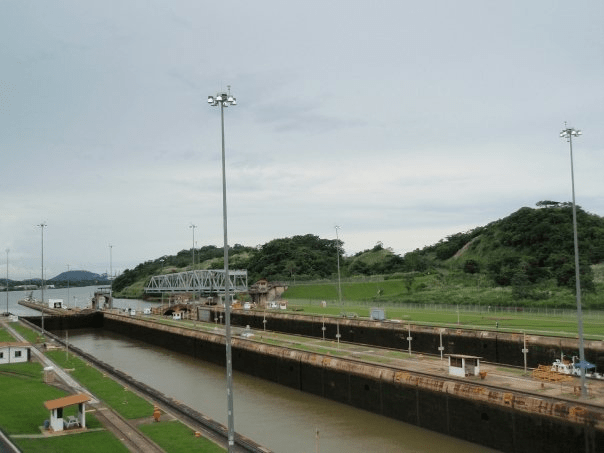
Of course, I had the chance to visit the Panamá Canal. It is an impressive view. Watching the huge vessels travel through this intricate piece of engineering is really a sight. It is also an interesting experience to visit the canal zone. The canal was transferred back to Panamá as it was always intended, in 1999. Since then, Panamanians have moved to the zone, while some service members from the USA have also stayed. It is an interesting reality worth witnessing.
The final place I would suggest visiting in Panamá — of the places I visited, because I cannot speak for the whole country — is the old town. Contrary to other old towns throughout Latin America, Panamá’s is small and not well maintained. The structures are crumbling, and they reminded me more of Havana than San Juan. The ruins of the old city are also nearby and they are an interesting place to visit to learn more about Panamá’s development. I am not sure about the rest of the country, but Panamá City is a sprawling experiment on US capitalist development. Huge skyscrapers are being built everyday. Hundreds of housing units unreachable for locals are being sold to international investors with no intentions to help the people of the country. However, since infrastructure is still lacking, water barely reaches the units beyond the third floor, and power outages are very common.
Visiting Panamá was a great experience for me. It showed me both sides of Latin America: the side still connected to our ancestors, cultures, and traditions, and the side that is the unsuspected victim of globalization and US imperialism. As a Puerto Rican, it was a great way to know that my people, my Island, are not alone in suffering the impact of invasive US imperialist policies. As the late Panamanian poet Dimas Lidio Pitty once wrote:
Panamá, my beloved land
wounded by the many pains
tomorrow, without invaders
an Eden under the sun you shall be.
 SocioTheology
You must be logged in to post a comment.