I want to continue sharing with you my experiences of traveling throughout Latin América this Hispanic Heritage Month. The countries I am sharing about are the ones I have visited, even if just once. Each one of them has their own cultures, their own cuisines, their own beauty, their own challenges, and their own histories. I don’t pretend to be an expert on Latin América, much less on the countries I have visited and only experienced a sliver of what they really are. I am not even an expert in my own country! But these are beautiful places I have visited and I wanted to share a bit of each one with you this Hispanic Heritage Month, in the hopes that it inspires you to visit places that you might have never thought of visiting.
Today, I take you to the land of the Quetzal: Guatemala. The Quetzal is a small bird endemic to certain parts of Central América. Unfortunately, the bird is endangered, and their numbers continue to dwindle. They are also very shy, and in all the years I have visited Central América, including the areas where the Quetzal is present, I have never seen one in real life. That does not take away from the reality that Guatemala is beautiful, full of history and wonderful things to experience, from its culture to its delicious cuisine.
My first visit to Guatemala was by car. I was visiting a friend in El Salvador, and we decided to drive to Guatemala for a long weekend. This was the first — and so far, only — time I crossed a land border in Central América. I drove through the southern part of El Salvador, entering Guatemala through the Hachadura entrance, crossing the Río Paz. This is a border entrance mostly used by trailers, and it wasn’t until almost an hour when I realized that I could’ve skipped the line of trailers and enter through a second gate for passenger cars. The process was different than entering and exiting the land border between the USA and México or Canada, both of which I have crossed in the past. Here, I had to leave the car and
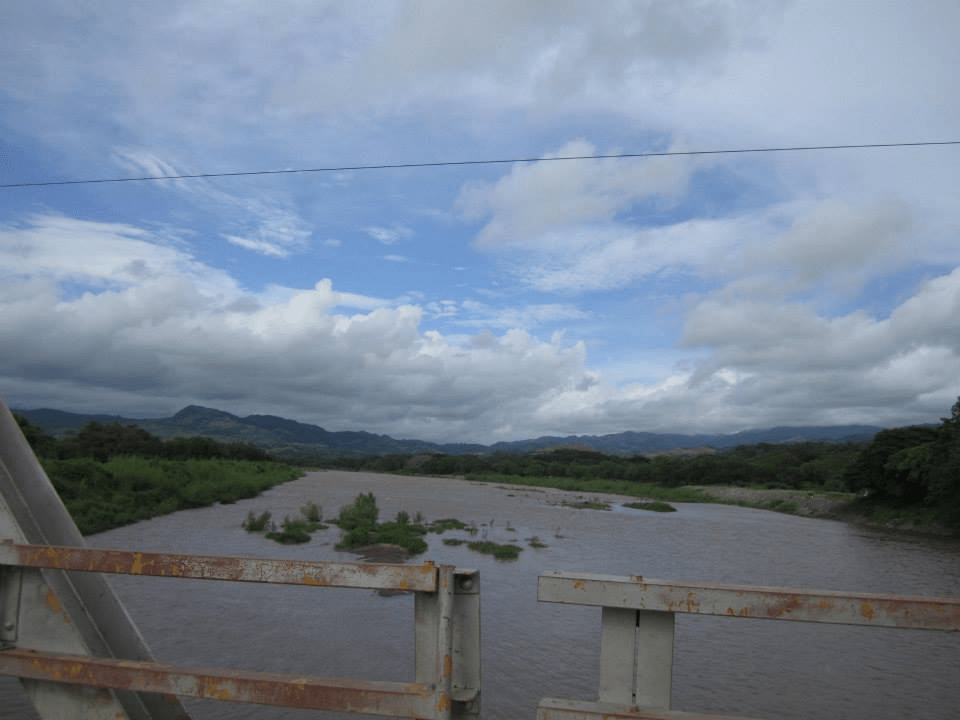
present my passport and pay the entry fee inside the customs and immigration building. Once over the other side, a few miles away from the border, we were stopped and our car searched. Again, a different experience. But the border patrol was really nice and, although I had to pay an extra fee — wink, wink — at the border crossing, the border patrol who stopped us didn’t ask for extra payments. They were curious about the binoculars I had and the Swiss knife I was carrying. Thankfully, they didn’t seize them and we went on our way.
It was fun driving through a country for the first time. We passed several small and large villages and towns, taking in all the beauty of the country. At last, very late at night after I got lost, we entered Antigua Guatemala, the most visited tourist city in the country. Antigua is, without a doubt, one of the most beautiful cities I have ever visited. The first time I was here, with my Salvadorean friend, we visited several churches and ruins, taking in all the history of this previous capital of the former Captaincy General of Guatemala from which many of the administrative business of Central América took place during colonial times.
This first time I visited was during low tourism season, which is honestly the best to visit. The city only had a handful of tourists, and pretty everyone was local. We visited a bar in the main square, and got to chat with the other two people at the bar. It turned out to be a couple of friends, one local to Antigua, and her friend from Perú was visiting. With the only bartender being the other person there, we had a pretty cool, international group: two Guatemalan women, a Peruvian man, a Salvadorean man, and myself, a Puerto Rican man. Central América, the Caribbean, and South América coming together to enjoy some delicious Guatemalan rum.
More recently, I went back to Antigua, as my husband and I visited Guatemala for my birthday last September 2022. The city was as charming and as beautiful as always and my husband was also enamored by the city and its charm. The history of this city is worth learning, as well as taking the time to
explore every inch of the place. Of course, the food here is like in no other place! From the local carts selling all sorts of delicious traditional Guatemalan snacks to the international restaurants with five-star chefs from around the world! I can still taste the delicious French dishes I ate here, better than at any French restaurant I have visited in the USA thus far.
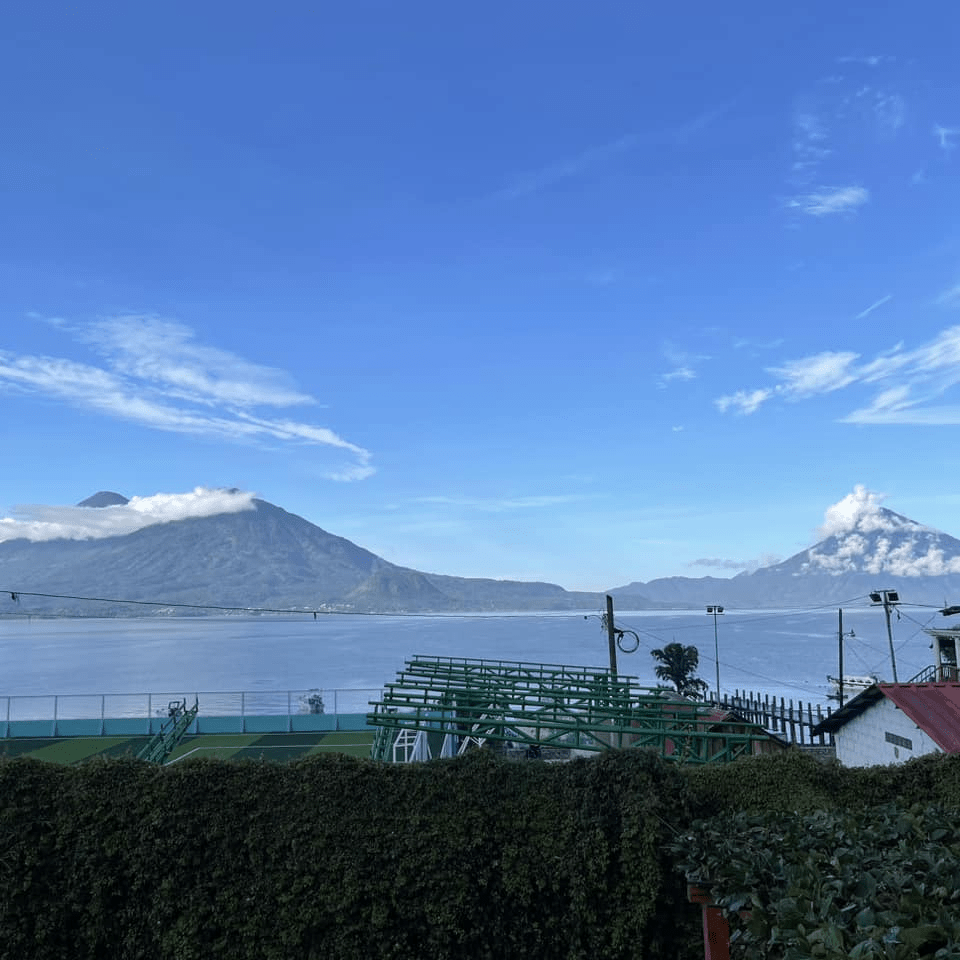
When I returned to Guatemala this past year, our first stop was not Antigua, though. As soon as we stepped out of the airport, we rented a car and drove to Santa Catarina Palopó, a tiny village on the eastern side of Lake Atitlán in the center of the country. The lake itself is beautiful, and the small village was the perfect place to relax and disconnect from the hustle and bustle of work. The village also has a coffee museum, which for me, having grown up in a coffee farm, was wonderful to experience. Santa Catarina also has, like most of Guatemala, a strong Maya identity. This was something that both my husband and I enjoyed, as he is of Maya Yucatec descend. Although their dialects differ (and my husband doesn’t speak Yucatec Mayan, just knows a few phrases and words), there are cultural ties that made this place feel like home for him. The huge window in our room also looked right into the lake, with the tall volcanoes on the other side of the lake. Waking up to this beautiful view was extraordinary. From here we also visited the slightly larger and certainly busier town of Panajachel, where you can walk a couple of miles through their open market and buy all sorts of knickknacks and delicious traditional foods. Our visit to Panajachel was met with a torrential rain that lasted for over an hour, and trapped us at a snacks and beer cart on the boardwalk by the side of the lake.
An unforgettable experience driving to Santa Catarina from Guatemala City happened as we traversed all the roads with huge mountains on one side and cliffs covered in coffee trees on the other. I am very used to driving through roads like this, as it is very similar to where I grew up. Unfortunately for my husband, this is not what he is accustomed to and he was terrified. At some point, we came to a river — or what would be considered a large creek in the USA — and there was a signed telling drivers to be careful, as the bridge had fallen and cars must cross the river. My husband looked at me terrified and ask, “what are we going to do now?” To which I responded: “We drive through the river!” And off we go! Again, this was not the first time I had driven through a river, and it was just a great and unforgettable experience for us both.
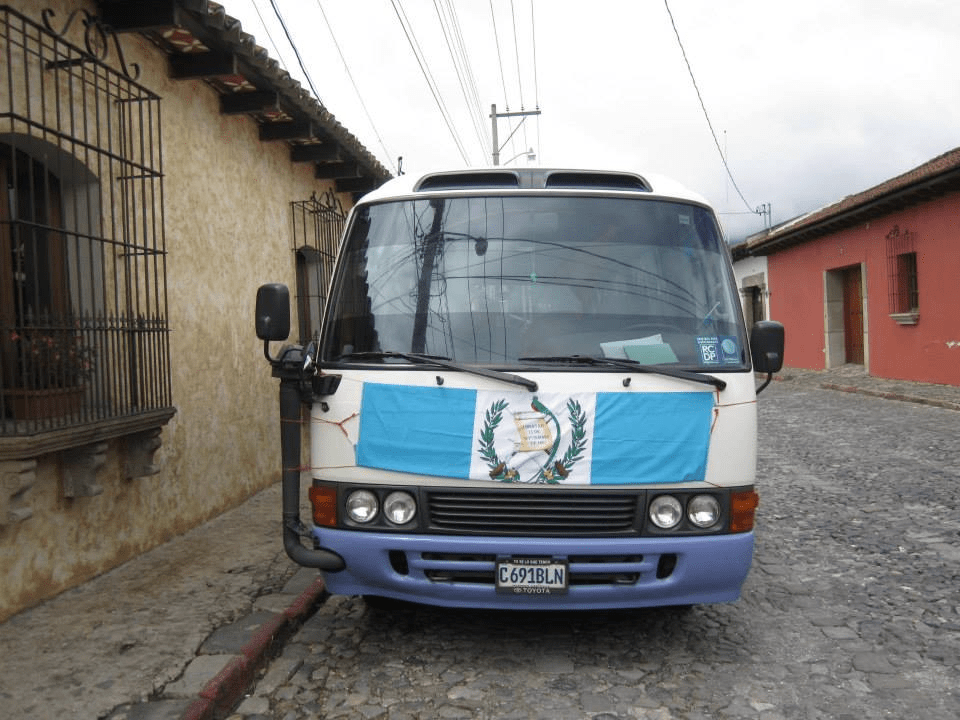
On our way back, we took a slightly different road — although we had to cross the river again — in order to visit the archeological ruins of Iximche. As I drove by, we came to an unfinished road with a gate and a tiny space open on the side. The GPS said that was the route, so we were a bit lost and curious on how the heck we were going to get to the ruins through here. We first asked a kid who walked by and he said the keys to the gate was kept at a neighbor’s house and we should walk there to ask them to open for us. Still perplexed on how we were going to continue our journey, we suddenly saw a small passenger bus drive through the small opening on the side of the gate. I wasn’t sure if this was private property, so I didn’t know if we could go through. But we saw a woman carrying some wood and her kids walking towards our side of the gate and asked her about the route to Iximche. She confirmed we were on the right path, and that everyone has to cross through the small opening next to the gate. We did… and about 30 minutes later, we were at the archeological ruins.
I highly recommend visiting places like this archeological site. The place is a beautiful park for everyone. There is a little museum where you can learn about the Maya culture and the history of the place. Besides, this is so out of the tourists’ path, that you will find yourself as the only non Guatemalans there. It was wonderful!
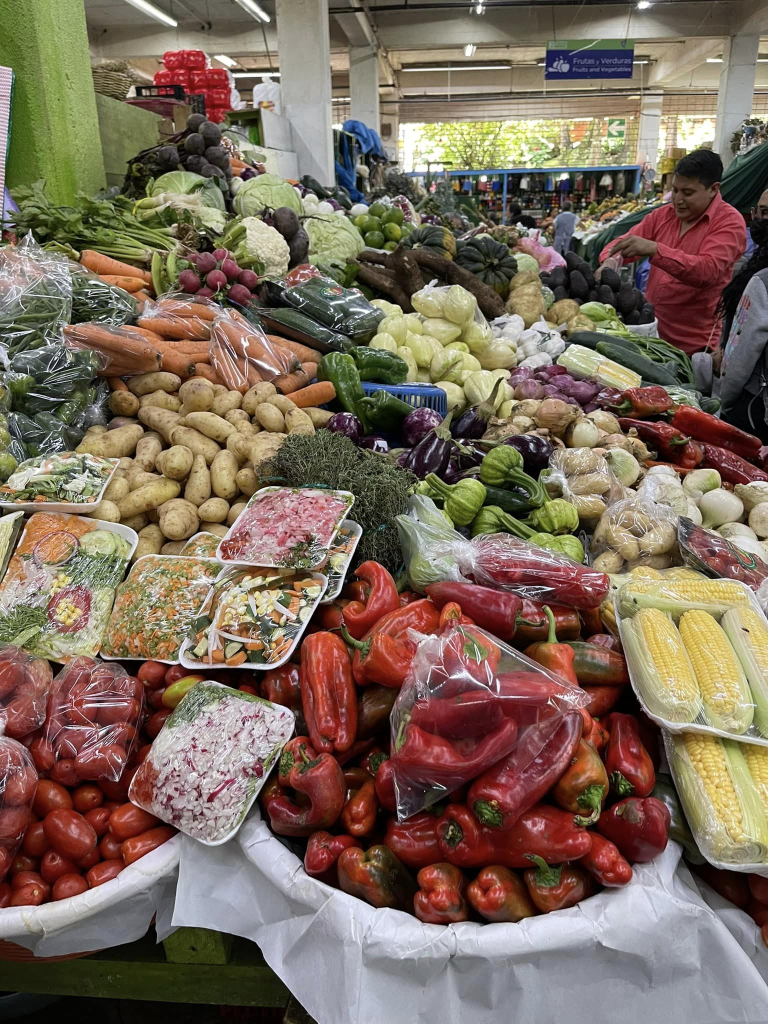
From here we went to Antigua and after a few days at the city, we headed to Guatemala City. Guatemala City is, like most Latin American capitals, a city of contrasts. There are the rich suburbs with the people who, belonging to the place, do not feel like they are from there but want to control the lives of those who are. The poor areas where people survive in whichever way they can. The modern areas where poor and rich mingle; some selling stuff and other buying stuff. There is the central market, where you can see the largest carrots ever grown by human — well, at least in my view — and the most beautiful, organic fruits and vegetables you can imagine. You also can also see the beautiful and creative folk art, clothes, and shoes. This was the second time I visited Guatemala City, and can say that I really like this place.
There is one thing about Guatemala for which I highly admire the country and its people. While most of Latin América continues to produce coffee for the international market while falling prey of the Nescafé ruse to strip us from quality coffee and replacing it with the chemical concoctions that are instant coffees, Guatemala has hold on to their real coffee. As one of the staff told me husband when he asked about instant or at least decaf coffee at the hotel in Santa Catarina Polopó: “Here, throughout the country, we only serve quality coffee. You will not find anything of low quality like decaf let along instant coffee anywhere on these lands.” As the proud son of a former coffee farmer, that makes Guatemala one of my favorite places to visit.


 SocioTheology
You must be logged in to post a comment.