Tag Archives: latino

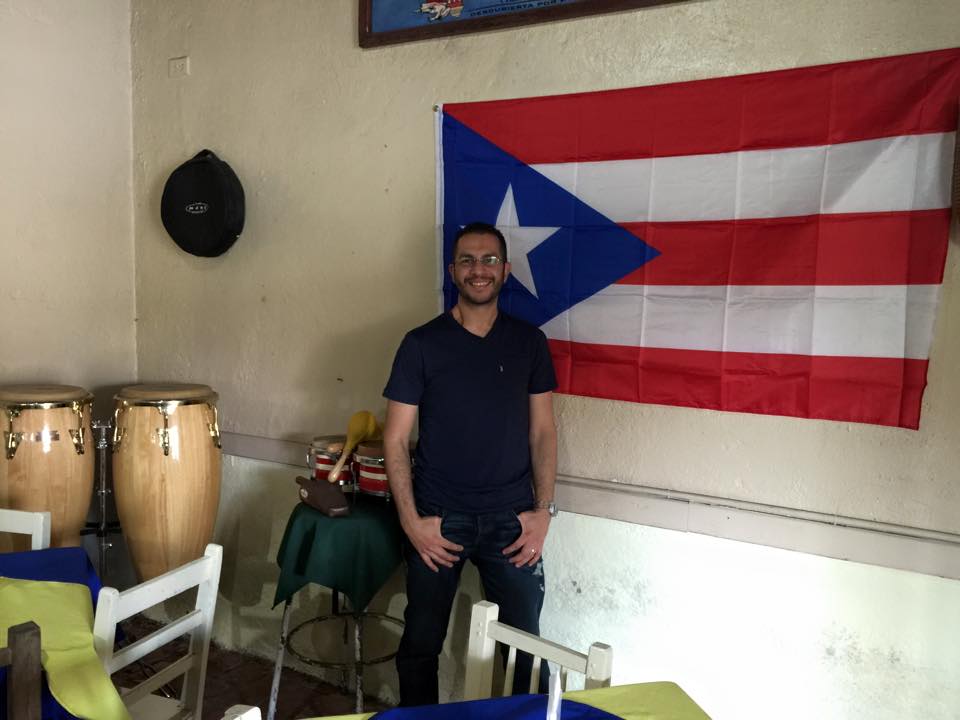
Yo también soy puertorriqueño

Pero no cambia mi amor
Por más lejos que me encuentre
Ni el recuerdo ni el dolor
De mi pueblo y de mi gente

Todo Cambia, Julio Numhauser

       Hace quince años, más o menos – con una pequeña interrupción en el 2011 – vivo en los Estados Unidos. La mayoría de este tiempo la he pasado entre estudios y trabajo. Ambos – tanto estudios como trabajo – han sido por lo general en contextos angloparlantes. Como estudiante, pasé cuatro años en la escuela graduada de teología, sumergido en clases todas en inglés, con libros en inglés – aun cuando el curso podría ser sobre teología latinoamericana –, escribiendo ensayos en inglés y asistiendo a servicios religiosos en inglés. Durante el tiempo que trabajé como pastor de congregaciones, la mayoría de estas congregaciones fueron angloparlantes. Aquí también tuve una interrupción, puesto que serví una congragación hispana en la ciudad de Nueva York. En esta congregación – y es importante que señale esto – la mayoría de las personas eran ecuatorianas, con una buena dosis de bolivianos, puertorriqueños, colombianos, cubanos, guatemaltecos, hondureños, peruanos y una persona mexicana.

Cuando era pequeño, recuerdo que a quienes se iban de Puerto Rico y regresaban eran vistos casi como “traidores a la patria”. Nadie decía nada abiertamente, es cierto, pero se les trataba como tal. “Ya te ves más blanca que una gringa”, le decían a algunas de mis tías cuando visitaba el poblado Castañer donde crecí. “¿Se te olvidó tan rápido el español?” le preguntaban a mis tíos que llevaban más de veinte años viviendo en Illinois o Nueva Jersey. “¿Es que no le enseñan español a esos nenes?” le preguntaban a tíos y tías cuando sus hijas e hijos batallaban para comunicarse con lo que aparentaba ser su poco vocabulario en español. Todas estas actitudes eran las que veía en mi propia familia. Pero estoy seguro que existían en otras familias también.
11098223_10153815799365620_3455883693989937180_n
Por mi parte, siempre pensé que irse de la Isla era como una traición. Sí, yo también lo pensaba. ¿Por qué se va la gente de este paraíso? ¿Por qué se retiran como si no pudieran hacer nada por este país y luego vienen con acentos, ropas diferentes, creyéndose más boricuas que aquellos que nos hemos quedado y queriendo tener injerencia en asuntos internos de la Isla que dejaron atrás? De verdad que no comprendía por qué las personas que salían de la Isla querían regresar con opiniones políticas y sociales; con expresiones culturales que eran ya irrelevantes a la realidad del momento en Puerto Rico; pero más que todo, con ese acento que ni era del todo español “boricua” ni inglés bien hablado. Me irritaba. Como siempre me he identificado como independentista, pues me irritaba más, porque pensaba que quienes se habían ido, no deberían tener la oportunidad de reclamar su puertorriqueñidad.
Eso es, hasta que me tocó a mí. Ahora soy yo quien está en el otro lado del discurso, como receptor de las críticas de amistades y enemistades que me piden que me quede callado cuando asuntos políticos, económicos, sociales y demás vienen a ser discutidos en el foro público puertorriqueño. Ahora soy yo de quien se burlan por un acento que algunas personas llaman “neutral” y que otras a quienes les interesa menos esconder su xenofobia llaman “mexicano”. Ahora es de mí de quien se dice que estoy “engringado” porque se me olvidan palabras y conceptos en el idioma de Cervantes y a veces mezclo el español con el inglés como la cosa más natural del mundo pero que es una aberración a los puristas boricuas que no pronuncian las “s” al final de las palabras y que arrastran las “r” como si estuvieran hablando francés, o, en la mayoría de los casos, las cambian por “l” aunque morfológicamente esté incorrecto…
Hay algo que entiendo ahora y que no entendía cuando era parte de los puristas puertorriqueñistas: la puertorriqueñidad – o cualquiera que sea la nacionalidad u originalidad de la persona – no tiene que ver con residir en el lugar, sino con las raíces que te unen a ese lugar. Por eso fui, soy y seguiré siendo puertorriqueño, con mancha de plátano incluida, no importa dónde resida ni cuánto tiempo pase fuera de la Isla. Como cantaba Mercedes Sosa – la argentina que vivió en el exilio en Francia y Esapaña hasta que pudo regresar a su amado país -: “Cambia, todo cambia; Pero no cambia mi amor, por más lejos que me encuentre, ni el recuerdo ni el dolor, de mi pueblo y de mi gente.” Y que valga decir que la canción fue escrita por un chileno, Julio Numhauser, quien también ha vivido en el exilio en Suecia desde que tuvo que abandonar su país durante la dictadura. Sí, todo cambia, pero no cambia el amor, el recuerdo, el interés, la pasión, el anhelo de mi gente y del país que me vio nacer y crecer. Miles de millas nos pueden separar, pero mi puertorriqueñidad no me la quita nadie; ni la realidad en la que vivo, ni los puristas puertorriqueñistas en la Isla.
Ciertamente, no fue la violencia militar la que me hizo salir de Puerto Rico. Al usar a Sosa y a Numhauser no quiero decir que mi situación haya sido idéntica. No lo fue. Aunque sí tuvo que ver la política con mi exilio. Pero lo que quiero demostrar al utilizar estos ejemplos es que toda persona que por cualquier razón deje a su patria para instalarse en otro lugar, sufre tanto de añoranza por su pueblo como de rechazo por parte de quienes, por cualquier razón, se han quedado.
Los medios de comunicación sociales nos permiten tener contacto constante con los países que hemos dejado. Esto también hace que nos mantengamos acercados a situaciones sociales, económicas, políticas y demás en nuestros países de origen. Si queremos aportar al discurso público en nuestros países, ¿por qué impedírnoslo? ¿Qué nos hace menos puertorriqueñas o puertorriqueños? ¿Quién dice que hemos dejado de interesarnos en el presente y el futuro de nuestra tierra? Los gobiernos (y no solo el de Puerto Rico) contrata servicios de consultoría de países extranjeros todo el tiempo. Esto lo hacen porque a veces el tener una perspectiva diferente, “desde afuera”, puede ayudar inmensamente en el desarrollo interno. Entonces, ¿por qué demandar que nos callemos quienes vivimos fuera de la tierra Borincana? Nuestra experiencia de vida en la Isla y fuera de ella es, creo yo, necesaria para el desarrollo del país. Esto no quita validez ni peso a las opiniones y las acciones de quienes todavía viven en Puerto Rico. Por el contrario, las fortalece.
Además de nuestra esto, lo cierto es que en el mundo globalizado en el que vivimos, todas las personas podemos hacer público nuestro sentimiento y nuestras posiciones con respecto a cualquier cosa de cualquier país. El hecho de que somos de un lado, de que vivimos en otro y de que hablemos diferentes idiomas no significa que no podemos entender la realidad de otros países u otras sociedades. Si no, ¿por qué tanta gente en Puerto Rico tiene opiniones e ideas de lo que debe hacerse en el Oriente Medio? O sea, según quienes nos critican por proponer ideas sobre la realidad actual de Puerto Rico, quienes vivimos fuera de la Isla “no tenemos vela en ese entierro”, pero lo mismo no le aplica a quienes viven en la Isla y tienen ideas de qué debe hacer el gobierno de Siria y las guerrillas ciudadanas. ¿Lógica etnocentrista?
Hay otro punto al que hice referencia al principio y quiero retomar; el acento. Quien ha salido de la burbuja San Juan-Bayamón-Guaynabo-Caguas (¡y mira que hay muchas personas que nunca han salido de allí!) sabrán que cada rincón de la Isla tiene su acentito. Unos más y otros menos, pero todos tenemos un acento regional. Recuerdo que cuando pequeño mi hermana y yo nos reíamos con la forma “cantadita” de hablar de nuestra familia de Morovis. ¡Morovis! Otro pueblo montañoso no tan diferente de Adjuntas donde crecí, pero con sus regionalismos y hasta su propio acento regional.
Tanto el jíbaro del campo como la señora de la loza tienen su acento particular. Cuando el jíbaro se muda pa’ la loza y la señora de la capital se muda pa’l campo, sus acentos pueden cambiar. El jíbaro comienza a pronunciar la “s” al final de la palabra mientras que la doña comienza a arrastrar la “r”. Eso pasa todo el tiempo. Es parte de una cultura en movimiento. Es parte de vivir en un mundo donde estamos en cada momento interactuando unas con otras. Cuando los horizontes se ensanchan y ya no es solamente salir de la loza pa’l campo, sino de un país a otro, es también posible que los acentos cambien. Esto no quiere decir que todo el mundo cambia su acento. No. Algunas personas, por cualquier motivo, lo mantienen. Otras, sin embargo, cambian. Es parte normal de las interacciones humanas.
Como dije al principio de este ensayo, estuve al frente de una congregación que era mayormente ecuatoriana. El transporte público, para mí, es guagua. Así que, en puertorriqueño, yo digo “coger la guagua” para referirme a la acción de tomar el transporte público para ser transportado de un lugar a otro. Pero hay algo importante en las relaciones internacionales y el uso del español… En Ecuador, “guagua” es niña pequeña, mientras que “coger” tiene, además de la acepción de “tomar”, otra acepción, que es de naturaleza sexual. Lo que para mí es una acción normal del día a día, para un ecuatoriano es una vulgaridad. ¿No es responsabilidad de un buen líder el adaptarse a la comunidad que sirve? Entonces, debo adaptar mi español a la comunidad que me circunda. Esto no me ha hecho menos puertorriqueño ni me quita el deseo de estar involucrado en la realidad política, social, económica y demás del país al que me siento unido.
El acento no me define como puertorriqueño; como tampoco define mi puertorriqueñidad el lugar donde vivo, mi sexualidad, mi color de piel, mi educación, mi sexo, mi género, mi posición social, mi trabajo, etcétera. Mi puertorriqueñidad no depende de cómo la definan quienes se han quedado en la Isla. Tampoco depende de cómo la definamos quienes hemos salido o quienes nunca la han visitado (hay puertorriqueños y puertorriqueñas que han nacido en Estados Unidos u otros países que también se interesan en la realidad de la Isla.) Mi puertorriqueñidad y cuánto quiero involucrarme en las discusiones de la realidad isleña la defino yo. Me interesa seguir leyendo, aprendiendo, escuchando, opinando sobre la realidad de la Isla. Me interesa seguir poniendo mi granito de arena en el desarrollo social, político, económico de Puerto Rico. Me interesa porque amo a mi Isla y no importa cuánto cloro los puristas puertorriqueñistas me quieran tirar, la mancha de plátano no se me va a quitar. ¡Yo también soy puertorriqueño!
Leave a comment

Filed under Español, Identidad, Latino, Puerto Rico, Uncategorized

Obama’s Weak and Timid Immigration (In)Action

On November 20th, President Obama announced executive actions regarding immigration. The provision has been called “the right thing to do”, “timely” and even “bold” by individuals and organizations that portray themselves a progressive. The reality, however, is different. The recent executive action is not even close to the comprehensive reform that is sorely needed by the immigrant communities in the United States. Certainly is not timely, as the President had the chance to act on comprehensive reform when he promised, immediately after his reelection in 2012. Finally, the recent executive action is far from being bold; the action is timid and weak.

According to some experts, about 5 million immigrants will benefit from the executive action. The program has five main focus areas: expansion of the previous Deferred Action Program (DACA) for DREAMERS, allow parents of US citizens to stay in the country for up to three years without fear of deportation, expanding the waiver program that was already in place for unlawful residents, modernizing and clarifying immigrant programs, and promoting citizenship education. Of these areas, two are the most contentious: the expand of the Deferred Action and allowing parents of US citizens to stay in the country for up to three years with a provisional work permit.ImmigrationReformPassedinSenate062813

These actions, while might look like a dim light at the end of a very dark tunnel, need to be taken very seriously and with a grain of salt. Why? These programs are creating large, federal databases with enough information on undocumented residents which can be easily accessed by future administrations that might not be fond of immigrants. Currently, and up to the Election Day on 2016, there is a 50/50 chance of a Republican takeover of the White House. If the Republican candidate runs on the same platform that the party has espoused so far, this means that 5 million undocumented residents will be at the will of a hostile president who might take action in deporting them. We must remember that Obama’s executive action has a three year lifespan. This is well into the administration of the next US President, whoever that person might be.

Moreover, the executive action affects less than half of the total undocumented immigrant community. During a conversation with my spouse, who has lived in the USA without documentation for the past 11 years, we wondered what was going to happen to most of our family. Would they be able to apply for the executive action? What about our friends? The answers were not what we needed or wanted to hear. Only one member of our family, whose son is a US citizen, will qualify for this executive action. Others, such as an uncle who has lived in this country, paid local and federal taxes, worked and invest in the local economy for the past 12 years, would not be able to qualify for the mere reason of not having any children born in the USA. In addition, our friends who are gay or lesbian, who have no children and many of whom never thought of having children, but who have lived in the USA for most of their lives, will not qualify for Obama’s executive action. How can such an action be called “bold”?

Indeed, Obama’s executive action on immigration is weak, timid, and comes with too many risks for the undocumented community. It will be extremely important for undocumented residents to explore what options are best for them. Three years of a temporary work permit, with the possibility of deportation at the end of that time, might not be the wisest movement for many undocumented residents.

There is one thing, however, that has been made clear throughout this process: Obama and his advisors are good politicians. He decided not to push for comprehensive immigration reform before the mid-term elections, thinking that this would give them advantage with the conservative-leaning undecided voters. Somehow, he and the Democrats took for granted the support of minority voters. That, as we have already seen, backfired. By presenting this weak and timid executive action, he hopes to get back the support of the left-leaning voters while at the same time look like a “champion” of the immigrant communities. Of course, the Republican Congress is going to do everything in their power to minimize the effects of this executive order, which will make them look like “the bad guys”, which is exactly what Obama and his party needed to win the next general election. Basically, Obama and the Democrats are using the immigrant community as a weapon in their dirty political game.

Add to this what I have already experienced: the resistance of the – mostly white – liberal voters to acknowledge that Messiah Obama cannot do anything wrong. I have already received messages from friends and acquaintances that ask me to stop criticizing the President’s actions lest the “right” use that as a weapon against all the other positive things that President Obama has accomplished.

But I cannot keep silent. My role in a semi-democratic society like ours is to raise my voice when I see unjust actions that affect those who have no voice within the political structures. The role of any citizen is to keep their government checked lest it lose sight of its responsibility: to look after the wellbeing of all of the people. Just because President Obama has accomplished many great things during his tenure does not mean that I need to stay silent when he does wrong. On the contrary, it is my civil responsibility to call on the government officials who represent me to act according to what is the wellbeing of all my fellow citizens.

Finally, with the reaction I have seen from the – mostly non-immigrant, and mostly white – liberal community, it is my fear that pressure on the Obama administration to proceed with comprehensive immigration reform might wane. It seems to me like the progressive voice has, once again, fall trapped of the “Obama charisma and speech” and is willing to compromise the lives of the other 6+ million undocumented residents who will not qualify for this executive action. If the progressive voice is not heard anymore, neither Democrats nor Republicans will feel the need to move boldly on immigration reform. We have already seen how every progressive voice has been praising Obama for his weak and timid action, calling it “bold” when in reality is not even close to be so. I do not want to be the kind of citizen that serves as a rubberstamp for the political leaders I do support. What I want to be is a responsible citizen who is willing to criticize the wrong actions of any political leader, even if I agree with them in most of the policies that they support.

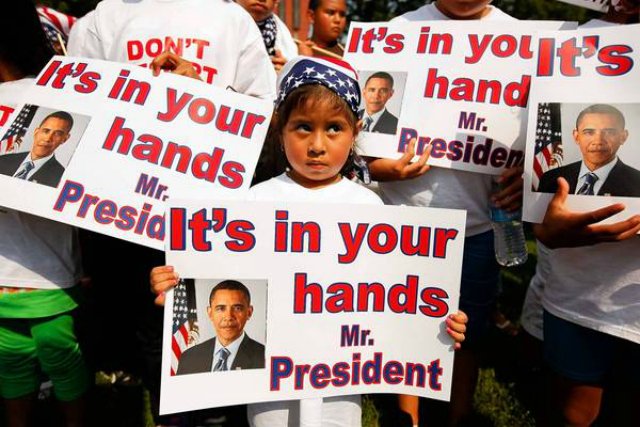
Mr. President, we need you to take BOLD action on immigration reform. Mr. President, we need you to ACT on immigration reform and not just use our immigrant communities as political weapons. Mr. President, we need you to BE A LEADER and not just a politician. The lives of over 11 million people who live and contribute to this country depend on you.

Leave a comment

Filed under Culture, discrimination, Hispanics, justice, Latino, race, racism

Why I Vote

i-votedThere are people in the United States, especially those – usually young, and white, and from middle and upper middle classes – that espouse “anarchist” and “leftist” views, who say that voting is a waste of time. Why should we vote if the candidates all have the same platforms? Candidates all work for the same corporate interests and look only after their own kind. Why bother with voting?

I do not disagree that many, if not most, candidates are just clones one of the other. However, for me it is still important to cast my vote. Why? Because of whom I am.
It is easy to dismiss your right to vote when you are white, or young, or male, or rich, or educated, or healthy… or any combination thereof. It is easy to dismiss the electoral process and complain about politicians and their work while not wanting to be part of the process. I understand the frustration, because I have felt it myself at times. But when you are not part of the majority, your vote is extremely important.

This is why I vote: because I am not white, because I am not straight, because I am not rich, because I am an immigrant, because my first language is not English, because my spouse can’t vote, because I am a feminist, because I am a progressive, because I am a person of faith, because I am not willing to let others dictate what I think is best for me… Voting allows me to reclaim my space in the public square. Voting allows me to stand up and say that I am part of the process even when the majority of those in power do not want to recognize my mere existence. Voting allows me to stand up for what I believe, even when the politicians making the decisions are those I voted for!

No candidate and elected official are going to share all of my values. However, I feel empowered to raise my voice when I vote. I can tell those politicians and elected officials that I have the power that the US Constitution grants me and I will make use of that power. Voting is not the “fix-all” solution. It is not perfect and it is not going to make the government work exactly as it should. But, when you are not part of the majority it is extremely important to show up at the voting booth (or to mail in your ballot!)

I vote because I am not white, because I am not straight, because I am not rich, because I am an immigrant, because my first language is not English, because my spouse can’t vote, because I am a feminist, because I am a progressive, because I am a person of faith, because I am not willing to let others dictate what I think is best for me…

Leave a comment

Filed under Uncategorized

I Have An Accent… Get Over It!

It was the first board meeGlobe_of_languageting of the year for a large, international organization. As there were going to be new members for the board, it was needed to go around and introduce ourselves. There were people from the four nations where the organization has a presence plus individuals from other nations who reside in one of the four nations represented. Everyone was sharing their names, location, and their job. It was right there when it happened…


With no hint of irony in her voice, the white, middle age, college-educated woman states that she lives in one of the places that was taken first from the native inhabitants and then from the nation to the south. Proudly she tells her audience – an international audience – that she “teaches foreign students how to lose their accents so they can get jobs” in the United States. Yup. Right as you read it. Immigrants who had spent years of education, who probably speak more than one or even two languages, needed this woman’s help to lose their accents so they could get in with the system.

I looked around for the reaction of my fellow immigrants and non-white colleagues, and, unsurprisingly, we all cringed a little. What this woman was saying, unconsciously, is that our accents make us look dumb, uneducated and unprepared for the professional challenges that jobs in this country offer.

Not long ago, something similar happened to me as I was about to take a new position and someone suggested that the organization paid for a coach who would help me lose my accent. (Full disclosure: I was not informed of this until after I had accepted the position, which caused much pain as I worked there.)

The USA culture states that, no matter how ethnically diverse the country is, those of us who have kept our accents from our mother tongues do not quite belong. For some immigrant communities this has meant that their ancestors’ languages have been lost because the parents are worried their children might not be able to find work or succeed in life. Interestingly, the culture has also incorporated words from other languages into the US English. Think, for instance, about words such as Kindergarten (German), pierogi (Polish), mesa (Spanish), bouquet (French), Brooklyn (Dutch), finale (Italian), tycoon (Japanese) and shtick (Yiddish), just to name a few. Other languages are part of the US culture, but nobody wants to acknowledge it. Moreover, if those of us who emigrated here from other countries with a different language use our own languages to communicate or express ourselves in English with an accent, then we are scolded for it.

Yet, nobody pays attention or asks Australians, South Africans, Jamaicans, New Zealanders, Trinidadians or British to lose their accents. Why?

It is true that communication is extremely important in academic and professional settings. (The personal settings are a bit different due to the familiarity of the people involved.) However, our accents and language backgrounds should not dictate our – the immigrant’s – capabilities to do the work. Being able to speak a language different than English does not mean that we have less education, less knowledge or less professional abilities. It only means that our education was in a language that was comprehensible to us as we grew up and became professionals. In fact, nobody questions the intelligence of English-speakers when you come to our countries and often times refuse to learn at least basic phrases to communicate with the people who live there.

Here are three other things that US Americans need to understand about people who speak other languages. First, most of us do speak English. Our accents only mean that English is a second, third and sometimes even fourth language (I had a seminary professor for whom this was the case, where English was the fourth language he learned.) The use of English along our own mother tongues only points to the fact that we are bi- or multi-lingual. How many languages you, English-speaker, are able to read, understand and speak?

Second, the truth is that every chance we have, we use to learn how to pronounce words, how to expand our vocabulary, and how to find the correct way to use your language in all contexts. Have you thought how difficult it is for a foreigner who was only exposed to “proper” English to figure out some of the common idioms and day-to-day phrases of your language? Take, for instance, “cut the mustard”. I know what the verb “cut” is, and I know that “mustard” is a condiment. How in the world am I supposed to know that “cut the mustard” means “to succeed”?! My mental references for mustard do not even allow for cutting! Mustard, as a seed, is too small to be able to be cut, and as paste, there is no need to be cut as it spreads. Do you follow my thoughts? (There’s another one!) I can tell you, from my personal experience, that I even take time to listen and practice pronouncing a word over and over and over again trying to find the correct way to pronounce it.

Third, there is the issue of pronunciation and hearing. You, who grew up listening to words in your language all the time, might be able to catch the subtle difference between “leave”, “live” and “leaf” but, trust me; it all sounds exactly the same to me! I need to pay attention to the context in which you used these words to find which one you used. How hard it is for you to do the same exercise? All of this is tiring, but it is exactly what non-English speakers have to do every day of our lives in this country (and what English-speakers have to do every day if they live in countries outside of the English-speaking world.)

There are two final thoughts I want to share with all of you. First, is the issue of regional accents within the United States. Most people fret about and want to change the accent of foreigners, but you seldom hear about changing the accents of people from different regions within the country. There are not-too-small differences between the accents of an Alaskan, a West Virginian from the mountains, a person from Brooklyn and one from Massachusetts. Yet, nobody will dare recommending that we all come to an agreement about speaking with the same “standard” English accent. Why? Because there is no such thing as a standard accent in any language! All languages have regional differences! Hence the ridiculous idea of asking British, Jamaicans, Australians, South Africans and Trinidadians to change their accents… they all speak English with regionalisms and it is a matter of adapting our ears to those regionalisms in order to understand each other.

Finally, my accent is, to me, a point of pride. It tells me that I speak more than one language, that I am able to communicate with more people than mono-lingual persons, and that I bring with me to this country a history. It defines who I am at this moment of my life and it makes me feel part of the global community, not just of a small community of either people of the United States or people of Puerto Rico. I can drive through the northern border of the USA and make myself understand just as I can cross the southern border and still engage in conversations. (Unfortunately, I do not speak French; therefore any visit to Quebec would be an adventure… And one that I would gladly welcome!)

My best advice to those who complain about my accent, or about any accent for that matter? Get over it.

Leave a comment

Filed under Culture, discrimination, ethnicity, Heritage, Hispanics, History, Puerto Rico, race, racism, Sociology, Uncategorized, United States, USA

Yes, I Am Mad as Hell!

A few years ago, while working on a predominantly white environment, I experience much racially and ethnically based discrimination. Some of this discrimination came in the form of what scholars now call “microaggressions”, while other was more overt such as questioning my abilities, my qualifications for the job or the like solely based on my ethnicity and accent. For some time I just shrugged it off as ignorance and lack of education on the part of the people who did it. At the same time, I would do an effort to educate.

fist-md However, the discrimination continued. Not only that, but I started to meet with other people of color who were also involved with this organization and heard their own stories of rejection, discrimination and paternalistic attitudes towards them because of their national origin, their accents, their skin color and the like. The pressure continued to mount inside me. I felt like a pressure cooker… until it exploded. The event that marked my anger explosion was the murder of Trayvon Martin in Florida.

Trayvon Martin’s untimely death and its circumstances touched me in a way that I was not expecting. However, many things coalesced at once. On the one hand, another young, unarmed, black human being was being gunned down for no reason. On the other hand, the murderer was a white, Hispanic man who had let his white-privilege rule his life and how he connected with the world around him. Listening and reading the reports of this tragic death, made me even angrier. The media outlets could not grasp the idea that a Hispanic person could possibly be the perpetrator of a racial crime. They also had troubles understanding the complexities of race within the Hispanic communities. But more than that, they totally misunderstood the intricate layers of relationships among the different minority groups in the United States. All of this was too much for me at the time; and I exploded in rage.

I was mad – still am. For years I had tried to understand the historical realities that have made the United States the dangerous place for people of color that this country is today. I had tried to understand that not all white people were responsible for racism. I had tried to justify many actions of racism as ignorance and lack of education on the perpetrators. I had tried to understand that my own Hispanic community was dealing with our own prejudices on top of being the target of discrimination. I had tried and tried and tried to understand and keep my composure. But I could not do it any longer.

At some point I shared my feelings with the community. I told them how it was tiring to be trying all the time to make people understand that we – people in the minority – were not the enemy. I was getting tired of being an educator at all times. I was getting tired of pretending that the words and the actions of white people didn’t hurt me. I was getting tired of pretending that I was going to understand their historical and sociological circumstance. I was getting tired… and this feeling was making me mad and angry.

As I look around and see that things have not changed a bit since the murder of Trayvon, and that black human beings continue to be murdered and their assassins walk free… As I look around and notice that other members of minority groups stay silent… As I look around and notice that the white “supporters” keep calling for what I call a “Kumbayah moment” without acknowledging the centuries of oppression that have brought us to this place… As I look around and see that even the President keeps silence when everyone is waiting for him to talk, to speak up, to raise his voice and use his power… As I look around and notice that the violence on the streets of Ferguson, Missouri are becoming just another excuse for the white majority to justify their oppression… As I look around and continue to notice all of this oppression… the only thing I can say is that I am fucking mad as hell!

Yes. Yes, I am mad. It is not a rage that started yesterday or the day before or the day I experienced racism at that institution I mentioned earlier. It is a rage that comes from a deeper, way deeper place. It is a rage that comes from fourteen years of living in a country that treats me as less than my white counterparts. It is a rage that comes the time that my country was invaded by a white, US navy that tried to impose on my ancestors their language, their religion, their way of life. It is a rage that comes from knowing that half of this country was built on lies and stealing from the natives peoples and when that was not enough, of the other settlers who lived there and spoke my language and shared my customs. It is a rage that comes from knowing that millions of my sisters and brothers’ ancestors – and I am sure mine too – were forced out of their Motherland to be brought here in chains and by force. It is a rage that comes from all the rage accumulated throughout the centuries… throughout the generations… throughout the ancestors who still live in me and within me… Yes, we are mad, and yes, we are going to continue being angry for as long as it takes for the systems to change. And yes, that anger is going to be at times violent and at times peaceful. But I do not care anymore about what the white majority thinks of my anger. I don’t care about what my Hispanic community thinks of the anger that makes me be in solidarity with my black sisters and brothers. I don’t care that my white friends – even those who are close to me and whom I love – hear me saying that I often doubt their good intentions.

I am mad as hell, and I am not going to apologize for it.

Leave a comment

Filed under Black, Culture, discrimination, ethnicity, Hispanics, History, justice, Latino, Peace, race, racism, Sociology, United States

La iglesia sodomita

En tiempos recientes no se usa mucho, pero en tiempos pasados era la norma. Aunque aún queda en la jerga legal el término “sodomía”, la verdad es que a la comunidad gay masculina no se le llama “sodomita” muy de seguido. Es de esperarse que ya no se le llame al hombre gay “sodomita”, puesto que la historia de Sodoma y Gomorra nada tiene que ver con la orientación sexual. Pero vamos, que me estoy adelantando a la discusión. La verdad es que la Iglesia – y hablo de la Iglesia con mayúscula, o sea, la comunidad religiosa sin importar su denominación – denuncia la orientación sexual no heterosexual como pecaminosa, sin darse cuenta que al hacerlo, se convierte, precisamente, en una Iglesia sodomita.

No quiero aburrir a mis lectoras y lectores con largas ponencias teológicas ni con apologías. Solo quiero señalar algunas cosas que, en su ceguera conservadora y fundamentalista, muchas personas ni se han dado cuenta. Lo gracioso es que son las mismas personas que gritan a los cuatro vientos que la Biblia es la palabra inerrante de Dios, que debem701070402_origos tomarla a la letra y que es necesario el creer cada palabra allí citada como inspirada sin error por el Espíritu Santo para alcanzar la vida eterna quienes no le han puesto atención a las historias de la Biblia ni a sus interpretaciones… ¡según aparecen en la Biblia misma! Así que aquí les va un poquito de iluminación, para ver si en algún momento se les prende el bombillo y deciden estudiar la Biblia de verdad.

Pues comencemos por el principio: la historia bíblica de Sodoma y Gomorra. La misma la encontramos en el libro de Génesis 18.16-19.38. En resumen, esto es lo que ocurre: Dios visita a Abraham y le indica que ha visto la maldad de las ciudades de Sodoma y Gomorra. Lot, el sobrino de Abraham, vive en Sodoma con su esposa y dos hijas. Abraham, preocupado por el bienestar de su sobrino y su familia, decide interceder por Lot. Dios promete a Abraham que si encuentra el mínimo de personas sin pecado en Sodoma y Gomorra, no destruirá las ciudades.

Cuando Dios miró de nuevo a las ciudades de Sodoma y Gomorra, la maldad era tal, que decidió destruirlas de todas maneras. Así que envió mensajeros a Lot y su familia para que abandonaran la ciudad y se salvaran. En el momento en que los visitantes llegan a la casa de Lot, el rumor pasa a oídos de la gente de Sodoma y Gomorra – o sea, los sodomitas y gomorritas – éstos salieron para intimidar a los visitantes.

Hay varias cosas importantes en la historia de Sodoma y Gomorra que los supuestos literalistas bíblicos prefieren no leer. También hay elementos en la historia que no pueden leerse fuera del contexto de las leyes levíticas bíblicas, algo que los literalistas – quienes dicen que hay que tomar TODA la Biblia de manera literal, que hay que prestarle atención a cada letra, cada palabra, cada oración – no hacen o no quieren hacer. Así que quisiera presentar mis argumentos para demostrar, de una vez y por todas, que los sodomitas (y gomorritas) de la modernidad son, en específico, quienes más condenan a las comunidades gay, lesbiana, bisexual y transgénero.

¿Por qué hago esto? Sencillo. Primero, porque es algo de lo que casi no se ha escrito en español. Existen miles de ensayos, libros y recursos en inglés sobre este tema, pero muy poco existe en español. Segundo, lo poco que existe en español, en su mayoría, son traducciones de los trabajos en inglés (u otras lenguas) por lo que no está escrito desde la realidad del pueblo hispanohablante. Tercero, porque es un tema que me toca personalmente como persona que profesa la fe cristiana, dentro de su forma protestante y de la tradición bautista. Además, finalmente, como hombre gay y miembro del clero, es importante para mí que temas como este se desarrollen puesto que, como dice la Biblia “Mi pueblo fue destruido, porque le faltó conocimiento…” (Oseas 4.6a) O, como nos recuerda de nuevo Dios en el libro de Isaías 5.13, “Por tanto, mi pueblo fue llevado cautivo, porque no tuvo conocimiento; y su gloria pereció de hambre, y su multitud se secó de sed.” Así que, con gusto comparto algo de conocimiento sobre la Biblia con quienes dicen haberla leído y seguir sus estatutos pero que dejan ver su ignorancia acerca del texto sagrado.

Ahora démosle una lectura seria al texto de la historia de Sodoma y Gomorra y lo que la misma Biblia dice sobre ella.

Aunque no pretendo dar una lectura completa, hermenéutica o apologética – o sea, esto no es un ensayo teológico, sino un corto ensayo expositivo – quiero hacer referencias a algunos puntos que los literalistas prefieren obviar cuando leen la historia de Sodoma y Gomorra.

Primero, tenemos que tener en cuenta las costumbres semíticas con respecto a la hospitalidad. Viviendo en lugares desiertos, donde la vida de cualquier persona corre peligro ya sea por la falta de agua, por el calor o por los animales y plantas venenosas del desierto, el mostrar hospitalidad es sumamente importante en la cultura semítica. La Biblia contiene leyes bien específicas acerca de cómo tratar a los extranjeros y las extranjeras que viven entre el pueblo hebreo. Una mirada rápida al Pentateuco nos ofrece una clara evidencia de la forma en que Dios le pide al pueblo que trate a personas extranjeras que vivan o visiten entre el pueblo de Israel. Y, como a los literalistas les gusta mucho el arrojar versículos bíblicos a diestra y siniestra, aquí les tengo algunos con respecto a las leyes de hospitalidad: Éxodo 12.49; 22.21; 23.9; Levítico 19.10, 33-34; 23.22; 24.22; 25.6, 23, 35, 47; Números 9.14; 15.14-16, 26, 29; Deuteronomio 1.16; 10.18-19; 14.29; 16.11, 14; 23.7; 24.14, 17, 19-21, 26.11-13; 27.19. Aunque estas leyes fueron codificadas mucho después de los sucesos de Sodoma y Gomorra, nos ofrecen una visión de lo importante que era – y es – para Dios el proteger a quienes son extranjeros en tierras extrañas.

Cuando los visitantes llegaron a casa de la familia de Lot, el pueblo de Sodoma salió de manera violenta a recibir a los extranjeros. Ciertamente, el pueblo de Sodoma (y de Gomorra) no era parte de quienes llegaría a ser el pueblo de Israel, pero entre ellos vivía Lot y su familia, que, por acción del pacto de Dios con Abraham y Sarah, eran parte del pueblo que Dios escogió para revelarse a sí mismo.

Segundo – y aquí lo más importante de la historia – es que las referencias bíblicas con respecto al pecado de Sodoma y Gomorra es contundente. ¡Nada que ver con homosexualidad! Sí, hay pecado de inmoralidad sexual, pero no es el que los literalistas quieren imponer al texto. ¡El pecado de inmoralidad sexual lo comete Lot! ¿Cómo? Pues así mismo como lee. El pecado de inmoralidad sexual lo comete Lot al ofrecer sus propias hijas a la multitud para que las violen. ¿No han leído esto los literalistas en la historia? Pues le cito, según Génesis 19.6-8: “Entonces Lot salió a ellos a la puerta, y cerró la puerta tras sí, y dijo: ‘Os ruego, hermanos míos, que no hagáis tal maldad. He aquí ahora yo tengo dos hijas que no han conocido varón; os las sacaré fuera, y haced de ellas como bien os pareciere; solamente que a estos varones no hagáis nada, pues que vinieron a la sombra de mi tejado.’” En ningún momento se nos dice cuál era la intención de la multitud con respecto a los ángeles que vinieron a visitar a Lot. La verdad es que no sabemos si la intención era de violarles, de pegarles o de maltratarles; pero de todas maneras, podemos inferir que la intención no era tratarles bien, sino humillarles. Entonces Lot, en se desesperación de que sus huéspedes no sean maltratados, ¡ofrece a sus propias hijas para que sean maltratadas! ¿Cuántos literalistas hablan acerca de estas acciones de Lot? Ninguno. O por lo menos, no he escuchado a ningún literalista condenar a Lot.

Ahora, veamos lo que la misma Biblia nos dice que es el pecado de Sodoma y de su hermana Gomorra… (Si quieren, aquí pueden escuchar los tambores… porque es una de esas revelaciones que, como dicen en mi país, “se cae de la mata”, pero que nadie lee.) Según Ezequiel 16.49-50, Dios mismo nos dice que esta fue la maldad de Sodoma: “He aquí que esta fue la maldad de Sodoma tu hermana: soberbia, saciedad de pan, y abundancia de ociosidad tuvieron ella y sus hijas; y no fortaleció la mano del afligido y del menesteroso. Y se llenaron de soberbia, e hicieron abominación delante de mí, y cuando lo vi las quité.” Les cito los pecados: soberbia, saciedad de pan, abundancia de ociosidad, no fortalecer la mano del afligido y el menesteroso y abominación. (Y aquí, recordemos que “abominación”, según la Biblia, puede ser cualquier cosa desde no limpiarse correctamente, según Levítico 7.21 hasta adorar ídolos según Deuteronomio 7.25).

Es interesante que en una de las instancias en que Jesús utiliza el ejemplo de Sodoma y Gomorra según lo leemos en Marcos 6.7-13, es en el contexto de que sus seguidores no sean recibidos de buena manera en tierras extranjeras. O sea, ¡que el mismo Jesús sabía que el pecado de Sodoma y Gomorra fue la inhospitalidad!

Como dije al principio, este no es un ensayo teológico hermenéutico o apologético, solamente un ensayo expositivo para dejarle saber a los literalistas lo alejados que están sobre la lectura del texto. Así que, entendiendo que podríamos escribir muchos otros ensayos sobre el tema, me adelanto a compartir algunas conclusiones con mis lectoras y lectores.

Entre las conclusiones a las que he llegado al prestarle atención al texto están las siguientes:

  1. La iglesia cristiana contemporánea, en especial la mayoría de las comunidades evangélicas y fundamentalistas, son el vivo ejemplo de sodomía. En ellas no se permiten personas ajenas a su grey (extranjeros y extranjeras). Las mismas no comparten la mesa con quien viene en busca de pan y vino (muchas mantienen la mesa de comunión cerrada, vetada a quienes no sean parte de las congregaciones o denominaciones particulares). Muchas de estas comunidades son soberbias, predicando que ellas, y solo ellas, tienen la verdad inalienable de Dios. Además, practican la abominación de idolatría, al poner a la Biblia – una creación humana – por encima de Dios, de la revelación de Dios en Jesucristo y de la dirección del Espíritu Santo, quien es responsable de “guiarnos a toda verdad” según nos dice Jesús en Juan 16.13.
  2. La iglesia cristiana contemporánea – otra vez, en especial las comunidades evangélicas y fundamentalistas – no son literalistas. Sus líderes y miembros NO toman la Biblia de manera literal. Por el contrario, estas comunidades leen sus propios prejuicios en cada historia bíblica, sin prestar atención a la dirección del Espíritu Santo ni de la historia del pueblo que nos dio las Sagradas Escrituras. De hecho, no hay tal cosa como “interpretación literal” de ningún texto. Toda persona que lee, lo hace desde una realidad histórica, social, religiosa, económica, familiar, geográfica y tantas circunstancias que nos hacen seres humanos.
  3. La iglesia cristiana contemporánea es hipócrita, pues utiliza sus propias bíblicas para imponer sus creencias sobre otras personas, en vez de permitir que sea Dios, a través del Espíritu Santo, quien dirija a los individuos a una lectura bíblica que nos acerque a Dios.
  4. Finalmente, la iglesia cristiana contemporánea, en especial las comunidades evangélicas y fundamentalistas, al tratar de imponer sus propias lecturas al texto bíblico, no dejar que el Espíritu sea quien les dirija y querer añadir y quitar cosas del texto de manera indiscriminada, están cometiendo el pecado que tanto aborrecen: quitar y añadir a la Biblia. Como nos dicen las Sagradas Escrituras, en Deuteronomio 12.32: “Cuidarás de hacer todo lo que yo te mando; no añadirás a ello, ni de ello quitarás.” Y luego nos repite en Apocalipsis 22.19: “Y si alguno quitare de las palabras del libro de esta profecía, Dios quitará su parte del libro de la vida, y de la santa ciudad y de las cosas que están escritas en este libro.” Así que, ¿qué esperan estas comunidades para arrepentirse, para mirar de nuevo a Dios y pedir perdón por sus pecados de sodomía e idolatría y reconciliarse con el Creador? Les insto a reconsiderar sus caminos sodomitas pecaminosos y abrir las puertas de sus iglesias y de sus corazones a recibir a toda la creación de Dios (Romanos 8.22-23), y de esta manera cumplir el sueño de Dios de crear un cielo nuevo y una tierra nueva donde “Enjugará Dios toda lágrima de los ojos de ellos; y ya no habrá muerte, ni habrá más llanto, ni clamor, ni dolor; porque las primeras cosas pasaron.” (Apocalipsis 21.2)

Leave a comment

Filed under amor, Dios, Español, Gay, iglesia, Latino, LGBTQ, Queer, trans

Justin Beiber and “José Pérez”

Much has been said about Justin Bieber’s case. Unless you live under a rock, you probably already know that even CNN had to stop an important interview with a US Congresswoman in order to report about the Biebs’ arrest. There is much that can be said about the whole thing, but I want to focus my attention on the one thing that has been abuzz around Spanish media but completely ignored by the mainstream media: Justin Bieber’s immigration status.

That is right, my dear Bielevers… The Biebs is 100% foreigner. He’s an immigrant worker. Like Ted Cruz, maple syrup and socialized medical care, the Biebs comes from Canada! Living and working in the United States legally, Justin Bieber should still be bound by the immigration laws of the great United States. This means that, for his infractions (driving under the influence of alcohol and controlled substances, drag racing and resisting arrest) he should be placed on deportation proceedings. But of course, this is not possible to do with a white, English-speaking, rich, young man. These immigration laws and procedures only apply to brown-skinned, middle-class, poor, and non-English-speaking residents.

Imagine for a second that the person arrested was not Bieber, but José Pérez (these being the most common first and last names throughout the Spanish-speaking world.) Imagine if a hard-working, young, Hispanic male was arrested for DUI, drag racing and resisting arrest on the streets of Miami? And I am not going to say an undocumented immigrant; but a legal resident. Someone who entered the country legally – say from Colombia or Venezuela, which are the two largest non-Cuban communities in Miami. What would have happened? Certainly, not a $2,500 fine and a slap on the wrist. If José Pérez had been caught on this situation, his family would be visiting him at the Glades County Detention Center right now, waiting for a judge to set a hearing, and certain that his legal residency status would be revoked and he would be deported. José Pérez’s family would be scrambling and trying to find the money for the onerous fine imposed by the judge while visiting a few dozen lawyers trying to find who would give them the chance to pay on installments. José Pérez would not be waving at his fans from the roof of a limo while surrounded by bodyguards, but rather waving at his children from inside a federal vehicle who will be transporting him from one detention center to another while a judge decides when to grant him a hearing.

This is what is wrong with the system. This immigration system works pretty well for the wealthy, white, English-speaking immigrant like Bieber. But it is hell for the one that is “the other.” Every day, thousands of men and women of all ages are placed on deportation procedures for less than what Bieber did. Yet, he walks out with a big smile and the certainty that no one will do anything against him. Why? Why are we allowing this system to continue? Why do we have these double standards in immigration? And when are we going to acknowledge that the current system does not work and needs to be fixed?

Leave a comment

Filed under Uncategorized

Las mantillas evangélicas

IMG_3419En mis años de infancia, cuando visitaba de vez en cuando la parroquia de Nuestra Señora de la Medalla Milagrosa en Castañer, Puerto Rico, veía una que otra viejita usando mantilla. Las mantillas son esos velos que cubren la cabeza de las mujeres católicas devotas. Por lo general son negras. Las mantillas eran utilizadas mucho en los años antes del Concilio Vaticano II. Pero luego de éste Concilio, la Iglesia Católica decidió que no era necesario el que las mujeres utilizaran mantillas en la iglesia. Así que el uso de mantillas se ha mantenido solamente entre las viejitas que todavía se aferran a la tradición y a los grupos Católicos ultra-ortodoxos.

Bueno, eso era lo que creía yo, hasta que visité El Salvador hace unas semanas. Resulta que caminando por las calles de San Salvador – y en muchos otros lugares que visité en el país – me encontré con mujeres de todas las edades vistiendo mantillas. Todas llevaban mantillas blancas. Elaboradas con perlitas de mentira y bordadas con hilo fino blanco. Me pareció interesante ver tanta mujer católica aferrada a su tradición, así que le pregunté a mi amigo el porqué de tal devoción.

“¡Esas no son mujeres católicas! Quienes llevan esas mantillas son evangélicas.” Eso me dijo mi amigo. Me quedé estupefacto. ¡Mujeres evangélicas vistiendo mantillas! Yo había sido testigo de mujeres de grupos evangélicos judaizantes utilizar mantillas (en Puerto Rico, la Congregación de Yahweh es una de estas iglesias), pero nunca en público. Por  lo general, el uso de mantillas es exclusivo para el culto privado. Después de todo, aun si leemos al Apóstol Pablo literalmente en 1 Corintios 11:1-16 éste hace referencia al uso del velo por la mujer solamente en el contexto del culto.

Lo interesante de ver tanta mujer en El Salvador con velo/mantilla es que me recordó cuán similares somos a pesar de nuestras diferencias. De seguro que si les preguntara a esas mujeres evangélicas qué piensas de sus hermanas católicas, nos dirán que las católicas están mal. Criticarán su fe y su forma de expresar el cristianismo. Así mismo, las mujeres católicas quizás critiquen o no entiendan a las mujeres evangélicas. Pero interesantemente, las mujeres evangélicas son herederas de una costumbre católica romana. La han adoptado y adaptado para sí. De hecho, a quien siguen e imitan es a la misma María de Nazaret, cuya imagen siempre lleva velo/mantilla, pero cuya imagen es tan rechazada por las mismas mujeres que siguen su ejemplo.

Seguimos teniendo divisiones por cosas que no deben dividirnos. Seguimos construyendo muros que nos separan aun cuando somos similares. Seguimos rechazando otras personas porque no comprendemos el porqué de sus costumbres… Así somos… Ojalá que un día estas hermanitas evangélicas se den cuenta que sus mantillas no son suyas, las heredaron de sus hermanas católicas romanas y de María la Madre de Jesús.


Leave a comment

Filed under Church, Culture, Dios, Español, Hispanics, iglesia, Latino, mantilla, Theology, worship

Hispanic Heritage Month 2013 Reading List

September 15th through October 15th is “Hispanic Heritage Month.” Here is a list I put together of books that talk about the Hispanic/Latin@ experience in the United States from different perspectives. I have only included books I have read and deemed interesting. I have also tried to capture different aspects of the Hispanic/Latin@ vida: from religion to sociology to economy to immigration… (I still have a very long list of other books to read… once I do read them, they will show up on this list!)

It is my hope that you can grab at least one of these books during this month and learn more about the Latin@/Hispanic experience in the United States. All of the books are in English, as my intention is to reach out to the English-speaking friends of all ethnicities and races. Hope you enjoy!

9.15.12.HispanicHeritageMonth


Religion:

1. Mañana: Christian Theology from a Hispanic Perspective by Justo L. González

2. En la lucha / In the Struggle: Elaborating a mujerista theology. A Hispanic Women’s Liberation Theology by Ada María Isasi-Díaz

3. La Cosecha: Harvesting Cotemporary United States Hispanic Theology by Eduardo C. Fernández

4. Latina Evangélicas: A Theological Survey from the Margins by Loida I. Martell-Otero, Zaida Maldonado Perez and Elizabeth Conde-Frazier

5. Galilean Journey: The Mexican-American Promise by Virgilio Elizondo

Literature:

1. When I Was Puerto Rican: A Memoir by Esmeralda Santiago

2. Almost a Woman by Esmeralda Santiago

3. The Turkish Lover by Esmeralda Santiago

4. The House on Mango Street by Sandra Cisneros

5. The Circuit : Stories From the Life of a Migrant Child by Francisco Jiménez

6. Breaking Through by Francisco Jiménez

7. Reaching Out by Francisco Jiménez

8. How the Garcia Girls Lost Their Accents by Julia Álvarez

9. Christ-Like by Emanuel Xavier

10. Americano: Growing up Gay and Latino in the USA by Emanuel Xavier

11. Santo de la Pata Alzada: Poems from the Queer/Xicano/Positive Pen by Lorenzo Herrera y Lozano

12. My Beloved World by Sonia Sotomayor

History

1. Bacardi and the Long Fight for Cuba by Tom Gjelten

2. Latino Americans: The 500-Year Legacy That Shaped a Nation by Ray Suárez

3. Latinos: A Biography of the People by Earl Shorris

4. Harvest of Empire: A History of Latinos in America by Juan González

5. Latinos: Remaking America edited by Marcelo M. Suárez-Orozco and Mariela Páez

6. Historical Perspective on Puerto Rican Survival in the United States edited by Clara E. Rodríguez and Virginia Sánchez Korrol

Cultural Studies

1. From Bomba to Hip-Hop: Puerto Rican Culture and Latino Identity by Juan Flores

2. It’s All in the Frijoles: 100 Famous Latinos Share Stories, Time-Tested Dichos, Favorite Folktales, and Inspiring Words of Wisdom by Yolanda Nava

3. Latinos in America: Philosophy and Social Identity by Jorge J. E. García

Social & Contemporary Issues

1. Empire’s Workshop: Latin America, the United States, and the Rise of the New Imperialism by Greg Grandin

2. HIS-Panic: Why Americans Fear Hispanics in the U.S. by Geraldo Rivera

3. Illegal People: How Globalization Creates Migration and Criminalizes Immigrants by David Bacon

4. The Presumed Alliance: The Unspoken Conflict Between Latinos and Blacks and What It Means for America by Nicolás C. Vaca

5. “They Take Our Jobs!” And 20 Other Myths About Immigration by Aviva Chomsky

Leave a comment

Filed under Culture, Heritage, Hispanics, History, Latino, Puerto Rico, United States, USA

Las Manos de Dios Are Working for Immigration Reform

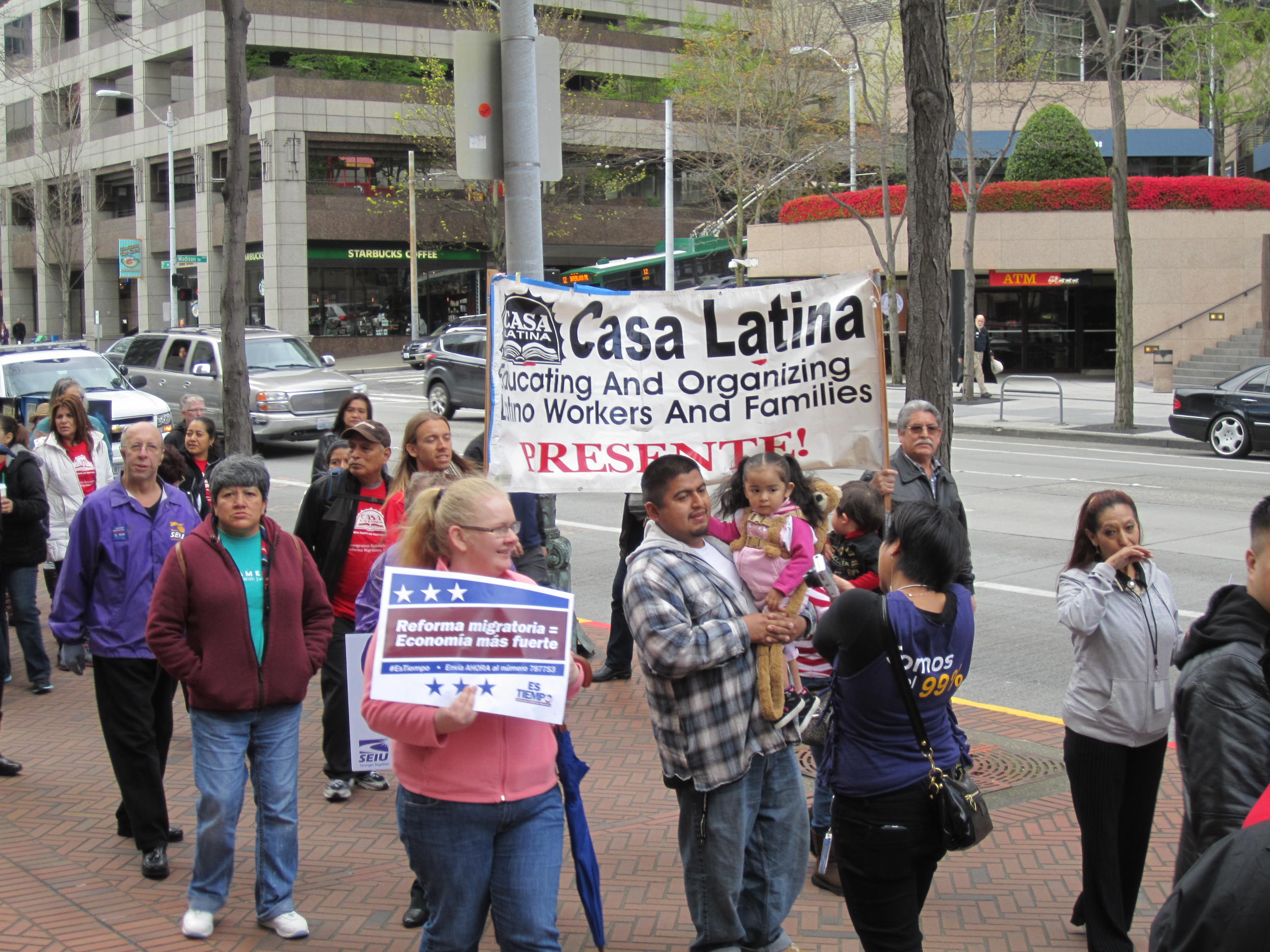
Does your church know you are here?” Before we introduced each other, this was the first question I got from a Latina activist.

ImageI was participating of a demonstration for immigration reform in Seattle. A few minutes after I arrived, I met this mother of two who was holding one of the signs and started a conversation with her. I shared that I was the pastor of a Baptist church in town. She looked at me surprised and asked the question above.

It turns out that, as this mujer activista told me, every time her organization approaches an iglesia evangélica Latina, they are turned away. She said that the most common excuse is, “Nosotros dejamos esos asuntos en manos de Dios.

Since I have been working on (mostly) Anglo congregations for most of my parish ministry, I had no idea that this was the current situation among Latino Protestant communities. (I have to say that most of the Latino congregations active on issues of immigration in Washington State are indeed Roman Catholic parishes.) It certainly pained me to hear the experience of this mujer. I assured her that my parish and indeed my denomination, the American Baptist Churches, USA support comprehensive immigration reform.

Standing by the side of this mujer y sus hij@s, holding a banner and chanting, was indeed a spiritual experience for me. How come other Latin@ evangelic@s are not praying in this way? I met Jesucristo yesterday at this demonstration. How come are there churches refusing to meet him? As the saying goes, “A Dios orando y con el mazo dando.” I cannot pray to God while at the same time sit idle to wait for the Spirit to “do” what I ought to do. In fact, I believe that the Spirit moves me to work for this! After all, I was taught that I am las manos de Dios! 

Por

J. Manny Santiago

Seattle, WA 

Leave a comment

Filed under Uncategorized