Tag Archives: Puerto Rico

Let Me Bring You To My Country This Time: Puerto Rico

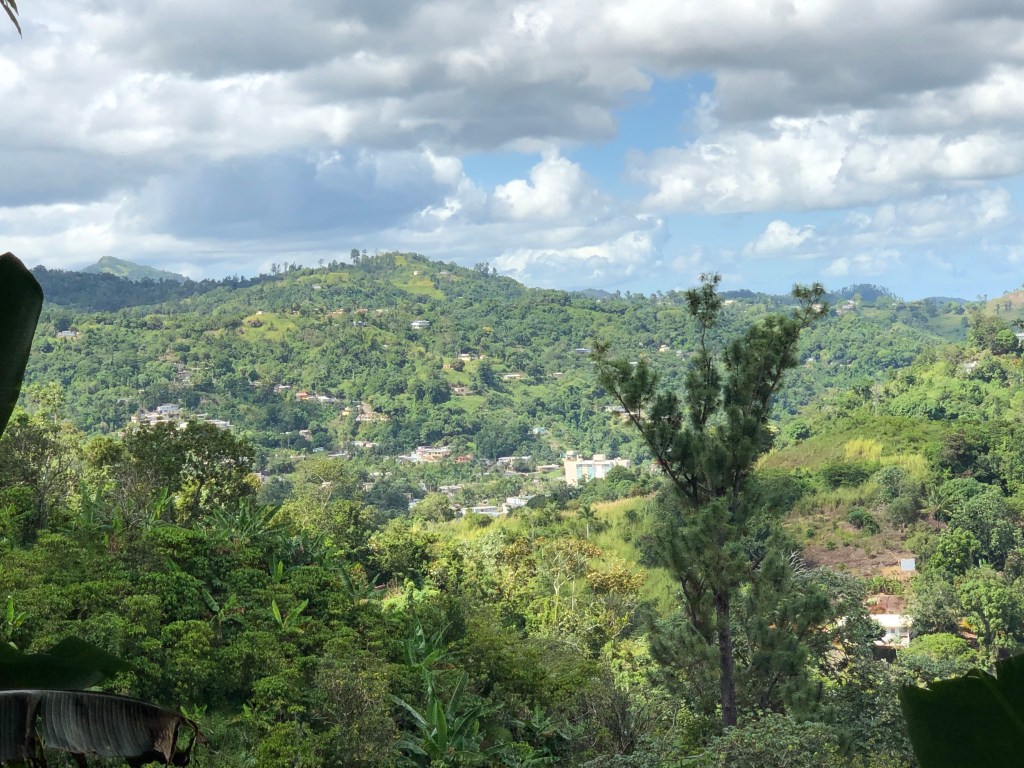
A view of my little settlement of Castañer, where I grew up, in the mountains where the municipalities of Lares (my birth town), Adjuntas (my hometown), Yauco, and Maricao meet.

I continue my journey of sharing with you all during this Hispanic Heritage Month a little bit about each Latin American country I have visited. Today, I want to invite you to come to my own home-country: Puerto Rico!

I was hoping to publish this yesterday, September 23rd, but unfortunately, as the saying goes: life happened. September 23rd is significant for many Puerto Ricans because it is the anniversary of the Lares Revolt, or as we know it, El Grito de Lares. You can read more about this event through the link embedded in the prior sentence, but here’s a short explanation.

In 1868, a group of people from Puerto Rico and Cuba were ready to raise in armed revolution against the Spanish Empire. There were coordinated efforts to overthrow the Spaniard government in both colonies, at around the same time. Unfortunately, the Spaniard government heard about the plans and things had to change. In Puerto Rico, the revolutionaries decided to go ahead with the revolt ahead of the original planned date. On September 23rd, a group from Lares, a town in the mountains of the Island, marched from the hacienda of Manuel Rojas and his family to the center of town. They proclaimed the Republic of Puerto Rico from the balcony of the Roman Catholic Church in the main plaza, and installed a temporary government. As they moved through the mountains to take on other towns and cities, the rebellion was squashed by the armed Spaniard forces, bringing to an end the dreams of a free country. Just a few years later, in 1898, when the Island was just admitted to the Kingdom of Spain as an official province, with representation in the Spanish Courts (Congress), the United States invaded and made Puerto Rico, first, a military colony, and later, an unincorporated territory. Or, in simple English: Puerto Rico is a colony of the United States.

Of course, I have my own opinions about the political realities of the Island. However, this post is about our culture, our island, and the wonderful places you can explore when you visit. If you want my opinions on the political realities, you can find some here on this blog or just by reading some of my posts elsewhere such as my social media channels.
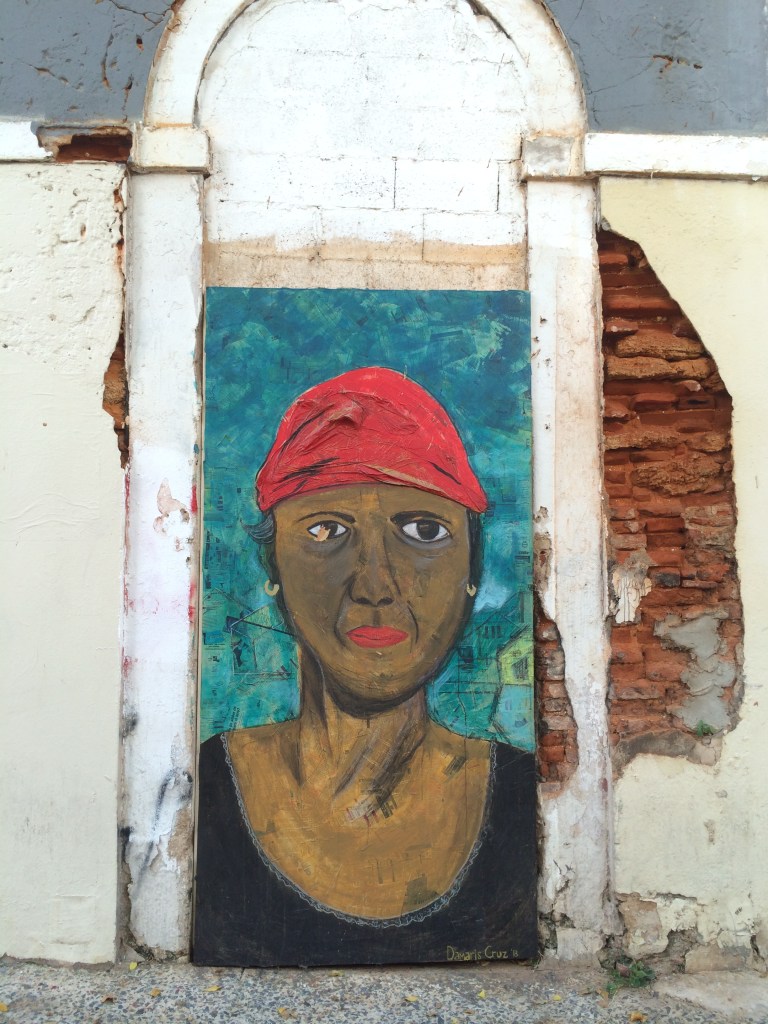
A mural honoring our African ancestors in an ancient building in Old San Juan.

With all that out of the way, here is my beautiful Puerto Rico! Almost everyone who visits the Island stays only in San Juan, the capital city. Although the city has some beautiful, important, and historical places to visit, staying only there is a huge mistake travelers make. It is especially sad when travelers only stay in the Condado area, where most hotels and tourist traps are. If you only visit Condado and Old San Juan, you might as well just stay in Miami Beach, Cancún or any of the other clones of soulless blocks of concrete make for USAmericans’ entertainment. If you want to keep reading, you will know where to experience the real Puerto Rico.

I was born in the municipality of Lares, as a matter of fact. And so was famous singer-songwriter José Feliciano of “Feliz Navidad” fame. But that’s as much as we share with each other. However, the town of Lares itself is worth visiting. Not only because it’ll give you a clear idea of how is life in the mountains, but also because of the wonderful things you can find here. Right next to the plaza there is a famous ice-cream shop where you can have some of the most famous Puerto Rican delicacies in ice-cream form. Arroz con gandules (rice with pigeon peas), coquito (a coconut based drink), rum, garlic, salted codfish, and a bunch of other familiar and unfamiliar flavors are just some of the ice-creams you can try at Heladería Lares. On the way to the town of San Sebastián from Lares, you can also see the beautiful flora of the Island, and even dip into one of the many great waterfalls on the side of the road.

I personally do not enjoy much of the eastern part of the Island. However, there is plenty to visit there. El Yunque is a rainforest that our Taíno ancestors venerated as it is the place where Yucahú, the Supreme Being, resides. El Yunque is also the natural barrier the Island has to stop the constant hurricanes that every year threaten the country. The islands of Vieques and Culebra can also be reached from the eastern side of the country. Although I am not of a beach person, I have enjoyed visiting both islands for different reasons. If the beach is your thing, Playa Flamingos in Culebra has constantly being rated as one of the top beaches in the world. A short small plane ride will take you from the mainland to either one of the Islands, as the ferries that carry passengers and cars are often out of service.

On the mainland, the town of Loíza can show you our deep connection with Mother Africa. Loíza is a town full of culture, rhythm, music, dancing, and delicious foods from our African ancestors. It is quite common to see tambores (drums) being brought out of any house, and immediately a party will start. Everyone will gather around the drums and listen carefully as they communicate with the Orishas who accompanied our ancestors from Mother Africa to the Caribbean. Bomba and plena, two of our African-inspired dances can be experienced here more often than in other parts of the Island. The area of Piñones, just west of Loíza, is a couple of miles of coastline covered with kiosks and food trucks where you can try all sorts of delicious small bites from our culinary traditions.
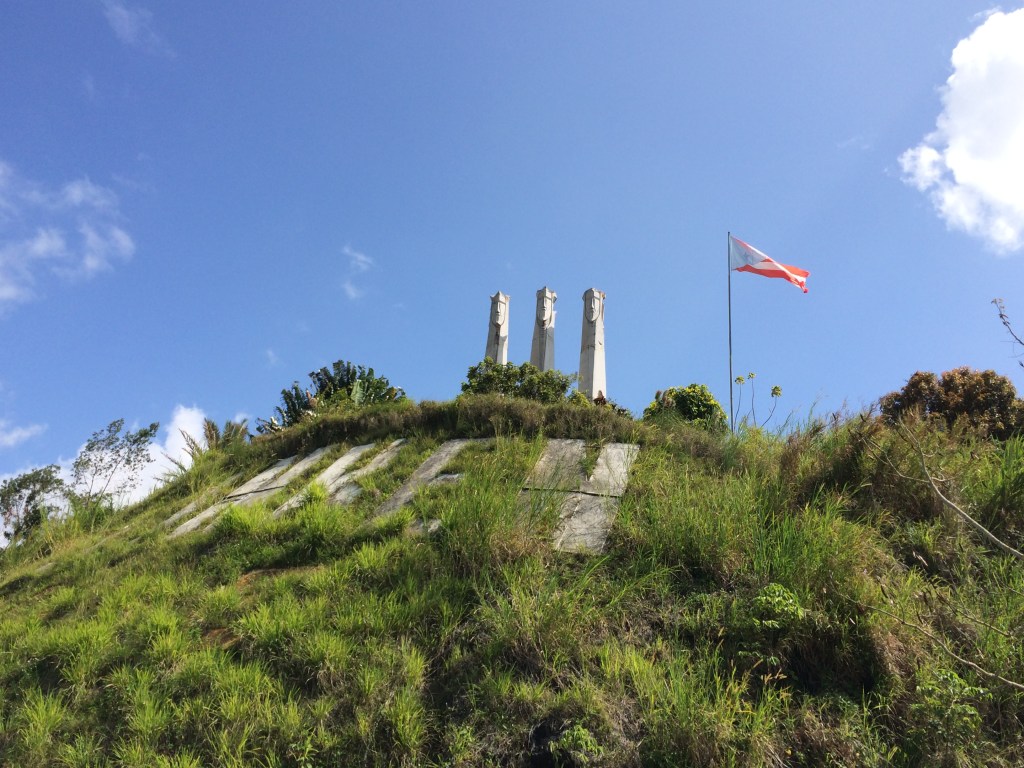
The Three Kings Hill, entrance to the Pork Highway in the town of Cayey.

On the way south through the town of Cayey, you can find what some have called the “Pork Highway.” This stretch of mountain roads is filled with roasted pork eateries. The Puerto Rican diet is based mostly on pork, and roasted pork — lechón asado — is king here. At the bottom of the road, you can find The Hill of the Three Kings, a monumental sculpture to the Wise Men — or Three Kings — from the Christian tradition, who are said to have visited the infant Jesus at his home to bring presents of gold, myrrh, and incense. Christmas is long in Puerto Rico, starting with the USAmerican holiday of Thanksgiving (the fourth Thursday of November) and running through eight days after the Feast of Epiphany on January 6th. The celebration of the Three Kings — Reyes Magos — is the biggest Christmas party in the Island. A visit during this time of the year is highly encouraged.

I was born and raised in the mountains, so this areas is very close to my heart. I already mentioned Lares, but there are so many other wonderful places to visit around the central mountains range. My hometown of Adjuntas has much to offer. Visitors can see the wonderful work of community initiatives such as Casa Pueblo, a world leader in advancing solar power for underserved communities. The organization also has other initiatives as a coffee farm, organic coffee production, a butterfly farm, and El Bosque del Pueblo, a forest that was reclaimed from the nation’s government and private hands who wanted to mine precious minerals at the expense of the rivers and creeks that run through the area. Moreover, my hometown has lakes, creeks, and rivers you can explore, and the second highest peak in the mountains, Cerro Guilarte, where you can spend a day of hiking. The municipal government also hosts a weekly folk art market at the main plaza (full disclosure, my sister is a town councilmember), and you can find the best bakery goods at a bakery on one side of the plaza while the best pizza in town on the other side. OK, I know I have spent a lot of time here, but I know and love my town, so I had to give it a bit more shout outs!

There are other wonderful places to visit throughout the mountains. Aibonito has the Festival of Flowers. For those who are religious, Maricao has a shrine to the Virgin Mary that is very well known. Las Marías hosts the annual Festival of the Sweet Orange. Jayuya has the highest point in the mountain range, Cerro Punta, the Museum of the Cemí showing indigenous artifacts, and you can hike down to a river with a pretty well preserved collection of indigenous petroglyphs carved into a big boulder known as Piedra Escrita (Written Boulder.)

La Cruceta del Vigía, Ponce, from which you can see the whole city and some of the islands off the southern coast of the country.

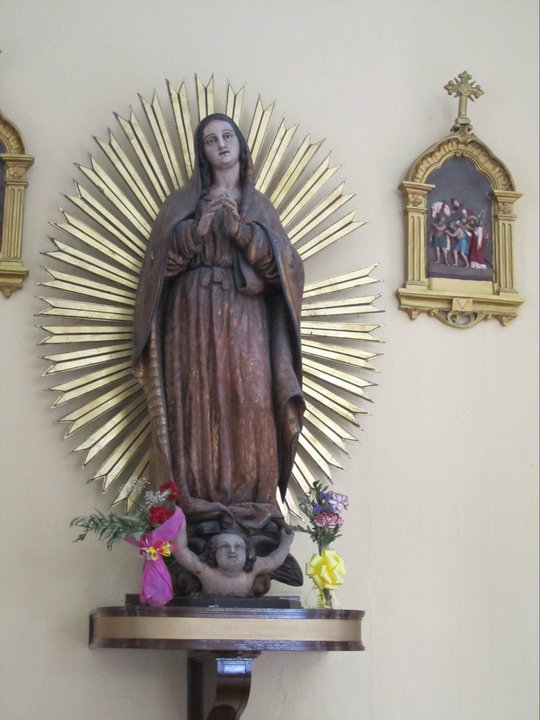
In the south, the city of Ponce offers from much to visitors. The area of Serrallés Castle has the aforementioned “castle” — in reality, a huge mansion for the Serrallés family, who were early rum producers –, a Japanese Garden, and the Cruceta del Vigía, a lookout where you can catch a pretty impressive sight of the whole area all the way to some of the islands off the southern coast. The main plaza is also worth visiting. You can shop around the downtown area for folk art as well as for guayaberas, our traditional male shirts. The historic Fire Station is a jewel in the middle of the city. The Roman Catholic Cathedral of Our Lady of Guadalupe displays an ancient icon of this advocation of the Virgin Mary that comes from the town of Guadalupe in Murcia, Spain, from which the Mexican advocation takes its name and likeness. (Yes, the Virgin of Guadalupe comes from Spain. The story of the Mexican apparition is much later, and the advocation comes because the bishop who heard San Juan Diego first, saw in the image a Virgin that reminded him of his hometown.) The Museum of Art of Ponce is another jewel in the south, with the largest collection of art in all of the Caribbean. Still in the southern part, you can visit the beaches in Guánica, while also walking along the boardwalk right on the bay where the USA soldiers invaded the island. In Lajas you can visit, stay, and certainly eat, at La Parguera, a great beach neighborhood with a long history of fishing and community development. It is here also where you can witness the wonders of nature in their bioluminescent waters. If you are lucky enough to be there in a new moon night, you can take a boat to the area where these microorganisms make the dark waters look bright blue with their light.
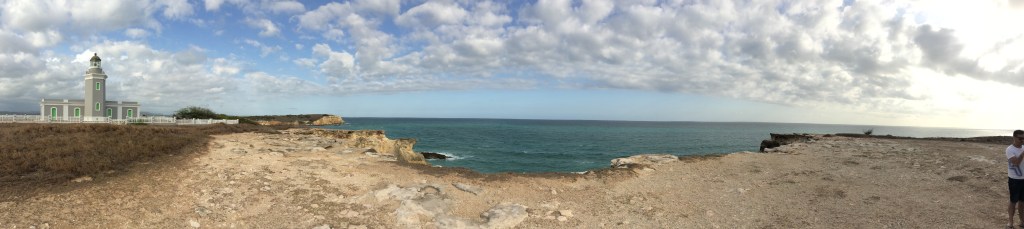
The lighthouse, cliffs, and beach in Cabo Rojo.

The western part has the town of San Germán, which is deemed the “Mother of Towns”, as it was from here that most of the south, central, and western towns and cities were established. There you can also walk through ancient stone roads, and look at colonial architecture still used today. The Porta Coeli, an important museum of religious art, is located here, as well as the oldest private, religious university in the Island, the Inter American University, which is affiliated with the Presbyterian Church, USA. Cabo Rojo is another beach town. As I said, I am not big on beaches, but Cabo Rojo has the only beach I actually like: Playa Sucia or La Playuela. To get there, you will drive through the salinas, a natural pool of salt water where salt is harvested, and which sometimes looks pink because of the microorganisms that overgrow here during certain times of the year. The cliffs by the old lighthouse are worth visiting, but with plenty of caution as many people have dater nature here, which is never a good idea. Mayagüez is the largest town in the western part. I had the chance to live here while in boarding school in high school, and college. The second largest campus of the University of Puerto Rico is here. The center of the town offers lost of entertainments yearlong, but Christmas is probably the best time of the year to visit Mayagüez. There are always parties on the main plaza, and lots of bars and restaurants offering live music — usually with local artists who might be students at the local UPR campus –, theater productions you can catch at the majestic Yagüez Theater. Rincón, a beach town next to Mayagüez, attracts amateur and professional surfers from throughout the world. The town just recently remodeled the park around the lighthouse, and you can come here to spend a relaxing time, dance to the live music, and catch a sight of the whales that come to this area every year.
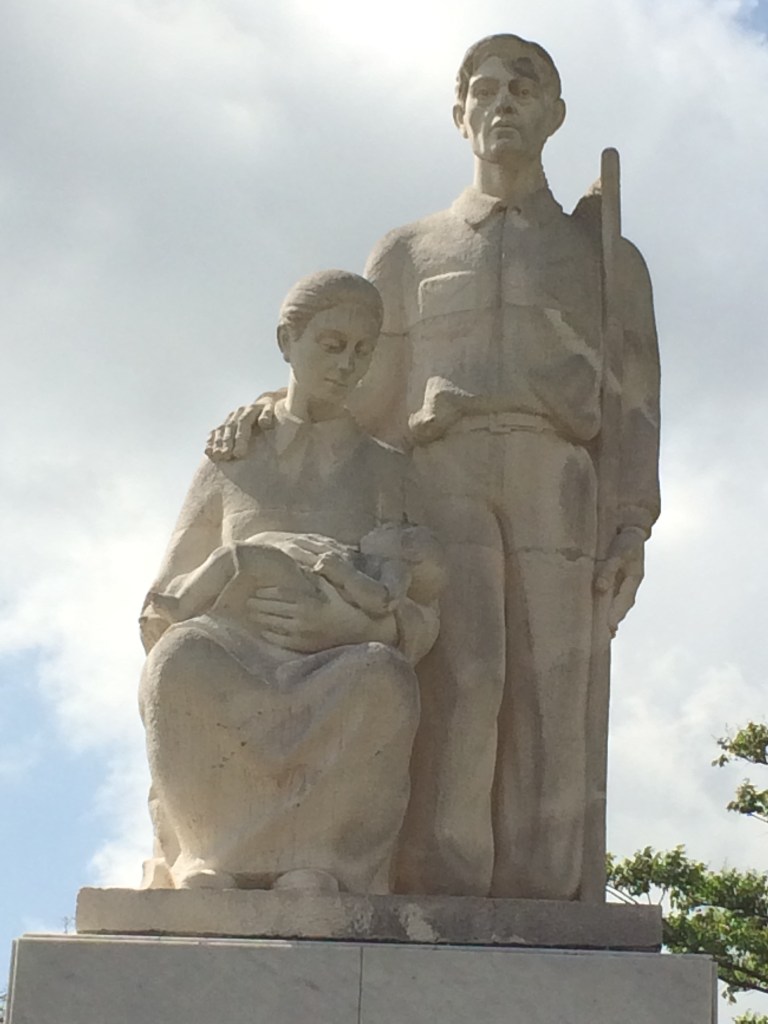
The National Monument to El Jíbaro. The jíbaro refers to people from the mountains, usually laborers, who toil the land, work hard, value cooperation and community, and keep a humble semblance. Many urbanites rejected the jíbaro, and some still look down at us. I am proud to come from this culture and these people, and forever will be proud to be a jíbaro myself.

As you drive north, the cities and towns of Aguadilla, Isabela, and Quebradillas offer pristine beaches and a relaxing atmosphere. In Quebradillas you can also find the ruins of the old train that crisscrossed the Island. In the area of Guajataca, the old tunnel offers a pretty cool experience of stepping into history as you walk through it.

These are just some of my favorite places to visit in my Island! Of course, I had to leave so much more, which is equally beautiful. There are haciendas, and parks, and caves, and mountains to hike, and foods to try, and festivals to attend. As you can read, if your visit to the Island only consisted on staying in San Juan, you missed 99% of what makes Puerto Rico, the Enchanted Island of the Caribbean.
Leave a comment

Filed under Afro-Boricua, Afro-Latino, cultural celebrations, Culture, Español, ethnicity, Heritage, Hispanic Heritage Month, Hispanics, Hispanidad, Hispanos, History, Home, Humanity, Identidad, Identity, Latin America, Latinidad, Latino, Puerto Rico, resistance, Sociology, tradiciones, traditions

Christmas Memories in Exile

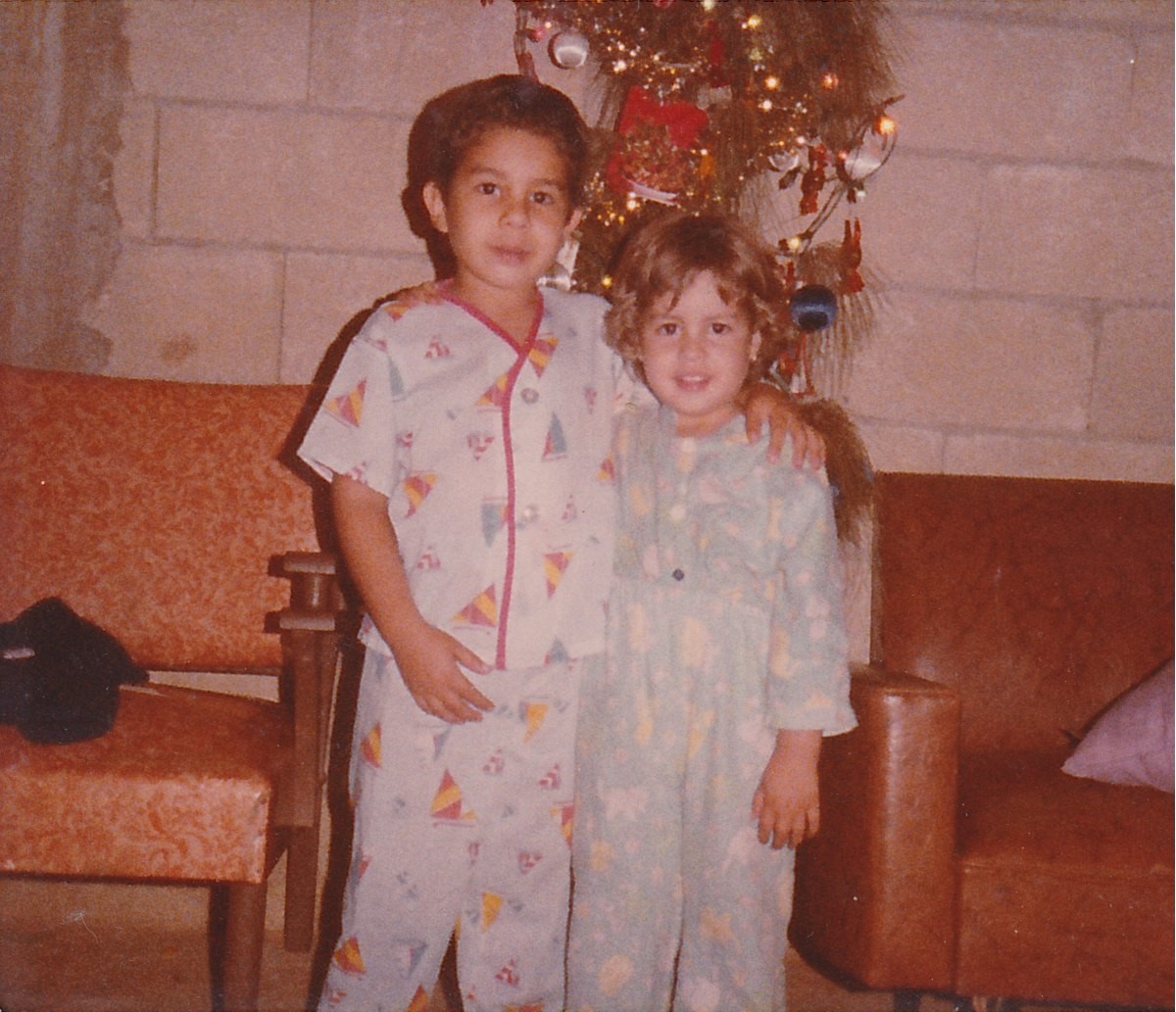
I remember a picture the other day. It was a picture with my sister and I, in front of a Christmas tree. I couldn’t remember what we were wearing, but I do remember that it was taken in the house we grew up in. It was taken many Christmases ago.

When you move as much as I have, memories are all you have left when important dates come up. Living away from the place you consider home means that you always carry with you the memories of special dates. Christmas in particular is a difficult time for me. I grew up in the mountains of Puerto Rico, where the weather this time of the year is cold, but not freezing cold as it is where I live now. The holiday music is festive, cheerful, loud, at a fast tempo, and is everywhere. Caribbean sounds fill up the air; not the slow, often dark, and to me, sad songs with northern European origins. Christmas music for me is drums and guitars, is tambourine and maracas, is güiro and cuatro. Parrandas fill the nights with music as people gather late at night and go throughout their neighborhoods signing traditional music from house to house. All homes are always ready for parrandas. There’s always food: hot chocolate, crackers, guava paste, queso de hoja (a type of homemade white cheese), and of course, the last home that is visited must prepare an “asopao”, or soupy rice with either chicken or pigeon peas.

Our Christmas tree at home was always humble. I still remember the year when my dad decided to just take a coffee tree and wrap its branches with aluminum foil. We placed lights and ornaments and it’s still the most beautiful Christmas tree I had ever had. The tree on the picture I remember was humble as well. We had gone to my grandfather’s farm and cut a pine tree. It did not have the aroma of the fir trees or the spruce trees, but it was beautiful in its humbleness. We put garlands and ornaments and musical lights on it. The tree would not have presents. Ever. Presents were not to be placed under the tree or given on Christmas Eve or Christmas Day. We had to wait until Epiphany, the Feast of the Wise Men, on January 6th. The day before my sister and I would gather some grass for the camels, place it on empty shoe boxes, and place those under our beds. The Three Kings will leave present then… and we will have a week or two to play with them before going back to school.

When you live in exile, or away from home in any form, these memories are all you have. You remember the holiday, and the music, and the presents, and the food, and the family time. You remember that nothing will go back to what it was. You remember that life goes on and you must adapt.

I found the picture among my things. My sister and I are wearing pajamas. The Christmas tree looks as beautiful as I remember. It brought back all the memories of Christmas past, in the mountains of Castañer, waiting for parrandas and for the music. It is Navidad; it is home.

IMG_0002

Leave a comment

Filed under Christmas, Culture, ethnicity, familia, History, Identidad, Identity, Latino, Navidad, niña, niñez, niño, Puerto Rico, Recuerdos, tradiciones, Uncategorized

La mata de guineo que resistió

Hace casi un mes el huracán María destrozó mi país. Por una semana estuve sin ningún tipo de comunicación con mi familia. Hasta el momento, la comunicación es esporádica, puesto que la infrastructura está dañada y mi familia vive en la zona rural de las montañas, donde la ayuda llega tarde – si es que llega algún día.

Hace unos días, le pedí a mi hermana que me enviara fotos para ver cómo quedó todo después del huracán. Cuando vi las fotos, hubo una que atrajo mi atención. En medio de una finca con casi todos los árboles y plantas en el piso, se mantiene de pie una mata de guineo, todavía cargando el racimo lleno de fruta. Esta planta resistió; no hubo fuerza de viento que pudiera doblar a esta mata de guineo. IMG_3712

Desde que pasó el huracán, mi gente puertorriqueña ha proclamado que #PuertoRicoSeLevanta. La capacidad de recuperación de mi gente es maravillosa. Con esto no quiero decir que no se sufra y se sienta el dolor de la pérdida. Por el contrario, se siente todo el dolor y todos lo sentimientos de haber perdido lo que se tenía y que con tanto sacrificio se había logrado. Pero al mismo tiempo, podemos ver cómo la valentía del pueblo hará que poco a poco se reconstruya el país. El pueblo sigue de pie, aunque todo a nuestro alrededor haya sido tumbado por el huracán.

Fue precisamente esto lo que pude ver en esta mata de guineo que resistió: el espíritu del pueblo tenaz, que resiste cargando su historia y su razón de ser. Esta planta representa para mí al pueblo que no tiene porqué levantarse porque es que nunca lo tumbaron.

Leave a comment

Filed under Huricaine, Puerto Rico

The Lazy Spic

10400503_18166125619_9115_nYesterday I worked a twelve-hour workday. The day before I had worked for thirteen hours straight. The day before was nine hours. I had taken exactly two days off in four months since I started my new job. I have worked on weekends and even when I have given my staff a day off, I have gone to the office or worked from home to finish a project or start a new one. My staff is always supportive and they have, on more than one occasion, asked me to take it slow, to pace down, and even encouraged me to take a day off. The Board of Directors of my organization expects me to work hard, but they have also encouraged me to practice self-care, to take time off, and to work at a healthy pace. I can show you emails, texts, and social media messages I have gotten from staff and Board members encouraging me and reminding me of practicing self-care. Yet, I continue to work.
Why do I do this? Sure, I love what I do. I thoroughly enjoy administration, management, strategic planning, and all that comes with this. But there’s a second, equally important reason why I work so much… and it is not because I am a workaholic.

The first new world in learned when I moved to New York City in 2000 was “spic.” There was a definition attached to this term. The spic is a lazy person; they live off of government handouts, they despise work, they are irresponsible, the have moved in droves to New York City and had made the space less livable, less desirable, less safe. The spic didn’t speak English and didn’t want to assimilate to the evidently superior “American” culture.

People – especially USAmericans – have been enraged with President Trump’s comments about how Puerto Ricans have not done enough to help ourselves in light of the major natural disaster we have just experienced. For Trump, we are lazy people who do not want to work collaboratively. This is what he was taught about our community in the New York City of his early childhood. For the USAmerican public, for the most part, these are atrocious accusations. For the Puerto Rican community, these are just the same comments we’ve been hearing since our community started migrating to the mainland in the 1950s.

Although I commend and welcome the rage that Trump’s comments have sparked among my USAmerican friends, you must understand that his comments are not made in a vacuum. Trump is talking about the lazy spic that I have been told I am.

As a Puerto Rican living in exile, you are taught that you are part of a group of people who are, at once, “job stealers” and “lazy people.” How is it possible that we steal “American” jobs and don’t work enough at the same time, I have no idea.

Perhaps for many of you it was a surprise that the President of the United States depicted the people of Puerto Rico as lazy people who do not help ourselves. However, this is what we have heard as a community since the 1950s when our people started migrating in droves to the USA due to the economic realities of the Island cause, precisely, by the USA’s policies towards its colonies. It is this message the one that is still ingrained in my head, to the point that I work and work and work, lest someone accuse me of being lazy and not doing enough.

This is not something I am making up. Neither is this something that happened a while ago and certainly not in so-called “progressive” spaces. On the contrary. This thinking that Puerto Ricans, and Latino people in general, are lazy is still alive. Take, for instance, what happened to me for four years while I served a progressive congregation in one of the most so-called progressive cities in the USA. A woman who self-appointed as the leader of the church would call my office at random hours of the day, just to check that I was there, just to make sure I had come to the office that day. She wouldn’t want to talk to me. She just wanted to make sure that I was there. Her excuse was that she had heard I had not been active in the community, or doing enough home visits to the folk in the congregation. She used her self-appointed status as a leader of the church to let me know that “there were concerns” in the church that I wasn’t being effective. Of course, like any good oppressor, she couldn’t notice the flaw in her argument: I had to be in the office so I could demonstrate that I was doing my job of being in the community and visiting folk.

When you are confronted with this reality every day, you learn to navigate the system. You know that you must be perfect, perform beyond what people’s perceptions of your abilities are, and work twice as hard as anybody else. No wonder the great Nuyorican poet Pedro Pietri wrote about our community:

They worked
They were always on time
They were never late
They never spoke back
when they were insulted
They worked
They never took days off
that were not on the calendar
They never went on strike

without permission
They worked
ten days a week
and were only paid for five
They worked
They worked
They worked
and they died
They died broke
They died owing
They died never knowing
what the front entrance
of the first national city bank looks like

Juan
Miguel
Milagros
Olga
Manuel
All died yesterday today
and will die again tomorrow…[1]

[1] Pedro Pietri, Puerto Rican Obituary, 1969

1 Comment

Filed under Culture, ethnicity, Heritage, Hispanics, Hispanos, Human Rights, Identity, justice, Puerto Rico, race, racism, resistance, Sociology, United States, USA

Después del Huracán

ebb60db07e3f8f1493c405ca43b96ba6

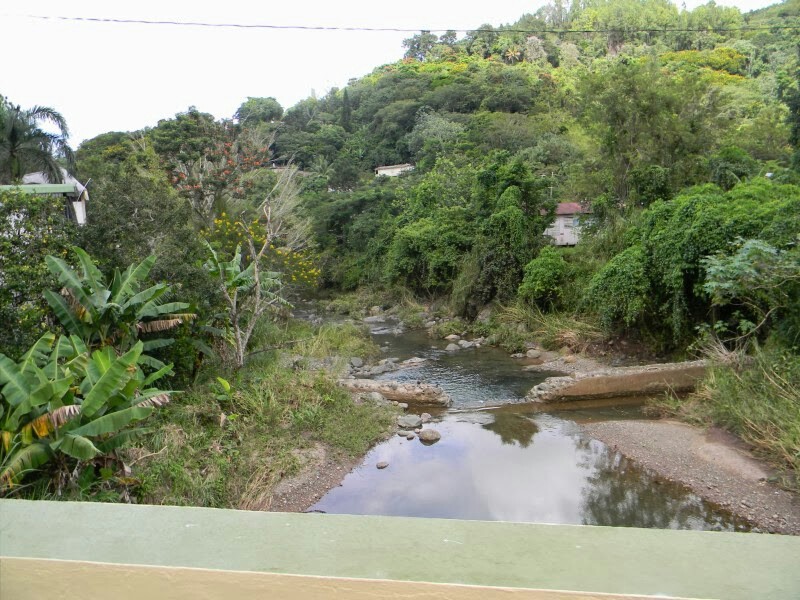
Mi abuela Margot y mi abuelo Quino vivían justo frente al Río Guayo. El puente que une a la municipalidad de Adjuntas con la municipalidad de Lares está justo frente al que fuera su hogar. Era en este río en el que nos bañábamos en el verano. Cuando pasaba el huracán, era en este río donde nos hacíamos más familia y más comunidad.

Dice el dicho que después de la tormenta, viene la calma. Esto es quizás así; pero después de la tormenta también vienen los desafíos de cómo vivir sin las necesidades básicas a las que nos hemos acostumbrado. Después de la tormenta también vienen los días sin luz, sin agua, con comida limitada… vienen los días largos sin saber cuánto tiempo será antes de que la vida vuelva a la normalidad. Después de la tormenta viene el resuelve, como le llamamos en mi pueblo.

No es secreto que cada vez que hace un viento fuerte, la frágil infraestructura de Puerto Rico sufre. En mi barrio, digo yo que cada vez que alguien destornuda duro, la luz se va. El agua potable también es un reto. Esa viene cada dos días; a veces un poco menos seguida. Prácticamente casa cuenta con sus tanques de agua para recolectarla cuando está disponible y así mantener el suministro cuando se vuelva a ir. Cuando chiquito, teníamos acceso a una quebrada de la cual sacábamos agua para tomar. El agua para uso diario la traíamos también de allí, pero por tubos y con bomba que mi papá instaló. Había conexión al sistema de la AAA , pero no dependíamos de ella para abastecernos de agua.

Recuerdo que después de los huracanes, cuando tanto la luz como el agua se iban por semanas, trasladábamos algunas de nuestras rutinas diarias al Río Guayo. Allí, debajo del puente que une a Adjuntas con Lares, un grupo de mujeres – la mayoría de mi familia – sacaba barras de jabones, paletas, cestos y tablas para lavar ropa. Sentadas en piedras o en banquitos que sus maridos le hacían, las mujeres comenzaban a lavar las ropas de sus familias. Con cada estrujada de ropa, con cada movimiento de limpieza, comenzaban los chistes, las carcajadas, las noticias del día y los chismes de barrio. Con cada pieza lavada, se enteraba uno de los planes para las comidas comunitarias de más tarde, de las posibilidades de que la luz y el agua llegaran más tarde de lo esperado, o de dónde ya estaban vendiendo pan caliente…

La niñez recorría el puente y nos tirábamos al río. Las madres nos gritaban que nos quedáramos quietos porque algo nos podía pasar. Algún niño o alguna niña, siempre, nos arruinaba el día cayéndose entre las piedras y abriéndose alguna herida. En ese momento se paraban todas las actividades para darle consuelo primero y un buen regaño después – o quizás era al revés, no recuerdo – al niño o la niña lastimada.

Los maridos, mientras las mujeres limpiaban las ropas, se iban a seguir limpiando los caminos. Vivir en el campo significa dos cosas: siempre hay mucho árbol en la carretera cuando pasa una tormenta, y los caminos no han sido construidos de la mejor manera así que siempre estarán en necesidad de reparación. Recuerdo que mi papá se llevaba la guagua pick-up, su machete, su sierra y cualquier otra herramienta que fuera útil, coordinaba con otros y se iban por caminos que sabían que los gobiernos municipales y estatales no les darían atención. Así era como comenzaban a ayudar a que los vecinos se conectaran. Después del huracán, la comunidad se juntaba para levantarse.

En algún momento del día, cuando ya las ropas estaban limpias, se reunían las mujeres para cocinar. Las ollas eran de tamaño enorme, como para alimentar a un ejército. Se cocinaba lo que hubiese: arroz, habichuelas, gandules, bruquenas del río, chopas del lago, pollos, puerco, guineos, ñames, yahutía, malanga, chayotes, plátanos, huevos… En fin, lo que hubiese por allí se hacía de comida para todos y todas. Después de la comida salían las sillas y las mesas, el juego de dominó estaba listo. Esta era la parte favorita de mi abuela paterna: el juego de dominó. No había en todo Castañer una persona más fanática del dominó que mi abuela Margot. Sus hijos e hijas le temían en la mesa. Ninguna o ninguno la querían tener como pareja de juego, porque si perdías la mano de dominó, ella te desheredaba. ¡Doña Margot no jugaba con su dominó! Abuela gritaba, se emocionaba, se vivía el juego desde el comienzo. Verla jugar dominó con una estrategia nítida, desarrollada por años de devoción a su juego favorito, era toda una experiencia.

Para mí, de niño, el tiempo después del huracán era más como una película de acción y de aventura. Era el tiempo en que la familia y la comunidad se unían. Era el tiempo de jugar debajo del puente del Río Guayo y comer en familia. Era el tiempo de ver las estrellas en el cielo al final del día, cuando se abría el firmamento y se iluminaba el cielo raso con un millón de estrellitas que nos recordaban tanto la fuerza de la naturaleza como el tesón de un pueblo que se levanta su dolor para alcanzarlas.

Leave a comment

Filed under familia, Heritage, Hispanics, Hispanos, Huricaine, Identidad, Identity, Latino, Puerto Rico, Recuerdos, tradiciones

While Waiting for News of My Family After Hurricane Maria

69735502People have asked me how I’ve been able to function these past few days. It has not been easy. My parents, sister, and I had been estranged for years. When I was diagnosed with cancer, they reached out. My husband and I visited with them for the first time on December 25th for their Christmas party. We’ve been in communication ever since.
As the hurricane approached, we stayed in communication through text. Then I called a few days before to check up on them. My mom was calmed and not too worried. Cellphone signal had came back just the day before I called. They still had no power in the neighborhood, but the water was back. They were prepared; they had water, food, fuel, and an electric plant. My sister – who works for the Department of the Family of the Commonwealth – had visited a shelter and checked up on her clients. They were ready to face the hurricane. The last I heard from my mom was a reply to my text saying: “yes, I am calmed.”

Those are the last few words I have from my family. I have not heard from them yet.

I have read news reports that tell me my neighborhood is fine and that there are no registered deaths in my hometown as of today. I read about the efforts to clear the roads and make sure that people have access to larger towns to get supplies. But there are no ways to get in touch with the outside world. How does the word go out about what’s happening? People from the metro area in San Juan who have family in Adjuntas go down to check up on them and then share what they had seen and heard on social media as the limited access to cellphone coverage allows them to.

But now going back to the question: How have I been able to function?

I have compartmentalized my self. Having to communicate in English helps. It is not my language. It is not my soul. It is not what connects me emotionally to the world. I focused on the tasks. I focused on the routine (of not having a routine), and pay attention only to the work in front of me. I have the news in the background and read the texts and news that I get constantly. But those are in español, those do not belong to the workplace. Those belong to mí.

I have compartmentalized my life in the past few days. Sure, I have shared news with coworkers and friends who ask. I have even shed a tear or two while doing so. I have tried to perform what is asked of me by the US society: calmness, be collected, show little emotion when talking about such things, etc. Like always, I have learned how to perform according to the social rules of the social mores of the society I live in. I have completely disconnected myself from all, creating walls that separate the mí from the me.

When I am home, or when I am speaking with a close friend, or when I am alone in my office and listening to the news, I cry. I let it all go and finally feel mí.

I know that my family is fine. Something within me tells me so. I also know that it will be probably weeks before I hear from them. I, too, am from those areas in the world where nobody cares about you; where the government has nothing to gain but votes every so often, where “charities” have no good faces or locations for photo-ops. I am from the place where the only thing that helps us is ourselves: the community who stands up, puts on their boots, picks up their machetes, brave the remainder rain and winds, and goes out to join one by one as they clear paths and help restore their comunidad. That resiliency is what helps me function. I am a jíbaro, and jíbaros don’t give up.

Leave a comment

Filed under Español, ethnicity, familia, Heritage, Hispanics, Hispanos, Huricaine, Identidad, Identity, Latino, Puerto Rico

How Mary of Nazareth Helped Me Regain My Faith

“Caridad, Guadalupe, and novenas are not part

of my more immediate tradition.

Yet they are part of my culture.

Does that mean that,

like my native ancestors five centuries ago

when faced by the initial Catholic ‘evangelization,’

I must renounce my cultural heritage

in order to affirm my Christianity?

I do not believe so.”

Dr. Justo González, theologian


268913_10150368732015620_6162879_n

Original icon of Our Lady of Guadalupe in Ponce, Puerto Rico. This icon came from the town of Guadalupe, Spain, and has been venerated in the Island for years before the Mexican manifestation of the Virgin of Guadalupe was revealed. 

The Mother of God. The Queen of Angels. The Star of the Seas. Help of the Afflicted. Mystical Rose. Refuge of Sinners. All these and more are devotional titles for Mary, the mother of Jesus of Nazareth. She is not very prominent in the gospel stories, and is very much absent from the rest of the New Testament writings. Yet, for millions of Christians around the world, Mary of Nazareth is a central figure in their spiritual lives. Her image is present in the iconography of Roman Catholic, Eastern Orthodox, Ethiopian Orthodox, Anglican, Coptic and many other Christian traditions. Her image is even utilized by syncretic traditions such as Santería, Candomblé and sometimes Folkloric Spiritism. However, for those of us who grew up mainline Protestants – especially those of us who grew up in Africa, Asia or Latin America – the mere thought of having an image of the Virgin Mother was cringe-worthy.

My religious background is a bit confusing. I often say, for simplicity’s sake, that I grew up Protestant. But, like everything in life, the reality is a bit more complicated. My father was raised in the Northern Baptist Convention (now the American Baptist Churches, USA). My mother, on the other hand, was raised in the Kardesian Spiritist household[1]. Although, by the time that my sister and I were born neither one of our parents were practicing their respective faith traditions. By default, we were “Christians”, but no last-name was attached to it. However, there is something that has followed me since my birth.

I was born a few days after the due date. Usually this is not that big of a concern. However, in my case, when I was born I could not breath and the doctors weren’t sure if I was going to survive. As my mother tells the story, she was eagerly awaiting to welcome her firstborn, but the nurses kept mumbling and didn’t bring the kid to her. After several hours, the doctor approached my mom to let her know that I was in critical condition and they could not bring me to her side. Her first glimpse of my face was through the glass window of the maternity ward in the hospital. In addition, she became ill with a cold, and due to my delicate state, she was discharged without even being able to hold me while the doctors kept me in the hospital for almost a month. When I was discharged and due to my mom’s illness, the doctor indicated not to nurse me as I was still too frail to be exposed to any possible infection. While I was in the hospital my mom did what many parents in religious countries would do: she brought my first pair of shoes – the ones that I had never had the chance to wear – to be deposited at the feet of the Blessed Virgin Mary. This took place at the Shrine of the Virgin of the Rosary in the town of Sabana Grande in Puerto Rico. There, my mom asked the Blessed Mother to look after her firstborn and, as many mothers both from the Bible and beyond have done, she promised God and the Virgin that I would be their servant forever.

I kind of “blame” my mother’s actions for the fact that I am an ordained minister today. Without my consent, she already made the decision for me. But that’s something for another time.

Often times my parents would send me – who was always very interested in spiritual matters and in religion in general – to the Roman Catholic Church in my hometown, the parish of Our Lady of the Miraculous Medal in Castañer, Puerto Rico. Often times, these visits to Sunday Mass were with our neighbors as my parents would not necessarily come with us. I do have some memories of these visits. I also remember visiting my maternal grandfather’s séance on Sunday afternoons and seeing my grandpa lead the community in worship as their Medium. Every now and then we would also visit a home prayer meeting at my paternal grandparents’ home with the Baptist community. And thus, my religious upbringing had a little bit of three “flavors” of experiencing Christianity: Roman Catholic, Protestant and syncretic.

Around age 10 or 11 and after having been invited to a Vacation Bible School at the Baptist congregation in my neighborhood of Yahuecas in Adjuntas, Puerto Rico, I started to regularly attend Sunday services with my sister. This went on for some time until my mom started coming with us and eventually my dad joined us. Later, the whole family was involved in the life of the church and we were all baptized (or in the case of my dad, re-baptized) in that congregation.

Upon my entering in the Baptist tradition, I learned about the Protestant’s rejection of images, idols and icons for worship. I was taught to reject these as useless items that distracted us from worshiping the true God who is neither wood nor plaster but Spirit. I was taught to memorize every Bible verse that warned against the use of idols or images or anything similar in worship. Moreover, I was taught that those who used idols in worship were really worshiping the Devil, without even knowing it. What I learned was that they were kneeling before idols and not before the true God as it was instructed in Scriptures.

Fast-forward several years. I have entered seminary with the intention of pursuing ordination in a mainline Protestant tradition. Although I was not quite sure whether that tradition would be the one in which I grew up, the American Baptist denomination.

Before seminary, a friend who had served as a Presbyterian minister and was now entering the Episcopal Church, introduced me to the wonders of the liturgical world. For the first time, I had the chance to actually understand the history, the meaning, the power of images and icons and movements and sounds and smells in the life of the Church. In addition, while in seminary, I met another friend from the Roman Catholic tradition. During a conversation with him I asked why he, being so progressive in his theology, was still so tied to the Roman Catholic Church. His response moved me. He said: “One of the things that keeps me in the Church is the thought that, for generations, and even today, at every single time of the day, there is a community reciting the same prayers, making the same gestures, saying the same words that I will say when I enter Mass. We are united in prayer; not only in our daily lives and with the people from our parish, but with our sisters and brothers from around the world, and with the saints that came before us and the saints that will come after us.” That statement made me change my understanding of liturgy forever.

But, there was still the fact that I grew up believing that icons and images were contrary to God’s wish for us. All these experiences and so much contradiction made me come to what I thought would be a final conclusion: there is no god. I started thinking of myself as an atheist. Sure, one that was trained in theology and who served the Church, but an atheist nonetheless.

Some time passed. I continued to struggle with my faith and with the idea of God. I went back to wise words that had been shared with me about my faith needed to be mine and not the one I had inherited from others. I read again some of the theological classics and other contemporary writings. I continued my discernment and my journey, without knowing where it would take me, but sure that I was in this wilderness because there was something, or someone, waiting for me.

My return to the faith happened thanks to Mary. Or rather, thanks to María.

In the Latino culture, María, José, Juan, Jesús are common names. (In fact, my given name is Juan!) As I became more and more involved in activism on behalf of my Latino community and as I traveled throughout Latin America sharing time with communities in both rural and urban areas, I started to notice the faces of my people. I notices the Marías, and the Juans, and the Jesúses, and the Josés… Then, I noticed the face of God in María. Often a single mother. Often poor. Perhaps a tortilla vendor or a farmer. Sometimes a beggar on the streets. Other times she was carrying her grandkids as her own children had left for El Norte in search of a better life for those they left behind. Back home in the USA, I say her carrying signs and marching for the rights of the undocumented community. I noticed her carrying her children and cooking me a meal while I visited with them. I noticed María fighting to get access to education while holding two or three part-time jobs to support her parents who barely spoke English. I started noticing María everywhere.

I went back to some of my books. There, I read about how La Virgen Morena, Our Lady of Guadalupe, had returned their humanity to a whole indigenous community in the hills of Tepeyac. There she was, dark-skinned like the indigenous man I had fallen in love with. She was on the banners of those who fought for liberation and freedom. She had welcomed the throngs of immigrants who desperately crossed more than one border to get here. She had welcomed them with open arms in churches and shelters throughout their journey. La Virgen had walked with these people, my people, and had never left them – us – alone. In this journey of doubt and rejection of faith that I had, she was also there, just patiently waiting for me.

Two experiences had transformed my faith thanks to an encounter with La Virgen. The first one was when I stood in front of the altar to Nuestra Señora de la Caridad del Cobre (Our Lady of Charity) in El Cobre, Cuba. There she was, carrying the baby Jesus on her arms, assuring him that all will be well. Her yellow dress reminding the many pilgrims that approach her altar that she was also the embodiment of Ochún, the Yoruba Orisha that traveled with the African slaves to the Américas. I was there, standing in awe before that powerful woman who never left her children alone as they were made to cross the ocean to be enslaved and stripped of their humanity. She journeyed with them and there she was, still standing proud and valiant.

The second experience was when I stood in front of Nuestra Señora de Guadalupe in her shrine in México. I stood in awe, as I saw the dark-skinned, pregnant, indigenous Virgen welcoming us. She looked at us. She saw us. She knew us. There she was, blessing our relationship and our bond of love. I, the descendant of oppressors who massacred the children of the Morenita, standing next to one of her children, dark-skinned and indigenous, like her. She smiled at us. She forgave me. She welcomed me. La Morenita let me know that I, too, was one of her children.

I continue having doubts, of course. I also continue searching for answers that may never come. But at the end, I know that in my wilderness, Our Mother was waiting for me to come home. As I look at the Mother of God, I want to believe that, if such a loving, powerful, inspiring, courageous woman is the route to know Christ and God, I am more than happy to follow her.

—-

[1] For more information about Kardecian Spiritism, you can visit the following site: http://www.spiritist.com/archives/1862

Leave a comment

Filed under Church, Culture, Dios, ethnicity, Heritage, Hispanics, Hispanos, History, Identidad, Identity, iglesia, Latino, Puerto Rico, race, Teología, Theology, tradiciones, worship

Vigil For LGBTQ Orlando Victims — Vigilia por las víctimas LGBTQ de Orlando

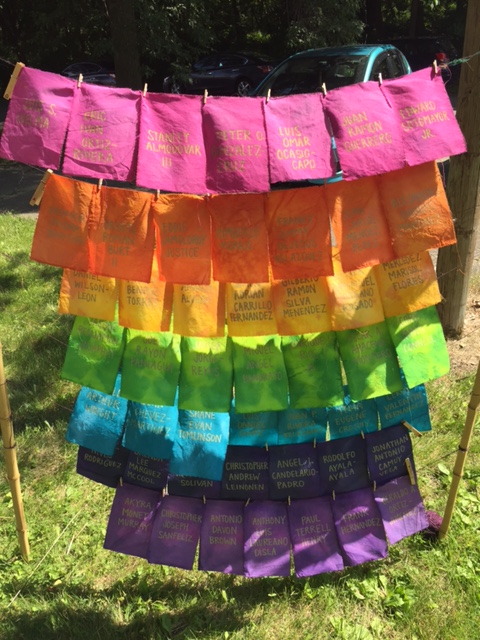
I shared these words with the Madison community during a vigil in honor of the victims of the recent massacre in Orlando. | Compartí estas palabras con la comunidad de Madison durante una vigilia en honor a las víctimas de la reciente masacre en Orlando.


image1

Rainbow flag with the names of the victims of the Orlando massacre. | Arcoiris de banderas con los nombres de las víctimas de la masacre de Orlando.

Buenas tardes, y gracias por decir “presente” en esta vigilia de recordación de nuestros hermanos y hermanas en Orlando. Soy el Rvdo. J. Manny Santiago, director ejecutivo de “The Crossing” un ministerio ecuménico para estudiantes en la Universidad de Wisconsin – Madison. Estaré compartiendo con ustedes unas palabras en español y luego en inglés. | Good afternoon and thank you for being here at this vigil honoring the siblings we lost in Orlando. I am the Rev. J. Manny Santiago, Executive Director of The Crossing campus ministry at the UW-Madison. I will share some words in Spanish first and then in English.

Español

No es fácil para mí el encontrar las palabras para compartir con nuestra comunidad. Hay ocasiones en el ministerio cuando tragedias como la que hemos sufrido nos dejan así: sin palabras, con dolor, con furia y confusión. Al mismo tiempo, sabemos que necesitamos levantar nuestras voces, ya sea para animarnos los unos a los otros, para denunciar injusticias o, en ocasiones, hasta para cuestionar la bondad de Dios cuando solo que podemos ver es violencia y muerte. Todo eso es parte del proceso de duelo y nadie nos debe decir que no sintamos estas cosas. Para mí, he pasado por todas esas etapas en menos de una semana: he sentido dolor, rabia, miedo, confusión y hasta he cuestionado la bondad de Dios que sirvo.

¿Por qué? Pues porque la tragedia de Orlando me ha tocado muy de cerca. No solamente tengo familia en Orlando – algunos de los cuales asisten al Club Pulse de vez en cuando – sino que, igual que la mayoría de las víctimas, soy Latino, puertorriqueño y abiertamente gay. Sí, soy un hombre Latino, pastor y gay. Desde pequeño escuché que esas cosas no podrían vivir juntas en una sola persona. Ese discurso de odio y rechazo que escuché de pequeño en la Iglesia me llevó a cuestionar, no solo mi identidad, sino el mismo amor de Dios y mi familia. Hoy muchas personas – políticos, líderes religiosos, etc. – están tratando de borrar las identidades de las víctimas de la masacre de Orlando. No queremos reconocer que son personas LGBTQ, no queremos reconocer que en su mayoría eran Latinos, no queremos reconocer que había entre ellos personas sin documentos… Algunas personas incluso han intentado poner a nuestras comunidades Latinas o LGBTQ en contra de la comunidad Musulmana.

Para mí, como persona de fe, Latino, puertorriqueño, gay, quiero dejarle saber a todas las personas que estamos tratando de hacer sentido de la tragedia: no va a ser un proceso fácil. Necesitamos crear espacios para procesar el dolor, el miedo, e inclusive para cuestionar la bondad de Dios. Pero en ningún momento podemos dejar de luchar por la justicia, por la paz, por reformas legislativas que ayuden a las comunidades de minoría. Reconozcamos que, en especial en nuestras comunidades Latinas, es tiempo de rechazar el machismo, la homofobia, la violencia, el racismo, la islamofobia y el heterosexismo que tanto permea entre nosotros. Es tiempo de levantarnos en unidad, en honor a todas las victimas de tragedias como esta y decir: ¡BASTA!

Que el Dios que se revela de muchas formas y de muchos nombres nos llene de valor, de amor, de sabiduría y de paz para hacer el trabajo…

___

English

It is not easy for me to find the words to share with you today. There are moments in ministry when tragedies like the one we have just witnessed leave us like this: without words, in pain, furious, and confused. At the same time, we know that we must lift up our voices, whether to support each other, to denounce injustices and even, on occasion, to question God’s goodness when the only thing we can see is violence and death. All this is part of the mourning process and nobody should tell us that we should not have these feelings. As for me, I have gone through all of these stages in the past week: I have been in pain, furious, scared, confused, and yes, I have questioned God’s goodness.

Why? Because the tragedy in Orlando is too close to me. I have family in Orlando – some of whom frequent Pulse Club – but also because, like the majority of the victims, I am Latino, Puerto Rican and openly queer. Yes, I am a gay, Latino pastor. Since childhood I’ve heard that these things cannot coexist. This discourse of hatred and rejection that I heard in Church brought me to question, not only my identity as a human being, but also God’s and my family’s love towards me. Today, many people – politicians and religious leaders in particular – are trying to erase the many identities that the victims embodied. Many do not want to recognize that the victims where LGBTQ, they do not want to recognize that the victims were Latino, they don’t want to recognize that among them there were people without proper documentation to work in the USA… Some have even tried to put our LGBTQ and Latino communities against the Muslim community.

As for me, as a person of faith, as a Latino, a Puerto Rican, and gay, I want to make it clear to all: trying to make sense of this tragedy will not be easy. We must build spaces to process the pain, the fear, and even to question God’s goodness. But under no circumstances must we stop working for justice, for peace, and for legislative reforms that would support minority communities. We, Latinos, must recognize that it is time to reject our machismo, our homophobia, our worshiping of death and violence, our Islamophobia, our racism, and our heterosexism. It is time to rise up, together, in honor of these victims and all the other victims of past violence, and say: ENOUGH!

May the God who is revealed in many forms grant us courage, and love, and wisdom, and peace for the work ahead of us…

Leave a comment

Filed under Church, Culture, Dios, Español, ethnicity, familia, Gay, Heritage, Hispanics, Hispanos, Identidad, Identity, iglesia, immigration, justice, Latino, Lesbian, LGBTQ, ministry, Peace, Puerto Rico, Queer, race, racism, Teología, Theology, trans, United States, USA

“What Are You?” – The Reality of Intersectional Identities

“What are you?” If you are a person of color, a person of non-white ethnic background, a practitioner of a non-Christian faith, or someone who does not follow conventional gender roles or expression, it is very likely that you have heard this question multiple times throughout your life. Heck! You might have heard this question multiple times just today! For some reason or another we all want to know where others “belong” – what tribe each person is a part of. Although I do not have scientific evidence to say this – it is a blog page after all, not my dissertation page – I believe we do this as a survival strategy; finding groups of people who will support each other in order to thrive, survive and protect each other based on the commonalities we share. However, we are humans. With being human comes the complexities of relationships and what it means to be in relation with each other, even those with whom we disagree.

intersectionality“What are you?” is, then, the amalgam of the identities we espouse and embody. These are identities that we have chosen and identities that are inherent to our being. The problem comes with the way in which the question is posed. Humans are not things. We are a very complex animal with both physiological and psychological characteristics. The integration of these characteristics is what makes us unique in the animal realm. Humans can overcome our desire to associate by tribe – or herd, or school, or pack, or whatever we call the different groups of animals that exist – precisely because we can answer the question “what are you?” Yet, the answer to this question is not an “it is” but an “I am”. In using this form of recognition of the self – something that other animals lack – we acknowledge that we are more than just our instincts.
Humans are the intersectionalities of our identities. These identities converge in order to create complex realities that define WHO – not “WHAT” – we are. I am… Puerto Rican, male, queer, cleric, cisgender, Latino, middleclass, a professional, Protestant, writer, advocate, light-skinned, etc. Each one of these identities reflects a part of who I am. Each one of these identities as well as when I choose to use them also reflect my values and what I treasure the most. Note, for instance, that I often identify as Puerto Rican first and foremost. This part of my identity is so crucial to my being that I cannot just ignore it or place it at the end of the list. With it come a whole lot of other realities that define what it means to be “Puerto Rican”. The context in which I experienced my Puerto Ricanness – growing up in the mountains, with a stable household, eldest son of a married couple, living in a coffee farm, Spanish speaker, exposed to the USA’s cultural realities while also keeping the history of a former Spaniard island possession, etc. – informs this part of my identity. Yet, my “self” is not complete without the interaction of the myriad other identities I embody or have chosen for myself.

Our realities are always intersections of the many identities we carry within ourselves. There are times when those identities are messy and even in contradiction with each other. Yet, this is part of the human experience. What makes us human is the capacity to navigate these apparent contradictions in a way that makes sense to US individually. What do I care about what others say about me? They cannot experience my identity the way I do, nor can I experience their identity the way each one of them does. My only responsibility is to try to acknowledge these differences and honor them by recognizing that each person’s multiple identities and how they converge are none of my business.

There is one aspect of the intersectionality of identities that is crucial, especially when it comes to living in a multi-everything society. Solidarity.

Solidarity is the ability to stand by the side of those who suffer because one or more aspects of their identities. Solidarity is recognizing that one or more parts of our identities might be attacked by others who do not understand the beauty of diversity. Solidarity is being wise enough to recognize that our lives are always being intertwined in such a way that the fight for justice is never to be done in isolation. As Blessed Martin Luther King taught us: “Injustice anywhere is a threat to justice everywhere.” If we do not see how the many identities we carry are intrinsically connected with the multiple identities of others, we will lose sight of the fight for justice and liberation.

There is no doubt that the question “what are you?” will continue to be a part of the daily experience of many of us. As a theologian, I like to reflect on the way in which the God of the Bible addressed this question when it was posed to God. According to the story found in Exodus, when Moses met God for the first time, he asked God whom should he say that send him to liberate God’s people. God’s answer was straightforward: I AM. That’s it! I am… You are, and others are too. It is in this present “being” that we can find commonalities in the midst of so many intersectional realities that make us who we are. Thus, the next time someone asks you “what are you?”, just answer: I AM.

Leave a comment

Filed under Culture, ethnicity, Heritage, Hispanics, Identidad, Identity, Latino, Puerto Rico, race, Sociology

Los callos de mis manos

Hace ya varios meses estoy yendo al gimnasio. Por razones de salud no puedo hacer ejercicios cardiovasculares (cardio) que requieran que mi corazón se acelere mucho. Así que mi entrenador sugirió que hiciera levantamiento de pesas en su lugar. Ya van varios meses levantando pesas. Siendo que no utilizo guantes, he notado cómo mis manos se comienzan a llenar de callos.

De pequeño, mi papá me llevaba a la finca para ayudarle. Tenía mis herramientas propias para trabajar: mi canastita de mimbre para el café y mi pequeño machete para enfrentarme a las yerbas que crecían impávidas por todos lados. Para quien no ha crecido en la finca, en el campo, esta vida es romantizada.

Todo escrito que he leído donde el ambiente es el campo, nos hacen pensar que esto es el idilio. Levantarse temprano, trabajar la tierra, producir nuestro propio alimento con el sudor de nuestra propia frente. Todo muy bonito y romantizado, como he escrito, pero nada de verdad.

La verdad es que esto es trabajo duro. Es fuerte. Es trabajo que, para el niño que era, no se sentía ni romántico ni satisfactorio. Aunque no creo que mi papá nunca se haya arrepentido de haber trabajado la tierra, la verdad es que él mismo nos repetía una y otra vez, la necesidad de estudiar para poder salir del campo. Tener una carrera y bc20ee0e87b18cbfe71303719e126ee4un trabajo estable. La vida en el campo y el trabajo de la finca son duros.

El tomar el pequeño machete me creaba callos en mis manos. Recuerdo que detestaba verme las manos al final del día y sentir la protuberancia que se convertiría en una ampolla de agua y que luego dejaría a su vez una marca callosa. Recuerdo el no querer ni siquiera mirar mis manos para no darme cuenta de esta horrorosa realidad que me marcaba como niño pobre, como niño del campo, como niño jíbaro…
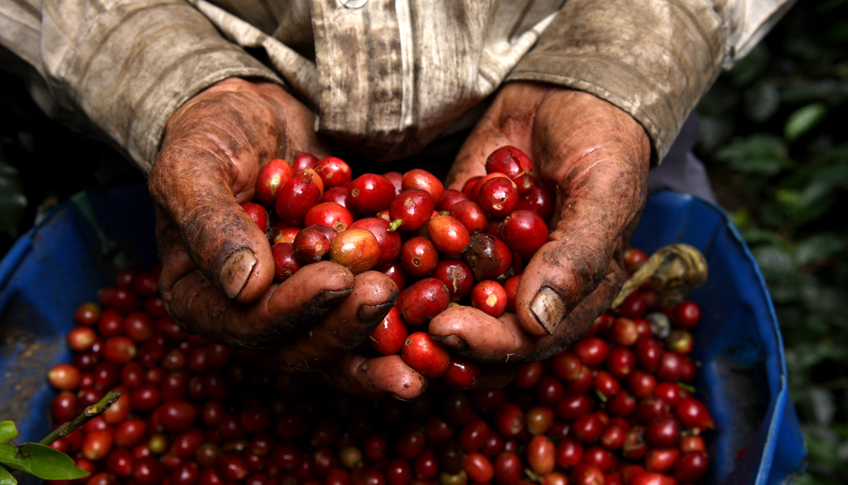
Me ha parecido interesante que ahora, cuando ya estoy adulto y tengo más o menos la misma edad que tenía mi papá cuando me llevaba con él a la finca, mi comprensión de los callos en mis manos es diferente. Ahora, aunque no tengo callos por las mismas razones, veo mis manos y recuerdo a mi papá. Recuerdo el machetito que yo usaba para cortar las yerbas del patio y de la finca. Recuerdo los granos del café, color del rubí, cuando recolectábamos los granos en las cestas de mimbre. Recuerdo el levantarme temprano – quejándome, no queriendo ir – para llenarnos del sereno de la madrugada mientras subíamos y bajábamos cerros para encontrar los arbustos más llenos de los granos de café. Recuerdo las manos de mi papá, acariciándonos con cariño por el trabajo completado, por haberle acompañado, por hacerle sentir orgulloso. Recuerdo sus manos callosas sobre las mías, recordándome la importancia de los estudios para que no tuviese que vivir toda la vida en la finca.

Ahora, los callos de mis manos, aunque no vienen de las mismas tareas, me recuerdan a mi procedencia campesina. Soy parte de esa jaibería boricua que salió de las montañas, también llenas de callos y de cicatrices en sus tierras…

Leave a comment

Filed under Culture, familia, Hispanics, Hispanos, Identidad, Latino, Puerto Rico, Recuerdos, tradiciones