Tag Archives: traditions

The Next Destination This Hispanic Heritage Month: Panamá!

As I continue inviting you to explore the places I have visited in our beloved and beautiful Latin America this Hispanic Heritage Month, I want to bring you with me to Panamá.
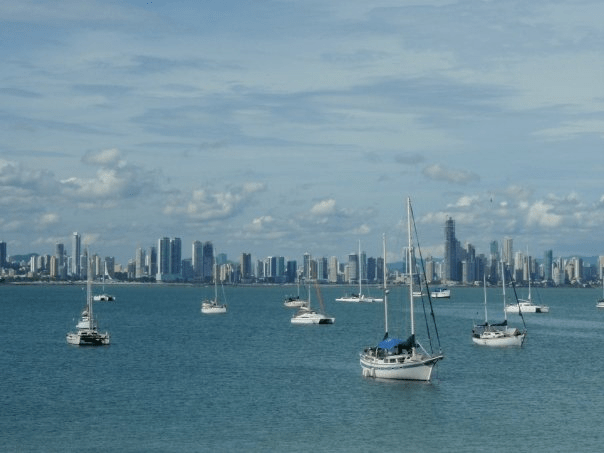
A view of Panamá City from the isthmus. The contrast of modernization with tradition is everywhere in the city.

It is possible that the only thing you know about Panamá is the canal. The Panamá Canal crosses the country north to south, opening a waterway for large container ships to cross from the Caribbean Sea to the Pacific Ocean. The Panamá Canal is quite significant for various reasons. First, because ships no longer have to do the difficult navigation around the southernmost point in the continent through Tierra del Fuego, to reach the Pacific Ocean from the Atlantic. Second, because it helped in cutting Panamá from Colombia, from which it was a department prior to its independence. Third, because the canal was USA territory until 1999, and thus, is another palpable reminder of the way in which the United States have had an overarching presence in Latin American affairs. Finally, the canal is also the big scar that divides the American continent, physically cutting the north and south parts of the large landmass that is América.

I have only visited Panamá once. My mentor, friend, and second mother, whom I met while she was a professor at the university I attended, lives there. Her ties to Panamá are strong. When she attended the same school she eventually taught at, she met the father of her sons, who was at the time, an international student from Panamá. Her sons were born there, and currently, her surviving son’s children live there. It makes sense for her, already retired, to live near her grandchildren and son.

A while ago, I decided I wanted to visit her. It had been quite some time since the last time I had seen her, and I felt it was right for me to visit as she had already traveled to visit me while I lived in NYC and she was in Pennsylvania. I also wanted to meet her son, as I consider her a second mother and it would’ve been great to meet my quasi-brother. Up until that time, Panamá had been a layover stop on my way to other Latin American countries. In fact, I had never stepped out of the Tocumén International Airport in Panamá City before. Thus, I didn’t have any expectations from the country, other than meeting my mentor and friend.
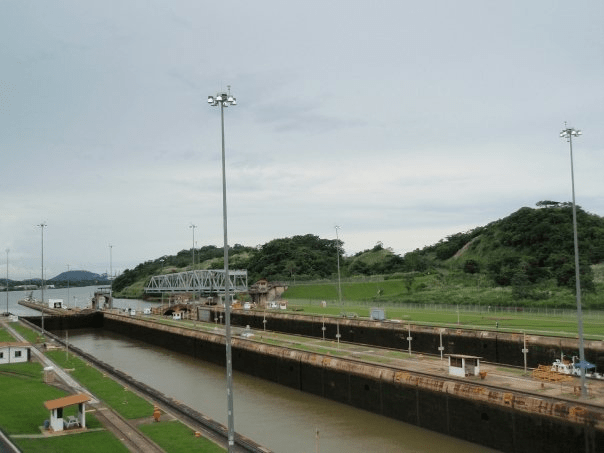
The Panamá Canal is the link between the Atlantic and Pacific Oceans.

What I discovered was way more than a beautiful Latin American country! I discovered a country with a complex history, wonderful people, delicious cuisine, and an accent that was so close to my own that I always felt at home.

My friend is a lesbian activist, and as such, I had the chance to connect with the LGBTQ community in Panamá and experience the country through their eyes.

The most significant experience I had in the country, was a visit to the Kuna or Guna people. The Guna are one of the surviving indigenous peoples who the colonizers were not able to erase. Like many other indigenous cultures from around the world, the Guna do not have a strictly binary gender system. In the Guna communities there is a third sex, the “Wigudum”, who play an important role in their societies.

When I visited with the Guna, I had the wonderful opportunity to meet some Wigudum people. Some of them were concerned because, although they had been accepted by the majority of their communities, US-backed Evangelical churches were growing in their communities. This meant that US puritanical and hypocritical mores were being spread throughout their communities, including the marginalization and demonization of the Wigudum. Moreover, the hypocritical aspect of the US puritanical moral code was using Wigudum young people as sex objects in private while rejecting their humanity from the pulpit. At the time, I was serving in parish ministry, and although the church I served is a very progressive congregation, I couldn’t get the guilt off of me. Modern, US Evangelical Christianity is annihilating a culture that survived millennia of colonization.

Still, visiting with the Guna was the most beautiful part of my visit to Panamá. They did not perform for me as a tourist. They did not put on a show to entertain me. I didn’t act as if I knew more than them about their country, their culture, or their struggle. I visited with humility and an open mind, hoping the learn from and with them, even if for just a few hours. I highly recommend connecting with indigenous communities, if possible, when visiting any Latin American country in which there are indigenous communities. Visiting with them will offer a better understanding of their culture, their history, their current realities, and the damage that colonization continues to do.
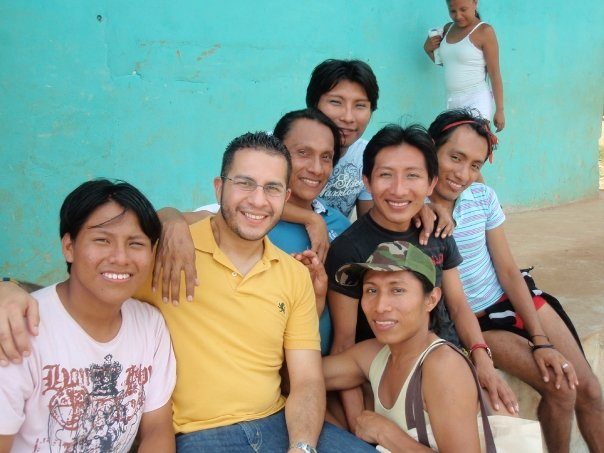
Sharing with Guna people was the highlight of my visit to Panamá.

Of course, I had the chance to visit the Panamá Canal. It is an impressive view. Watching the huge vessels travel through this intricate piece of engineering is really a sight. It is also an interesting experience to visit the canal zone. The canal was transferred back to Panamá as it was always intended, in 1999. Since then, Panamanians have moved to the zone, while some service members from the USA have also stayed. It is an interesting reality worth witnessing.

The final place I would suggest visiting in Panamá — of the places I visited, because I cannot speak for the whole country — is the old town. Contrary to other old towns throughout Latin America, Panamá’s is small and not well maintained. The structures are crumbling, and they reminded me more of Havana than San Juan. The ruins of the old city are also nearby and they are an interesting place to visit to learn more about Panamá’s development. I am not sure about the rest of the country, but Panamá City is a sprawling experiment on US capitalist development. Huge skyscrapers are being built everyday. Hundreds of housing units unreachable for locals are being sold to international investors with no intentions to help the people of the country. However, since infrastructure is still lacking, water barely reaches the units beyond the third floor, and power outages are very common.

Visiting Panamá was a great experience for me. It showed me both sides of Latin America: the side still connected to our ancestors, cultures, and traditions, and the side that is the unsuspected victim of globalization and US imperialism. As a Puerto Rican, it was a great way to know that my people, my Island, are not alone in suffering the impact of invasive US imperialist policies. As the late Panamanian poet Dimas Lidio Pitty once wrote:

Panamá, my beloved land

wounded by the many pains

tomorrow, without invaders

an Eden under the sun you shall be.
Leave a comment

Filed under celebrations, cultural celebrations, Culture, ethnicity, Heritage, Hispanic Heritage Month, Hispanics, Hispanidad, Hispanos, History, Human Rights, Humanity, Identidad, Identity, justice, Latin America, Latinidad, Latino, Panama, race, Racial Relations, racism, Recuerdos, resistance, Social Movements, Sociology, tradiciones, traditions, trans, transgender

Traveling Throughout Latin American This Hispanic Heritage Month – Venezuela

I want to continue taking you on a journey with me throughout my beautiful Latin America. Of course, I can only share the experiences of the places I have traveled, which is what I am doing with this series of publications. Today, I want to take you on a journey to the second Latin American country I visited: Venezuela.

I visited Venezuela for the first time in 1997, right after my trip to Nicaragua. In fact, my little group — three young women and I, all from the same religious group from college — flew from Nicaragua, through Panamá, to Venezuela. There we met with a larger group from the same religious organization from college. However, while we were in Nicaragua, there were general strikes in the country. The public transportation sector had joined the students in strike as prices were going to be raised in the public universities in the country. This meant that the ferries from Ometepe to the mainland were suspended.

Moreover, during this time, there was also an earthquake in Venezuela that devastated parts of the country. This was our first trip to Venezuela and we had no idea where the earthquake happened and whether it was close to where we were supposed to stay.

Thankfully, we were able to clear everything up and were able to travel to Venezuela after all. This was the first of many trips I took to Venezuela. I have visited before, during, and after the Chávez presidency. I have seen the country transform in many ways. Here, I will not take share about those transformations, as I believe this is a delicate topic that should never be entered into without first engaging the brilliant minds of Venezuelans who support, oppose, and are ambivalent about the political reality of their country. I would do a disservice to my Venezuelan siblings by focusing on my political opinions instead of highlighting the beauty of their motherland.

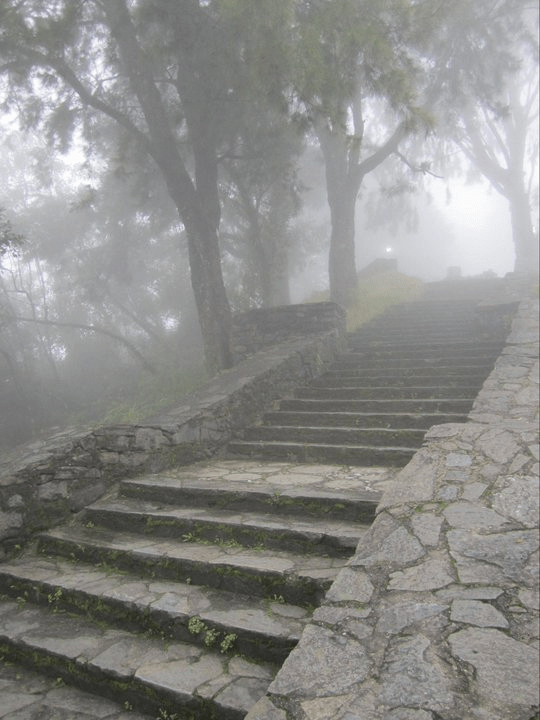
Stairs enveloped in mist as you continue the journey up once you get to the top of Cerro Avila in Caracas.

The first time I visited Venezuela, I stayed in the home of the local pastor whose church we were working with. His house was on a very scary cliff, in the town of El Junquito. He was a dentist, and made good money through his job. His service to the local church in an impoverished neighborhood of Caracas was part-time. He used his skills as a dentist to provide free service to the community too, and the church had a dental clinic for the people in the community.

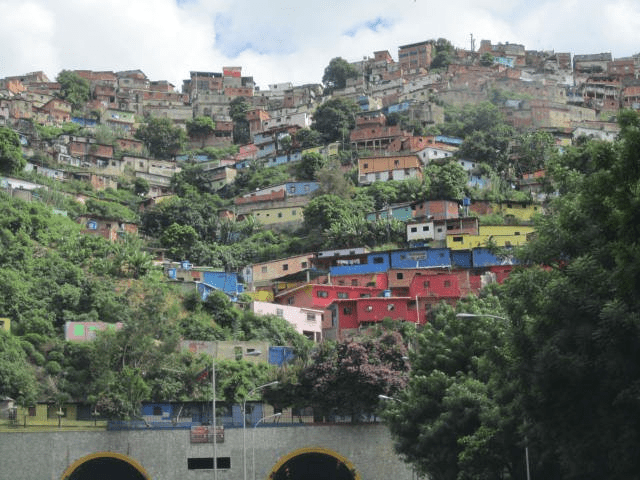
El Junquito wasn’t particularly interesting to me. But Caracas was! The city is a huge sprawl in a valley and extends to the foot of the mountains around it. As you come up from the Maiquetía Airport, you can see the haphazardly built structures covering miles and miles of mountain slopes. At night, the lights look beautiful. During the day, it looks impressive and dangerous. In the neighborhood where we were working, the passages and narrow paths crisscrossing the slopes from house to house, some built one on top of another, were a maze we did not dare to walk through. This in itself was a beautiful sight. It was beautiful because you could feel how much the community cared for each other, as they helped each other navigate this network of paths that were so confusing that outsiders were warned not to venture in. The Caracas that I experienced that first time, and the second, and third time I visited, was a city of drastic contrasts. It was a city filled with cars, motorcycles, public buses, and a pretty impressive urban metro system. It was a cosmopolitan city filled with culture and arts. It was a city filled with the delicious aromas of national and international cuisines.

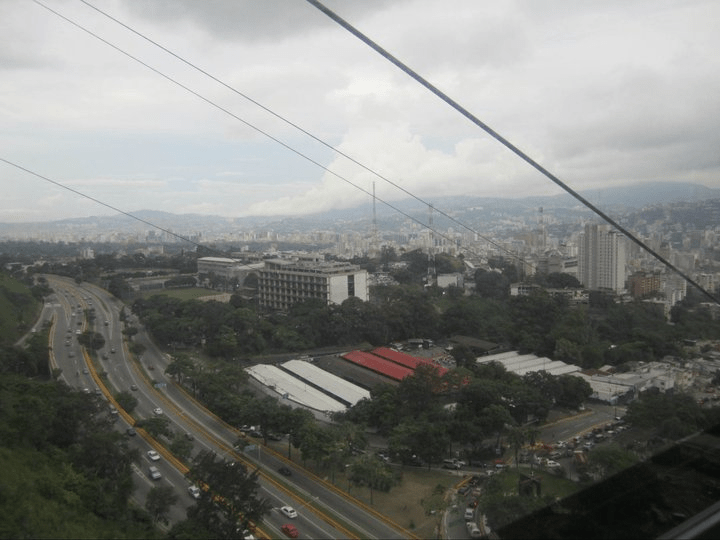
A view of Caracas from Cerro Avila.

Caracas is my favorite place in Venezuela. Contrary to many Latin American cities, Caracas doesn’t have a very defined and preserved “old town.” You walked through history and modernity all the same time. As you step out of the old Roman Catholic Cathedral in the center of the city, there are modern buildings and shopping malls all over the perimeter. This contrast was new to me, and I enjoyed it very much.

In Caracas is also where you can find Cerro Avila. The impressive mountain on the side of the city is reachable through a cable car. The first few times I rode this cable car, I had no worries. However, the last time I visited Caracas, I guess my age showed, as I was scared to death to go up! I positioned myself in the center of the car and curled up in the fetal position until we reached the top of the mountain to the amusement of my sister and my friend who were serving as our tour guide. But once on the top, you get to see the city through the fog.

Another place that is magical in Venezuela is Colonia Tovar in the state of Aragua. I have visited this place a couple of times. This town up in the mountains is the result of German immigrants arriving in Venezuela over a hundred years ago. The climate on the mountain was reminiscent of the climate in their home towns. They produce some of the sweetest and biggest strawberries I have ever had! It is worth visiting the colony and enjoying a day or two trying all of their traditional German dishes and strawberry creations.

Valencia and Maracaibo are the other two places I have spent time in. Although I didn’t get to explore much in Valencia, it was a family visit and we got to enjoy some good time with my aunt and her husband’s extended family who lives there. Having some street food late at night was probably one of the greatest experiences in Valencia. Maracaibo, on the other hand, was also a magical place. Every morning, I would wake up early and walk to the nearby bakery to buy freshly baked bread for the group with which I was. The team there made a delicious strawberry jam (I get to see the thread here!) Eating that freshly baked bread was heaven!

The views of the houses on the cliffs as you drive up from the Maiquetía airport to Caracas.

Venezuela has my heart because of many other, more personal experiences I had while traveling and shortly living there in my youth. Although it’s been a few years since my last visit, I do hope to return someday. I want to continue eating the delicious street foods, especially, the arepas reina pepiada (my favorite), and their empanadas — there’s a story about empanadas and a visit to Simón Bolívar’s hacienda from which I will spare you this time. Venezuela is a beautiful country, with wonderful people, and way to much to discover in just a few days over a decade of visiting it. I know in my heart that I will visit more places and get to see the Salto del Angel with my own eyes someday. Until then, I live with the wonderful memories of many, many months spent exploring the streets of Caracas, and the memory of the wonderful smell of freshly baked bread in Maracaibo.

Leave a comment

Filed under celebrations, cultural celebrations, Culture, ethnicity, Heritage, Hispanic Heritage Month, Hispanics, Hispanidad, Hispanos, History, Humanity, Identidad, Identity, immigration, Latin America, Latinidad, Latino, race, racism, Sociology, tradiciones, traditions, Venezuela

Christmas Memories in Exile

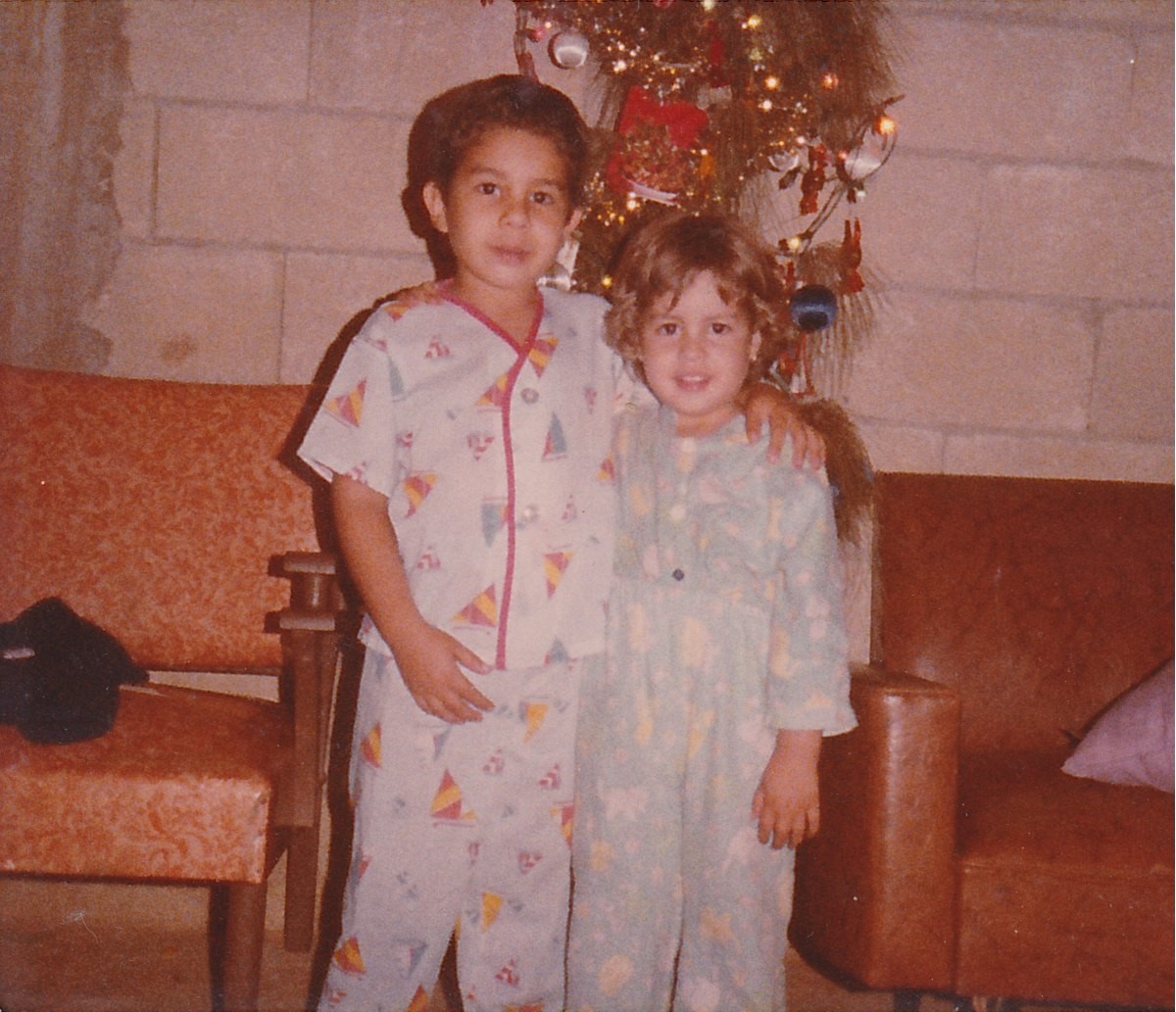
I remember a picture the other day. It was a picture with my sister and I, in front of a Christmas tree. I couldn’t remember what we were wearing, but I do remember that it was taken in the house we grew up in. It was taken many Christmases ago.

When you move as much as I have, memories are all you have left when important dates come up. Living away from the place you consider home means that you always carry with you the memories of special dates. Christmas in particular is a difficult time for me. I grew up in the mountains of Puerto Rico, where the weather this time of the year is cold, but not freezing cold as it is where I live now. The holiday music is festive, cheerful, loud, at a fast tempo, and is everywhere. Caribbean sounds fill up the air; not the slow, often dark, and to me, sad songs with northern European origins. Christmas music for me is drums and guitars, is tambourine and maracas, is güiro and cuatro. Parrandas fill the nights with music as people gather late at night and go throughout their neighborhoods signing traditional music from house to house. All homes are always ready for parrandas. There’s always food: hot chocolate, crackers, guava paste, queso de hoja (a type of homemade white cheese), and of course, the last home that is visited must prepare an “asopao”, or soupy rice with either chicken or pigeon peas.

Our Christmas tree at home was always humble. I still remember the year when my dad decided to just take a coffee tree and wrap its branches with aluminum foil. We placed lights and ornaments and it’s still the most beautiful Christmas tree I had ever had. The tree on the picture I remember was humble as well. We had gone to my grandfather’s farm and cut a pine tree. It did not have the aroma of the fir trees or the spruce trees, but it was beautiful in its humbleness. We put garlands and ornaments and musical lights on it. The tree would not have presents. Ever. Presents were not to be placed under the tree or given on Christmas Eve or Christmas Day. We had to wait until Epiphany, the Feast of the Wise Men, on January 6th. The day before my sister and I would gather some grass for the camels, place it on empty shoe boxes, and place those under our beds. The Three Kings will leave present then… and we will have a week or two to play with them before going back to school.

When you live in exile, or away from home in any form, these memories are all you have. You remember the holiday, and the music, and the presents, and the food, and the family time. You remember that nothing will go back to what it was. You remember that life goes on and you must adapt.

I found the picture among my things. My sister and I are wearing pajamas. The Christmas tree looks as beautiful as I remember. It brought back all the memories of Christmas past, in the mountains of Castañer, waiting for parrandas and for the music. It is Navidad; it is home.

IMG_0002

Leave a comment

Filed under Christmas, Culture, ethnicity, familia, History, Identidad, Identity, Latino, Navidad, niña, niñez, niño, Puerto Rico, Recuerdos, tradiciones, Uncategorized

The Academy and Creativity

It took me a very long time, but I finally recently got admitted to a doctoral program. I am currently completing a Doctor of Education (Ed.D.) degree in educational leadership through an innovative distance learning program on a respected university. Contrary to what many people believe, online degrees are not less rigorous or less demanding than traditional programs. Certainly, there are several “diploma mills” out there – and both the FBI and the Department of Justice have taken matters into their hands.

Since way before I entered a doctoral program, I was excited with the possibility of becoming part of the academic elite. I do not mean this in a derogatory way. Far from it! I have admired academics and researchers my whole life. I looked up to them. I followed some of them and their works. I wanted to be part of this group that gives so much to

"This doesn't leave much room for creativity."

“This doesn’t leave much room for creativity.”

society. Thus, when I was admitted to the doctoral program, I was elated. I was finally entering a world in which I could be creative, original, and novel… My interaction with other students would allow me to discover new things and to expand my understanding of the world. Having mentors and teachers with vast experience in the field would mean that I would have the opportunity to ask questions, to get answers, to get recommendations on where to find answers, to get encouragement on topics to research and so much more.

What I can say, however, is that it’s been both encouraging and frustrating (but I guess that this is exactly how life in general goes!)

I am not saying that I am not happy with the program and the mentors. Nothing farther from the truth! I have enjoyed every part of the program. My mentors are amazingly great scholars and they have shown tremendous respect for their respective fields of study, for the training of the students, and for the institution they represent. I must also confess that I am in absolute awe with one particular mentor. Throughout my life, I have had my fair share of great teachers, and this particular mentor has quickly become one of them.

My frustration, however, is not with the institution, with the program, or with the field of study. My frustration is with the academic system that, in order to standardize the production of knowledge, has, at the same time, curtailed creativity on the part of the scholars.

I am not suggesting that we ought to get rid of rules altogether, or that we should never follow certain standards. However, I have noticed how the rules and regulations are so ridiculously complicated and detailed that they do not allow for the expressing of individuality on the part of the scholar who is writing.

I became aware of this through my doctoral studies. Throughout my academic life I have used different styles manuals (mostly the University of Chicago manual, but also MLA Formatting and Style Guide and the APA Style Publication Manual.) Since one of my graduate degrees is in theology, even more creativity was allowed. This doesn’t mean that theological research is less rigorous. It means that, because of the nature of the field, creativity is welcomed and celebrated. Moreover, some flexibility was always allowed so as to present works that spoke to who we are as individuals in relation to the work we are doing.

Now, however, as I move to a more standardized form of scholarly writing, I find myself baffled at the many regulations that come with it.

Two spaces after a final period? Why the heck?! Do the people who put together these manuals are over 100 years old and still using typewriters?

A whole, almost blank page *just* for my name and institution? Apparently they don’t care about wasting money or resources when printing!

Having to repeat the title on EVERY. SINGLE. PAGE? Why??? Just… WHY???

OK, I get the numbering pages (always have done that.) And I also get having a standard way of quoting, citing, and writing the references. But, honestly, there are other rules that make no sense… and that, for people who enjoy writing and reading like me, make it difficult to be creative with the way in which we present our work.

Now I understand why most scholars dress the same, talk the same, have the same mannerisms, and pretty much look all the same: they have been following standardized ways of scholarly work for decades! To me, that is sad.

To be honest, I will definitely follow every single one of the ridiculous rules and regulations the program asks me to follow. After all, I *do* want to succeed in this program and part of the way of doing this is by conforming to the system that has allowed you to pursue research and scholarly work. But I also make myself a promise: never, ever, ever, EVER, to curtail the writing creativity – within reason – of my future students and mentorees.


[RANT OVER. LOL]

Leave a comment

Filed under Academy, Creativity, School, Studies, Uncategorized